• KGS/USD = 0.01144 0%
  • KZT/USD = 0.00211 0%
  • TJS/USD = 0.10460 0.19%
  • UZS/USD = 0.00008 0%
  • TMT/USD = 0.28490 0%
  • KGS/USD = 0.01144 0%
  • KZT/USD = 0.00211 0%
  • TJS/USD = 0.10460 0.19%
  • UZS/USD = 0.00008 0%
  • TMT/USD = 0.28490 0%
  • KGS/USD = 0.01144 0%
  • KZT/USD = 0.00211 0%
  • TJS/USD = 0.10460 0.19%
  • UZS/USD = 0.00008 0%
  • TMT/USD = 0.28490 0%
  • KGS/USD = 0.01144 0%
  • KZT/USD = 0.00211 0%
  • TJS/USD = 0.10460 0.19%
  • UZS/USD = 0.00008 0%
  • TMT/USD = 0.28490 0%
  • KGS/USD = 0.01144 0%
  • KZT/USD = 0.00211 0%
  • TJS/USD = 0.10460 0.19%
  • UZS/USD = 0.00008 0%
  • TMT/USD = 0.28490 0%
  • KGS/USD = 0.01144 0%
  • KZT/USD = 0.00211 0%
  • TJS/USD = 0.10460 0.19%
  • UZS/USD = 0.00008 0%
  • TMT/USD = 0.28490 0%
  • KGS/USD = 0.01144 0%
  • KZT/USD = 0.00211 0%
  • TJS/USD = 0.10460 0.19%
  • UZS/USD = 0.00008 0%
  • TMT/USD = 0.28490 0%
  • KGS/USD = 0.01144 0%
  • KZT/USD = 0.00211 0%
  • TJS/USD = 0.10460 0.19%
  • UZS/USD = 0.00008 0%
  • TMT/USD = 0.28490 0%

Weekly Digest of Central Asia

BISHKEK (TCA) — The Publisher’s note: Central Asia is an important geopolitical area between Europe, Russia and China. It is in Central Asia that world powers have confronted each other for centuries; it is here that China needs to succeed with its new Silk Road Belt for direct access to the Western markets; and it is here that a large wealth of raw materials has its origin. Every week thousands of news appears all over the world in printed and online media and it is quite understandable that many of them may escape the attention of busy readers. At The Times of Central Asia, we strongly believe that more information can better contribute to peaceful development and better knowledge of the region, and for this reason we are presenting this Weekly Digest of Central Asia which compiles what other media have reported during the past week.

Continue reading

As Kazakhstan-Kyrgyzstan border tension continues, prime ministers trade accusations

BISHKEK (TCA) — At the meeting of the Council of Heads of Government of the Commonwealth of Independent States (CIS) on November 3 in Tashkent, Prime Minister of Kyrgyzstan Sapar Isakov complained about the situation on the Kazakhstan-Kyrgyzstan border, where long lines of loaded trucks stand on the Kyrgyz side of the border facing delays with entering Kazakhstan whose authorities stepped up border checks on October 10.

The delays began after outgoing Kyrgyz President Almazbek Atambayev accused Kazakhstan of meddling in the campaign for Kyrgyzstan’s October 15 presidential election and criticized the Kazakh President Nursultan Nazarbayev over his long rule.

Kazakh officials have denied any political motive for stepped-up procedures at the border.

Both countries are members of the Eurasian Economic Union (EEU), which also includes Russia, Belarus, and Armenia.

The Prime Minister of Kyrgyzstan said that Kazakhstan, using the transit advantage, creates artificial barriers to the movement of goods and cars. “Cars are under control for up to five days. Each time there are various justifications — up to the point that Kyrgyzstan carries smuggling. Can we call agricultural products, milk products smuggling?” Isakov said, adding that the situation has not changed for more than 20 days and Kyrgyzstan was forced to apply to the EEU and WTO.

Kazakhstan Prime Minister Bakytzhan Sagintayev responded to Isakov, explaining the position of the Government of Kazakhstan.

“The government of Kazakhstan considers statements of the Kyrgyz side incorrect. The position of our state on this issue is well known. It fully corresponds to the ideology of the formation of the common economic space of the countries of the Eurasian Economic Union and is aimed at minimizing economic risks and economic damage to the member countries of the Union,” Sagintayev said as reported by the official website of the Prime Minister of Kazakhstan.

Sagintayev said Kyrgyzstan needs to bring the norms of its national legislation in accordance with the EEU law on tax administration, counteract illegal exports including of counterfeit products, and ensure permanent and effective veterinary-sanitary and phytosanitary (quarantine) control of goods for compliance with the EEU requirements.

“Thus, we protect not only our national interests. We protect the economic interests and economic security of the EEU space,” Sagintayev said, adding that the order of monitoring and control at the Kazakh-Kyrgyz border fully and strictly conforms to the norms and requirements of the EEU legislation.

“We are ready for a constructive dialogue on bilateral economic cooperation, as well as cooperation in the field of border, transport, phytosanitary and veterinary control, customs and tax administration,” the Kazakh prime minister concluded.

USAID builds capacity of tourist guides in Kyrgyzstan

BISHKEK (TCA) — On October 29, 39 tour guides in Kyrgyzstan completed a training course on international standards for tour guides. Members of the World Federation of Tourist Guide Associations (WFTGA) trained them on the best techniques to plan and conduct guided tours, as well as ways to better research, document, and relay facts about cultural and historical sites. The United States Agency for International Development (USAID) organized the training as part of its broader efforts to improve tourism in the Kyrgyz Republic.

Continue reading

Are newly-built high-rise buildings safe in Kyrgyzstan?

BISHKEK (TCA) — Special attention of government agencies, the media and general public is currently paid to the quality of construction works in Kyrgyzstan. The reason was the recent collapse of a building under construction in the southeast of Bishkek. The Avangard Style construction company, a leader of the country’s construction market with a 19-year history, is constructing that high-rise building.

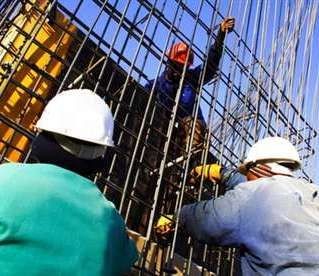
A 740 square meters extension facility under construction (where a sports complex should be) attached to the main building collapsed because of violation of construction rules and the lack of state architectural and construction supervision. As a result, 11 construction workers suffered.

Construction works were suspended until the end of the clarification of the cause of the collapse, the State Inspectorate for Environmental and Technical Security said. The Inspectorate did not give its permission to continue construction of the building. After the investigation, the facility will be demolished. The Avangard Style company will pay an administrative fine for non-compliance with the technology for construction and installation works.

According to official data, Temirlanbek Sultanov is the head and founder of Avangard Style. The company belonged to the current presidential adviser Kalykbek Sultanov until 2011, when he was appointed Minister of Transport and Communications of Kyrgyzstan.

Under Kyrgyzstan’s law, officials are not allowed to be engaged in commercial activities, but civil servants who own businesses come out of the situation by re-registering their companies to trusted persons or close relatives.

It was not the only case of collapse at facilities under construction. Last May, as a result of a strong wind, part of the wall of a building under construction collapsed into a yard of the neighboring residential multi-storey building in downtown Bishkek. Fortunately, there were no casualties.

Prosecutor General’s Office conclusion

According to the Prosecutor General’s Office, officials of the State Inspectorate for Environmental and Technical Safety did not conduct mandatory construction supervision over the construction of the 14-storey multi-apartment house at the intersection of Tokombayev and Sukhbaatar streets (Southern Highway) in Bishkek, constructed by Avangard Style LLC.

After the incident, the officials of the State Technical Inspectorate, in order to conceal their illegal actions, entered into collusion with the construction company’s employees and compiled and registered forged acts on allegedly completed works from May to August 2017, the Prosecutor General’s Office said. The permission to carry out construction works expired on July 28, 2017 and was not extended in accordance with the established procedure.

The Prosecutor General’s Office has initiated a criminal case for abuse of office and forgery.

Triple control

Construction companies should be responsible for the safety of residential buildings which they sell to citizens. According to the legislation, buildings under construction are subject to triple control. Project authors should carry out their own supervision, developers or customers – technical control, and the State Inspectorate for Environmental and Technical Safety – architectural and construction supervision.

Developers should monitor the input control of all building materials and equipment used. Construction companies should ensure control over all technological operations on which the safety of buildings depends.

The State Technical Inspectorate should check the compliance of the works performed with the requirements of technical regulations. General contractor conducting construction is responsible for poor-quality construction. Violation of technical regulations entails administrative fines.

There have been no facts of destruction of objects after commissioning so far, officials said.

Quality of building materials

On November 1, Kyrgyzstan’s MPs considered amendments to the Law on safety of building materials, products and structures. The amendments will bring Kyrgyzstan’s regulatory legal acts in line with the new edition of the Commodity Nomenclature for Foreign Economic Activity of the Eurasian Economic Union.

A draft technical regulation of the Eurasian Economic Union “On the Safety of Buildings and Structures, Building Materials and Products” is currently being developed to establish mandatory safety requirements for the EEU member countries, but the regulation will be adopted not earlier than 2019.

Before the EEU rules are introduced, the Economy Ministry of Kyrgyzstan proposed to develop domestic requirements on the safety of building materials.

In 2016, more than 69.6 thousand tons of cement was imported to Kyrgyzstan, but only 15 thousand tons of them were confirmed for compliance with the technical regulations. Thus, about 78% of cement imported into Kyrgyzstan last year did not pass quality control, which does not ensure the proper quality and safety of construction works and buildings.

Tourism a driver of development in Central Asia — World Bank

BISHKEK (TCA) — The Central Asia region hosted about 11 million visitors in 2014, and is gaining more attention as an emerging tourism destination, with strong potential for further development under the common brand of the Great Silk Road. But the countries in the region need to further collaborate in order to enable the growth of sustainable tourism and to leverage their countless cultural heritage sites and natural assets, the World Bank wrote in an article posted on its website.

Continue reading