• KZT/USD = 0.00223
  • TJS/USD = 0.10860
  • UZS/USD = 0.00008
  • TMT/USD = 0.29850
  • KZT/USD = 0.00223
  • TJS/USD = 0.10860
  • UZS/USD = 0.00008
  • TMT/USD = 0.29850
  • KZT/USD = 0.00223
  • TJS/USD = 0.10860
  • UZS/USD = 0.00008
  • TMT/USD = 0.29850
  • KZT/USD = 0.00223
  • TJS/USD = 0.10860
  • UZS/USD = 0.00008
  • TMT/USD = 0.29850
  • KZT/USD = 0.00223
  • TJS/USD = 0.10860
  • UZS/USD = 0.00008
  • TMT/USD = 0.29850
  • KZT/USD = 0.00223
  • TJS/USD = 0.10860
  • UZS/USD = 0.00008
  • TMT/USD = 0.29850
  • KZT/USD = 0.00223
  • TJS/USD = 0.10860
  • UZS/USD = 0.00008
  • TMT/USD = 0.29850
  • KZT/USD = 0.00223
  • TJS/USD = 0.10860
  • UZS/USD = 0.00008
  • TMT/USD = 0.29850
11 November 2026

Viewing results 1 - 6 of 2

C5+1 Statement Omits Afghanistan, Prioritizes Trans-Caspian Trade

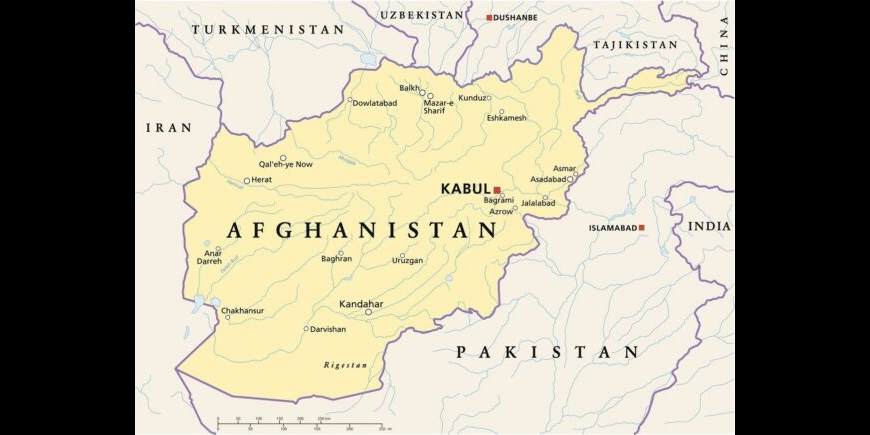
The United States and the five Central Asian republics have issued a joint statement on economic and security cooperation that makes no mention of Afghanistan, once a central concern of U.S. regional policy. The document followed the October 19 C5+1 ministerial meeting in Samarkand, Uzbekistan. Afghanistan's absence from the statement does not mean it has disappeared from negotiations or Washington's strategic interests. Nevertheless, a comparison with earlier C5+1 documents reveals a shift in the published agenda. Where Washington once placed considerable importance on connecting Central Asia with South Asia through Afghanistan, the latest statement focuses on trade across the Caspian Sea and investment in the region's minerals. Afghanistan's Changing Place in C5+1 Talks In July 2021, just weeks before the Taliban retook Kabul, C5+1 participants at a conference in Tashkent explicitly supported closer trade and transport links between Central and South Asia through Afghanistan, as well as efforts to secure peace in the country. That month, the U.S., Uzbekistan, Afghanistan, and Pakistan also announced plans for a quadrilateral platform to support trade and transportation projects linking the two regions. In July 2023, Afghanistan was the subject of a separate C5+1 special session in Astana. Officials called for an inclusive Afghan government that respected women's rights and backed further development of transport and energy links through the country. A joint statement issued by C5+1 leaders that September described Afghanistan as an important factor in Central Asian security. In the 2026 Samarkand statement, Afghanistan goes unmentioned even in the section on border security and terrorism. However, the October 2023 C5+1 connectivity statement had already highlighted the Trans-Caspian Trade Route, which connects Central Asia to Western markets, and also omitted Afghanistan. For Central Asian countries, the Afghan route remains important in practical terms. Uzbekistan is pursuing plans for a railway through Afghanistan to Pakistan, which would give it access to Indian Ocean ports. Kazakhstan is already a major supplier of food to Afghanistan, exporting around $216 million worth of flour and $122 million of wheat in the first seven months of 2026. In September, Kazakhstan and Uzbekistan also agreed with the United Arab Emirates to study a railway corridor through Afghanistan to Pakistan. Tajikistan, Uzbekistan, and Turkmenistan all share borders with Afghanistan. Uzbekistan and Turkmenistan also face the prospect of reduced water supplies from the Amu Darya as Afghanistan builds its Qosh Tepa Canal. Afghanistan's omission from a joint statement should therefore not be taken as a complete account of the policies of all five Central Asian states. What Constrains Washington One possible explanation lies in the U.S. approach to Afghanistan's current authorities. Washington allows practical contacts with representatives of the Taliban but does not recognize the government it has formed. The movement remains designated as a Specially Designated Global Terrorist, although it is not included in the U.S. Department of State's separate list of Foreign Terrorist Organizations. The designation restricts dealings with the Taliban, although U.S. sanctions rules permit many commercial transactions involving Afghanistan's governing institutions, including civilian infrastructure and transportation projects....

Opinion: C5+1 in Samarkand: What Uzbekistan Expects and What Washington Wants

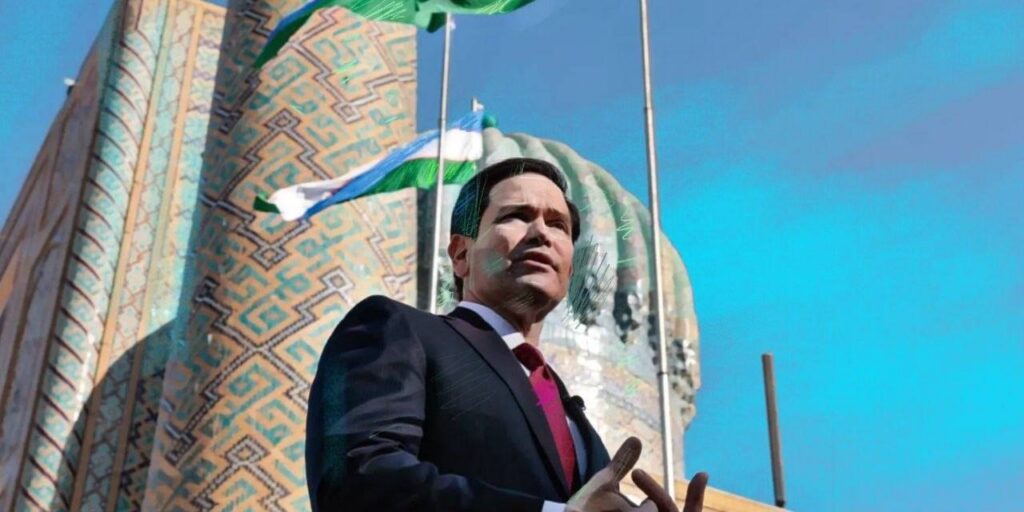
U.S. Secretary of State Marco Rubio has arrived in Uzbekistan with a delegation representing more than 200 American companies. He is attending a C5+1 ministerial meeting with the foreign ministers of Kazakhstan, Kyrgyzstan, Tajikistan, Turkmenistan, and Uzbekistan. The agenda includes regional connectivity, energy security, trade, private investment, and economic modernization. The visit brings the format back to its birthplace. The first C5+1 ministerial meeting was held in Samarkand on November 1, 2015, with then-Secretary of State John Kerry. The November 6, 2025, summit in Washington gave the relationship a substantial commercial dimension. Uzbekistan and the United States announced economic agreements and trade contracts worth approximately $34.5 billion. President Donald Trump also said Uzbekistan intended to purchase and invest more than $100 billion in the United States over the following decade. Samarkand is now hosting a ministerial meeting accompanied by a large business delegation. The immediate question is how much of the previously announced portfolio has moved toward financing and implementation. In late September, Uzbekistan's Minister of Investment, Industry, and Trade, Laziz Kudratov, valued the project portfolio with the United States at $35 billion, with approximately $7 billion already completed. On that accounting, about $28 billion remains. In my assessment, the strongest overlap between American and Uzbek interests lies in processing critical minerals inside Uzbekistan, using American financing and technology to serve international supply chains. Washington wants alternative sources of strategic materials. Tashkent wants investment in industrial production rather than simply exporting raw materials. Their positions are less closely aligned on technology and relations with Iran. Uzbekistan seeks access to American artificial intelligence infrastructure while maintaining cooperation with China. It also regards Iran as an important transit partner. Washington's approach to sensitive technologies and sanctions could complicate both ambitions. Another Uzbek priority is ending the application of the Jackson–Vanik Amendment to Uzbekistan, a U.S. trade-law provision dating from 1974 that continues to affect the legal framework for bilateral commerce. Rubio can support its repeal, but Congress must make the decision. Investment Deals The C5+1 format has become more commercially focused. At the Washington summit, the U.S. Department of Commerce organized a dedicated venue for business agreements and announced more than $25 billion in commercial deals involving the five Central Asian countries. Since the Washington summit, Uzbekistan has developed additional channels for economic cooperation with the United States. A bilateral Business and Investment Council has brought together officials and business representatives. Cooperation has also expanded into critical minerals, energy, infrastructure, and advanced manufacturing. In June 2026, Uzbekistan's Ministry of Investment, Industry, and Trade, its Fund for Reconstruction and Development, the U.S. International Development Finance Corporation (DFC), and the Export-Import Bank of the United States (EXIM) announced a joint investment platform. Uzbekistan has also adopted a critical minerals development program for 2026–2030, covering 120 projects valued at $4.2 billion. The first stage includes 12 projects worth $166 million, with plans to produce high-purity selenium, tellurium, and rhenium. These plans reflect Tashkent's industrial priorities. Uzbekistan wants foreign partners to help build processing facilities and...