
• KGS/USD = 0.01144 0%
  • KZT/USD = 0.00213 0%
  • TJS/USD = 0.10792 -0.28%
  • UZS/USD = 0.00008 0%
  • TMT/USD = 0.28490 0%
  • KGS/USD = 0.01144 0%
  • KZT/USD = 0.00213 0%
  • TJS/USD = 0.10792 -0.28%
  • UZS/USD = 0.00008 0%
  • TMT/USD = 0.28490 0%
  • KGS/USD = 0.01144 0%
  • KZT/USD = 0.00213 0%
  • TJS/USD = 0.10792 -0.28%
  • UZS/USD = 0.00008 0%
  • TMT/USD = 0.28490 0%
  • KGS/USD = 0.01144 0%
  • KZT/USD = 0.00213 0%
  • TJS/USD = 0.10792 -0.28%
  • UZS/USD = 0.00008 0%
  • TMT/USD = 0.28490 0%
  • KGS/USD = 0.01144 0%
  • KZT/USD = 0.00213 0%
  • TJS/USD = 0.10792 -0.28%
  • UZS/USD = 0.00008 0%
  • TMT/USD = 0.28490 0%
  • KGS/USD = 0.01144 0%
  • KZT/USD = 0.00213 0%
  • TJS/USD = 0.10792 -0.28%
  • UZS/USD = 0.00008 0%
  • TMT/USD = 0.28490 0%
  • KGS/USD = 0.01144 0%
  • KZT/USD = 0.00213 0%
  • TJS/USD = 0.10792 -0.28%
  • UZS/USD = 0.00008 0%
  • TMT/USD = 0.28490 0%
  • KGS/USD = 0.01144 0%
  • KZT/USD = 0.00213 0%
  • TJS/USD = 0.10792 -0.28%
  • UZS/USD = 0.00008 0%
  • TMT/USD = 0.28490 0%

Viewing results 1 - 6 of 9

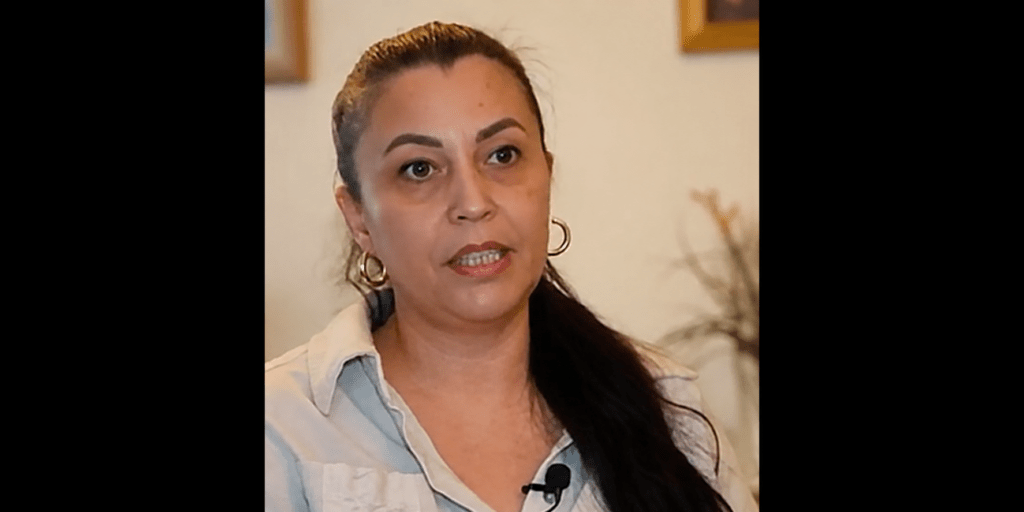
Turkmen Rights Activist Diana Dadasheva Receives French Humanitarian Visa

Turkmen human rights activist Diana Dadasheva, founder of the civil rights platform Dayanch, has received a French humanitarian visa and relocated to Paris, a move that could allow her to seek political asylum. Dadasheva’s arrival in France follows years of activism focused on human rights issues in Turkmenistan and concerns among rights groups about her personal safety while she was living in Turkey. Although she had resided legally in Turkey for several years, activists feared she could face deportation to Turkmenistan. According to rights advocates, Dadasheva received repeated threats linked to her public activities. Her human rights work began after she personally experienced restrictions imposed by the Turkmen authorities. Dadasheva has said she was barred from leaving Turkmenistan for six years without explanation, an experience that later motivated her advocacy on behalf of migrant workers and women, as well as her engagement with international organizations. One issue she has frequently highlighted is the practice of travel bans imposed on Turkmen citizens, which rights groups have long criticized as arbitrary and lacking transparency. Concerns about Dadasheva’s safety were heightened by the experiences of other Turkmen opposition figures and activists living in Turkey. In 2023, Turkish authorities reportedly deported several Turkmen activists, including Farhad Meymankuliyev, Rovshen Klychev, and Serdar Durdylyev, according to rights advocates. Others, including Merdan Muhammedov, Alisher Sakhatov, and Abdulla Oruzov, were reportedly forcibly returned to Turkmenistan or faced a serious risk of deportation. Another prominent activist, Dursoltan Taganova, left Turkey after years of alleged harassment and detention and later received asylum in Canada. Dadasheva’s relocation to France was reportedly facilitated in part by the opposition movement Democratic Choice of Turkmenistan. Dadasheva has said she intends to continue her human rights work from France, including advocacy for the Turkmen community abroad.
Turkmenistan Denies Early Release to Activist Mansur Mingelov Despite Serious Illness

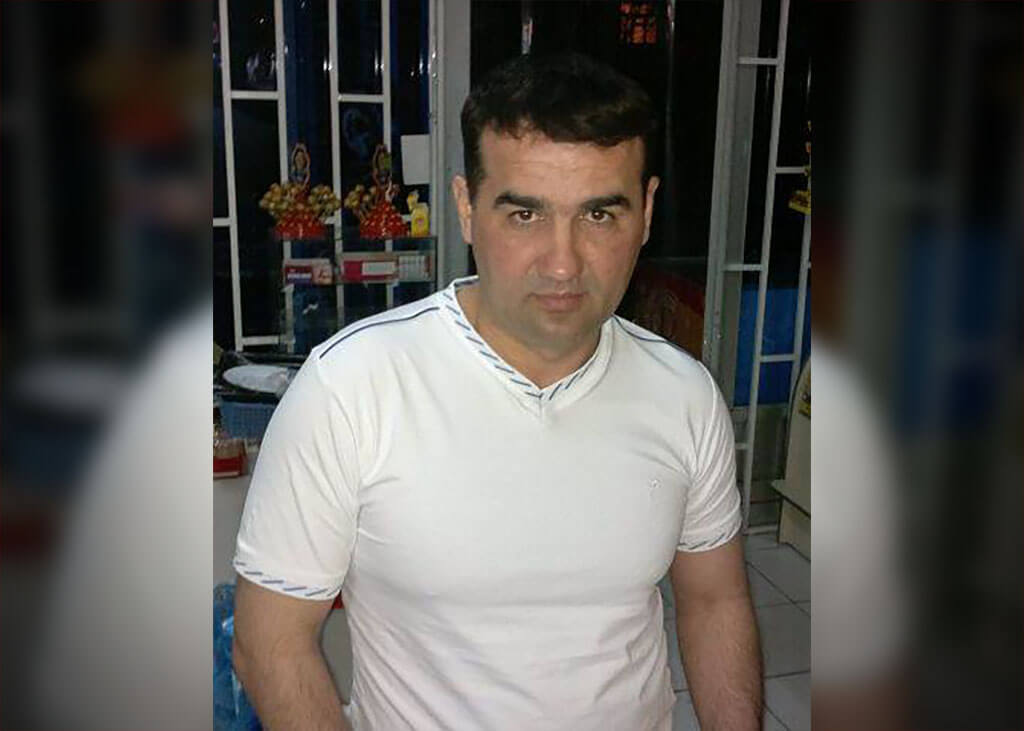
Turkmenistan’s Ministry of Internal Affairs has rejected a request to initiate early release procedures for imprisoned human rights activist Mansur Mingelov, despite his confirmed serious medical diagnosis and the legal provisions that would permit such action. According to an official response dated October 20, the Department for the Enforcement of Sentences under the Ministry of Internal Affairs concluded there were “no grounds” for early release. The response followed appeals by Mingelov’s family to the Prosecutor General’s Office and the Ministry of Internal Affairs, citing his deteriorating health and referencing multiple legal articles supporting their request. Mingelov, who has been imprisoned since 2012, was convicted after defending his own rights and those of the Baloch minority in Turkmenistan. His family cited Article 76 of the Criminal Code (“Release from punishment due to serious illness”) and Article 166 of the Criminal Enforcement Code (“Grounds for release from serving a sentence”), as well as Presidential Decree No. 202 of May 11, 2017, which outlines the medical criteria for such releases. In mid-2024, a commission from the Ministry of Health officially diagnosed Mingelov with tuberculous arthritis in both knees, a condition that, according to doctors, cannot be treated inside Turkmenistan. He is currently being held at the MR-B/15 prison hospital. Notably, Vepa Hajiyev, Turkmenistan’s permanent representative to the United Nations, publicly acknowledged Mingelov’s diagnosis and affirmed that national legislation provides for the release of prisoners with serious illnesses upon court approval. Under existing law, a court can only consider such cases after receiving a joint submission from the prison monitoring commission and the sentencing authority - a process Mingelov’s family attempted to initiate but which authorities declined to advance. Despite the official diagnosis and detailed legal framework, no follow-up medical examination or formal review of Mingelov’s health condition has been conducted, according to the independent outlet, turkmen.news. Mingelov's relatives argue that the Ministry’s refusal is not based on medical or legal grounds, but rather political calculation. They note that Mingelov has served more than half of his sentence, one they consider to be politically motivated and unlawful, and that his condition meets all criteria for early release. In their view, the key decision lies with Turkmen President Serdar Berdimuhamedov. Human rights organizations and family members suggest that releasing Mingelov, along with other political prisoners, could help improve Turkmenistan’s international standing by showing a willingness to respect its own laws and humanitarian obligations. For now, the contradiction remains stark: the illness is acknowledged, the law is in place, and the legal procedure is defined, yet no action has been taken.

UN Special Rapporteur Urges Turkmenistan to Release Activist Murat Dushemov

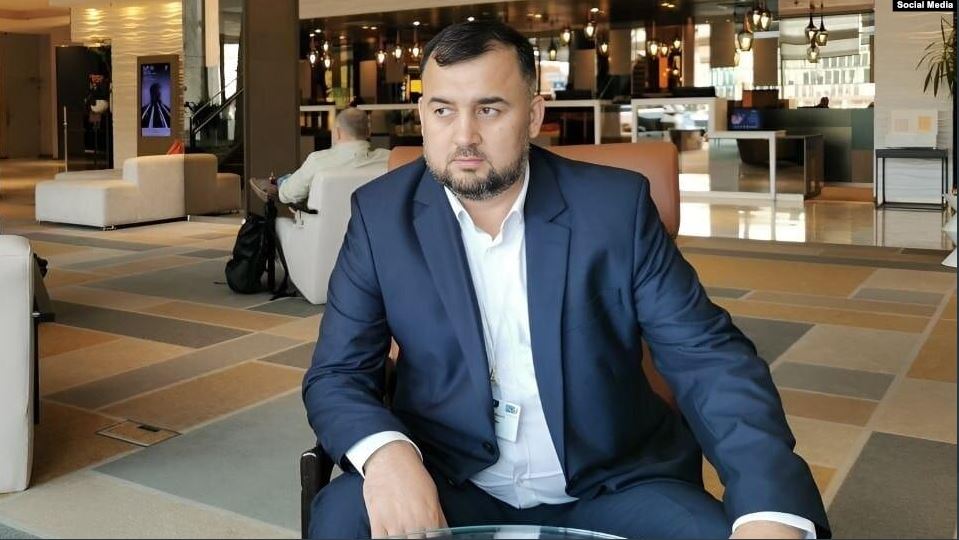
Mary Lawlor, the United Nations Special Rapporteur on the situation of human rights defenders, has called for the immediate release of Turkmen civil activist Murat Dushemov, who was recently re-imprisoned under disputed circumstances. Lawlor stated that the new charges against Dushemov are fabricated and appear to be retaliation for his peaceful activism and exercise of free expression. “I will closely monitor the trial of civil activist Murat Dushemov, who has been in prison since 2021 and is now facing new criminal charges in apparent retaliation for his peaceful activism and for exercising his freedom of expression in Turkmenistan. I call for his immediate release,” Lawlor posted on X. Her call was echoed by the Regional Office for Central Asia of the UN High Commissioner for Human Rights, which reaffirmed support for Dushemov’s release. Renewed Persecution As previously reported by The Times of Central Asia, Dushemov was originally scheduled for release on June 14, after serving a four-year sentence. However, just days before his expected release, he was transferred to a pre-trial detention facility in Turkmenabat. Authorities have accused him of participating in a prison altercation, an allegation he claims is entirely fabricated. "The person who wrote the statement against me started banging his head against the wall, injuring himself and staining the wall with his blood. They want to slander me again to prolong my stay here," Dushemov reportedly said. Despite assurances from Prosecutor Agajan Nuryev that a hearing would take place in mid-July, no trial date has been announced. Details remain withheld even from Dushemov’s family, in clear violation of Turkmenistan’s judicial transparency laws. Background and First Conviction Dushemov was first detained in 2021. He was convicted of extortion and causing bodily harm and sentenced to four years in prison. Human rights groups say the trial was politically motivated, noting that Dushemov had openly criticized the government’s pandemic response, including mandatory mask policies and vaccination campaigns, which he considered unlawful. The initial charges centered on two incidents: an alleged extortion attempt involving a chief doctor, and accusations of assault made by fellow inmates, claims that mirrored the current allegations against him. Widening International Support Several human rights organizations have joined the campaign to secure Dushemov’s release. These include the Norwegian Helsinki Committee, Turkmen.News, the Turkmen Human Rights Initiative, the International Partnership for Human Rights, and the Association for Human Rights in Central Asia. “The authorities must drop the new criminal charges brought against civil activist Murat Dushemov as clear retaliation for his activities and release him immediately,” the organizations said in a joint statement. They also urged Turkmenistan’s international partners to pressure Ashgabat to cease persecution of activists, journalists, and dissenters. Human Rights Watch has also issued a statement supporting Dushemov, calling for his “immediate and unconditional” release and demanding an end to abuses prolonging his detention. Lawlor has previously highlighted rights violations in Turkmenistan. In April, she called for an investigation into the alleged poisoning of independent journalist Soltan Achilova. She is also monitoring the case of Baloch...

International Human Rights Defenders Demand Release of Turkmen Activist

Turkmen civil activist Murat Dushemov, who has completed a four-year prison sentence, was not released on June 14 as expected. Instead, he was transferred to a pre-trial detention facility in Turkmenabat just days before his anticipated release. Sentence Served, Yet No Freedom According to Turkmen.News, new criminal charges were filed against Dushemov following an alleged altercation with another inmate, an incident human rights defenders claim was fabricated. Dushemov asserts he was framed in a deliberate provocation: "The person who filed the complaint started hitting the wall, injuring himself, and smearing the wall with blood. They want to slander me again to prolong my stay here," he said. Human rights advocates argue the authorities are using these new accusations as a tactic to extend Dushemov's imprisonment. Retaliation for Criticism Dushemov was arrested in 2021 and sentenced to four years on charges of extortion and bodily harm. International watchdogs have consistently stated that the charges were politically motivated. Prior to his arrest, Dushemov had openly criticized the Turkmen government's COVID-19 policies, questioning the legal basis for mask mandates and mandatory vaccination, which he refused to comply with. One allegation involved the chief doctor of a medical facility, whom Dushemov allegedly blackmailed by threatening to release a compromising video. Another accusation stemmed from a supposed provocation in prison, where two inmates, allegedly encouraged by authorities, fought each other and later claimed Dushemov had assaulted them. Global Advocacy Five human rights groups, including the Norwegian Helsinki Committee, Turkmen.News, the Turkmen Human Rights Initiative, the International Partnership for Human Rights, and the Association for Human Rights in Central Asia, have issued a joint statement calling for Dushemov’s immediate release. They condemned the new charges as retaliation for his civic activism: “The authorities must drop the new criminal charges brought against civil society activist Murat Dushemov as clear retaliation for his activities and release him immediately,” they stated. The groups also urged Turkmenistan’s international partners to exert diplomatic pressure on Ashgabat to halt its persecution of activists and journalists. Human Rights Watch echoed this call, stating on June 25 that the Turkmen authorities must “immediately and unconditionally release activist Murat Dushemov and end all abuses aimed at prolonging his detention.” The case of Murat Dushemov illustrates the ongoing suppression of dissent in Turkmenistan. Despite growing international criticism, the government continues to use the criminal justice system as a tool to silence civil society.

Feminists in Kazakhstan Under Pressure Ahead of International Women’s Day

On March 8, the world marks the annual International Women’s Day, and in Kazakhstan’s commercial capital, Almaty, the authorities are again working to prevent public gatherings sponsored by feminist or LGBT groups. Since early February, several members of the feminist group, Feminita, have been detained in Almaty. Preemptive Measures Late March 3, an Almaty court sentenced Aktorgyn Akkenzhebalasy of the feminist group Feminita to ten days in jail after finding her guilty of violating the law on organization of peaceful assemblies. The charge dated back to May 2024, when six members of Feminita held an unsanctioned march in downtown Almaty, demanding a life sentence for former Minister of National Economy Kuandyk Bishimbayev. Bishimbayev beat his wife to death in a private room in an Almaty restaurant in November 2023. His trial from March to May 2024 was broadcast over television and widely watched by the public in Kazakhstan. Akkenzhebalasy was not the only Feminita activist to be jailed for participating in the May 2024 march. On February 28, Feminita co-founder Zhanar Sekerbayeva was jailed for ten days, meaning she would not be freed from jail until March 10, two days after International Women’s Day. Sekerbayeva and another Feminita co-founder, Gulzada Serzhan, were detained on February 13 after Bagila Baltabayeva, the leader of a group called Kazakhstan’s Union of Parents, and several other women burst into a Feminita meeting. Baltabayeva is also the author of a widely circulated petition against LGBT propaganda. Feminita activists said Baltabayeva called the police and complained that participants in the meeting were corrupting minors and had no permission to conduct their meeting. Kazakh independent media outlet Vlast cited witnesses as saying Baltabayeva also struck Akkenzhebalasy. All 25 of the Feminita members at the meeting were detained but quickly released except Sekerbayeva and Serzhan, who were kept at the police station for several hours and eventually charged with conducting public activities of an unregistered social organization. Baltabayeva and those who accompanied her to disrupt the meeting were not detained. On February 14, Feminita tried to have another meeting, but a group of women from the charity fund Rahym interrupted, calling the Feminita activists “foreign agents” and demanding they “get out!“ Again, police questioned the Feminita activists but not the Rahym members who burst into the meeting. On February 19, an Almaty court found Sekerbayeva and Serzhan guilty of holding a meeting of an unregistered organization and were each fined 393,000 tenge (about $1,500). The Kazakhstan International Bureau for Human Rights and Rule of Law released a statement noting Feminita had tried repeatedly to register with authorities but was always rejected. The statement also mentioned that Feminita activists had been attacked during meetings in other cities in Kazakhstan and that “All this happened with complete inaction or direct connivance of the police against the aggressors.” Women’s Day vs Women’s Rights There are no reports indicating that the authorities in Almaty, or officials in any other city in Kazakhstan, have approved any requests from feminist groups to conduct public...

Activist in Exile: Tajikistan Pressures Family Over Political Dissent

Mahmadsobir Abdukakhor, an activist associated with the banned Group 24 in Tajikistan, has accused law enforcement agencies in the Rasht District of pressuring his family. According to Abdukahkhor, authorities are demanding that his relatives persuade him to renounce his political activities and return to Tajikistan. “They came to my parents and brother, demanding that they convince me to return and ask for forgiveness from the authorities. But my parents are not responsible for my actions,” Abdukahkhor told Radio Ozodi on December 16. Abdukahkhor stated that such tactics are not new but reaffirmed that he would not stop his political activities or “repent,” as he does not trust the authorities’ assurances. “If I go back, I will either be killed like Umarali Kuwwatov or arrested like Sukhrob Zafar,” he said, referring to other opposition figures. Attempts by Radio Ozodi to obtain comments from Rasht District law enforcement agencies were unsuccessful. Tajik authorities have placed Mahmadsobir Abdukahkhor and other members of Group 24 — a political movement recognized as an extremist organization and banned in the country — on a wanted list. Abdukahkhor initially moved to Russia in 2012, where he ran a business and became involved in the movement before relocating to Europe. In 2014, Tajikistan amended its Criminal Code, allowing individuals accused of extremism to be exonerated if they return and “sincerely repent.” President Emomali Rahmon instructed law enforcement agencies to facilitate the return of such citizens. However, human rights activists claim that despite promises of amnesty, some returnees — including former members of ISIS and the Islamic Renaissance Party of Tajikistan (IRP) — were subsequently arrested and imprisoned.
