• KGS/USD = 0.01144 0%
  • KZT/USD = 0.00215 0%
  • TJS/USD = 0.10599 -0.28%
  • UZS/USD = 0.00008 0%
  • TMT/USD = 0.28571 0%
  • KGS/USD = 0.01144 0%
  • KZT/USD = 0.00215 0%
  • TJS/USD = 0.10599 -0.28%
  • UZS/USD = 0.00008 0%
  • TMT/USD = 0.28571 0%
  • KGS/USD = 0.01144 0%
  • KZT/USD = 0.00215 0%
  • TJS/USD = 0.10599 -0.28%
  • UZS/USD = 0.00008 0%
  • TMT/USD = 0.28571 0%
  • KGS/USD = 0.01144 0%
  • KZT/USD = 0.00215 0%
  • TJS/USD = 0.10599 -0.28%
  • UZS/USD = 0.00008 0%
  • TMT/USD = 0.28571 0%
  • KGS/USD = 0.01144 0%
  • KZT/USD = 0.00215 0%
  • TJS/USD = 0.10599 -0.28%
  • UZS/USD = 0.00008 0%
  • TMT/USD = 0.28571 0%
  • KGS/USD = 0.01144 0%
  • KZT/USD = 0.00215 0%
  • TJS/USD = 0.10599 -0.28%
  • UZS/USD = 0.00008 0%
  • TMT/USD = 0.28571 0%
  • KGS/USD = 0.01144 0%
  • KZT/USD = 0.00215 0%
  • TJS/USD = 0.10599 -0.28%
  • UZS/USD = 0.00008 0%
  • TMT/USD = 0.28571 0%
  • KGS/USD = 0.01144 0%
  • KZT/USD = 0.00215 0%
  • TJS/USD = 0.10599 -0.28%
  • UZS/USD = 0.00008 0%
  • TMT/USD = 0.28571 0%

Viewing results 1 - 6 of 53

Kazakhstan Plans to Boost Agricultural Exports to Serbia

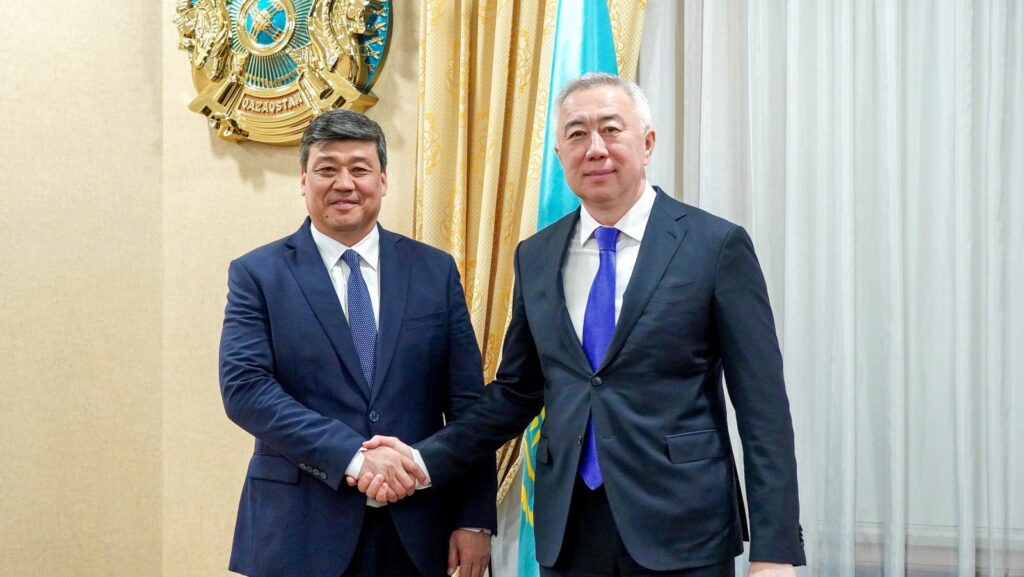
Kazakhstan plans to expand agricultural exports to Serbia, as discussed at the fourth meeting of the Kazakh-Serbian Intergovernmental Commission (IGC) held in Almaty late last week. Co-chair of the IGC, Deputy Prime Minister and Minister of National Economy Serik Zhumangarin, said agriculture is one of the most promising areas of bilateral cooperation, along with healthcare, tourism, science, biotechnology, education, and culture. In the first half of 2025, trade in agricultural products between the two countries rose 1.5 times, reaching $4 million. Kazakhstan aims to increase supplies of grains and legumes, vegetable oils, fish, meat, and dairy products. Deputy Minister of Agriculture Yermek Kenzhehanuly noted that the European Commission has approved requirements for the export of Kazakh fish products to EU countries, with 20 enterprises now authorized to supply pike perch fillets and other fish. In February, Kazakhstan also received permission to export honey to the European Union, and four major producers are ready to begin shipments. Work is ongoing to open access to the EU market for aquaculture products and horse meat. Kazakhstan has proposed joint investment projects in the processing of livestock and crop products. Scientific cooperation was also identified as a promising area, including training specialists in breeding and seed production, conducting field trials of grain, oilseed, and vegetable crops across various regions, plant hybridization, and producing biopesticides. According to the Ministry of Agriculture, food production in Kazakhstan has grown 1.4 times over the past three years, from KZT 2.3 trillion ($4.2 billion) in 2021 to KZT 3.3 trillion ($6.1 billion) in 2024. In the first half of 2025, gross agricultural output totaled KZT 1.8 trillion ($3.3 billion), 3.7% higher than the same period last year. Food production rose by 10%, while beverage production increased by 5%. Exports of agricultural products grew 1.3 times, from $3.8 billion to $5.1 billion. Investments in fixed assets in agriculture increased 1.2 times to KZT 919 billion ($1.7 billion), while investments in food production rose from KZT 118.3 billion to KZT 180.3 billion (from $220 million to $333 million). Labor productivity in the sector reached KZT 5 million ($9,200) per employee, up from KZT 3.4 million ($6,300) in 2021. State support has led to a doubling of fertilizer use from 626,000 tons to 1.3 million tons, an increase in the renewal rate of agricultural machinery from 4.3% to 5.5%, a 1.38-fold rise in the yield of grain and legumes from 11.0 to 15.2 cwt/ha, a 1.82-fold increase in land cultivated with water-saving technologies to 470,100 hectares, a 10% rise in cattle numbers to 4.3 million head, and a 17.3% increase in small ruminants to 11.6 million head. As previously reported by The Times of Central Asia, in January, Minister of Agriculture Aidarbek Saparov met with Russian Agriculture Minister Oksana Lut in Moscow to discuss lifting restrictions on the import and transit of agricultural products and boosting Kazakh food exports to Russia.

Kazakhstan Grain Exports Surge to Iran, Azerbaijan, and Central Asia

Kazakhstan exported 12.4 million tons of grain and flour between September 2024 and July 2025, marking a 34% increase from the same period in 2023-2024, when exports totaled 9.3 million tons, according to the Ministry of Agriculture. Kazakhstan recorded substantial export growth to key regional markets. Shipments to Uzbekistan rose by 28.2%, from 3.384 million to 4.338 million tons, while exports to Tajikistan grew by 39.2%, reaching 1.446 million tons. Deliveries to Kyrgyzstan more than doubled, increasing 2.5 times from 156,000 to 398,000 tons. Exports to Iran surged nearly 17-fold, jumping from 56,000 to 974,000 tons, and shipments to Azerbaijan skyrocketed 120-fold, from just 6,000 to 723,000 tons. A major milestone of the 2024-2025 export season was the diversification of export destinations. For the first time, Kazakh grain reached Belgium, Poland, Portugal, Norway, and the United Kingdom. Additionally, Kazakhstan exported approximately 60,000 tons of wheat to Morocco and 15,000 tons to Vietnam. Grain exports to Azerbaijan, Georgia, and Turkey resumed after a five-year hiatus, and shipments of durum wheat to Italy saw significant growth. The increased volumes highlight the growing competitiveness of Kazakh grain on the international market and reinforce Kazakhstan’s standing as one of the world’s leading grain exporters.

Kyrgyzstan Begins Dried Apricot Exports to China

Kyrgyzstan has launched exports of dried apricots to China, with the first 23-ton shipment dispatched on July 29. The delivery comes after Chinese authorities approved Kyrgyz dried apricots for import, following Kyrgyzstan’s successful compliance with Beijing’s sanitary and quarantine standards. According to the Kyrgyz Ministry of Water Resources, Agriculture and Processing Industry, this marks a significant step in expanding agricultural exports to China and sets the stage for broader trade in fruit and vegetable products. The milestone follows the July 11 signing of a bilateral agreement to construct a food safety and quarantine laboratory in Bishkek. The facility will test agricultural goods destined for China to ensure they meet the country’s stringent import regulations. Deputy Prime Minister Bakyt Torobayev noted that Kyrgyz-Chinese trade grew by 44.7% in 2024, reaching $5.3 billion. Exports from Kyrgyzstan to China surged to $2.04 billion, representing a 93-fold increase compared to 2023. Agriculture has emerged as a key area of bilateral cooperation. In 2024, trade in agricultural products between the two nations totaled $153.3 million, up by $33 million from the previous year. Kyrgyz authorities are now seeking to expand the list of approved exports. Negotiations are underway to finalize four additional protocols with China, covering dried fruits, cattle hides, meat, and animal feed. These efforts aim to diversify Kyrgyzstan’s agricultural exports and enhance its position in the Chinese market. Officials see China’s rising demand for agricultural imports as a major opportunity for Kyrgyz farmers and exporters, particularly as the country continues to invest in infrastructure and quality assurance systems to support trade growth.

Kazakhstan and Kyrgyzstan Seek to Increase Agricultural Trade

Kazakhstan and Kyrgyzstan have agreed to establish a "green-light corridor" for the export of Kyrgyz agricultural products to Kazakhstan, as well as for the supply of early spring fruits and vegetables from Kyrgyzstan.  The agreement was discussed during an April 25 meeting in Astana between Kyrgyzstan’s Deputy Chairman of the Cabinet of Ministers and Minister of Water Resources, Agriculture and Processing Industry, Bakyt Torobayev, and Kazakhstan’s Deputy Prime Minister and Minister of National Economy, Serik Zhumangarin. Kazakh and Kyrgyz officials agreed to jointly determine the list and volumes of agricultural products required by Kazakhstan. Zhumangarin and Torobayev also discussed introducing tariff discounts on rail transportation for Kyrgyz food and agricultural products intended for export and transit through Kazakhstan. The officials noted the steady growth of Kazakh-Kyrgyz trade, which reached $1.7 billion last year. Zhumangarin proposed expanding the range of Kazakh goods exported to Kyrgyzstan.  "We are ready to increase the export of Kazakhstani products across 195 commodity items by more than $260 million," Zhumangarin stated. He also suggested increasing the export of Kazakh grain and oilseeds to Kyrgyzstan.

Kazakhstan to Establish Healthy Seed Center to Boost Crop Yields

Kazakhstan’s Ministry of Agriculture has announced plans to establish a Healthy Seed Center aimed at reducing plant diseases and increasing crop productivity. The center will be created in 2026 at the Zhiembaev Kazakh Research Institute of Plant Protection and Quarantine and will be equipped with state-of-the-art technology and staffed by highly qualified specialists. Its primary goal is to combat pathogens that threaten crop yields and environmental safety. The new center will collaborate with seed farms across Kazakhstan, analyzing seed samples from various crops. A key objective of the project is to increase the share of domestically produced seeds to 80% by 2030. Experts emphasize that improving seed quality is crucial in preventing plant diseases, as up to 70% of crop infections are transmitted through seeds. The center is expected to boost crop yields by at least 40%. As Central Asia’s leading agricultural producer and exporter, Kazakhstan plays a key role in the regional supply of grain, wheat, and oilseeds. In 2025, the country plans to cultivate 23.8 million hectares, an increase of 518,000 hectares compared to 2024, reflecting ongoing efforts to expand agricultural production.

Kyrgyzstan Aims to Develop Organic Agriculture

As Kyrgyzstan seeks to expand the production and export of environmentally friendly organic agricultural products, the country’s Ministry of Water Resources, Agriculture, and Processing Industry has drafted a Program for the Development of Organic Production in the Kyrgyz Republic for 2025-2029. The document has been submitted for public discussion. The program aims to create favorable legal, economic, and social conditions for organic producers through state support. Kyrgyzstan has natural advantages for developing organic agriculture, including a clean ecosystem, ecologically unpolluted soils and water in mountainous and foothill regions, traditional farming methods with minimal agrochemical use, rich biodiversity, and strong export potential. According to the ministry, Kyrgyzstan currently has 63,000 hectares of certified organic farmland, accounting for 5.25% of the country’s total arable land. By 2029, this area is expected to triple to 200,000 hectares. The program also seeks to increase organic production to 25% of total agricultural output and raise the share of organic exports to 25% of total agricultural exports. To achieve these goals, the program proposes several key measures: Pilot Project: Transition the Issyk-Kul and Naryn regions to fully organic farming methods. Public Awareness Campaign: Conduct a large-scale information campaign on the benefits of organic production. Infrastructure Development: Improve processing and logistics for organic exports. Certification Standards: Establish laboratories for organic product certification. Research and Innovation: Conduct scientific research and introduce advanced organic farming technologies. If successfully implemented, the initiative could strengthen Kyrgyzstan’s position as a leading producer of organic agricultural products in the region.