• KZT/USD = 0.00213
  • TJS/USD = 0.10810
  • UZS/USD = 0.00008
  • TMT/USD = 0.29850
  • KZT/USD = 0.00213
  • TJS/USD = 0.10810
  • UZS/USD = 0.00008
  • TMT/USD = 0.29850
  • KZT/USD = 0.00213
  • TJS/USD = 0.10810
  • UZS/USD = 0.00008
  • TMT/USD = 0.29850
  • KZT/USD = 0.00213
  • TJS/USD = 0.10810
  • UZS/USD = 0.00008
  • TMT/USD = 0.29850
  • KZT/USD = 0.00213
  • TJS/USD = 0.10810
  • UZS/USD = 0.00008
  • TMT/USD = 0.29850
  • KZT/USD = 0.00213
  • TJS/USD = 0.10810
  • UZS/USD = 0.00008
  • TMT/USD = 0.29850
  • KZT/USD = 0.00213
  • TJS/USD = 0.10810
  • UZS/USD = 0.00008
  • TMT/USD = 0.29850
  • KZT/USD = 0.00213
  • TJS/USD = 0.10810
  • UZS/USD = 0.00008
  • TMT/USD = 0.29850
07 August 2026

Viewing results 1 - 6 of 48

Bishkek Authorities Ban Low-Quality Coal to Curb Air Pollution

On October 6, the Kyrgyz government banned the use of powder-like coal with particle sizes between 0-13 mm in Bishkek and the surrounding Chui region as part of a broader effort to combat air pollution and improve public health. According to the Ministry of Natural Resources, Ecology, and Technical Supervision, this fine-grade coal is inefficient for household heating and generates significant dust, contributing to particulate air pollution. The new regulation applies only to private households and does not affect heating plants or boiler facilities. As part of its wider decarbonization strategy, the Ministry of Finance has partnered with domestic banks to launch the Improving Air Quality project. This initiative supports the transition to modern, environmentally friendly heating systems and promotes cleaner household energy use. Funded through a $50 million loan from the International Development Association, the project will distribute $31.8 million in preferential loans via Aiyl Bank, Eldik Bank, and Bakai Bank. The program aims to reduce household coal consumption, promote energy-efficient heating, and expand access to cleaner technologies across the capital and beyond. Officials believe the project will help accelerate the adoption of eco-friendly heating solutions and improve urban air quality in Bishkek, a city of more than one million residents. Air pollution remains a chronic problem, particularly during winter months, when coal burning in households surges and accounts for an estimated 40% of the city's harmful emissions. Bishkek frequently ranks among the top 10 most polluted cities worldwide, according to IQAir’s global index.
Korean Firm to Reduce Emissions from Bishkek Heating Plant

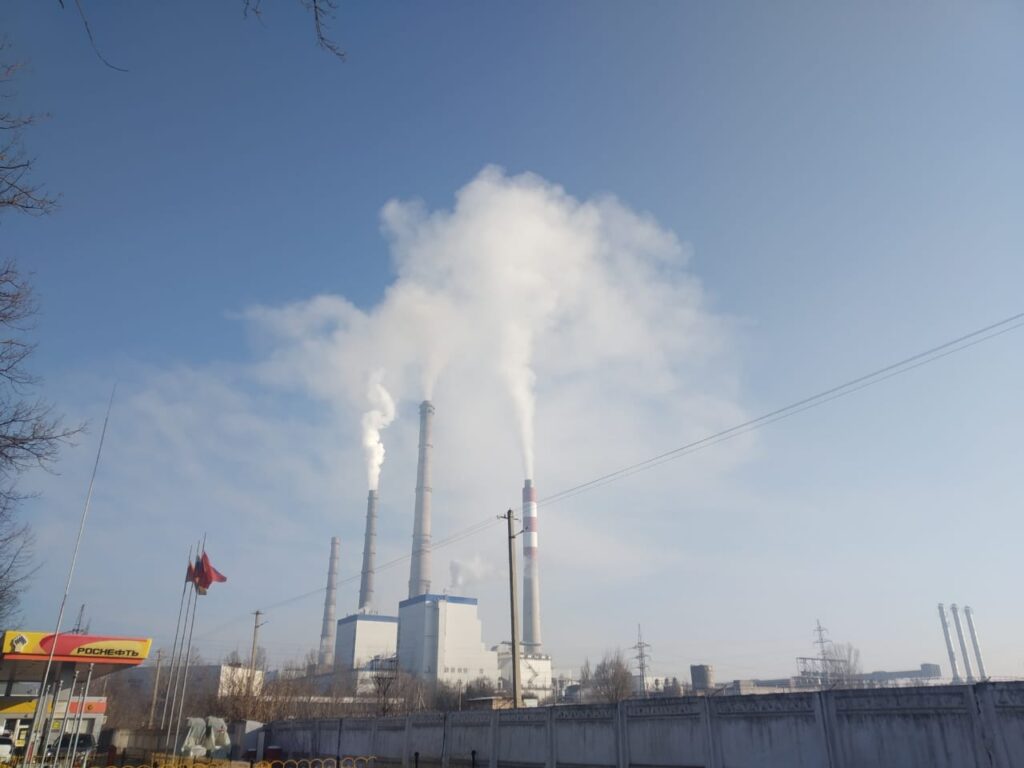
On September 24, the Bishkek city administration and South Korea’s EcoMotion signed a memorandum of understanding aimed at cutting air pollution in the Kyrgyz capital. The agreement focuses on the introduction of advanced High Voltage Power Supply (HVPS) air purification technologies at the Bishkek Thermal Power Plant (TPP). The initiative begins with a preliminary feasibility study for installing high-voltage electrostatic precipitators, devices that use a strong electrostatic field to capture particulate matter such as dust and smoke from gas emissions. The technology is designed to reduce harmful pollutants produced by the thermal plant, which relies primarily on coal to generate electricity and heat for the city. The project forms part of the Bishkek City Development Program, which prioritizes clean air and improved environmental conditions. As previously reported by The Times of Central Asia, emissions from the Bishkek TPP account for approximately 15% of the city’s air pollution. The Bishkek thermal plant generates 13% of Kyrgyzstan’s electricity, the majority of which is otherwise supplied by hydropower, and provides heat and hot water to nearly two-thirds of the capital’s population. Air quality remains a serious concern in Bishkek, a city of over one million residents. Pollution levels spike during winter months, when widespread coal burning for residential heating significantly increases emissions. Bishkek frequently ranks among the top 10 most polluted cities worldwide, according to IQAir’s global air quality index.

Survey Reveals 41% of Bishkek Residents Use Private Cars, Exacerbating Air Pollution

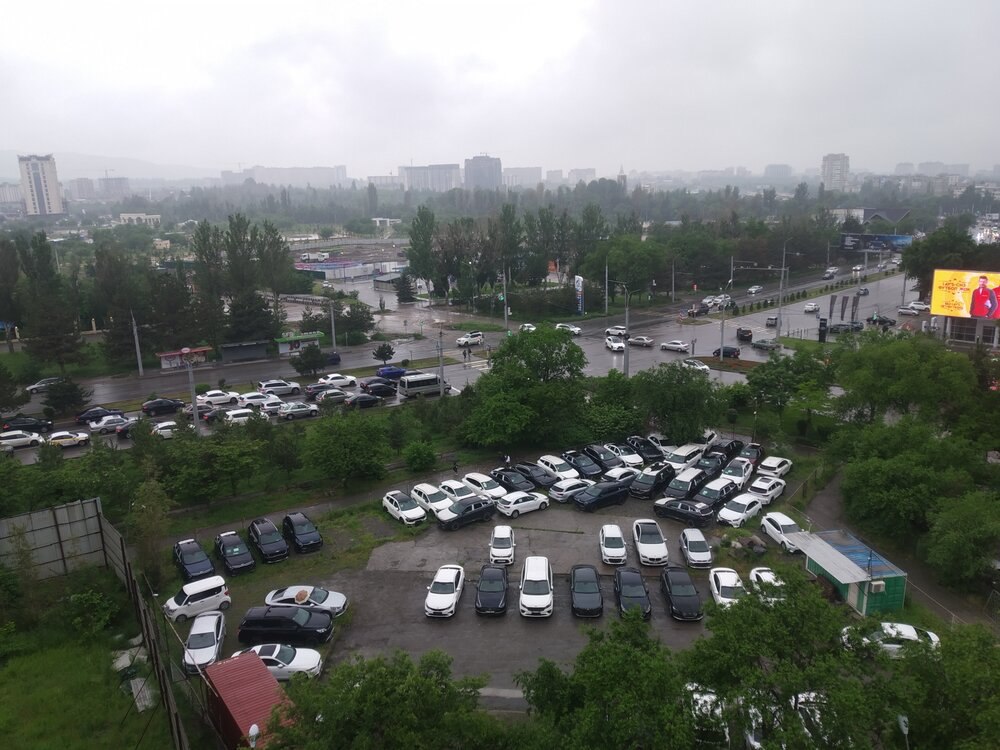
As part of preparations for a new urban development plan, Bishkek’s municipal authorities have conducted a comprehensive survey to understand how residents of the capital and its suburbs navigate the city. According to the results, 41% of respondents rely on private transportation, including personal vehicles and taxis, while 38% use municipal public transport, primarily buses. The remaining 21% get around on foot, by bicycle, or by scooter, including electric scooters. The most frequented destination for city residents is the downtown area, which accounts for the majority of work-related and other daily trips. The Bishkek City Administration stated that the survey data will be used to design a more efficient and balanced urban transportation system aimed at enhancing public transit services. Traffic congestion remains a critical issue in Bishkek, a city experiencing rapid population growth. According to the Ministry of Natural Resources, Ecology, and Technical Supervision, motor vehicles, particularly older models lacking catalytic converters, are responsible for approximately 30% of the city’s air pollution. Vehicle numbers in the capital have surged in recent years. Bishkek now hosts more than 700,000 vehicles, nearly double the road infrastructure’s intended capacity of 350,000. Over 300,000 of these vehicles are more than 15 years old, making them significant contributors to harmful emissions. In response, the city has taken steps to modernize its public transportation fleet. Recent initiatives include replacing diesel-powered buses with larger, more environmentally friendly models powered by liquefied petroleum gas (LPG).

South Korean Firm to Launch EV Charging Station Production in Kyrgyzstan

A new partnership between Kyrgyz and South Korean stakeholders aims to bring electric vehicle (EV) charging station manufacturing to Kyrgyzstan. The Public-Private Partnership Center under the National Investment Agency of Kyrgyzstan, OJSC Chakan HPP, and South Korea’s BLUE NETWORKS CO., LTD., a company specializing in EV charging infrastructure, have signed a memorandum of cooperation to jointly implement the project. The agreement, reached under a public-private partnership (PPP) framework, outlines plans to establish a local manufacturing facility and roll out a nationwide EV charging network in major cities and regions across the country. According to the PPP Center, the initiative is designed to support sustainable and environmentally friendly transport infrastructure, localize high-tech production, and create new employment opportunities. It also reflects Kyrgyzstan’s broader goals of modernizing its energy and transport sectors and strengthening international cooperation in green technologies. In a related move, Kyrgyzstan’s Ministry of Economy and Commerce signed a memorandum of understanding in June with South Korean firms EVSIS, NGS, and the Korea Automobile Environment Association. That agreement focuses on developing EV charging infrastructure in Bishkek. The broader partnership also includes plans to collaborate with the Kyrgyz State Technical University to offer technical training and internship programs. Emphasis will be placed on building local expertise through industry-academic cooperation, particularly in the operation and maintenance of EV charging networks. The aim is to support the employment of young professionals and foster sustainable growth in the green tech sector. These initiatives are aligned with the Kyrgyz government’s strategy to promote eco-friendly transport alternatives and reduce air pollution in Bishkek and other major urban centers.

Almaty Grapples with Year-Round Nitrogen Dioxide Crisis, Study Warns

A new study has revealed persistently dangerous levels of nitrogen dioxide (NO₂) pollution in Almaty, Kazakhstan’s largest city, with motor vehicles identified as the primary source. Conducted by the Almaty Air Initiative over 2023-2024, the research highlights aging vehicles, inadequate emissions oversight, and coal-based heating as key contributors to chronically high NO₂ levels throughout the year. With more than 600,000 vehicles on the roads daily, Almaty’s outdated and poorly regulated transport fleet is having a significant environmental impact. According to the Ministry of Internal Affairs, nearly one-third of the city’s vehicles are over 20 years old, many lacking catalytic converters that are standard in other countries. NO₂ Levels Far Exceed Global Health Standards Data from over 50 monitoring stations, installed as part of an Asian Development Bank-supported program, show that annual NO₂ concentrations in Almaty were 4.6 times higher than the World Health Organization’s recommended limits in 2023, and 4.2 times higher in 2024. Only 16 days in 2024 met the WHO’s daily NO₂ threshold of 25 µg/m³. On 143 days, concentrations exceeded 40 µg/m³, posing health risks to vulnerable groups such as children, the elderly, and people with respiratory issues. On seven days, levels surpassed 100 µg/m³, considered extremely hazardous for the general population. Kazhydromet, Kazakhstan’s national weather agency, documented over 11,000 violations of the country’s maximum permissible concentration (MPC) for NO₂ in 2024, an average of nearly 30 per day. Pollution Persists Across All Seasons Unlike particulate matter (PM2.5), which typically spikes during the heating season, NO₂ pollution remains elevated year-round. Peak monthly averages reached nearly 100 µg/m³ in January 2023 and 80 µg/m³ in December 2024. Even in summer, concentrations hovered around 30-35 µg/m³, well above WHO guidelines. In 2024, Almaty recorded 164 “clean” days based on PM2.5 levels (below the WHO’s 15 µg/m³ threshold), but just 16 days met the corresponding standard for NO₂, underscoring the pollutant’s persistent presence and underrecognized health risks. Additional Contributors: Coal and Industry Beyond traffic emissions, NO₂ levels are exacerbated by emissions from two coal-fired thermal power plants, as well as numerous private heating systems and small-scale boiler houses. The study also criticized Kazakhstan’s vehicle inspection system, which it says fails to identify or enforce emissions violations. Study Urges Comprehensive Action To tackle the NO₂ crisis, researchers recommend a suite of policy measures, including: Transitioning public transport to gas and electric power Phasing out coal-based heating in favor of gas Installing emissions filters at thermal power plants and residential heating units Establishing low-emission zones across Almaty Encouraging walking and cycling for short trips Strengthening vehicle inspection and emissions monitoring systems With NO₂ now considered one of the most serious and persistent air quality threats in Central Asia, Almaty’s situation serves as a stark warning for other rapidly urbanizing cities in the region.

Bishkek Launches “Living Wall” Project to Tackle Heat and Pollution

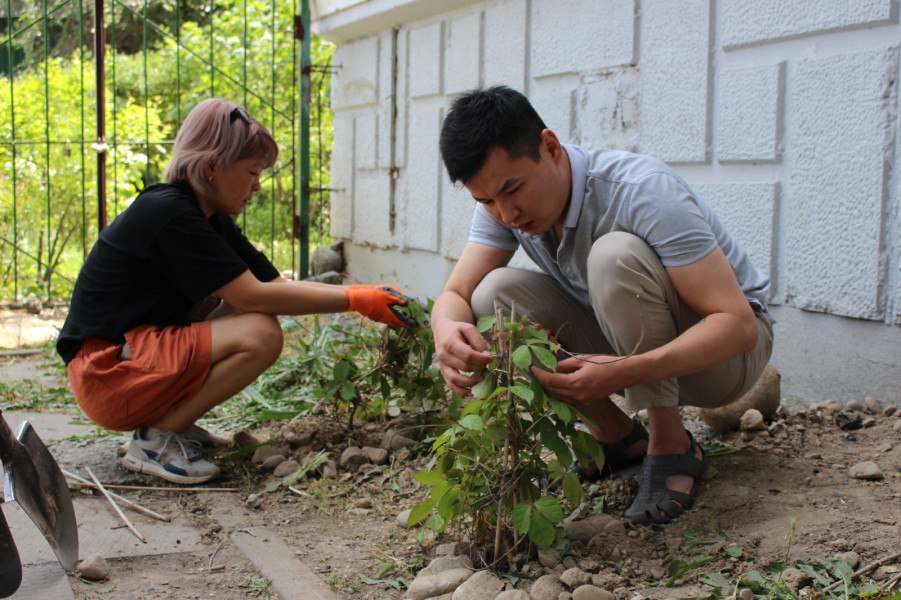
Bishkek has launched a pilot project to green the facades of buildings as part of a broader effort to adapt to climate change and mitigate growing heat and air pollution in Kyrgyzstan’s capital. In June, vertical greenery was installed on the facades of three schools and one apartment building under the “1000 Green Walls” program. The initiative is jointly implemented by the environmental organization MoveGreen and the Bishkek municipality, with support from the United Nations Environment Programme (UNEP) and the development agency Bread for the World. More Than Just Aesthetic Green facades, also known as living walls, offer both visual and environmental benefits. They reduce building surface temperatures, absorb carbon dioxide, release oxygen, and filter dust and pollutants from the air. These vertical gardens also improve sound insulation, protect buildings from temperature extremes, and support urban biodiversity, providing habitat for birds, insects, and butterflies. Two species were selected for the pilot phase: maiden grapes and ivy. Maiden grapes are fast-growing, frost- and drought-resistant vines that create dense green coverage. In addition to insulating buildings, they absorb dust and exhaust emissions, improving local air quality. Their vibrant red foliage in autumn also enhances the city’s visual appeal. Ivy, an evergreen perennial, retains its foliage year-round and provides consistent thermal and acoustic insulation. It is effective in trapping airborne pollutants and helps create a more temperate and pleasant microclimate around buildings. A Scalable Urban Solution The Bishkek municipality views this as a sustainable and scalable urban solution. “These green facades contribute to a more comfortable, ecological, and aesthetically pleasing urban environment,” officials said. The city plans to expand the 1000 Green Walls program to include more schools, kindergartens, and residential buildings in the coming months.