• KGS/USD = 0.01144 0%
  • KZT/USD = 0.00203 0%
  • TJS/USD = 0.10429 -0.38%
  • UZS/USD = 0.00008 0%
  • TMT/USD = 0.28490 0%
  • KGS/USD = 0.01144 0%
  • KZT/USD = 0.00203 0%
  • TJS/USD = 0.10429 -0.38%
  • UZS/USD = 0.00008 0%
  • TMT/USD = 0.28490 0%
  • KGS/USD = 0.01144 0%
  • KZT/USD = 0.00203 0%
  • TJS/USD = 0.10429 -0.38%
  • UZS/USD = 0.00008 0%
  • TMT/USD = 0.28490 0%
  • KGS/USD = 0.01144 0%
  • KZT/USD = 0.00203 0%
  • TJS/USD = 0.10429 -0.38%
  • UZS/USD = 0.00008 0%
  • TMT/USD = 0.28490 0%
  • KGS/USD = 0.01144 0%
  • KZT/USD = 0.00203 0%
  • TJS/USD = 0.10429 -0.38%
  • UZS/USD = 0.00008 0%
  • TMT/USD = 0.28490 0%
  • KGS/USD = 0.01144 0%
  • KZT/USD = 0.00203 0%
  • TJS/USD = 0.10429 -0.38%
  • UZS/USD = 0.00008 0%
  • TMT/USD = 0.28490 0%
  • KGS/USD = 0.01144 0%
  • KZT/USD = 0.00203 0%
  • TJS/USD = 0.10429 -0.38%
  • UZS/USD = 0.00008 0%
  • TMT/USD = 0.28490 0%
  • KGS/USD = 0.01144 0%
  • KZT/USD = 0.00203 0%
  • TJS/USD = 0.10429 -0.38%
  • UZS/USD = 0.00008 0%
  • TMT/USD = 0.28490 0%

Viewing results 1 - 6 of 34

Metro Expansion Key to Almaty Infrastructure Plans

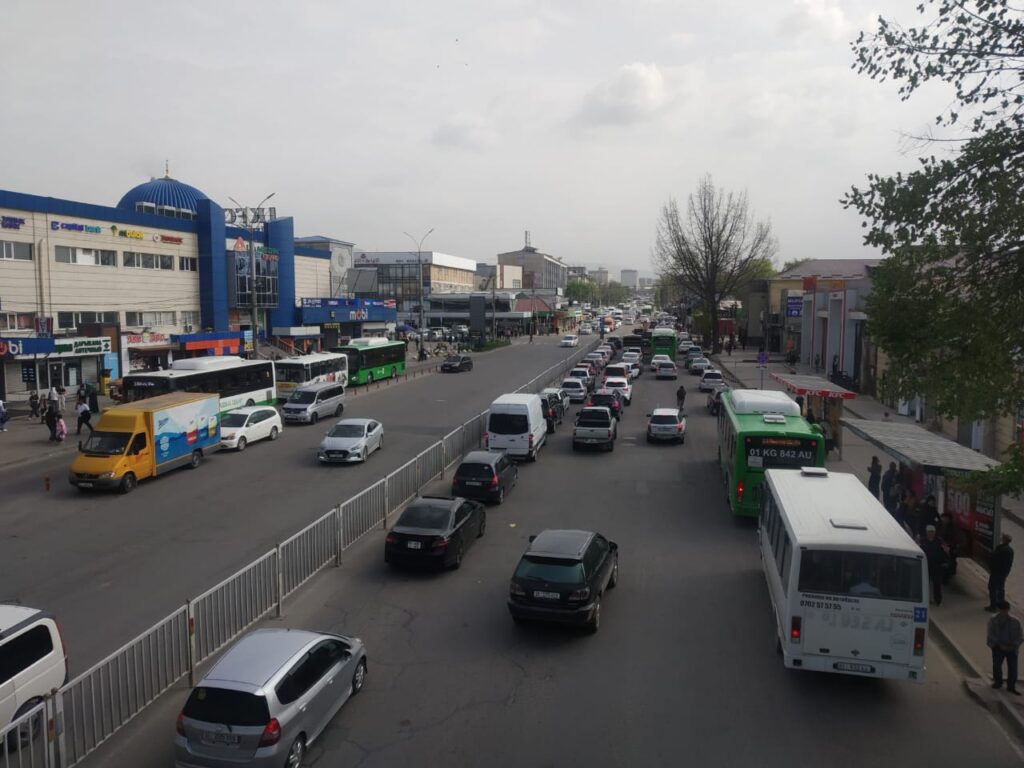
Next year, Almaty plans another incremental step in the development of its public transport infrastructure with the opening of a new station at Kalkaman. This should see the tentacles of the transport system shift towards the west of the city. In the future, there are also plans to extend the metro north to Alatau, where the government’s “smart city” is being developed. Investment in public transport is welcome, particularly with vocal complaints from residents about ever-increasing traffic problems and their contribution to the city’s winter smog. “The expansion of the metro is considered one of the key tools for improving the environmental situation in Almaty,” a spokesperson for the Almaty mayor’s office (or Akimat), told The Times of Central Asia. “Increasing the share of passenger transportation via the subway reduces the use of cars, decreases traffic congestion, lowers emissions, and contributes to improved air quality.” The ambitious new metro project is in addition to over 600 new buses expected to be added to the Almaty Bus fleet this year. But despite these schemes, the traffic problem shows little sign of abating. It begs the question: has the city got public transport priorities right? [caption id="attachment_39565" align="aligncenter" width="1600"] New-look trolleybuses and electro-buses can be seen as part of Almaty’s modern fleet; image: TCA, Joe Luc Barnes[/caption] The rise of the automobile “Traffic jams in Almaty began in the early 2000s, when the economic situation improved and people started buying cars,” Dauren Alimbekov, a high-profile blogger on Almaty transport, told The Times of Central Asia. He adds that the privatisation of other forms of public transport exacerbated this problem. The tram network was suspended in 2015 after two high-profile accidents, with the tracks being dismantled in 2017. Its disappearance coincided almost exactly with the arrival of ride-hailing services such as Yandex Go! in July 2016. By 2023, over 200,000 residents were moonlighting as Yandex Go! drivers to earn extra money. “In recent decades, the city has been planned with cars in mind, with major thoroughfares such as Al-Farabi almost totally lacking in convenient pedestrian crossings,” said Alimbekov. This influx of drivers has created problems. Private cars are a major contributor to air pollution in the city. On some days earlier this year, Almaty recorded the worst pollution in the world. [caption id="attachment_39564" align="aligncenter" width="1600"] A lack of dedicated bus lanes slows journey times and prevents more people from using public transport; image: TCA, Joe Luc Barnes[/caption] Public transport That is not to say that there is no public transport in the city. Indeed, the Almaty Metro is the only metro system in Central Asia to have opened since the collapse of communism. Trains began running in 2011, but they only travelled between an initial five stations. Two more opened in 2015, which saw a spike in passenger numbers. Today, there are eleven stations, although most of these remain along Abay Avenue, giving it little practical value to most residents. The metro system does not connect to either of the city’s main train...

Kyrgyzstan Confronts Transport-Driven Air Pollution

On October 21, Bishkek hosted the National Multi-Stakeholder Dialogue “Tackling Transport Air Pollution in Kyrgyzstan: Towards Clean Air in Cities All Year Round.” The event gathered representatives from government bodies, international organizations, environmental NGOs, academia, and civil society. Participants discussed coordinated actions and practical solutions to reduce air pollution and improve environmental conditions in Kyrgyz cities. Key proposals included transitioning to cleaner fuels, expanding public transport, improving energy efficiency, and implementing stricter emission standards. A systemic approach was emphasized, involving the promotion of electric vehicles, public environmental education, and robust air quality monitoring. Experts warned that transport-related pollution is a leading contributor to chronic diseases and premature death, particularly among vulnerable populations. Kyrgyz Minister of Natural Resources, Ecology and Technical Supervision, Meder Mashiev, highlighted that while previous efforts had focused on pollution during the heating season, new World Bank analysis shows that vehicle emissions significantly impact air quality year-round in Bishkek. According to the Ministry, vehicle emissions account for roughly 30% of air pollution in the capital. In 2024, 1,674,085 vehicles were registered in Kyrgyzstan, with 83% or 1,392,737, over 15 years old. In Bishkek, 426,946 vehicles were registered, including 333,801 older than 15 years, most of which do not meet modern environmental standards. The city administration reported that more than 750,000 vehicles operate on Bishkek’s roads daily, more than double the road network’s intended capacity of 350,000. This, combined with poor fuel quality and widespread reliance on private cars, has led to a systemic environmental challenge. Mashiev outlined several initiatives to address the issue. First, the city is transitioning to environmentally friendly public transport. Over 1,300 eco-friendly buses and 120 electric buses have been delivered to Bishkek. Each new bus replaces approximately four diesel buses, cutting diesel fuel consumption by around 100 tons per day. By the end of 2024, 3,535 electric vehicles were registered in the capital, and 44 charging stations had been installed. Second, modern air quality monitoring systems are being deployed to enable more accurate and responsive pollution tracking. Third, updates to the regulatory framework are being implemented to improve emission controls and compliance mechanisms. “We have already taken concrete steps to improve air quality in Bishkek, the use of low-quality coal has been banned, large-scale greening projects are underway, and an active transition to alternative energy sources is in progress,” said Mashiev. He concluded that similar measures would be introduced in other major cities across Kyrgyzstan, including Osh and Jalal-Abad.

Greening Campaign in Bishkek Targets Air Quality Improvement

A citywide greening campaign was launched in Bishkek on October 15, with plans to plant more than 10,000 tree and shrub saplings across the capital. The initiative is part of a broader effort to combat environmental degradation and improve air quality in one of Central Asia’s most polluted cities. According to the Bishkek City Administration, priority will be given to areas surrounding educational institutions. The plan includes the creation of green zones around every school in the city. The tree-planting campaign is designed to help reverse decades of urban deforestation, a consequence of rapid development that has significantly reduced Bishkek’s tree cover. Once regarded as one of the greenest cities in the former Soviet Union, Bishkek has lost much of its vegetation due to unchecked construction and infrastructure expansion. Environmental experts have urged city planners to prioritize the planting of tall, broadleaf deciduous trees, valued for their shade and noise-reducing qualities, over coniferous species, which currently dominate urban landscaping. The campaign aligns with Kyrgyzstan’s nationwide “Jashyl Muras” (“Green Heritage”) initiative, launched by President Sadyr Japarov in March 2022. The program aims to plant between five and six million saplings each year. In 2024, the Ministry of Natural Resources, Ecology and Technical Supervision reported that more than 8.1 million saplings were planted across the country. Additional Measures to Reduce Pollution On the same day, during a meeting of the Interdepartmental Commission for Improving Air Quality, Bishkek Mayor Aibek Junushaliev detailed other municipal efforts to reduce pollution. He noted that more than 1,500 diesel-powered minibuses have been removed from central city streets. The municipal transport fleet now consists of 1,449 environmentally friendly buses, 1,329 running on liquefied natural gas and 120 electric buses purchased in 2025. According to the Ministry of Natural Resources, Ecology and Technical Supervision, motor vehicle emissions contribute approximately 30% of Bishkek’s air pollution. Further efforts include the installation of a desulfurization system at the Bishkek Thermal Power Plant (TPP), which supplies heat and hot water to most of the capital. The plant’s emissions are estimated to account for around 15% of the city’s air pollution. The new system captures up to 96.6% of sulfur dioxide (SO₂) generated during coal combustion, marking a major step toward improving air quality in the city.

Asia’s Top Three Towns for Air Quality All in Kazakhstan, Finds New Study

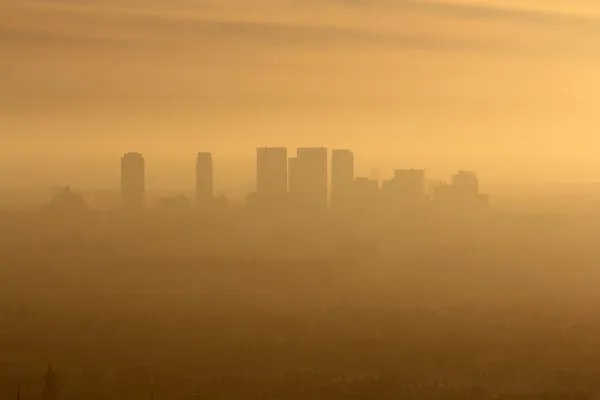
A new study into global air quality by the independent website HouseFresh has found that Kazakhstan is home to some of the world’s cleanest towns. The report also notes that one Kazakh city is also among the most polluted.  Using data from IQAir’s 2024 research, HouseFresh examined the average PM2.5 level – the number of small particles in the air – for over 8,800 towns with a population over 10,000. It found that the world’s most polluted town is Byrnihat in India, with a PM2.5 level of 128.2 particles per cubic meter (µg/m³). The cleanest air globally is in the Kazakh town of Shu. Shu, a rail freight hub in the country’s southeastern Zhambyl region, close to the border with Kyrgyzstan, had an average PM2 level of 1.5 µg/m³ in 2024.  Kazakhstan is in fact home to the three cleanest towns in Asia, with the next places after Shu being Zhezkazgan in the central Ulytau region (2.3 µg/m³), and the southwestern town of Beyneu, outside Mangystau (3.4 µg/m³).  Kazakhstan’s government has pledged that the country will become ‘climate neutral’ by 2060. It is aiming for its towns to follow the lead of cities such as New York and Beijing, which have more than halved their air pollution with measures such as cleaner public transport, modernized heating systems, and emissions regulation. However, Kazakhstan generally ranks highly in lists of the most polluted countries, due to its large-scale and outdated industrial infrastructure. Dust in the south of the country can also affect air quality. Due to this, the much larger central city of Karaganda, a center for Kazakhstan’s coal mining industry, remains one of the world’s most polluted cities. With average PM2.5 levels of 104.8 µg/m³ in 2024, the impact on the health of its half a million residents is equivalent to them smoking over 1,700 cigarettes per year.

South Korea to Support Air Quality Improvement in Kyrgyzstan

The Korea International Cooperation Agency (KOICA) has launched a major initiative to improve air quality in Kyrgyzstan, with a particular focus on the capital, Bishkek. On August 20, Bishkek hosted the signing ceremony for the Record of Discussions between KOICA and the Ministry of Natural Resources, Ecology, and Technical Supervision, marking the official start of the Air Quality Improvement Project in the Kyrgyz Republic. The event was attended by Kim Kwang-jae, Ambassador of the Republic of Korea to the Kyrgyz Republic; Meder Mashiev, Minister of Natural Resources, Ecology, and Technical Supervision; and Lim So Yeon, KOICA Country Director in Kyrgyzstan. According to KOICA, the project will run through 2028 with a budget of $10 million. It aims to enhance Kyrgyzstan’s capacity to respond to climate change and improve urban air quality. Air pollution is a persistent challenge in Bishkek, home to over one million residents. The situation worsens during winter when widespread coal use for heating sharply increases harmful emissions. Bishkek frequently ranks among the world’s top 10 most polluted cities on IQAir’s global air quality index. Key components of the project include: Phased implementation of air pollution mitigation measures in Bishkek Development of a “Comprehensive Air Quality Management Plan for 2028-2038” Pilot introduction of green heating systems (heat pumps) in public educational institutions The project plans to install heat pumps in approximately 30 schools and kindergartens in the Chui region, which includes Bishkek. This initiative is expected to benefit an estimated 2.3 million residents by creating a healthier and more comfortable environment. At the launch event, Ambassador Kim highlighted the urgency of the initiative: “The issue of air quality is of particular concern in Bishkek, and it is important to address it. We look forward to the successful implementation of the project and continued collaboration with the Ministry.” KOICA Country Director Lim added: “We hope these efforts will lead to tangible results in combating climate change and improving public health, serving as an important example of international cooperation.” Minister Mashiev expressed gratitude to KOICA, which has operated in Kyrgyzstan for over a decade: “We highly value our cooperation with the government of the Republic of Korea and intend to continue developing our relations.” South Korean involvement in environmental initiatives in Kyrgyzstan has expanded in recent months. Efforts include promoting eco-friendly transport and reducing emissions in major urban centers. The Public-Private Partnership Center under the National Investment Agency of Kyrgyzstan, together with OJSC Chakan HPP and South Korea’s BLUE NETWORKS CO., LTD., a company specializing in EV charging infrastructure, has agreed to establish a local manufacturing facility and roll out a nationwide EV charging network. In June, Kyrgyzstan’s Ministry of Economy and Commerce also signed a memorandum of understanding with South Korean firms EVSIS, NGS, and the Korea Automobile Environment Association to develop EV charging infrastructure in Bishkek.

Almaty Grapples with Year-Round Nitrogen Dioxide Crisis, Study Warns

A new study has revealed persistently dangerous levels of nitrogen dioxide (NO₂) pollution in Almaty, Kazakhstan’s largest city, with motor vehicles identified as the primary source. Conducted by the Almaty Air Initiative over 2023-2024, the research highlights aging vehicles, inadequate emissions oversight, and coal-based heating as key contributors to chronically high NO₂ levels throughout the year. With more than 600,000 vehicles on the roads daily, Almaty’s outdated and poorly regulated transport fleet is having a significant environmental impact. According to the Ministry of Internal Affairs, nearly one-third of the city’s vehicles are over 20 years old, many lacking catalytic converters that are standard in other countries. NO₂ Levels Far Exceed Global Health Standards Data from over 50 monitoring stations, installed as part of an Asian Development Bank-supported program, show that annual NO₂ concentrations in Almaty were 4.6 times higher than the World Health Organization’s recommended limits in 2023, and 4.2 times higher in 2024. Only 16 days in 2024 met the WHO’s daily NO₂ threshold of 25 µg/m³. On 143 days, concentrations exceeded 40 µg/m³, posing health risks to vulnerable groups such as children, the elderly, and people with respiratory issues. On seven days, levels surpassed 100 µg/m³, considered extremely hazardous for the general population. Kazhydromet, Kazakhstan’s national weather agency, documented over 11,000 violations of the country’s maximum permissible concentration (MPC) for NO₂ in 2024, an average of nearly 30 per day. Pollution Persists Across All Seasons Unlike particulate matter (PM2.5), which typically spikes during the heating season, NO₂ pollution remains elevated year-round. Peak monthly averages reached nearly 100 µg/m³ in January 2023 and 80 µg/m³ in December 2024. Even in summer, concentrations hovered around 30-35 µg/m³, well above WHO guidelines. In 2024, Almaty recorded 164 “clean” days based on PM2.5 levels (below the WHO’s 15 µg/m³ threshold), but just 16 days met the corresponding standard for NO₂, underscoring the pollutant’s persistent presence and underrecognized health risks. Additional Contributors: Coal and Industry Beyond traffic emissions, NO₂ levels are exacerbated by emissions from two coal-fired thermal power plants, as well as numerous private heating systems and small-scale boiler houses. The study also criticized Kazakhstan’s vehicle inspection system, which it says fails to identify or enforce emissions violations. Study Urges Comprehensive Action To tackle the NO₂ crisis, researchers recommend a suite of policy measures, including: Transitioning public transport to gas and electric power Phasing out coal-based heating in favor of gas Installing emissions filters at thermal power plants and residential heating units Establishing low-emission zones across Almaty Encouraging walking and cycling for short trips Strengthening vehicle inspection and emissions monitoring systems With NO₂ now considered one of the most serious and persistent air quality threats in Central Asia, Almaty’s situation serves as a stark warning for other rapidly urbanizing cities in the region.