India Says It Exported Akash Missile System to Tajikistan and Turkmenistan
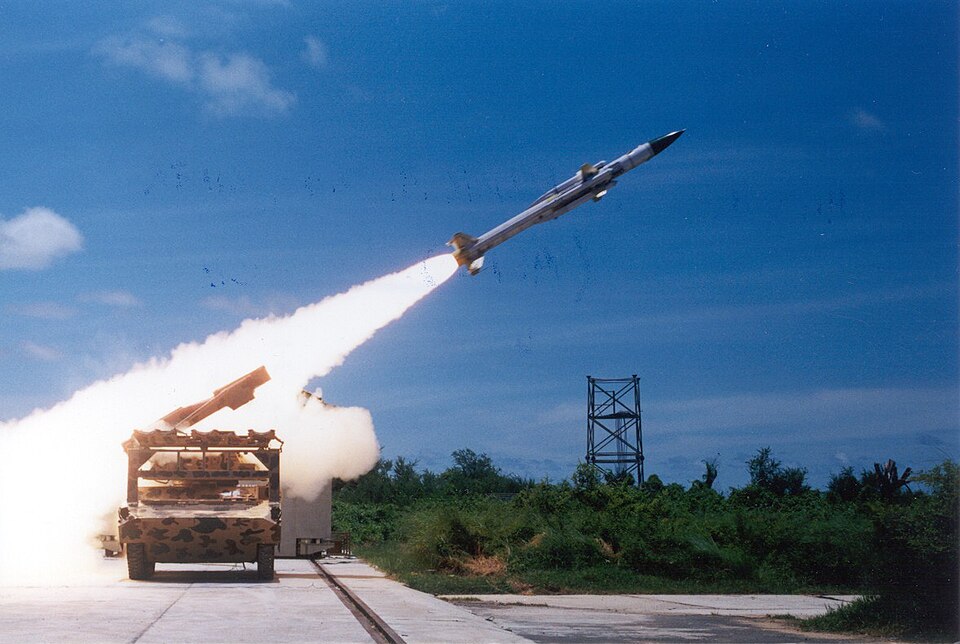
India says Tajikistan and Turkmenistan are customers of its Akash surface-to-air missile system, which can be used to counter threats including drones, missiles, and fighter aircraft. The two Central Asian countries have not commented publicly on the Akash exports, and Indian officials have not provided details about the transactions. But Indian Defense Secretary Rajesh Kumar Singh has told Asian News International (ANI) that there is growing international interest in the Akash system, which Indian officials regard as a success of their indigenous defense industry. "Akash, I would say that it is one of our success stories. It shows the maturing of our indigenous missile design and production system. It is effective in dealing with high-velocity aerial targets,” Singh said. “The first customer was Armenia, which has taken multiple batteries. Thereafter, we've also exported it to Tajikistan and Turkmenistan. Production has stabilized.” He said there were “additional orders for our own services” and that more were expected from other countries, according to an ANI report on October 1. The agency described the sales to Tajikistan and Turkmenistan as “an expansion of Indian arms exports into traditionally Russian-supplied markets.” While Tajikistan and Turkmenistan traditionally relied on Soviet and Russian military hardware, Turkmenistan has taken significant steps to diversify its arms suppliers, also buying weapons from China, Türkiye, and Italy. Tajikistan is more closely tied to Russia, though it has bought weapons systems from China. Tajikistan is a member of the Collective Security Treaty Organization (CSTO), a regional alliance that is led by Russia; Turkmenistan maintains a posture of self-declared neutrality and is not a member of the CSTO. Indian officials have promoted the Akash missile system as a relatively economical option in the international air defense market. India’s state-run Defence Research and Development Organisation started developing the Akash missile system in the 1980s. In the mid-2010s, it was inducted into the Indian army and air force, which ordered thousands of the missiles. The Indian government approved Akash exports in December 2020, according to Airforce Technology, a website that reports on procurement in the military aerospace industry. The Akash weapon system can target threats including drones, helicopters, and fighter aircraft at ranges of 4.5 to 25 kilometers and altitudes of up to 20 kilometers, India’s Defense Ministry said.