
• KZT/USD = 0.00221
  • TJS/USD = 0.10830
  • UZS/USD = 0.00008
  • TMT/USD = 0.29760
  • KZT/USD = 0.00221
  • TJS/USD = 0.10830
  • UZS/USD = 0.00008
  • TMT/USD = 0.29760
  • KZT/USD = 0.00221
  • TJS/USD = 0.10830
  • UZS/USD = 0.00008
  • TMT/USD = 0.29760
  • KZT/USD = 0.00221
  • TJS/USD = 0.10830
  • UZS/USD = 0.00008
  • TMT/USD = 0.29760
  • KZT/USD = 0.00221
  • TJS/USD = 0.10830
  • UZS/USD = 0.00008
  • TMT/USD = 0.29760
  • KZT/USD = 0.00221
  • TJS/USD = 0.10830
  • UZS/USD = 0.00008
  • TMT/USD = 0.29760
  • KZT/USD = 0.00221
  • TJS/USD = 0.10830
  • UZS/USD = 0.00008
  • TMT/USD = 0.29760
  • KZT/USD = 0.00221
  • TJS/USD = 0.10830
  • UZS/USD = 0.00008
  • TMT/USD = 0.29760
12 October 2026

Viewing results 1 - 6 of 3

India Says It Exported Akash Missile System to Tajikistan and Turkmenistan

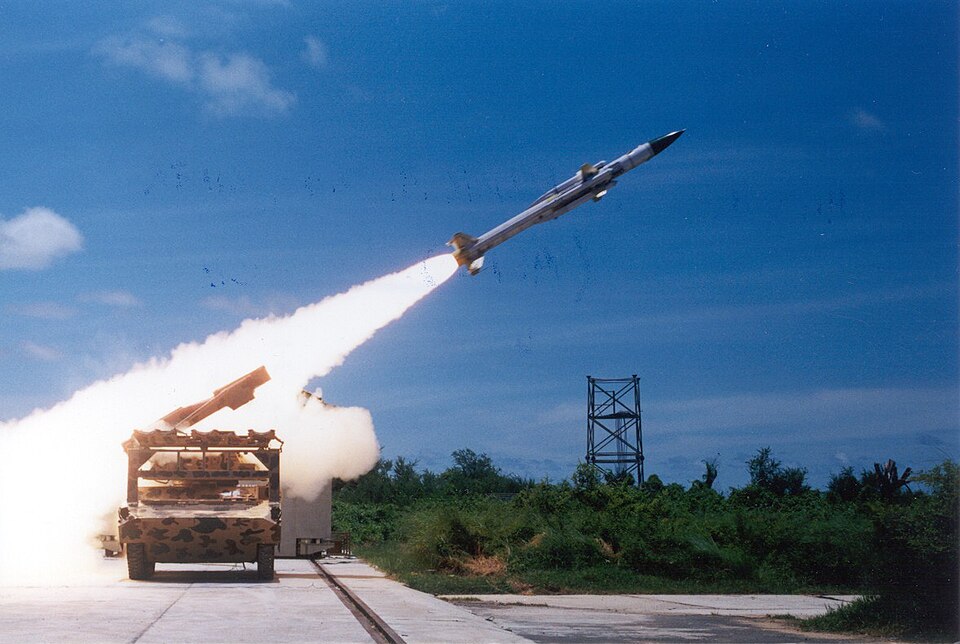
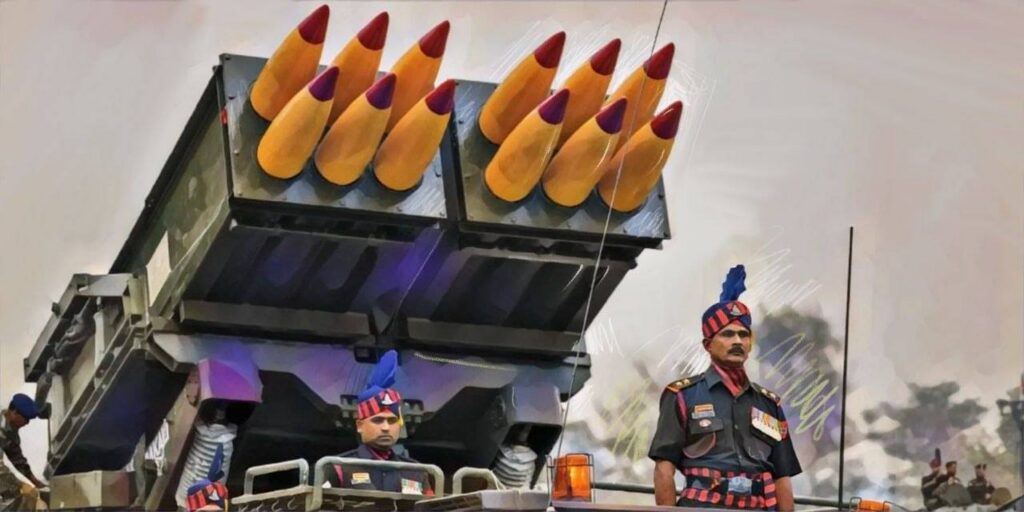
India says Tajikistan and Turkmenistan are customers of its Akash surface-to-air missile system, which can be used to counter threats including drones, missiles, and fighter aircraft. The two Central Asian countries have not commented publicly on the Akash exports, and Indian officials have not provided details about the transactions. But Indian Defense Secretary Rajesh Kumar Singh has told Asian News International (ANI) that there is growing international interest in the Akash system, which Indian officials regard as a success of their indigenous defense industry. "Akash, I would say that it is one of our success stories. It shows the maturing of our indigenous missile design and production system. It is effective in dealing with high-velocity aerial targets,” Singh said. “The first customer was Armenia, which has taken multiple batteries. Thereafter, we've also exported it to Tajikistan and Turkmenistan. Production has stabilized.” He said there were “additional orders for our own services” and that more were expected from other countries, according to an ANI report on October 1. The agency described the sales to Tajikistan and Turkmenistan as “an expansion of Indian arms exports into traditionally Russian-supplied markets.” While Tajikistan and Turkmenistan traditionally relied on Soviet and Russian military hardware, Turkmenistan has taken significant steps to diversify its arms suppliers, also buying weapons from China, Türkiye, and Italy. Tajikistan is more closely tied to Russia, though it has bought weapons systems from China. Tajikistan is a member of the Collective Security Treaty Organization (CSTO), a regional alliance that is led by Russia; Turkmenistan maintains a posture of self-declared neutrality and is not a member of the CSTO. Indian officials have promoted the Akash missile system as a relatively economical option in the international air defense market. India’s state-run Defence Research and Development Organisation started developing the Akash missile system in the 1980s. In the mid-2010s, it was inducted into the Indian army and air force, which ordered thousands of the missiles. The Indian government approved Akash exports in December 2020, according to Airforce Technology, a website that reports on procurement in the military aerospace industry. The Akash weapon system can target threats including drones, helicopters, and fighter aircraft at ranges of 4.5 to 25 kilometers and altitudes of up to 20 kilometers, India’s Defense Ministry said.
Why Central Asia Is Diversifying Its Arms Suppliers

India could become another supplier of major weapons to Central Asia. Indian Masterminds reported in July that Samir V. Kamat, former chairman of India’s Defence Research and Development Organisation (DRDO), said India had exported Akash surface-to-air missile systems to Tajikistan and Turkmenistan. The reported deliveries remain unconfirmed by the recipient governments. Publicly available accounts give no contract values, quantities, or delivery schedules. DRDO says an initial Akash battery has been flagged off for export to friendly foreign countries, without naming the recipients. Akash is a mobile medium-range surface-to-air missile system designed to counter aircraft, helicopters, cruise missiles, and drones. If the reported deliveries are confirmed, they would mark the first publicly known Akash exports to Central Asia following India’s deal with Armenia. The region’s armed forces still rely heavily on Soviet- and Russian-designed equipment, but governments are increasingly buying newer systems from other suppliers. Russia retains a strong position where countries need to maintain Soviet- and Russian-designed equipment already in service. Other suppliers are winning orders for drones and aircraft, extending their role in the region’s defense procurement. The figures illustrate the persistence of Russian influence. According to the Stockholm International Peace Research Institute (SIPRI), Russia accounted for 83% of Kazakhstan’s imports of major arms in 2021–25. These figures measure transfers of major weapons, rather than the full range of military supplies and support. Russia’s exports of major arms, however, fell by 64% in 2021–25 compared with the previous five-year period. Nearly three-quarters of its exports went to India, China, and Belarus. SIPRI attributes much of the fall to reduced deliveries to Algeria, China, and Egypt. The most visible shift has occurred in Uzbekistan. In late August, official footage showed Chinese-built J-10CE fighter jets carrying Uzbek markings. At least six aircraft could be seen. For three decades, Soviet-designed MiG-29s and Su-27s formed the backbone of Uzbekistan’s fighter fleet. Operating the J-10CE requires different training and maintenance arrangements, alongside compatible weapons and ground equipment. The transition moves a key component of the Uzbek Air Force outside its traditional supply chain. On September 25, Brazil’s Embraer delivered the first C-390 Millennium military transport aircraft to the Uzbek Air Force. The handover ceremony took place at the company’s facility in Gavião Peixoto, making Uzbekistan the first C-390 operator in Central Asia. The late-2024 contract includes training to operate the aircraft and covers its upkeep with technical support and spare parts. The aircraft can carry payloads of up to 26 metric tons and can be configured for troop and cargo transport, aerial refueling, medical evacuation, and search-and-rescue missions. Kazakhstan’s military has put Turkish Aerospace Industries’ ANKA drone into service after military trials. In its review of 2024, Kazakhstan’s Defense Ministry reported discussions with Baykar, another Turkish drone maker, on a roadmap for local production of tactical drones and loitering munitions. The latter can remain airborne while searching for a target before striking it. The same review said the Turkish side had offered to provide Bayraktar Kalkan and Bayraktar Mini reconnaissance drones, along with the...

Uzbekistan’s Reported Chinese Jet Deal in a Changing Arms Market

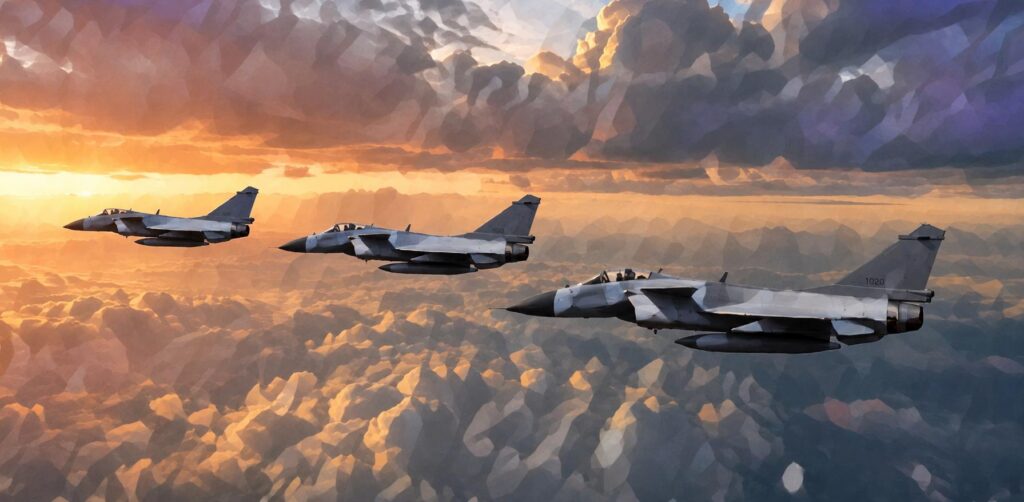
China’s J-10CE could become Uzbekistan’s first new combat fighter in decades that was designed neither in Russia nor the Soviet Union. This summer, defense publications and analysts reported that Tashkent had allegedly already received the first aircraft and could eventually acquire 24 jets. Neither Uzbekistan nor China has confirmed the deal. If the reports prove accurate, the purchase would mark a notable shift for a region whose armed forces still rely heavily on Soviet- and Russian-made equipment. For decades, Russia was the natural source of new weapons, spare parts and maintenance. Its position is no longer unchallenged. China can offer combat aircraft and air-defense systems, Turkey has established itself in the drone market, while Kazakhstan and Uzbekistan are developing their own defense industries. Whether or not the reports prove accurate, they point to two broader trends: Central Asian countries are increasingly looking beyond Russia for newer military technology, while some are also trying to produce more equipment at home. Shadow Purchase In July, reports emerged of the alleged delivery of four J-10CEs to Uzbekistan. The aircraft is the export version of the Chinese J-10C multirole fighter manufactured by Chengdu Aircraft Corporation. Its export variant has already been purchased by Pakistan. Subsequent reports spoke of a possible contract for 24 aircraft and of Uzbek pilots undergoing training in China. Uzbek news outlet Kun.uz attempted to verify the claims and contacted the country’s Ministry of Defense. The ministry responded that it had no information it could provide on the matter. Chinese authorities and manufacturers have also made no public announcement of a sale. Nevertheless, throughout the summer, reports of Uzbekistan purchasing J-10CEs have refused to die down. Russian Weapons Remain the Backbone of Existing Arsenals Uzbekistan inherited a combat aircraft fleet from the Soviet Union built primarily around MiG-29 and Su-27 fighters. These aircraft were developed in the Soviet era, and after the collapse of the USSR, Russia remained the main source of compatible spare parts, weapons, repairs, and upgrades. The reports about the J-10CE challenge this established model. A new fighter comes with a different weapons, maintenance and training ecosystem. Over time, this creates dependence on a new supplier. According to the Stockholm International Peace Research Institute, or SIPRI, Russian exports of major arms in 2021–2025 were 64% lower than during the previous five-year period. Russia’s share of global arms exports fell from 21% to 6.8%, leaving it the world’s third-largest supplier after the United States and France. Those figures do not mean that China has replaced Russia as Central Asia’s dominant arms supplier. Russia retains a strong position, above all because of the equipment Central Asian militaries already operate. Kazakhstan is perhaps the clearest example. According to SIPRI data for 2021–2025, Russia accounted for 83% of Kazakhstan’s imports of major arms. Spain accounted for 7.9% and France for 3.6%. Kazakhstan operates Russian Su-30SM fighters, as well as helicopters, armored vehicles and air-defense systems. Any abrupt change in procurement policy would raise questions over the compatibility of ammunition, communications systems, maintenance, and the training of crews...
