• KGS/USD = 0.01144 0%
  • KZT/USD = 0.00205 0%
  • TJS/USD = 0.10785 0.09%
  • UZS/USD = 0.00008 0%
  • TMT/USD = 0.28571 0.28%
  • KGS/USD = 0.01144 0%
  • KZT/USD = 0.00205 0%
  • TJS/USD = 0.10785 0.09%
  • UZS/USD = 0.00008 0%
  • TMT/USD = 0.28571 0.28%
  • KGS/USD = 0.01144 0%
  • KZT/USD = 0.00205 0%
  • TJS/USD = 0.10785 0.09%
  • UZS/USD = 0.00008 0%
  • TMT/USD = 0.28571 0.28%
  • KGS/USD = 0.01144 0%
  • KZT/USD = 0.00205 0%
  • TJS/USD = 0.10785 0.09%
  • UZS/USD = 0.00008 0%
  • TMT/USD = 0.28571 0.28%
  • KGS/USD = 0.01144 0%
  • KZT/USD = 0.00205 0%
  • TJS/USD = 0.10785 0.09%
  • UZS/USD = 0.00008 0%
  • TMT/USD = 0.28571 0.28%
  • KGS/USD = 0.01144 0%
  • KZT/USD = 0.00205 0%
  • TJS/USD = 0.10785 0.09%
  • UZS/USD = 0.00008 0%
  • TMT/USD = 0.28571 0.28%
  • KGS/USD = 0.01144 0%
  • KZT/USD = 0.00205 0%
  • TJS/USD = 0.10785 0.09%
  • UZS/USD = 0.00008 0%
  • TMT/USD = 0.28571 0.28%
  • KGS/USD = 0.01144 0%
  • KZT/USD = 0.00205 0%
  • TJS/USD = 0.10785 0.09%
  • UZS/USD = 0.00008 0%
  • TMT/USD = 0.28571 0.28%

Viewing results 1 - 6 of 35

Kazakhstan Transfers Flight Recorders to Brazil for Further Investigation

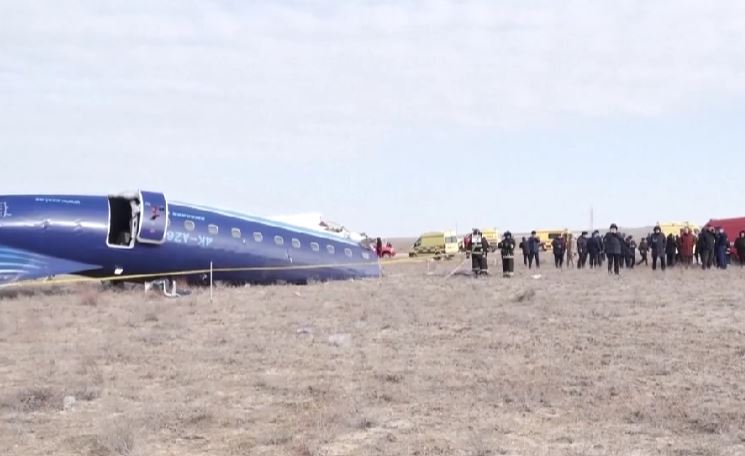
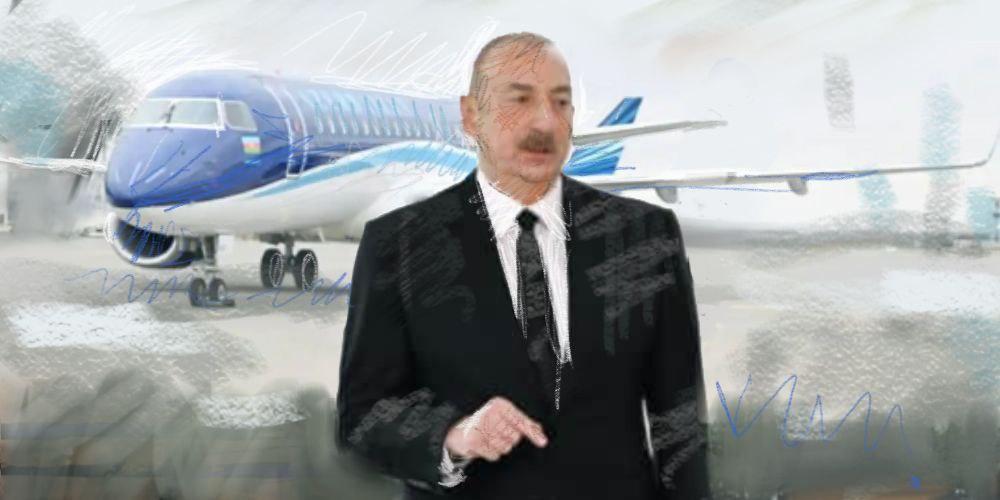
The Azerbaijan Airlines plane crash near the Kazakh city of Aktau continues to dominate media discussions in Azerbaijan, Kazakhstan, and Russia. Public attention has centered on statements from Azerbaijan’s leader, Ilham Aliyev, who appears dissatisfied with Vladimir Putin’s vague apologies, as well as on the actions of Kazakh President Kassym-Jomart Tokayev, who faces the delicate challenge of conducting an investigation that satisfies both Baku and Moscow. Tensions between Baku and Moscow have escalated, with both sides imposing mutual migration restrictions. Russians are now limited to 90 days per year in Azerbaijan, while Russia has enacted asymmetric measures against Azerbaijani citizens. Amid this backdrop, Kassym-Jomart Tokayev has taken personal control of the aviation accident investigation, which includes collaboration with specialists from both Azerbaijan and Russia. On the evening of Sunday, December 29, the Commission on Aviation Incident Investigation, led by Kazakhstan’s Minister of Transport, Marat Karabayev, announced its decision to send the flight data recorder (black box) to Brazil's Center for Investigation and Prevention of Aeronautical Accidents (CENIPA). Brazil is also the manufacturer of the Embraer aircraft involved in the crash. According to the Kazakh authorities, the decision complies with the standards of Annex 13 of the Chicago Convention, which assigns responsibility for decoding flight recorders to the investigating country and allows it to select the location for the task. Kazakhstan, a member of the International Civil Aviation Organization (ICAO) since 1992, made the decision in alignment with this framework. The commission emphasized that CENIPA possesses the necessary technical expertise, certified laboratories, and specialized equipment for decoding the flight data recorders. Kazakh analyst Gaziz Abishev interprets the decision as a potential response to external pressure on Kazakhstan, though officials deny any such influence. According to Abishev, the rhetoric from Azerbaijan’s leadership reflects a lack of mutual understanding with Moscow, suggesting covert attempts to sway the investigation. “In this context, Kazakhstan’s decision to transfer the black box to CENIPA represents a principled step aimed at neutralizing pressure and ensuring an impartial decoding process that instills confidence in the international community,” Abishev stated. A similar view is held by Aydos Sarym, a deputy in Kazakhstan's Mazhilis. “This is, in essence, a ‘Solomonic’ decision, as Azerbaijan is the aggrieved party, with the majority of victims being its citizens. President Aliyev has repeatedly emphasized Russia’s culpability in the tragedy and expressed distrust toward certain CIS institutions that have investigated past international incidents. To guarantee full transparency and objectivity, the decryption process has been entrusted to Brazil. This move seeks to accurately determine the cause of the tragedy and establish accountability while ensuring the investigation’s conclusions are accepted by all parties,” Sarym commented. Azat Peruashev, leader of the parliamentary party Ak Zhol, also voiced support for the decision. He praised it as a testament to Tokayev’s diplomatic skill, describing him as a “high-class diplomat capable of finding balanced solutions in the most challenging situations.” Peruashev highlighted the advantages of shifting the investigation to a neutral and unbiased venue, allowing the manufacturer to confirm whether the crash...

How the Azerbaijan Airlines Crash Could Shake Relations with Russia

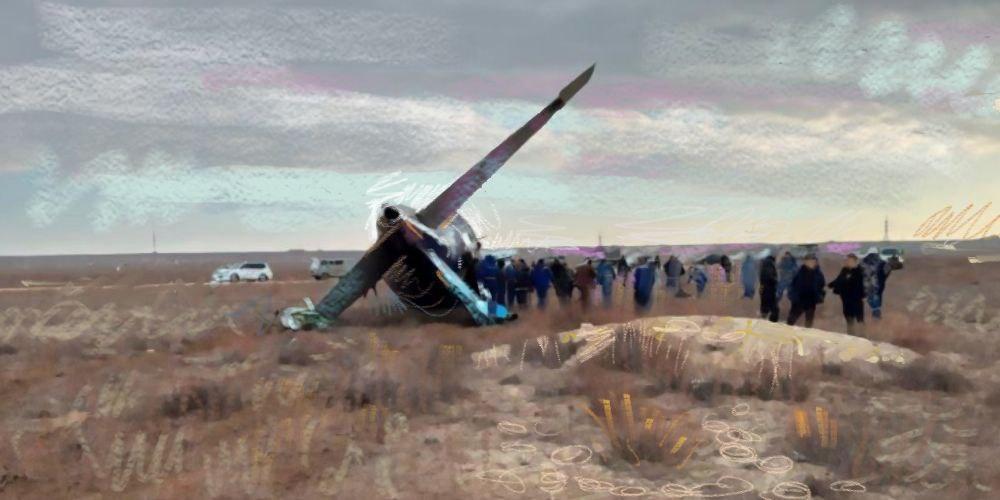
The crash of an Azerbaijan Airlines (AZAL) airplane in Aktau, Kazakhstan, has the potential to significantly effect Azerbaijan's relations with Russia if Moscow mishandles the situation. To date, there has been a lack of transparency and responsiveness on the part of the Kremlin. The implications could include accelerating the deterioration of Moscow's influence in the region. These implications, therefore, concern not only the local countries, but any international actor having strategic interests in the South Caucasus and Central Asia, or otherwise concerned with their future role and place in the evolving post–Cold War international system.   The Facts of the Disaster Given the rapid dissemination of information in the 2020s by electronic means, whereby authentic real-time videos made by first responders to the fuselage on the ground were uploaded to social media and available worldwide within minutes, the overall outline and some details of the incident are by now generally well known. The airplane was en route from Baku to Grozny, the capital of Chechnya, when explosions in the air damaged the cabin. Very soon after, but not as a result of these explosions, the pilots completely lost all electronic orientation and navigation capabilities. According to one source close to Azerbaijan's investigation into the crash, preliminary results showed the plane was struck by a Russian Pantsir-S air defense system and its communications were then paralyzed by electronic warfare systems on the approach into Grozny. Ukrainian military drones have repeatedly targeted Russia’s southern regions, triggering Russian air defenses. “No one claims that it was done on purpose,” the source said; but “taking into account the established facts, Baku expects the Russian side to confess to the shooting down of the Azerbaijani aircraft.” After being hit, the plane was refused emergency landing permission at Grozny (2.5 kilometers from where the incident occurred) and at least two other Russian airports in the North Caucasus (Makhachkala, 155 kilometers away, and Mineral’nye Vody, 225 kilometers), before being directed by local air control out over the Caspian Sea. Once there, the pilots made the decision to try to land in Aktau (435 kilometers away). Against all odds, they succeeded in avoiding the need to ditch the aircraft into the sea, which would have undoubtedly killed all on board and also destroyed the craft, making any investigation into what had happened impossible. In the event, according to the Kazakhstani authorities, out of 62 passengers and five crew, 32 survivors were initially rescued. Captain Igor Kshnyakin, Co-pilot (First Officer) Alexander Kalyaninov, and Purser Hokuma Aliyeva died when the front wheel touched down ahead of the back wheels, as a result of which the cockpit was thrown violently away from the ongoing wreck. However, this is what created the conditions for at least some of the passengers to survive, as it split the fuselage in two. The event has garnered international attention, including for the professionalism of the crew.   What Has Happened Since At first, Kazakhstan declared its own unilateral competence to investigate the crash, which occurred on...

Azerbaijan Tightens Visa Rules for Russians Amid Aktau Crash Fallout

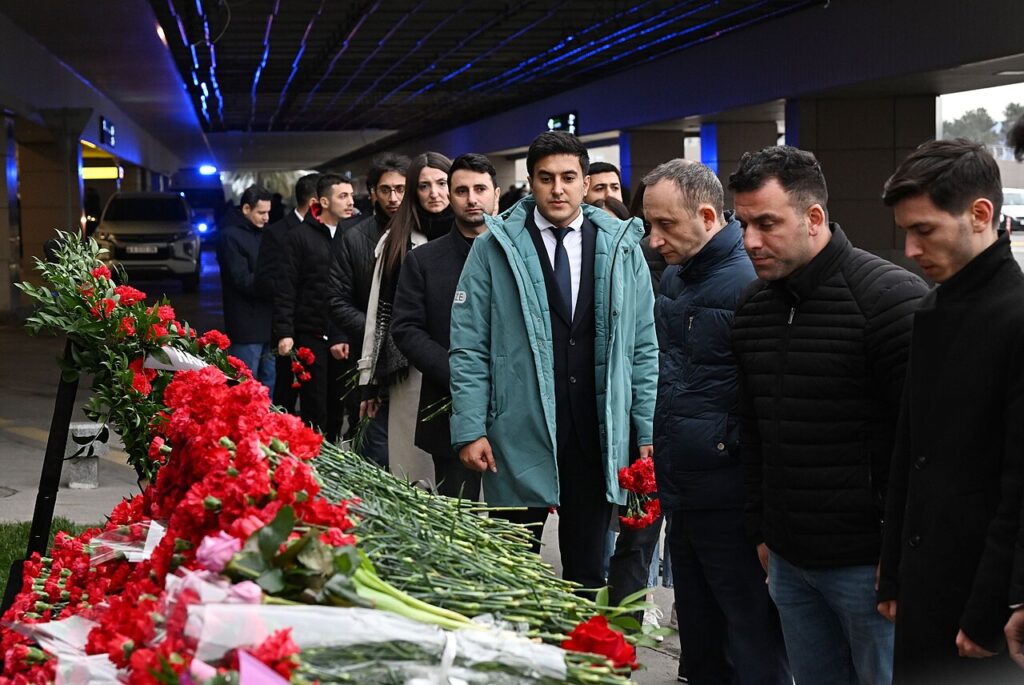
The Azerbaijani government has announced new restrictions on the temporary stay of Russian citizens, effective January 1, 2025. Under the new rules, Russian citizens and stateless persons residing in Russia will be limited to a maximum of 90 days per calendar year without a visa. The announcement comes in the wake of a tragic plane crash involving an Azerbaijan Airlines (AZAL) aircraft near the Kazakh city of Aktau on December 25. The plane, which had taken off from Baku headed to Grozny, Chechnya, crashed, killing 38 people and injuring 29 others. Kazakhstan is currently leading the investigation into the incident. Accusations and Responses Azerbaijan’s President Ilham Aliyev has stated that the plane was struck by Russian ground fire while flying over Russian territory. He accused Russia of attempting to obscure the truth by spreading “absurd theories” about the crash. Russian President Vladimir Putin had issued an apology for the incident one day before Aliyev's remarks, but did not admit responsibility for the alleged ground fire. International Reactions The crash has prompted flight suspensions to Russia by several airlines, citing safety concerns. Turkmenistan: Flights on the Ashgabat-Moscow-Ashgabat route have been canceled from December 30, 2024, to January 31, 2025. The reason for the decision has not been disclosed, but the airline previously operated twice-weekly flights to Moscow. Kazakhstan: Kazakh Air has suspended its Astana-Yekaterinburg route from December 28, 2024, to January 27, 2025, to ensure passenger safety. Israel: Israeli airline El Al has halted flights on the Tel Aviv-Moscow route until next week, citing “events in Russian airspace.” UAE: Flydubai has suspended flights to Sochi and Mineralnye Vody due to technical reasons. Flights to Sochi are expected to resume on January 2, while services to Mineralnye Vody will restart on January 3. In a symbolic gesture, an Uzbekistan Airways plane circled Aktau Airport twice in memory of the Azerbaijan Airlines crash victims. Broader Implications The tragedy and subsequent allegations have heightened tensions in the region and raised concerns about air travel safety in Russian airspace. While investigations are ongoing, the incident underscores the geopolitical sensitivities and potential risks associated with the aviation sector in this area.

Ilham Aliyev: Azerbaijani Plane Crashed In Kazakhstan Due To Russian Ground Fire

Azerbaijan's President Ilham Aliyev said on Sunday that the Azerbaijani airliner that crashed in Kazakhstan last week had been hit by Russian ground fire while flying over Russian territory. He also said that there had been efforts by Russia to cover up what had happened by spreading “absurd theories.” After several days of international speculation and scrutiny, Aliyev spoke in detail with Azerbaijan Television in Baku about the crash of the Azerbaijan Airlines (AZAL) plane on Wednesday that killed 38 people. His remarks came one day after Russian President Vladimir Putin apologized for the crash but did not acknowledge that the aircraft had been accidentally hit by Russian fire. Kazakhstan is leading the investigation of the crash, which occurred near the Caspian Sea city of Aktau after the plane diverted from its original destination of Grozny in the Russian republic of Chechnya. Officials said 29 people survived.   “The facts indicate that the Azerbaijani civilian plane was damaged from the outside over Russian territory, near the city of Grozny, and almost lost control. We also know that means of electronic warfare put our plane out of control. This was the first impact on the plane. At the same time, as a result of fire from the ground, the tail of the plane was also severely damaged,” Aliyev said in the interview.  Aliyev said that fact that “the fuselage is riddled with holes” indicates that initial speculation that birds hit the plane is false, and he criticized “some circles in Russia” for proposing that theory.  “Another regrettable and surprising moment for us was that official Russian agencies put forward theories about the explosion of a gas cylinder on board the plane. In other words, this clearly showed that the Russian side wanted to cover up the issue, which, of course, is unbecoming of anyone. Of course, our plane was hit by accident. Of course, there can be no talk of a deliberate act of terror here,” the Azerbaijani president said.  “Therefore, admitting guilt, apologizing in a timely manner to Azerbaijan, which is considered a friendly country, and informing the public about this – these were measures and steps that should have been taken. Unfortunately, for the first three days, we heard nothing from Russia except for some absurd theories.” Azerbaijan refused Russian suggestions that the Russian-led Interstate Aviation Committee investigate the crash, saying there were concerns about the objectivity of the regional agency. Aliyev said he told Kazakh President Kassym-Jomart Tokayev that he didn’t want the agency involved and that his position was “met with understanding.” In his apology in a phone conversation with Aliyev on Saturday, Putin said the Azerbaijani plane had been trying to land at a time when Russian air defenses were repelling attacks by Ukrainian drones. But he didn’t say that those air defenses hit the plane.  Azerbaijan Airlines has suspended flights to 10 Russian cities since the crash. 

Putin Apologizes for Azerbaijan Airlines Plane Crash in Kazakhstan

Russian President Vladimir Putin has apologized for the crash of an Azerbaijan Airlines passenger plane that diverted from its Russian destination to Kazakhstan, the Kremlin said on Saturday, as investigators focused on the possibility that Russian air defenses had mistaken the plane for a Ukrainian drone and fired on it. Putin made the apology in a telephone conversation with President Ilham Aliyev of Azerbaijan, according to a Kremlin statement. “During the conversation, it was noted that the Azerbaijani passenger aircraft, which was strictly on schedule, repeatedly attempted to land at the Grozny airport. At that time, Grozny, Mozdok and Vladikavkaz were attacked by Ukrainian combat unmanned aerial vehicles, and Russian air defense systems repelled these attacks,” the statement said. Putin did not offer further detail about what exactly caused the plane to crash. In an account of the conversation, Aliyev’s office gave more detail to support the contention that Russian air defenses and communications jamming targeted the plane when it tried to land as scheduled in Grozny in Russia-controlled Chechnya, saying the aircraft “was subjected to physical and technical external interference in Russian airspace.” In the call with Putin, Aliyev “emphasized that the presence of numerous holes in the fuselage of the plane, the injuries of passengers and crew members by foreign particles that penetrated the deck of the plane while still in the air, and in this regard, the statements of the surviving flight attendants and passengers establish the fact of external physical and technical interference,” the Azerbaijani president’s office said. “During the conversation, the heads of state discussed a serious and thorough investigation of all the details of this tragedy and bringing the perpetrators to justice,” the office said. The Embraer 190 plane was flying on the Baku-Grozny route but diverted and crashed near the Caspian Sea city of Aktau, Kazakhstan, on Wednesday killed 38 people, according to Kazakh and Azerbaijani officials. A total of 67 people, including five crewmembers, had been on board. Kazakhstan is leading the investigation and its prosecutors have opened a criminal case. The Kremlin said two employees from the office of Azerbaijan’s prosecutor general are in Grozny and are working with Russian counterparts on the investigation.

With Russia Under Scrutiny, Kazakhstan Promises Thorough Investigation into AZAL Crash

The investigation of the fatal crash of an Azerbaijan Airlines plane in Kazakhstan after it diverted from Russia is a major international test for Kazakh authorities, who have promised a full and impartial inquiry even as the theory that Russian air defenses had fired on the aircraft gains traction. Kazakhstan, which is in charge of the probe of the crash that killed 38 people near the Caspian Sea city of Aktau on Wednesday, has cautioned against a rush to judgment before all the evidence has been assessed. But it must navigate emerging tensions between Azerbaijan and Russia, which have put forth conflicting narratives about what happened, as well as the possible challenge of collecting evidence from the plane’s original destination of Grozny, the capital of Russian Chechnya.  Azerbaijan and Russia say they are collaborating with the investigation by Kazakhstan, which comes amid geopolitical rifts over Russia’s full-scale invasion of Ukraine and the efforts of countries in Central Asia to balance their interests among major trading partners and rival powers.  In a sign of the growing international complexity of the crash inquiry, Turkish Transport Minister Abdulkadir Uraloğlu said Friday that his ministry was dispatching an eight-person team to Baku, Azerbaijan’s capital, “to examine all aspects of the incident” at the request of Azerbaijan's civil aviation authorities. Also, a team from the Brazilian company that produced the Embraer 190 plane has arrived in Kazakhstan to help with the investigation.   On Friday, Kazakh President Kassym-Jomart Tokayev updated his Azerbaijani counterpart, Ilham Aliyev, on the investigation and and “assured that the Kazakh side will make every effort to ensure a comprehensive and objective clarification of all the circumstances of the air crash,” Tokayev’s office said. The two leaders agreed that their governments will stay in close contact during the investigation.  Azerbaijan Airlines, meanwhile, said on Friday that preliminary results of the investigation showed that the Brazil-produced Embraer 190 plane on the Baku-Grozny route had crashed because of “physical and technical external interference,” a possible reference to an attack by the city’s air defenses and alleged communications jamming at a time when Russian authorities said there was a threat from Ukrainian military drones.  The airline, also known by the acronym AZAL, said it had suspended flights from Baku to a total of 10 Russian cities because of concerns about flight safety.  Also Friday, Dmitry Yadrov, head of Russia’s Federal Air Transport Agency, gave an account of the circumstances surrounding the crash that did not address the airline’s version.  Yadrov said the plane was unable to land in Grozny because of a restriction requiring all aircraft to leave the area due to alleged Ukrainian attempts to attack civilian infrastructure there, according to Russia’s state-run news agency RIA Novosti. There was dense fog around the airport and the Azerbaijan Airlines plane tried to land twice before deciding to proceed across the Caspian Sea to Aktau, he said.  Some commentators in Azerbaijan have expressed frustration with varying initial accounts from Russian official sources of what caused the crash,...