• KGS/USD = 0.01143 0%
  • KZT/USD = 0.00212 0%
  • TJS/USD = 0.10799 -0.09%
  • UZS/USD = 0.00008 0%
  • TMT/USD = 0.28571 0%
  • KGS/USD = 0.01143 0%
  • KZT/USD = 0.00212 0%
  • TJS/USD = 0.10799 -0.09%
  • UZS/USD = 0.00008 0%
  • TMT/USD = 0.28571 0%
  • KGS/USD = 0.01143 0%
  • KZT/USD = 0.00212 0%
  • TJS/USD = 0.10799 -0.09%
  • UZS/USD = 0.00008 0%
  • TMT/USD = 0.28571 0%
  • KGS/USD = 0.01143 0%
  • KZT/USD = 0.00212 0%
  • TJS/USD = 0.10799 -0.09%
  • UZS/USD = 0.00008 0%
  • TMT/USD = 0.28571 0%
  • KGS/USD = 0.01143 0%
  • KZT/USD = 0.00212 0%
  • TJS/USD = 0.10799 -0.09%
  • UZS/USD = 0.00008 0%
  • TMT/USD = 0.28571 0%
  • KGS/USD = 0.01143 0%
  • KZT/USD = 0.00212 0%
  • TJS/USD = 0.10799 -0.09%
  • UZS/USD = 0.00008 0%
  • TMT/USD = 0.28571 0%
  • KGS/USD = 0.01143 0%
  • KZT/USD = 0.00212 0%
  • TJS/USD = 0.10799 -0.09%
  • UZS/USD = 0.00008 0%
  • TMT/USD = 0.28571 0%
  • KGS/USD = 0.01143 0%
  • KZT/USD = 0.00212 0%
  • TJS/USD = 0.10799 -0.09%
  • UZS/USD = 0.00008 0%
  • TMT/USD = 0.28571 0%

Viewing results 1 - 6 of 40

Turkmen Rights Activist Diana Dadasheva Receives French Humanitarian Visa

Turkmen human rights activist Diana Dadasheva, founder of the civil rights platform Dayanch, has received a French humanitarian visa and relocated to Paris, a move that could allow her to seek political asylum. Dadasheva’s arrival in France follows years of activism focused on human rights issues in Turkmenistan and concerns among rights groups about her personal safety while she was living in Turkey. Although she had resided legally in Turkey for several years, activists feared she could face deportation to Turkmenistan. According to rights advocates, Dadasheva received repeated threats linked to her public activities. Her human rights work began after she personally experienced restrictions imposed by the Turkmen authorities. Dadasheva has said she was barred from leaving Turkmenistan for six years without explanation, an experience that later motivated her advocacy on behalf of migrant workers and women, as well as her engagement with international organizations. One issue she has frequently highlighted is the practice of travel bans imposed on Turkmen citizens, which rights groups have long criticized as arbitrary and lacking transparency. Concerns about Dadasheva’s safety were heightened by the experiences of other Turkmen opposition figures and activists living in Turkey. In 2023, Turkish authorities reportedly deported several Turkmen activists, including Farhad Meymankuliyev, Rovshen Klychev, and Serdar Durdylyev, according to rights advocates. Others, including Merdan Muhammedov, Alisher Sakhatov, and Abdulla Oruzov, were reportedly forcibly returned to Turkmenistan or faced a serious risk of deportation. Another prominent activist, Dursoltan Taganova, left Turkey after years of alleged harassment and detention and later received asylum in Canada. Dadasheva’s relocation to France was reportedly facilitated in part by the opposition movement Democratic Choice of Turkmenistan. Dadasheva has said she intends to continue her human rights work from France, including advocacy for the Turkmen community abroad.

Uzbekistan Expands U.S. Labor Migration Talks in New York

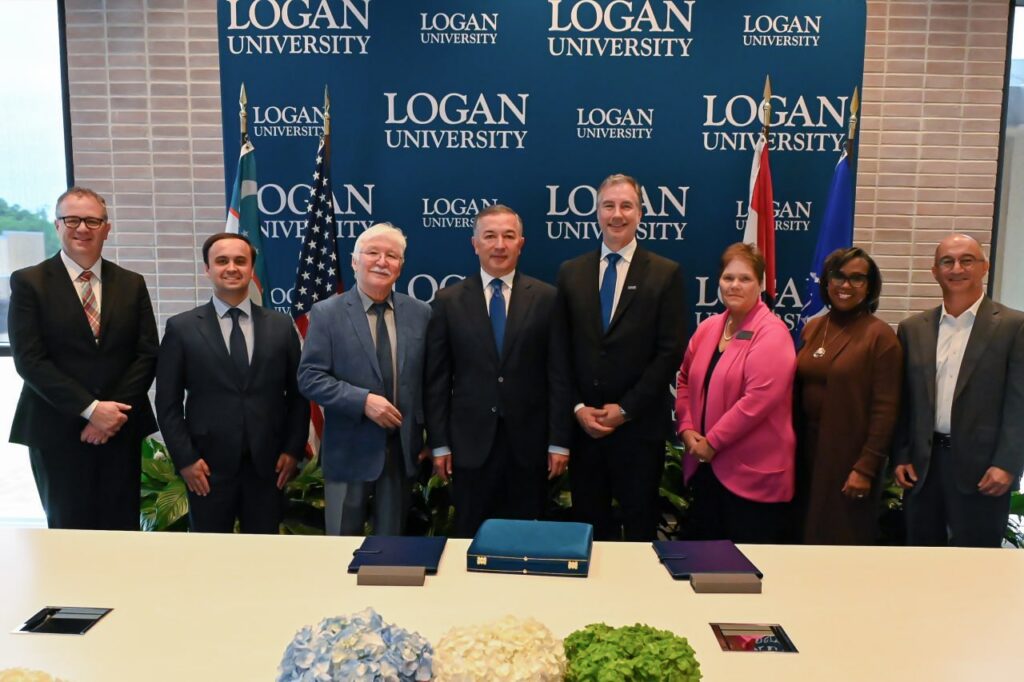
A delegation from Uzbekistan held a series of meetings with international organizations, educational institutions, employers, and law firms during the International Migration Review Forum (IMRF) in New York, as Tashkent seeks to expand legal labor migration opportunities in the United States. According to Uzbekistan’s Migration Agency, the delegation included officials from the agency, the Ministry of Foreign Affairs, and Uzbekistan’s embassy in Washington. The push comes as labor migration remains a major part of Uzbekistan’s economy. The Central Bank of Uzbekistan said remittance inflows reached high levels in 2025, with $9.9 billion arriving through traditional money transfer systems and another $8.6 billion credited directly to bank cards through P2P transfers. That scale has made overseas employment both a household income issue and a policy priority for Tashkent. The forum opened with remarks by UN Secretary-General António Guterres and Amy Pope, director general of the International Organization for Migration (IOM), who outlined priorities for global migration policy and international cooperation. During the event, Behzod Musayev, the head of Uzbekistan’s Migration Agency, presented information on migration reforms underway in Uzbekistan, including vocational and language training programs designed to prepare citizens for overseas employment. Musayev said labor migration should be viewed as an economic necessity and an investment in human capital. The delegation also met with Ugochi Daniels, IOM’s deputy director general for operations, to discuss protecting the rights of citizens of Uzbekistan working abroad and organizational issues related to an international migration forum scheduled to be held in Tashkent. Several meetings focused on expanding cooperation with U.S. educational institutions and employers. Uzbekistan signed a cooperation agreement with Logan University in Missouri on training medical personnel for the U.S. labor market, launching joint educational programs, and developing human resources. Representatives of Missouri Trucking School discussed creating a 160-hour training program to prepare drivers from Uzbekistan according to U.S. standards and support their employment opportunities. Talks with the National Council of Agricultural Employers focused on organizing labor forums with employers and expanding seasonal work programs for citizens of Uzbekistan. The delegation also reached agreements with the recruitment organization Head Honchos on H-2A visa processing, promoting agricultural workers from Uzbekistan in the U.S., and launching preparatory programs lasting eight to ten weeks. In meetings with the New York-based law firm Ballon Stoll, officials discussed work opportunities through O, H-2A, H-2B, H-1B, and E visas, as well as stronger legal protections for citizens of Uzbekistan employed in the U.S. The U.S. route is still at an early stage and will depend on American visa rules and employer demand. Under U.S. regulations, H-2A and H-2B petitions are generally limited to nationals of countries designated by the Department of Homeland Security, though USCIS can approve petitions for workers from non-designated countries on a case-by-case basis if it determines that doing so is in the U.S. interest. The discussions follow statements made earlier this year by President Shavkat Mirziyoyev, who instructed Uzbekistan’s diplomats to begin talks with Washington on including the country in U.S. seasonal labor recruitment programs. The...

U.S. Expands Visa Bond Policy for Kyrgyzstan, Tajikistan and Turkmenistan

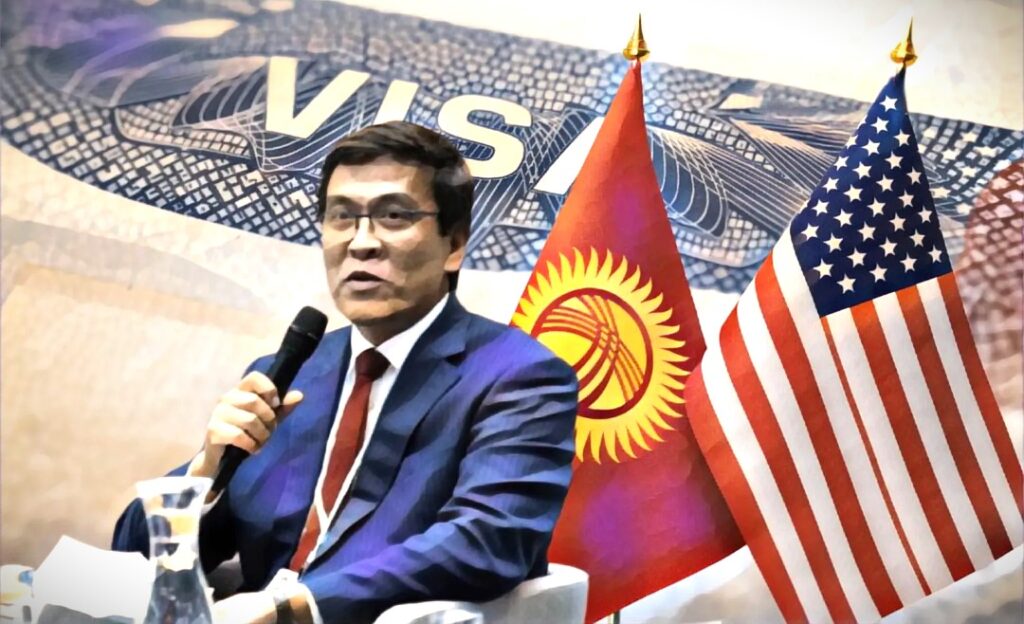
The United States has expanded a visa bond policy that increases the upfront cost of short-term travel for citizens of Kyrgyzstan, Tajikistan, Turkmenistan, and dozens of other countries. Under the policy, applicants for B-1 and B-2 business and tourism visas may be required to post bonds of $5,000, $10,000, or $15,000. The State Department set out the latest rules and the country list on its visa bond policy page. The program now covers nationals from 38 countries. In Central Asia, it was applied to Turkmenistan on January 1, and is scheduled to extend to Kyrgyzstan and Tajikistan starting from January 21. The bond is refundable when travelers follow visa terms and leave on time, but it can tie up large sums for the duration of a trip and may put U.S. travel beyond reach for many applicants. Turkmenistan, where emigration is tightly controlled, sees low numbers of its citizens entering the United States. Department of Homeland Security data for Fiscal Year 2024 indicates that the total number of Turkmen nationals issued B-1/B-2 visas to the U.S. was 1,759. Tajikistan, meanwhile, saw 1,772 visas granted, and Kyrgyzstan 9,625. By way of comparison, Saudi Arabia saw over 54,000 visas granted. The expansion has already triggered public pushback in Kyrgyzstan. In a post on X on Thursday, Edil Baisalov, the deputy chairman of Kyrgyzstan’s Cabinet of Ministers and a prominent ally of President Sadyr Japarov, urged the Kyrgyz authorities to review visa-free access for U.S. citizens. Kyrgyzstan currently allows U.S. travelers to enter without a visa for stays of up to 30 days. “I believe that we should initiate a review of our visa-free regime for U.S. citizens following the new visa requirements announced yesterday by the State Department, under which Kyrgyz citizens are required to pay a visa deposit of up to $15,000 when submitting visa applications,” Baisalov wrote. “Visa policy is a matter of parity and mutual respect. If such high barriers are introduced for our citizens, we cannot pretend that nothing has happened.” Baisalov did not specify precisely what changes Kyrgyzstan might pursue, and any escalation risks provoking a dispute with a far stronger partner. The remarks also come as Kyrgyzstan and other Central Asian governments seek closer engagement with President Donald Trump’s administration while managing competing pressures from Russia and China. The measure is a setback for Kyrgyz efforts to ease travel barriers with the United States. Kyrgyz Foreign Minister Zheenbek Kulubaev raised visa issues with U.S. Deputy Secretary of State Christopher Landau during a meeting on the sidelines of the U.N. General Assembly in New York in September. So far, Tajikistan has not matched Kyrgyzstan’s public stance, with no prominent statement appearing on Tajik government channels addressing the bond requirement or signaling reciprocity. Discussion has instead focused on what the new U.S. rules mean for applicants, the implementation timeline, and the bond amounts that may be set at the interview stage. For Turkmenistan, the requirement adds another hurdle to an already narrow path to U.S. travel. The country’s...

Kyrgyz Official Concerned Over “High Barriers” in U.S. Visa Bond Policy

Kyrgyzstan should review its visa-free system for American citizens after the United States expanded its visa bond policy to include the Central Asian country, according to a senior Kyrgyz official who said there should be “mutual respect.” The suggestion that there should be some reciprocity following the U.S. measure came from Edil Baisalov, deputy chairman of Kyrgyzstan´s Cabinet of Ministers and a prominent ally of President Sadyr Japarov. Currently, U.S. travelers to Kyrgyzstan can stay for up to 30 days without obtaining a visa. “I believe that we should initiate a review of our visa-free regime for U.S. citizens following the new visa requirements announced yesterday by the State Department, under which Kyrgyz citizens are required to pay a visa deposit of up to $15,000 when submitting visa applications,” Baisalov said on X on Thursday. “Visa policy is a matter of parity and mutual respect. If such high barriers are introduced for our citizens, we cannot pretend that nothing has happened.” However, he did not offer any analysis about what, if any, changes should be made to the visa-free system for U.S. visitors. Any visa dispute with the far more powerful United States could be risky for Kyrgyzstan, which has meanwhile joined with other Central Asian countries in trying to develop closer ties to the administration of U.S. President Donald Trump. Nationals from 38 countries, including Kyrgyzstan, Tajikistan and Turkmenistan, are subject to visa bonds under the U.S. State Department policy, which is part of a wider crackdown on immigration. The policy took effect for citizens from Turkmenistan on January 1 and will be implemented for nationals from Kyrgyzstan and Tajikistan starting on January 21. “Any citizen or national traveling on a passport issued by one of these countries, who is found otherwise eligible for a B1/B2 visa, must post a bond for $5,000, $10,000, or $15,000.  The amount is determined at the time of the visa interview,” the State Department said. B-1 (business) and B-2 (tourism) refer to non-immigrant visas for people who want to stay temporarily in the U.S. Visa holders who have posted bond are also required to enter the United States via designated international airports, including seven in the U.S. and two in Canada. The U.S. visa bond policy is a setback for Kyrgyzstan, which had previously appealed to the United States to relax its visa requirements. Kyrgyz Foreign Minister Zheenbek Kulubaev raised the issue during a meeting with U.S. Deputy Secretary of State Christopher Landau on the sidelines of the U.N. General Assembly in New York in September.

U.S. Adds Turkmenistan to Visa Bond List, Raising Entry Costs for Travelers

The Trump administration has added seven countries, including Turkmenistan, to a list requiring some visa applicants to post bonds of up to $15,000 to enter the United States, according to a notice published on the U.S. State Department’s travel website. The measure took effect on January 1. The newly designated countries are Bhutan, Botswana, the Central African Republic, Guinea, Guinea-Bissau, Namibia, and Turkmenistan. With these additions, the total number of countries subject to the bond requirement has risen to thirteen, most of them in Africa. As reported by the Associated Press, the policy applies to passport holders from the listed countries seeking certain non-immigrant visas who are considered at higher risk of overstaying. According to U.S. officials, the bonds, ranging from $5,000 to $15,000, are intended to ensure compliance with visa conditions. The State Department has stated that the requirement is designed to encourage timely departure from the U.S. Payment of the bond does not guarantee visa issuance; if a visa is denied, or if the applicant complies with all visa terms, the bond is refunded. The policy is part of a broader tightening of U.S. entry rules under President Donald Trump. Recent changes include mandatory in-person interviews for most visa applicants, expanded disclosure of social media histories, and more detailed reporting of personal travel and residency records. For Turkmenistan, the move marks a shift in U.S. policy. Although the six-month suspension on issuing new U.S. visas to Turkmen citizens has been partially lifted, access to the U.S. has, in practice, become significantly more restricted. Heightened scrutiny and increased financial requirements have sharply narrowed the pool of applicants eligible for tourist and business visas. In effect, travel to the U.S. is now largely limited to a small segment of Turkmen citizens who can demonstrate sufficient financial means and meet stricter security and compliance criteria. As a result, the formal easing of visa restrictions has not translated into broader mobility but instead introduced new filtering mechanisms. A similar approach has previously been observed in Turkmenistan’s outbound travel policies. According to turkmen.news, Turkmen travel agencies require a security deposit of $500 when arranging 60-day visas to the United Arab Emirates. The measure is intended to offset fines imposed if travelers fail to leave the UAE after their visa expires. In December of last year, The Times of Central Asia reported that the United States had lifted its suspension on the entry of Turkmen citizens holding non-immigrant visas. That suspension had been imposed under a June executive order signed by President Trump that restricted entry from nineteen countries. A subsequent order expanded controls on nations the White House said had serious deficiencies in screening and vetting procedures, paving the way for measures such as the visa bond requirement. Tajikistan and Kyrgyzstan were also added to the U.S. list. Restrictions on citizens of these countries are set to take effect on January 21, 2026. In July of last year, the U.S. State Department imposed additional restrictions on the issuance of B-1/B-2 visas for Kyrgyz...

The Silk Visa Deadlock: The Long Road to a Borderless Central Asia

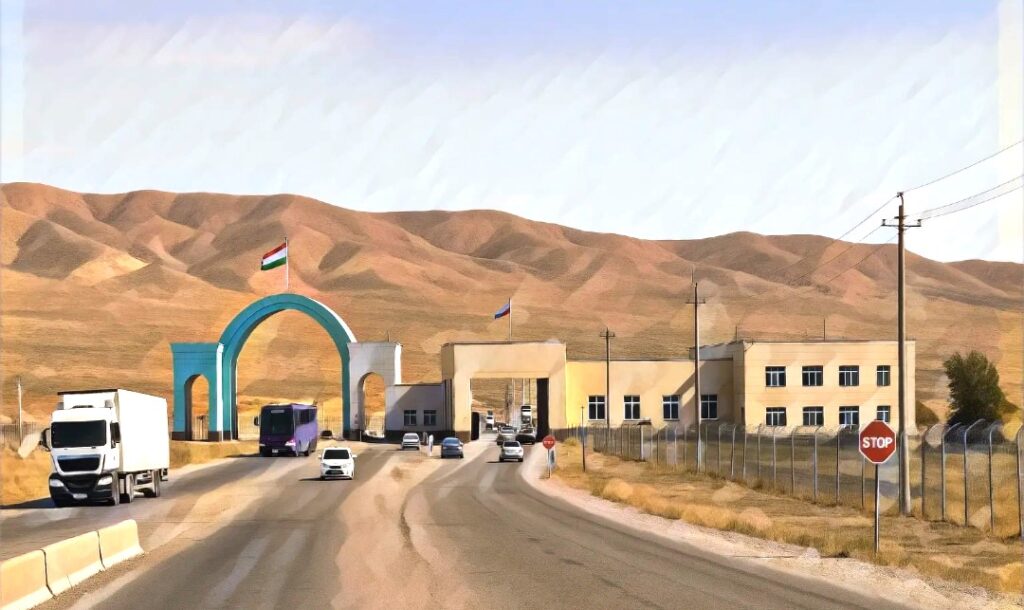
The year 2025 will likely be remembered as a milestone in Central Asian diplomacy. Regional leaders signed landmark agreements on water and energy cooperation and launched major investment projects. At high-level meetings, Central Asian presidents emphasized a new phase of deeper cooperation and greater unity, highlighting strategic partnership and shared development goals. But at ground level, at border crossings such as Korday between Kazakhstan and Kyrgyzstan, or the congested diversion routes replacing the closed Zhibek Zholy checkpoint, the picture is far less seamless. Long queues, heightened scrutiny, and bureaucratic delays remain the norm. While political rhetoric celebrates unity, the reality on the ground tells a different story. The region’s physical borders remain tightly controlled. A key symbol of unrealized integration is the stalled “Silk Visa” project, a proposed Central Asian version of the Schengen visa that would allow tourists to travel freely across the region. The project has made little headway, with experts suggesting that, beyond technical issues, deeper concerns, including economic disparities and security sensitivities, have played a role. Silk Visa: A Stalled Vision Launched in 2018 by Uzbekistan and Kazakhstan, the Silk Visa was envisioned as a game-changer for regional tourism and mobility. Under the scheme, tourists with a visa to one participating country could move freely across Central Asia, from Almaty to Samarkand and Bishkek. Seven years on, the project has yet to materialize. Official explanations point to the difficulty of integrating databases on “undesirable persons.” But as Uzbekistan’s Deputy Prime Minister acknowledged earlier this year, the delay stems from the need to harmonize security services and create a unified system. Experts also cite diverging visa policies and resistance from national security agencies unwilling to share sensitive data. As long as each country insists on determining independently whom to admit or blacklist, the Silk Visa will remain more aspiration than policy. Economic Imbalance: The Silent Barrier The most significant, albeit rarely acknowledged, hurdle to regional openness is economic inequality. Kazakhstan’s GDP per capita, at over $14,000, is significantly higher than that of Uzbekistan or Kyrgyzstan, which hover around $2,500-3,000. This disparity feeds fears in Astana that full border liberalization would trigger a wave of low-skilled labor migration, putting strain on Kazakhstan’s urban infrastructure and labor market. While Kazakhstan is eager to export goods, services, and capital across Central Asia, it remains reluctant to import unemployment or social tension. Migration pressure is already high: according to Uzbekistan’s Migration Agency, the number of Uzbek workers in Kazakhstan reached 322,700 in early 2025. Removing border controls entirely could exacerbate this trend, overwhelming already stretched public services. Security Concerns and Regional Tensions The geopolitical landscape further complicates the dream of borderless travel. A truly open regional system would require a strong, unified external border, something unattainable given Afghanistan’s proximity. The persistent threats of drug trafficking and extremist infiltration compel Uzbekistan and Tajikistan to maintain tight border controls. Kazakhstan, while geographically removed, remains cautious about loosening controls along its southern frontier. Moreover, despite recent agreements on delimiting the Kyrgyz–Tajik border, tensions in...