• KGS/USD = 0.01144 0%
  • KZT/USD = 0.00198 0%
  • TJS/USD = 0.10857 -0.18%
  • UZS/USD = 0.00008 0%
  • TMT/USD = 0.28571 0%
  • KGS/USD = 0.01144 0%
  • KZT/USD = 0.00198 0%
  • TJS/USD = 0.10857 -0.18%
  • UZS/USD = 0.00008 0%
  • TMT/USD = 0.28571 0%
  • KGS/USD = 0.01144 0%
  • KZT/USD = 0.00198 0%
  • TJS/USD = 0.10857 -0.18%
  • UZS/USD = 0.00008 0%
  • TMT/USD = 0.28571 0%
  • KGS/USD = 0.01144 0%
  • KZT/USD = 0.00198 0%
  • TJS/USD = 0.10857 -0.18%
  • UZS/USD = 0.00008 0%
  • TMT/USD = 0.28571 0%
  • KGS/USD = 0.01144 0%
  • KZT/USD = 0.00198 0%
  • TJS/USD = 0.10857 -0.18%
  • UZS/USD = 0.00008 0%
  • TMT/USD = 0.28571 0%
  • KGS/USD = 0.01144 0%
  • KZT/USD = 0.00198 0%
  • TJS/USD = 0.10857 -0.18%
  • UZS/USD = 0.00008 0%
  • TMT/USD = 0.28571 0%
  • KGS/USD = 0.01144 0%
  • KZT/USD = 0.00198 0%
  • TJS/USD = 0.10857 -0.18%
  • UZS/USD = 0.00008 0%
  • TMT/USD = 0.28571 0%
  • KGS/USD = 0.01144 0%
  • KZT/USD = 0.00198 0%
  • TJS/USD = 0.10857 -0.18%
  • UZS/USD = 0.00008 0%
  • TMT/USD = 0.28571 0%
05 December 2025

Viewing results 1 - 6 of 3

Kazakhstan’s Cultural Reawakening: Almaty Opens Its New Museum of Arts

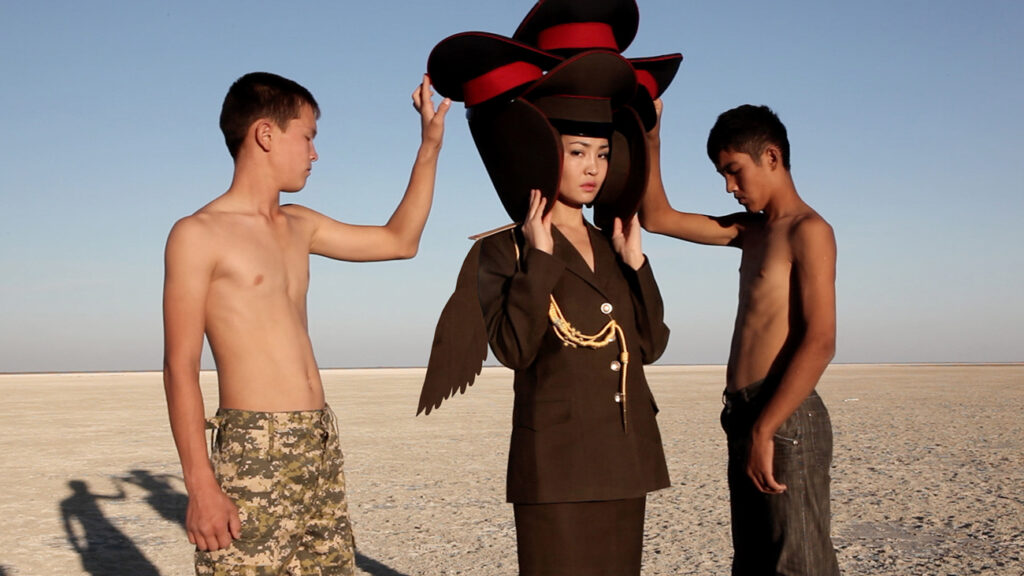
First, a young Kazakh schoolgirl in a black dress with a starched collar, her hair tousled by the wind of the Aral Sea, clutches a large Russian book tightly to her chest as she stands before a lonely school building in the middle of nowhere. Then, a camel speaks: “Give me back the sea!” “No!” cries a woman, her face hidden beneath a military hat. She stands before an abandoned edifice, her head wrapped in fur, her body strangely adorned with eggs. [caption id="attachment_36257" align="aligncenter" width="900"] Image: Almagul Menlibayeva[/caption] This series of surreal images is from the video Transoxiana Dream, by one of Central Asia’s pioneering contemporary artists, Almagul Menlibayeva. The Times of Central Asia attended her major solo show, I Understand Everything, curated by Thai curator Gritiya Gaweewong, a powerful exploration of memory, trauma, and identity, which provides the “treble clef” for the opening of the Almaty Museum of Arts. The show brings together works spanning decades, from Menlibayeva’s early paintings and collages in the 1980s, to her recent internationally recognized video and photography works. Through a variety of mediums, she charts the collapse of the Soviet Union, the ecological devastation of Kazakhstan, and suppressed cultural memory. [caption id="attachment_36258" align="aligncenter" width="2560"] Almagul Menlibayeva, People Talking against a Blue Background, 1988; image: Almaty Museum of Arts[/caption] As always in her practice, the feminine and feminist narratives are at the forefront. Menlibayeva’s women are at times bound with nature or with military rule, alternately merciful or merciless. Her works tackle ecological concerns, tying them directly to the destruction of patriarchy. “For us, opening our program with Menlibayeva’s show was highly significant,” says Meruyert Kaliyeva, the museum’s artistic director. “She is a pioneering Central Asian artist who is known internationally but at the same time has always dealt with topics and themes that are important locally.” A New Museum in Almaty The inauguration of the Almaty Museum of Arts represents a decisive step in shaping Kazakhstan’s creative future. As the country’s first large-scale contemporary art museum, it houses over 700 works collected across three decades, offering a panoramic view of modern Kazakh art while opening pathways to Central Asian and international dialogues. [caption id="attachment_36265" align="aligncenter" width="2560"] Almaty Museum of Arts; image: Alexey Poptsov[/caption] Its mission extends beyond exhibitions: the institution positions itself as a center for education, research, and collaboration, aiming to nurture local artists and connect them to global networks. For Kazakhstan, long without a dedicated contemporary art museum, this moment signals a new era, one in which cultural identity is asserted with confidence, and the arts are recognized as a vital force for national memory as well as international visibility. Kaliyeva emphasizes how essential it is that Kazakh artists now have a platform where voices once peripheral to national culture can take center stage. She also stresses the urgency of the moment: in a world reshaped by geopolitical fractures, climate crises, and cultural decolonization, this opening is necessary: “It’s a moment for Kazakhstan to assert its own narratives, to host...

Almaty to Open Central Asia’s First Private Museum of Contemporary Art

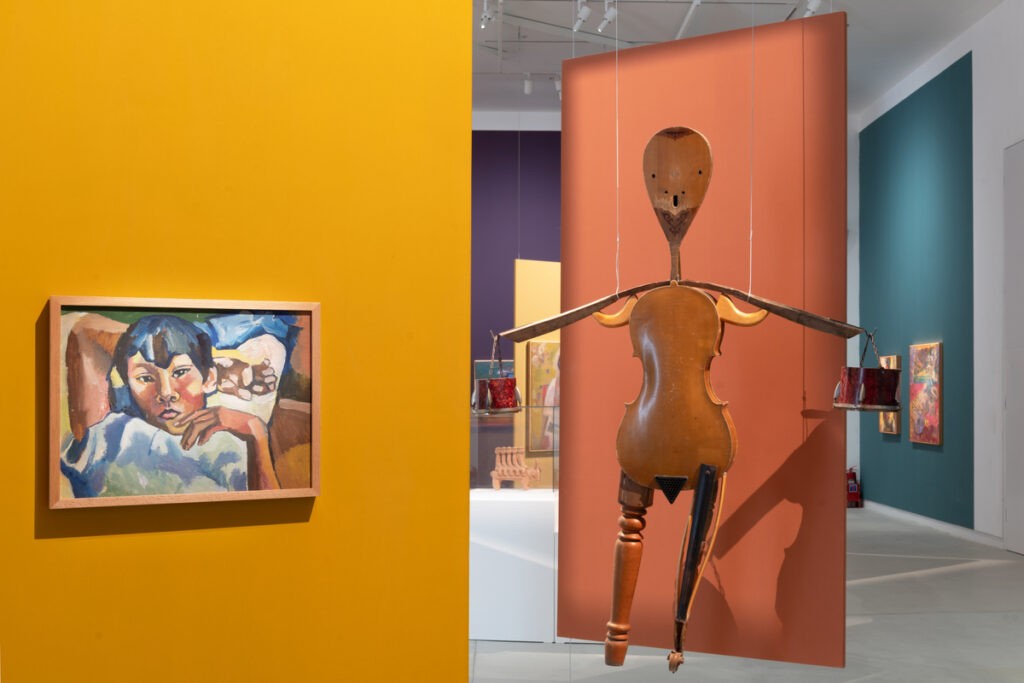
Almaty is preparing for a cultural milestone of international significance. In September 2025, the Almaty Museum of Arts will open its doors as the first private museum of contemporary art in Central Asia. The project is poised to reshape Kazakhstan’s cultural landscape and position Almaty as a new regional hub for artists, curators, and global audiences. Architecture and Concept The 10,000-square-meter building was designed by British firm Chapman Taylor, in collaboration with Buro Happold and Lord Cultural Resources. The architectural concept draws on Almaty’s unique identity: stone elements evoke the surrounding mountains, while metal structures reflect the city's dynamism. Together, they create a space where art exists in a dialogue with both nature and urban life. The museum will include permanent and temporary exhibition halls, artist studios, educational auditoriums, a performance venue, a restoration laboratory, a café, and a museum shop. [caption id="attachment_35388" align="aligncenter" width="657"] Image: Almaty Museum of Arts[/caption] Investment and Collection The project is valued at approximately $100 million, with $30 million allocated for construction and $70 million for building the collection and outfitting the museum. The collection already comprises more than 700 works, spanning Kazakh and Central Asian artists as well as internationally renowned figures such as Yayoi Kusama, Alicja Kwade, Richard Serra, Yinka Shonibare, and Bill Viola. One permanent installation has already captured the public's attention: Nades, a 12-meter sculpture by Spanish artist Jaume Plensa, stands at the museum's main entrance. Depicting a young girl with her eyes closed, the artwork has sparked mixed reactions. Museum founder Nurlan Smagulov described it as a symbol of the "strength, dignity, and beauty of women.” While some praised its serenity and conceptual elegance, others questioned its cost and originality. Regardless, Nades has succeeded in igniting a public discourse, something all meaningful art aspires to, making the museum a topic of national conversation before its official opening. [caption id="attachment_35389" align="aligncenter" width="527"] Image: Almaty Museum of Arts[/caption] Curators and Opening Program Meruert Kalieva, founder of Almaty’s Aspan Gallery, has been appointed artistic director. The museum’s chief curator will be Inga Lāce, formerly of the Latvian Centre for Contemporary Art and a contributor to the Venice Biennale. The inaugural program includes: “I Understand Everything” - a solo exhibition by Kazakh artist Almagul Menlibayeva, tracing her work since the 1980s, and “Qonaqtar” - a group exhibition exploring themes of hospitality and migration, curated from the museum’s growing collection. [caption id="attachment_35399" align="aligncenter" width="884"] Aisha Galimbaeva, "Shepherd's Wedding", 1965; image: Almaty Museum of Arts[/caption] Role for the City and the Region The Almaty Museum of Arts aims to serve as a bridge between Central Asia and the global contemporary art world. Beyond exhibitions, it will function as an educational platform, hosting lectures, masterclasses, and programming for children and students. The institution is expected to boost the local art scene while drawing international visitors, contributing to the creation of a new cultural district in Almaty. More broadly, it signals Central Asia’s readiness to participate fully in global artistic discourse. Almaty stands to emerge as the cultural...

Spanish Artist Jaume Plensa Unveils “Nades” Sculpture for Almaty Museum of Arts

A new 12-meter sculpture titled Nades, created by internationally acclaimed Spanish artist Jaume Plensa, has been unveiled in Almaty. Commissioned specifically for the future Almaty Museum of Arts, the piece was presented during a special ceremony attended by the museum’s founder, Kazakhstani entrepreneur and arts patron Nurlan Smagulov. “We dreamed of having a work of art next to the museum that would become an important part of Almaty. Nades is the embodiment of female strength, dignity, and beauty,” Smagulov said. The sculpture portrays the head of a young woman with closed eyes and two long braids, a nod to the traditional image of a Kazakh girl. According to Plensa, the work is based on a real face that was scanned and then abstracted into a universal symbol. “I work with real people, I scan their faces and transform the image until their individuality disappears. I want every viewer to recognize themselves in them. These faces become mirrors,” Plensa explained. Born in Barcelona in 1955, Plensa is known for his monumental public sculptures installed in cities around the world. His notable works include Water’s Soul (2020, Jersey City), Julia (2018, Madrid), Roots (2014, Tokyo), Soul (2011, Singapore), and Alchemist (2010, MIT, Boston). The Almaty Museum of Arts, Kazakhstan’s first private contemporary art museum, is set to open in September 2025. It will showcase a collection of over 700 works from Kazakhstan, Central Asia, and beyond, all curated from Smagulov’s personal collection.