Almaty is preparing for a cultural milestone of international significance. In September 2025, the Almaty Museum of Arts will open its doors as the first private museum of contemporary art in Central Asia. The project is poised to reshape Kazakhstan’s cultural landscape and position Almaty as a new regional hub for artists, curators, and global audiences.
Architecture and Concept
The 10,000-square-meter building was designed by British firm Chapman Taylor, in collaboration with Buro Happold and Lord Cultural Resources. The architectural concept draws on Almaty’s unique identity: stone elements evoke the surrounding mountains, while metal structures reflect the city’s dynamism. Together, they create a space where art exists in a dialogue with both nature and urban life.
The museum will include permanent and temporary exhibition halls, artist studios, educational auditoriums, a performance venue, a restoration laboratory, a café, and a museum shop.
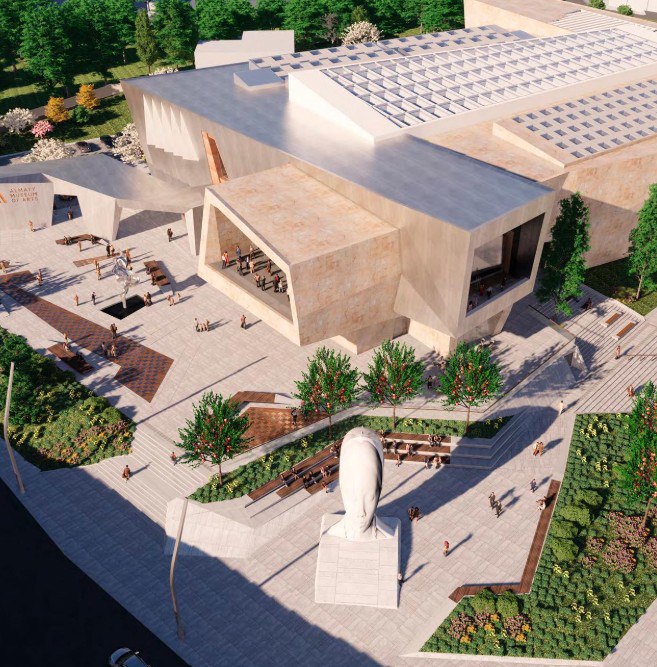
Image: Almaty Museum of Arts
Investment and Collection
The project is valued at approximately $100 million, with $30 million allocated for construction and $70 million for building the collection and outfitting the museum. The collection already comprises more than 700 works, spanning Kazakh and Central Asian artists as well as internationally renowned figures such as Yayoi Kusama, Alicja Kwade, Richard Serra, Yinka Shonibare, and Bill Viola.
One permanent installation has already captured the public’s attention: Nades, a 12-meter sculpture by Spanish artist Jaume Plensa, stands at the museum’s main entrance. Depicting a young girl with her eyes closed, the artwork has sparked mixed reactions. Museum founder Nurlan Smagulov described it as a symbol of the “strength, dignity, and beauty of women.” While some praised its serenity and conceptual elegance, others questioned its cost and originality. Regardless, Nades has succeeded in igniting a public discourse, something all meaningful art aspires to, making the museum a topic of national conversation before its official opening.
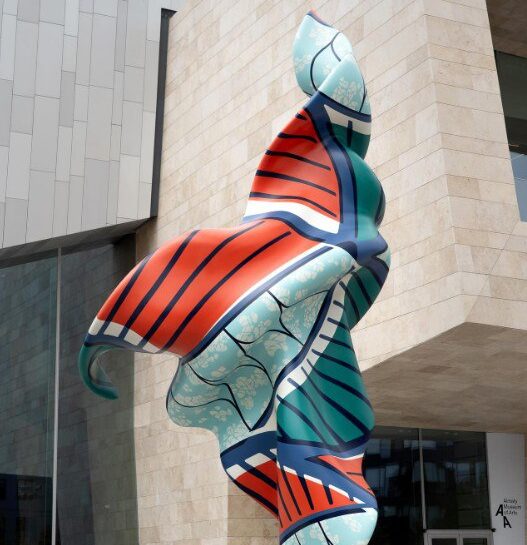
Image: Almaty Museum of Arts
Curators and Opening Program
Meruert Kalieva, founder of Almaty’s Aspan Gallery, has been appointed artistic director. The museum’s chief curator will be Inga Lāce, formerly of the Latvian Centre for Contemporary Art and a contributor to the Venice Biennale.
The inaugural program includes: “I Understand Everything” – a solo exhibition by Kazakh artist Almagul Menlibayeva, tracing her work since the 1980s, and “Qonaqtar” – a group exhibition exploring themes of hospitality and migration, curated from the museum’s growing collection.
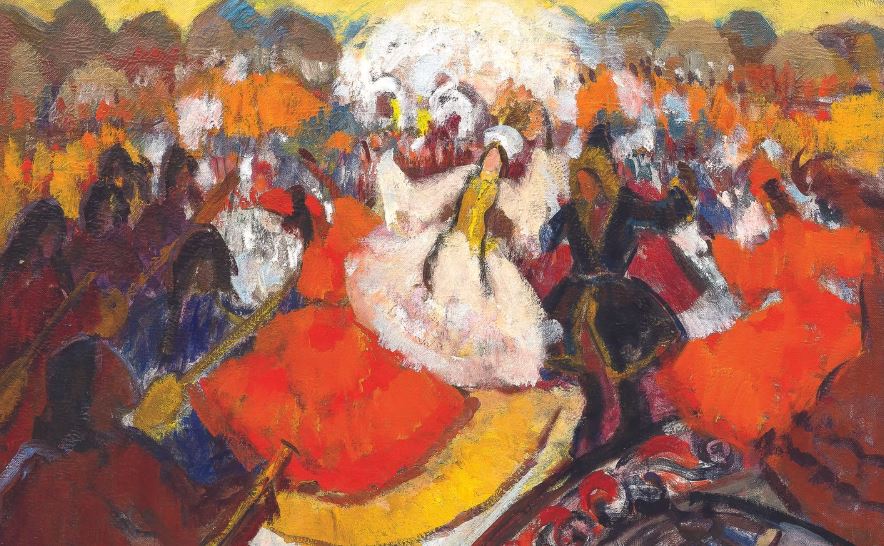
Aisha Galimbaeva, “Shepherd’s Wedding”, 1965; image: Almaty Museum of Arts
Role for the City and the Region
The Almaty Museum of Arts aims to serve as a bridge between Central Asia and the global contemporary art world. Beyond exhibitions, it will function as an educational platform, hosting lectures, masterclasses, and programming for children and students.
The institution is expected to boost the local art scene while drawing international visitors, contributing to the creation of a new cultural district in Almaty. More broadly, it signals Central Asia’s readiness to participate fully in global artistic discourse. Almaty stands to emerge as the cultural capital of the region, with the museum itself symbolizing Kazakhstan’s modernity, hospitality, and creative vitality.
As one installation has already demonstrated, if a single artwork can inspire debate and reflection, the full unveiling of the museum is likely to resonate far beyond Kazakhstan’s borders.