
• KGS/USD = 0.01144 0%
  • KZT/USD = 0.00208 0%
  • TJS/USD = 0.10465 -0.29%
  • UZS/USD = 0.00008 0%
  • TMT/USD = 0.28571 0%
  • KGS/USD = 0.01144 0%
  • KZT/USD = 0.00208 0%
  • TJS/USD = 0.10465 -0.29%
  • UZS/USD = 0.00008 0%
  • TMT/USD = 0.28571 0%
  • KGS/USD = 0.01144 0%
  • KZT/USD = 0.00208 0%
  • TJS/USD = 0.10465 -0.29%
  • UZS/USD = 0.00008 0%
  • TMT/USD = 0.28571 0%
  • KGS/USD = 0.01144 0%
  • KZT/USD = 0.00208 0%
  • TJS/USD = 0.10465 -0.29%
  • UZS/USD = 0.00008 0%
  • TMT/USD = 0.28571 0%
  • KGS/USD = 0.01144 0%
  • KZT/USD = 0.00208 0%
  • TJS/USD = 0.10465 -0.29%
  • UZS/USD = 0.00008 0%
  • TMT/USD = 0.28571 0%
  • KGS/USD = 0.01144 0%
  • KZT/USD = 0.00208 0%
  • TJS/USD = 0.10465 -0.29%
  • UZS/USD = 0.00008 0%
  • TMT/USD = 0.28571 0%
  • KGS/USD = 0.01144 0%
  • KZT/USD = 0.00208 0%
  • TJS/USD = 0.10465 -0.29%
  • UZS/USD = 0.00008 0%
  • TMT/USD = 0.28571 0%
  • KGS/USD = 0.01144 0%
  • KZT/USD = 0.00208 0%
  • TJS/USD = 0.10465 -0.29%
  • UZS/USD = 0.00008 0%
  • TMT/USD = 0.28571 0%

Viewing results 1 - 6 of 4

Kazakhstan Prepares for Its First-Ever Administrative Amnesty

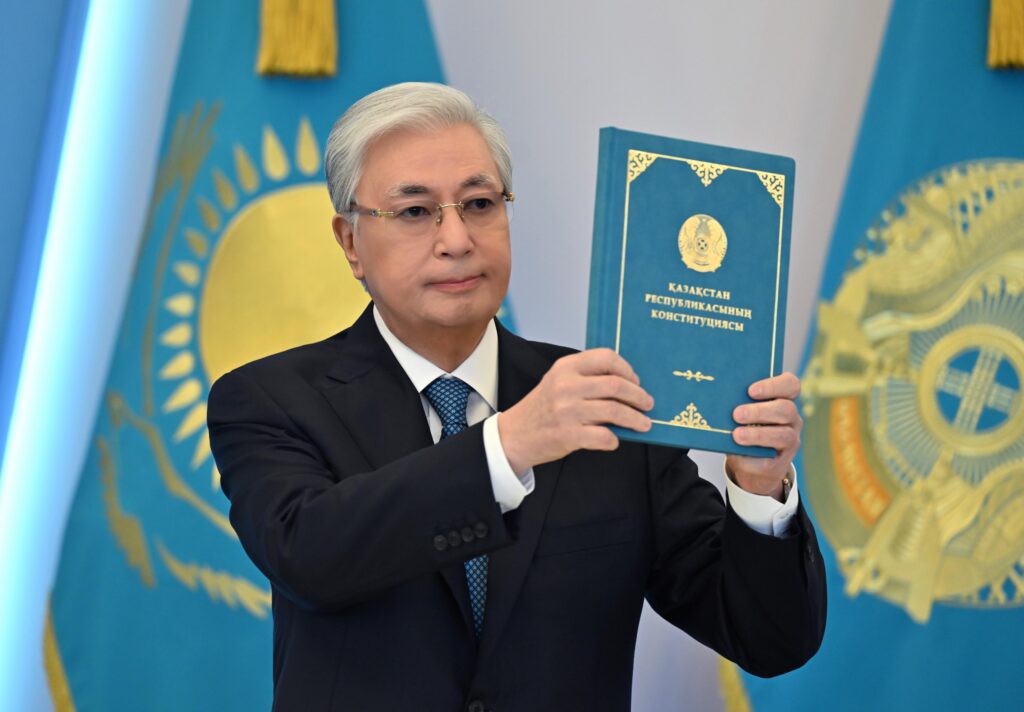
President Kassym-Jomart Tokayev has announced plans to introduce Kazakhstan’s first-ever administrative amnesty. The statement was made during a ceremony marking the adoption of the country’s new Constitution. In the past, Kazakhstan has periodically granted amnesties to individuals convicted of criminal offenses, often timed to coincide with national anniversaries. The most recent such amnesty was carried out in 2025 to mark the 30th anniversary of the Constitution. The new initiative is linked to the adoption of the updated Constitution. On March 15, a nationwide referendum was held in which a majority of voters supported the new basic law. The document is scheduled to enter into force on July 1, 2026. Speaking at the ceremony, Tokayev said that constitutional reform represents a transition to a new stage in the country’s development and requires a reassessment of the relationship between the state and society. “The People’s Constitution is a strategic mandate of trust and a new social contract aimed at long-term goals and horizons of progress,” the president said. He instructed parliament to adopt an amnesty law by the end of the current session. The proposed amnesty is expected to cover a range of criminal and administrative offenses that do not pose a threat to public or national security. The current parliamentary session is due to conclude at the end of June. Under the new Constitution, however, the powers of the existing parliament will cease on July 1, 2026, the same day the new constitutional framework enters into force. In the near future, five new constitutional laws are expected to be submitted to parliament, including legislation governing the presidency, the Kurultai (the future parliament), the Halyk Kenesi (People's Council), as well as laws regulating the status of the capital and the country’s administrative-territorial structure. According to Tokayev, eight existing constitutional laws and more than 60 regulatory acts, including key legal codes, will also require revision. These legislative changes are expected to be synchronized with upcoming parliamentary elections. Elections to the new unicameral parliament are likely to take place before the opening of the next parliamentary session, which traditionally begins on September 1. As a result, voting could be held within the coming months. “By that time, preparation of the necessary legal framework must be fully completed. The comprehensive transformation of Kazakhstan’s legal and political system will continue throughout this year and possibly into the next,” the president said. According to Tokayev, the reforms envisage the creation of new state institutions, as well as structural and personnel changes within existing government bodies.


Kazakhstan to Grant Amnesty to More Than 15,000 Inmates and Offenders

Kazakhstan’s Senate has passed a bill granting amnesty to more than 15,000 individuals in connection with the 30th anniversary of the country’s Constitution. The draft law, which has been approved by both chambers of parliament, will take effect once it is signed by President Kassym-Jomart Tokayev. According to the bill, approximately 4,100 individuals currently serving sentences will be fully released from criminal liability, while the sentences or penalties of an additional 11,000 convicts will be reduced or softened. However, only a small fraction of those covered by the amnesty, fewer than 1,000, are expected to be released from prison. As explained by MP Abzal Kuspan, 632 of those eligible for full release are currently incarcerated. The remaining 3,500 individuals to be released are to be placed under the supervision of the probation service and are serving non-custodial sentences. The amnesty targets individuals convicted of minor or moderate offenses, particularly those who have not caused harm or who have compensated for any damage caused. It also applies to socially vulnerable groups. Among those eligible are 833 women, of whom 109 will be released and 724 will have their sentences reduced. Only four of the 75 convicted minors in Kazakhstan will be granted amnesty, due to the fact that most underage offenders are serving sentences for serious or particularly serious crimes. “The reason is that minors in our country are mostly convicted of serious and particularly serious offenses,” Kuspan explained. The amnesty explicitly excludes individuals convicted of serious or particularly serious crimes, including corruption, terrorism, extremism, crimes against the sexual integrity of minors, torture, repeat offenses, and those serving life sentences. Currently, 624 people in Kazakhstan are imprisoned for corruption-related crimes, 294 for terrorism, 96 for extremism, and 48 for torture. In total, over 40,000 individuals are held in the country’s criminal justice system, which includes 63 penal institutions and 16 pre-trial detention centers. Of these, approximately 33,000 are convicted prisoners, while 7,000 are awaiting trial. In recent years, the Kazakh authorities have introduced a series of reforms aimed at strengthening the protection of the rights of detainees and convicts. These efforts are part of a broader push to improve transparency and accountability in the justice system.