• KGS/USD = 0.01144 0%
  • KZT/USD = 0.00213 0%
  • TJS/USD = 0.10792 -0.28%
  • UZS/USD = 0.00008 0%
  • TMT/USD = 0.28490 0%
  • KGS/USD = 0.01144 0%
  • KZT/USD = 0.00213 0%
  • TJS/USD = 0.10792 -0.28%
  • UZS/USD = 0.00008 0%
  • TMT/USD = 0.28490 0%
  • KGS/USD = 0.01144 0%
  • KZT/USD = 0.00213 0%
  • TJS/USD = 0.10792 -0.28%
  • UZS/USD = 0.00008 0%
  • TMT/USD = 0.28490 0%
  • KGS/USD = 0.01144 0%
  • KZT/USD = 0.00213 0%
  • TJS/USD = 0.10792 -0.28%
  • UZS/USD = 0.00008 0%
  • TMT/USD = 0.28490 0%
  • KGS/USD = 0.01144 0%
  • KZT/USD = 0.00213 0%
  • TJS/USD = 0.10792 -0.28%
  • UZS/USD = 0.00008 0%
  • TMT/USD = 0.28490 0%
  • KGS/USD = 0.01144 0%
  • KZT/USD = 0.00213 0%
  • TJS/USD = 0.10792 -0.28%
  • UZS/USD = 0.00008 0%
  • TMT/USD = 0.28490 0%
  • KGS/USD = 0.01144 0%
  • KZT/USD = 0.00213 0%
  • TJS/USD = 0.10792 -0.28%
  • UZS/USD = 0.00008 0%
  • TMT/USD = 0.28490 0%
  • KGS/USD = 0.01144 0%
  • KZT/USD = 0.00213 0%
  • TJS/USD = 0.10792 -0.28%
  • UZS/USD = 0.00008 0%
  • TMT/USD = 0.28490 0%

Viewing results 1 - 6 of 4

Tajikistan Amnesty to Free or Reduce Sentences for More Than 18,000

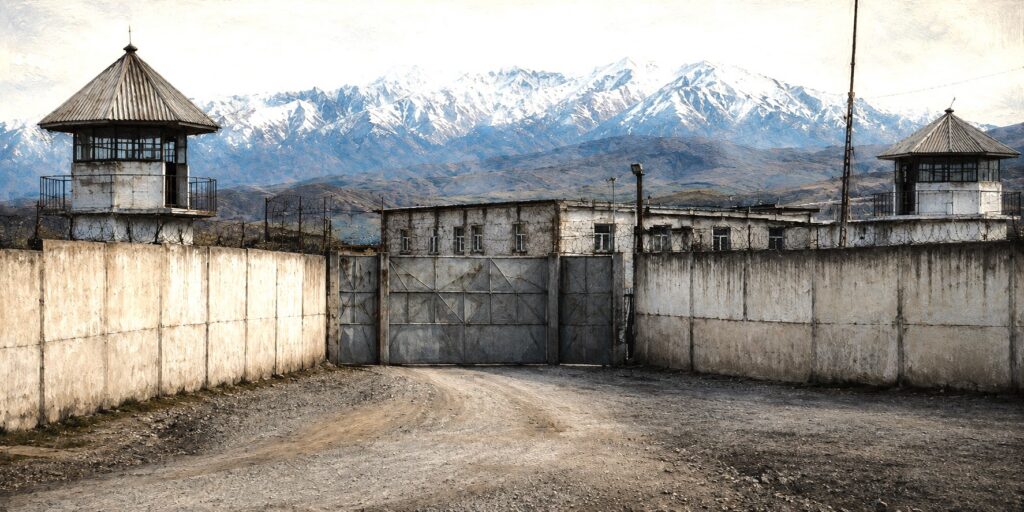
President Emomali Rahmon has signed an amnesty law covering 18,038 convicted people as Tajikistan prepares to mark 35 years of independence. The measure provides full release for 11,305 people and reduces the unserved terms of 6,733 others. The 11,305 figure includes prison and settlement-colony sentences, along with punishments that do not involve custody. Women and minors will receive wider relief. Of 507 women serving sentences, 248 will be released, and 259 will receive shorter terms. Of 134 minors, 99 will be freed, and 35 will have their sentences reduced. Rahmon submitted the bill to the lower house of parliament on June 16 and signed it after adoption. The anniversary falls on September 9. His office said the measure would allow offenders to “return to their families and relatives, and engage in constructive work.” The published law gives broad eligibility to women, minors, men over 55, foreign citizens, people with disabilities, and people with specified serious illnesses. War veterans, certain mobilized personnel, Chornobyl victims and cleanup workers, and holders of state awards also qualify, subject to the law’s exclusions. People convicted of negligent offenses can also receive full release, subject to the law’s restrictions. Several groups serving deferred, suspended, or non-custodial sentences can qualify, as can people in settlement colonies or on parole. For intentional offenses, people sentenced to up to five years for minor or medium-severity crimes may qualify for release. People convicted of serious crimes may qualify after serving one-third of their terms. Those convicted of especially serious crimes may qualify after serving three-quarters. Exclusion clauses still apply. The law restricts full release for a long list of offenses, including provisions on murder, rape, terrorism, extremist activity, and serious drug trafficking. It also excludes life prisoners, especially dangerous repeat offenders, people whose death sentences were commuted, and prisoners convicted of intentional crimes while incarcerated. Some specified convictions can still receive fixed reductions of one, two, or three years. Eligible cases still under investigation or before the courts can be closed when the offense occurred before the law’s adoption. The measure also removes criminal records for people convicted of minor or medium-severity offenses committed before June 16. The authorities must decide every case individually. Investigators, military commanders, and prison authorities need a prosecutor’s approval. Courts must consider applications with a prosecutor present. The amnesty does not cancel additional penalties or duties to compensate victims. Local governments must help released people find work and return minors to their families or arrange education and care. Medical and social institutions must accommodate people who need treatment or supported housing. The law took effect after official publication. State bodies have two months to complete its implementation, after which the prosecutor general must report to Rahmon. Nurullo Mahmadullozoda, a legal scholar at Tajikistan’s National Academy of Sciences, said: “A person cannot be reformed through punishment alone.” He called for employment support, legal advice, psychological help, and restored social ties after release. The law names categories and Criminal Code provisions rather than individual beneficiaries. Whether any...

Kazakhstan Amnesty Bill Could Free 1,500 Inmates, Excludes Violent Offenders

Kazakhstan’s Mazhilis, the lower house of parliament, has approved in its first reading a draft amnesty law tied to the adoption of the country’s new Constitution. The measure could affect approximately 16,500 people, including around 1,500 inmates who could be released from prisons and other detention facilities. The initiative is notable for its scale and because it combines criminal and administrative amnesty measures for the first time in Kazakhstan’s history. According to lawmakers, the administrative component alone could affect around one million unpaid fines. The proposal has sparked public debate over whether individuals involved in high-profile criminal cases could benefit from the measure. Some lawmakers have also argued that journalists and bloggers convicted under controversial legislation should be included. Who Will Benefit? According to Snezhanna Imasheva, chair of the Mazhilis Committee on Legislation and Judicial and Legal Reform, individuals convicted of minor offenses and criminal misdemeanors would be eligible for full release from punishment. For offenses classified as medium severity, a different approach would apply. Individuals who caused no damage, or who have fully compensated victims, could qualify for complete release. Others could receive reductions in the remaining portions of their sentences. Among the most common offenses covered by the amnesty are theft, livestock theft, and embezzlement or misappropriation of entrusted property. Certain economic crimes may also qualify for partial sentence reductions. In some cases, individuals convicted of fraud could receive reduced sentences, provided the offenses do not involve corruption, particularly large-scale damages, or other exclusions specified in the legislation. Imasheva said that approximately one million unpaid administrative fines totaling nearly $33 million could be written off. The measure would apply to fines for offenses committed before midnight on March 17, 2026, shortly after Kazakhstan’s new Constitution was adopted in a nationwide referendum. Who Will Not Be Released? The draft law excludes crimes against life and health, corruption offenses, terrorism, and extremism. Those convicted of murder, assisting suicide, intentional infliction of serious, moderate, or minor bodily harm, assault, torture, stalking, HIV transmission, and sexual offenses will not be eligible for amnesty. Those convicted of murder, assisting suicide, intentional infliction of bodily harm, assault, torture, stalking, HIV transmission, and sexual offenses will not be eligible for amnesty. The measure also excludes recently criminalized offenses such as acting as a financial “dropper” in fraud schemes and bride kidnapping. High-Profile Convicts Remain Excluded Former minister of national economy Kuandyk Bishimbayev, who was convicted in May 2024 of murdering his common-law wife, Saltanat Nukenova, will neither be released nor receive a sentence reduction. His convictions for murder committed with extreme cruelty and torture fall among the offenses excluded from the amnesty. Another widely publicized defendant, Perizat Kairat, will also be ineligible. Kairat, the founder of the charity Biz Birgemiz Qazaqstan 2030, was convicted in a high-profile fraud case involving funds raised for flood victims and other charitable causes. Lawmakers said her conviction for large-scale fraud falls under offenses excluded from the amnesty. In July 2025, Kairat was sentenced to ten years in prison, while her...

Kazakhstan Prepares for Its First-Ever Administrative Amnesty

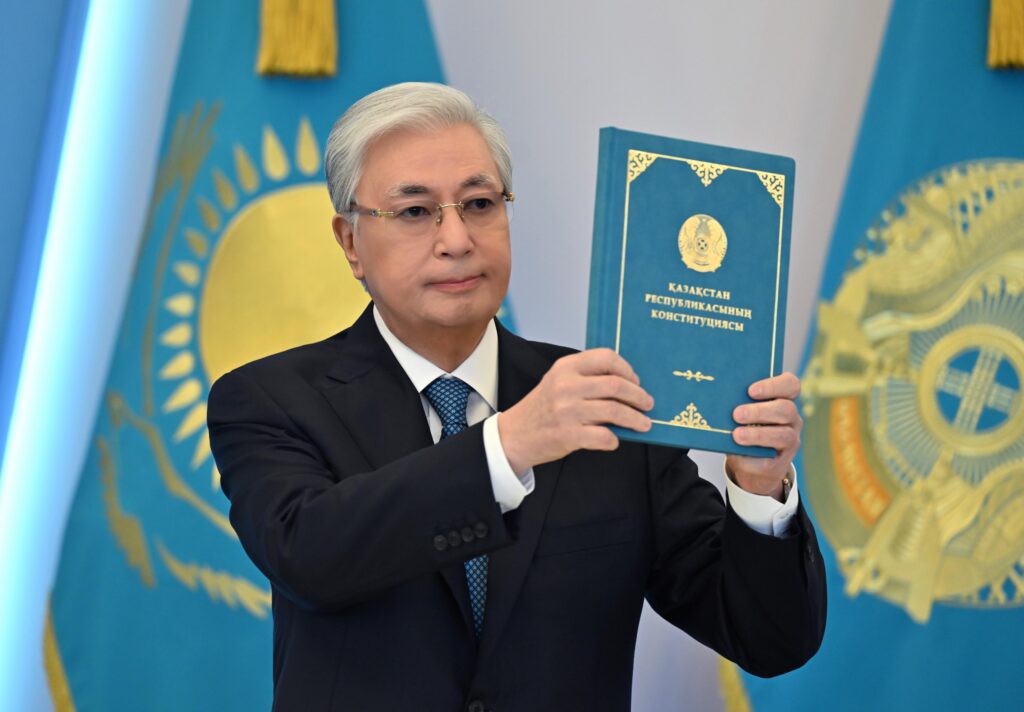
President Kassym-Jomart Tokayev has announced plans to introduce Kazakhstan’s first-ever administrative amnesty. The statement was made during a ceremony marking the adoption of the country’s new Constitution. In the past, Kazakhstan has periodically granted amnesties to individuals convicted of criminal offenses, often timed to coincide with national anniversaries. The most recent such amnesty was carried out in 2025 to mark the 30th anniversary of the Constitution. The new initiative is linked to the adoption of the updated Constitution. On March 15, a nationwide referendum was held in which a majority of voters supported the new basic law. The document is scheduled to enter into force on July 1, 2026. Speaking at the ceremony, Tokayev said that constitutional reform represents a transition to a new stage in the country’s development and requires a reassessment of the relationship between the state and society. “The People’s Constitution is a strategic mandate of trust and a new social contract aimed at long-term goals and horizons of progress,” the president said. He instructed parliament to adopt an amnesty law by the end of the current session. The proposed amnesty is expected to cover a range of criminal and administrative offenses that do not pose a threat to public or national security. The current parliamentary session is due to conclude at the end of June. Under the new Constitution, however, the powers of the existing parliament will cease on July 1, 2026, the same day the new constitutional framework enters into force. In the near future, five new constitutional laws are expected to be submitted to parliament, including legislation governing the presidency, the Kurultai (the future parliament), the Halyk Kenesi (People's Council), as well as laws regulating the status of the capital and the country’s administrative-territorial structure. According to Tokayev, eight existing constitutional laws and more than 60 regulatory acts, including key legal codes, will also require revision. These legislative changes are expected to be synchronized with upcoming parliamentary elections. Elections to the new unicameral parliament are likely to take place before the opening of the next parliamentary session, which traditionally begins on September 1. As a result, voting could be held within the coming months. “By that time, preparation of the necessary legal framework must be fully completed. The comprehensive transformation of Kazakhstan’s legal and political system will continue throughout this year and possibly into the next,” the president said. According to Tokayev, the reforms envisage the creation of new state institutions, as well as structural and personnel changes within existing government bodies.

Kazakhstan to Grant Amnesty to More Than 15,000 Inmates and Offenders

Kazakhstan’s Senate has passed a bill granting amnesty to more than 15,000 individuals in connection with the 30th anniversary of the country’s Constitution. The draft law, which has been approved by both chambers of parliament, will take effect once it is signed by President Kassym-Jomart Tokayev. According to the bill, approximately 4,100 individuals currently serving sentences will be fully released from criminal liability, while the sentences or penalties of an additional 11,000 convicts will be reduced or softened. However, only a small fraction of those covered by the amnesty, fewer than 1,000, are expected to be released from prison. As explained by MP Abzal Kuspan, 632 of those eligible for full release are currently incarcerated. The remaining 3,500 individuals to be released are to be placed under the supervision of the probation service and are serving non-custodial sentences. The amnesty targets individuals convicted of minor or moderate offenses, particularly those who have not caused harm or who have compensated for any damage caused. It also applies to socially vulnerable groups. Among those eligible are 833 women, of whom 109 will be released and 724 will have their sentences reduced. Only four of the 75 convicted minors in Kazakhstan will be granted amnesty, due to the fact that most underage offenders are serving sentences for serious or particularly serious crimes. “The reason is that minors in our country are mostly convicted of serious and particularly serious offenses,” Kuspan explained. The amnesty explicitly excludes individuals convicted of serious or particularly serious crimes, including corruption, terrorism, extremism, crimes against the sexual integrity of minors, torture, repeat offenses, and those serving life sentences. Currently, 624 people in Kazakhstan are imprisoned for corruption-related crimes, 294 for terrorism, 96 for extremism, and 48 for torture. In total, over 40,000 individuals are held in the country’s criminal justice system, which includes 63 penal institutions and 16 pre-trial detention centers. Of these, approximately 33,000 are convicted prisoners, while 7,000 are awaiting trial. In recent years, the Kazakh authorities have introduced a series of reforms aimed at strengthening the protection of the rights of detainees and convicts. These efforts are part of a broader push to improve transparency and accountability in the justice system.