

• KZT/USD = 0.00218
  • TJS/USD = 0.10810
  • UZS/USD = 0.00009
  • TMT/USD = 0.29850
  • KZT/USD = 0.00218
  • TJS/USD = 0.10810
  • UZS/USD = 0.00009
  • TMT/USD = 0.29850
  • KZT/USD = 0.00218
  • TJS/USD = 0.10810
  • UZS/USD = 0.00009
  • TMT/USD = 0.29850
  • KZT/USD = 0.00218
  • TJS/USD = 0.10810
  • UZS/USD = 0.00009
  • TMT/USD = 0.29850
  • KZT/USD = 0.00218
  • TJS/USD = 0.10810
  • UZS/USD = 0.00009
  • TMT/USD = 0.29850
  • KZT/USD = 0.00218
  • TJS/USD = 0.10810
  • UZS/USD = 0.00009
  • TMT/USD = 0.29850
  • KZT/USD = 0.00218
  • TJS/USD = 0.10810
  • UZS/USD = 0.00009
  • TMT/USD = 0.29850
  • KZT/USD = 0.00218
  • TJS/USD = 0.10810
  • UZS/USD = 0.00009
  • TMT/USD = 0.29850
21 August 2026

Viewing results 1 - 6 of 3

Japarov Says Tashiyev Was His Planned Successor as Prosecutors Seek Nine-Year Terms

Kyrgyz President Sadyr Japarov says he once planned to leave office in 2027 and support Kamchybek Tashiyev as his successor, before deciding that his longtime political partner was not ready for the presidency. The disclosure comes as prosecutors are asking an appeals court to impose nine-year prison terms on Tashiyev and seven other defendants in the “Letter of 75” case. Japarov set out the abandoned succession plan in an interview with journalist Ali Toktakunov released on August 13. He said he had expected to complete the six-year term he won in 2021, then leave politics if Tashiyev was ready to take over. “Kamchy would become president, and I would retire. I had such a plan,” Japarov said. The president said he had told Tashiyev about the plan roughly a year earlier and urged him to prepare for the presidency by imposing more discipline on the people around him. Japarov said he later concluded that Tashiyev was not ready. He cited the conduct of some of Tashiyev’s staff and associates, the appearance of the “Letter of 75,” and signs that parliament was being divided between supporters of the president and supporters of “the general,” a reference to Tashiyev. Japarov said he summoned Tashiyev and told him: “This won’t do. You cannot split people.” He said he informed Tashiyev that he would be removed from office, but claimed he was still prepared to allow him to contest the presidential election without obstruction. That account adds a succession dispute to the explanation Japarov gave when he dismissed Tashiyev on February 10 as chairman of the State Committee for National Security (GKNB) and deputy chairman of the Cabinet of Ministers. At the time, the presidency said the decision was needed to “prevent a split in society” and state institutions. Senior GKNB officials were removed soon afterward, the border service was taken out of the hands of the committee, and parliamentary speaker Nurlanbek Turgunbek uulu resigned. Japarov has now drawn a sharp distinction between his personal relationship with Tashiyev and their political future. In another part of the interview, he said the two had been friends since 2005, and their families had been close. “He will remain my friend, but I have no plans to appoint him to any position,” Japarov said. He credited Tashiyev with making a major contribution during his five years at the GKNB, but said he should rest and consider where he had made mistakes. Japarov also confirmed for the first time himself that he intends to seek another term. “I intend to run for another term and continue my work,” he said, according to Reuters. His spokesman had said in 2024 that Japarov planned to run again, but the president had not previously made a public declaration of his own. He said a second term was needed to complete reforms already under way. Japarov also promised that rivals would be free to challenge him. “The road is open. Whoever wants to run, let them run,” he said, adding that there...
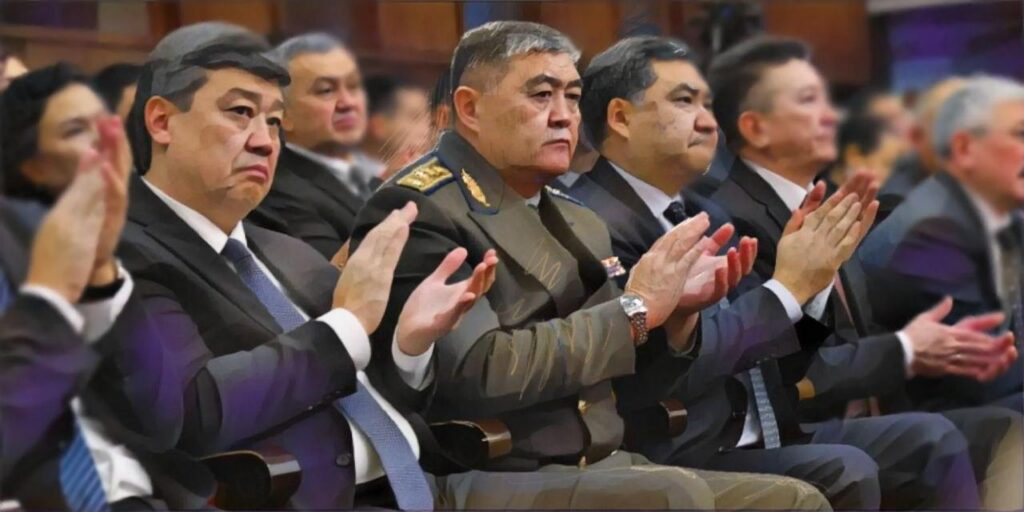

Kyrgyz Prosecutors Seek Nine-Year Prison Terms for Tashiyev and Seven Others

Kyrgyz prosecutors are asking an appeals court to send former security chief Kamchybek Tashiyev and seven other defendants to prison. A lower court convicted all eight in July of preparing to seize power by force, but allowed them to remain free on probation. The appeal is being heard by the Bishkek City Court, with the hearing taking place behind closed doors. Prosecutors are challenging the sentences handed down by the trial court. The “Letter of 75” case arose from an open letter signed on February 9 by 75 politicians, former officials, and public figures. The authors called for an early presidential election amid a dispute over when President Sadyr Japarov’s current term should end. Five of the signatories were among the eight people later charged with preparing to seize power by force. Before his dismissal, Tashiyev had been one of Kyrgyzstan’s most powerful officials and a central figure in Japarov’s government. Japarov appointed his longtime ally to lead the State Committee for National Security (GKNB) after coming to power in 2020, but dismissed him on February 10, 2026, saying the move was needed to “prevent a split in society” and state institutions. The dismissal ended a five-year governing partnership and was followed by personnel changes across the GKNB and other state bodies. Eight people eventually stood trial, including Tashiyev, former Prosecutor General Kurmankul Zulushev, and former parliamentary speaker Nurlanbek Turgunbek uulu. The trial court found all eight guilty and sentenced them to four years in prison with confiscation of property, but exempted them from serving the prison terms and placed them under supervised probation for three years. They were acquitted of the separate charge of abuse of office. The Times of Central Asia previously reported in detail on the verdict and the circumstances surrounding the case. Prosecutors had sought nine-year prison terms at the original trial. According to defense lawyers, they are now asking the appeals court to impose the same terms on all eight defendants. Some of the defendants have also appealed their convictions and are seeking acquittal. During the appeal, the defendants again raised one of the disputed issues in the case: why criminal proceedings targeted only some of the people involved when the open letter had 75 signatories. Five defendants who had signed the letter asked the court to give a legal assessment of the actions of the other 70 signatories. The appeals panel granted the request and agreed that the other signatories could be called for questioning, with the defense responsible for securing their attendance. If prosecutors prevail, the appeal would reverse the main practical outcome of the July trial: all eight defendants were convicted of preparing to seize power by force, but none was sent to prison.

Appeals Filed Against Life Sentences in Crocus City Hall Attack Case

Lawyers representing those convicted of carrying out the 2024 attack at Crocus City Hall have filed appeals against the court’s verdict, arguing that the sentences are excessively harsh, Russian state media reported. According to Russia’s state news agency TASS, defense attorneys have submitted initial appeals on behalf of the main perpetrators and several accomplices following a ruling by the 2nd Western District Military Court. Earlier, the Russian outlet RBC reported that the four gunmen who carried out the attack were sentenced to life imprisonment. The court ruled that they would serve extended initial terms in prison under the strictest conditions before being transferred to high-security penal colonies. In addition to life sentences, the defendants were ordered to pay fines of nearly 1 million rubles (approximately $12,139) each. The court also handed down severe sentences to a number of accomplices. Several received life terms, while others were given lengthy prison sentences of more than 20 years. Financial penalties imposed on accomplices ranged from hundreds of thousands to several million rubles. The attack took place on March 22, 2024, in Krasnogorsk, in the Moscow Region. According to investigators, armed assailants entered the concert venue, opened fire on the audience, and set the building on fire. The assault left 149 people dead and more than 550 injured, and the venue was largely destroyed. During the trial, which lasted around seven months, prosecutors had requested life sentences for the main perpetrators along with substantial fines. They argued that the defendants had undergone training for terrorist activities, illegally handled weapons, and participated in a terrorist organization. At the same time, lawyers representing victims expressed dissatisfaction with parts of the ruling. As cited by RBC, some legal representatives said they had sought even stricter prison conditions for the perpetrators, including longer periods in high-security prisons before transfer to penal colonies. Under Russian law, sentences served in prisons differ significantly from those served in penal colonies. Prison regimes are typically stricter, with limited visitation rights, reduced access to parcels, and tighter daily controls. Both the defense and representatives of victims are now seeking to challenge aspects of the verdict through the appeals process.
