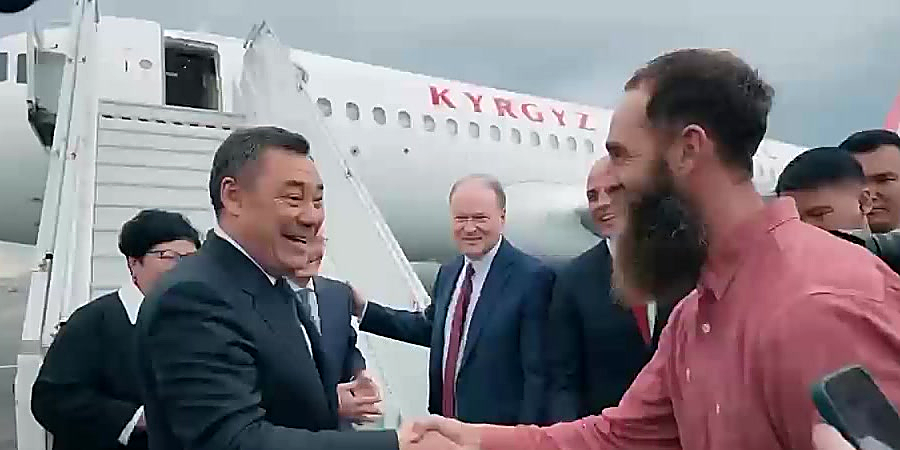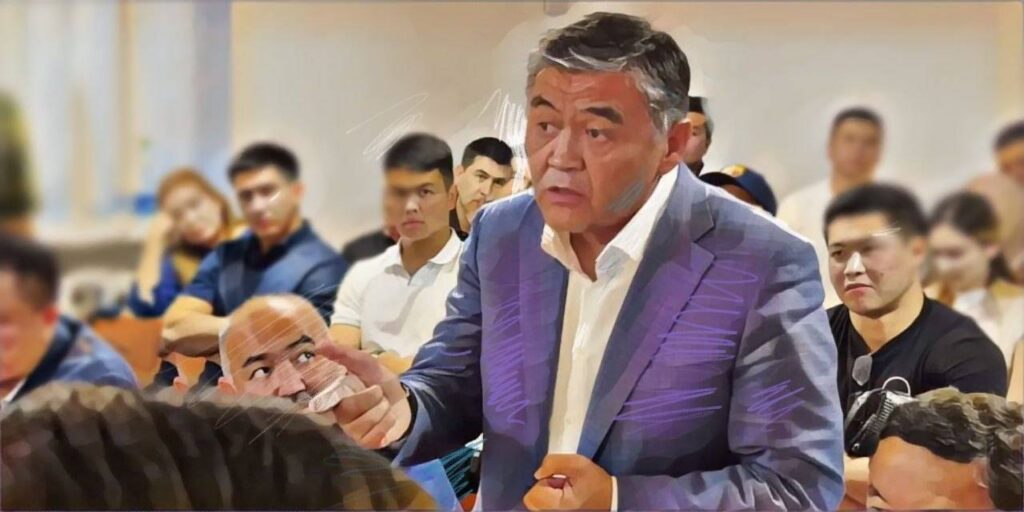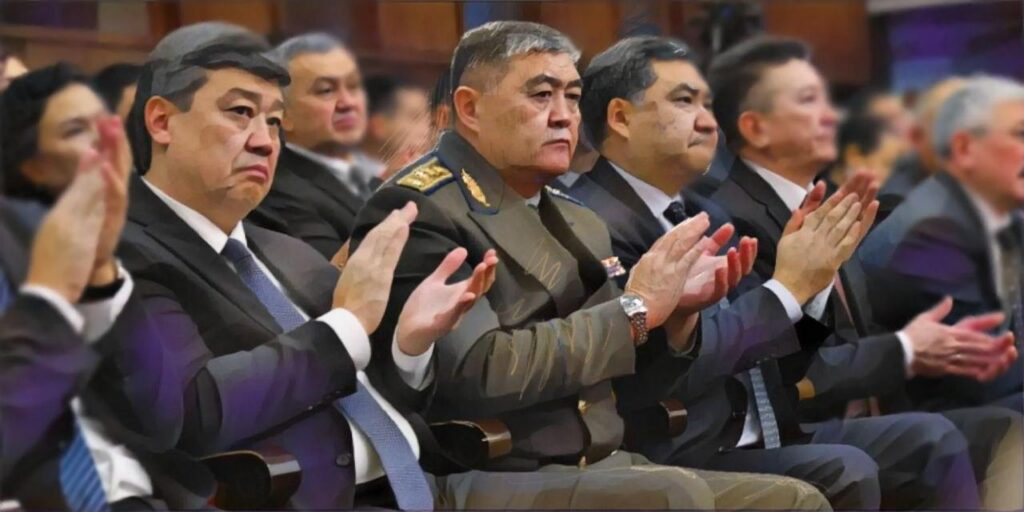
Kyrgyz President Sadyr Japarov says he once planned to leave office in 2027 and support Kamchybek Tashiyev as his successor, before deciding that his longtime political partner was not ready for the presidency. The disclosure comes as prosecutors are asking an appeals court to impose nine-year prison terms on Tashiyev and seven other defendants in the “Letter of 75” case.
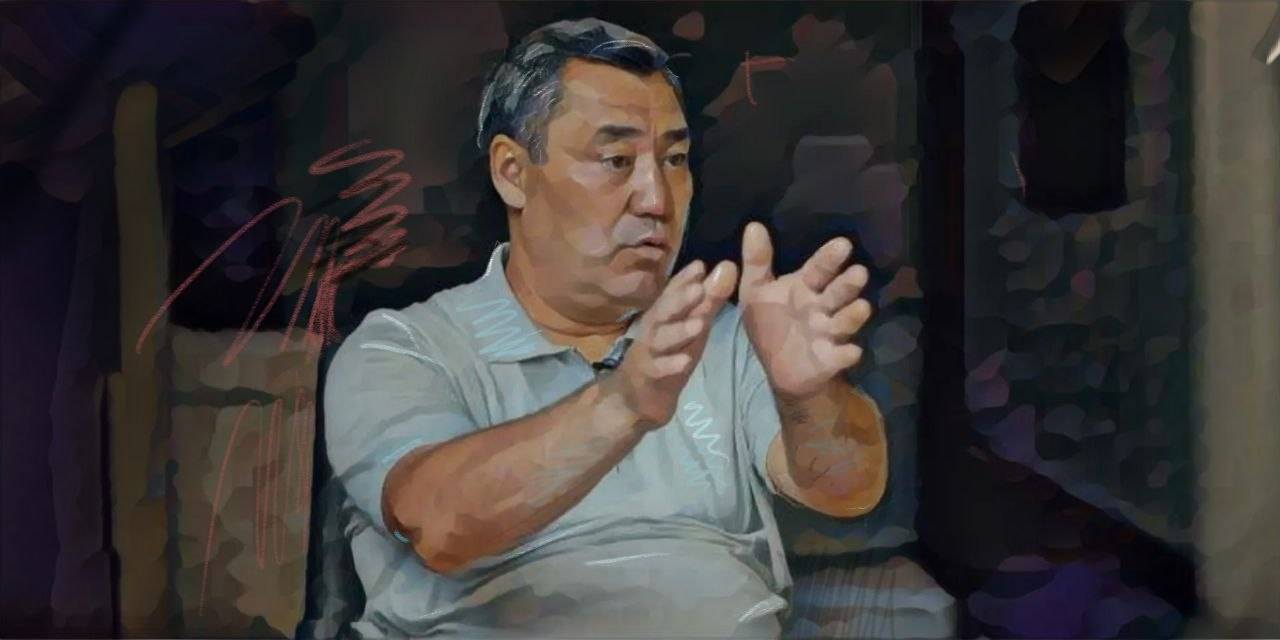
Japarov set out the abandoned succession plan in an interview with journalist Ali Toktakunov released on August 13. He said he had expected to complete the six-year term he won in 2021, then leave politics if Tashiyev was ready to take over. “Kamchy would become president, and I would retire. I had such a plan,” Japarov said.
The president said he had told Tashiyev about the plan roughly a year earlier and urged him to prepare for the presidency by imposing more discipline on the people around him. Japarov said he later concluded that Tashiyev was not ready. He cited the conduct of some of Tashiyev’s staff and associates, the appearance of the “Letter of 75,” and signs that parliament was being divided between supporters of the president and supporters of “the general,” a reference to Tashiyev.
Japarov said he summoned Tashiyev and told him: “This won’t do. You cannot split people.” He said he informed Tashiyev that he would be removed from office, but claimed he was still prepared to allow him to contest the presidential election without obstruction.
That account adds a succession dispute to the explanation Japarov gave when he dismissed Tashiyev on February 10 as chairman of the State Committee for National Security (GKNB) and deputy chairman of the Cabinet of Ministers. At the time, the presidency said the decision was needed to “prevent a split in society” and state institutions. Senior GKNB officials were removed soon afterward, the border service was taken out of the hands of the committee, and parliamentary speaker Nurlanbek Turgunbek uulu resigned.
Japarov has now drawn a sharp distinction between his personal relationship with Tashiyev and their political future. In another part of the interview, he said the two had been friends since 2005, and their families had been close. “He will remain my friend, but I have no plans to appoint him to any position,” Japarov said. He credited Tashiyev with making a major contribution during his five years at the GKNB, but said he should rest and consider where he had made mistakes.
Japarov also confirmed for the first time himself that he intends to seek another term. “I intend to run for another term and continue my work,” he said, according to Reuters. His spokesman had said in 2024 that Japarov planned to run again, but the president had not previously made a public declaration of his own.
He said a second term was needed to complete reforms already under way. Japarov also promised that rivals would be free to challenge him. “The road is open. Whoever wants to run, let them run,” he said, adding that there would be no administrative pressure on public-sector workers during the campaign.
Kyrgyzstan’s presidential election is scheduled for January 27, 2027. The date has already been changed twice. In 2025, the vote was moved from October 2026 to January 2027 so Japarov could complete the six-year mandate he won in January 2021. Legislation signed in July 2026 then moved polling day from the fourth Sunday of January to the fourth Wednesday.
The length of Japarov’s mandate was central to the February crisis. He was elected under the previous constitution, which provided a single six-year presidential term. A new constitution approved three months later introduced two five-year terms. Earlier this year, the Constitutional Court ruled that Japarov’s current mandate counts as his first term under the 2021 Constitution, leaving him eligible to seek a second five-year term.
The “Letter of 75” was published on February 9, one day before Tashiyev’s dismissal. The open letter, signed by former officials and other prominent figures, called for an immediate presidential election to settle the dispute over when Japarov’s mandate should end. It praised the administration for restoring stability and resolving border disputes, while also citing problems including debt, poverty, and labor migration.
The collapse of the Japarov-Tashiyev partnership was especially striking because their political alliance reached back nearly two decades. They were prominent figures in the Ata-Jurt opposition after the 2010 revolution and were both convicted after a 2012 protest at the government building in Bishkek. Japarov later spent years outside Kyrgyzstan and then in prison before being freed during the unrest of October 2020. Tashiyev was among the politicians who backed his rapid rise to power. The two then formed the governing tandem that dominated Kyrgyz politics for the next five years.
Japarov appointed Tashiyev to head the GKNB in October 2020. Tashiyev became one of the country’s most powerful officials, overseeing the security services and playing a central role in border negotiations with Uzbekistan and Tajikistan. He also led high-profile campaigns against organized crime and corruption. The partnership increasingly concentrated political and security power around the two men, while the authorities tightened pressure on opposition figures and independent media. Their sudden rupture in February therefore triggered a much wider political realignment.
Tashiyev’s legal position worsened in the spring. After returning to Kyrgyzstan, he was questioned several times. On April 29, he was charged with preparing a forcible seizure or retention of power and with abuse of office. He was not remanded in custody and denied the accusations. “I am innocent and, God willing, I will be acquitted,” he said after questioning.
The case went to trial in June. On July 2, the court convicted all eight defendants of preparing to seize power by force and sentenced them to four years in prison with confiscation of property. It then applied three years of supervised probation, so none of the defendants was sent to prison. All eight were acquitted of the separate abuse-of-office charge.
Tashiyev, Turgunbek uulu, former Prosecutor General Kurmankul Zulushev, and other defendants challenged the convictions. Prosecutors also appealed, arguing that the lower court had been too lenient and asking the Bishkek City Court to impose the original nine-year terms. The appeal is being heard behind closed doors.
The appeal has also reopened a central dispute in the case. Five defendants who signed the February letter asked judges to give a legal assessment of the other 70 signatories. The appeals panel agreed that they could be called for questioning, with the defense responsible for securing their attendance. Five of the eight defendants were signatories to the letter, while the case against the group extends beyond the act of signing it.
Japarov’s account supplies a missing piece of the rupture that began in February. Tashiyev was not only the president’s security chief and most powerful ally, but, by Japarov’s own account, he was also the man he expected to follow him into the presidency.
Six months later, that succession plan has disappeared. Japarov is preparing to seek the second term he says he once intended to forgo, while Tashiyev is trying to overturn his conviction.