• KGS/USD = 0.01144 0%
  • KZT/USD = 0.00216 0%
  • TJS/USD = 0.10682 -0.56%
  • UZS/USD = 0.00008 0%
  • TMT/USD = 0.28490 -0.28%
  • KGS/USD = 0.01144 0%
  • KZT/USD = 0.00216 0%
  • TJS/USD = 0.10682 -0.56%
  • UZS/USD = 0.00008 0%
  • TMT/USD = 0.28490 -0.28%
  • KGS/USD = 0.01144 0%
  • KZT/USD = 0.00216 0%
  • TJS/USD = 0.10682 -0.56%
  • UZS/USD = 0.00008 0%
  • TMT/USD = 0.28490 -0.28%
  • KGS/USD = 0.01144 0%
  • KZT/USD = 0.00216 0%
  • TJS/USD = 0.10682 -0.56%
  • UZS/USD = 0.00008 0%
  • TMT/USD = 0.28490 -0.28%
  • KGS/USD = 0.01144 0%
  • KZT/USD = 0.00216 0%
  • TJS/USD = 0.10682 -0.56%
  • UZS/USD = 0.00008 0%
  • TMT/USD = 0.28490 -0.28%
  • KGS/USD = 0.01144 0%
  • KZT/USD = 0.00216 0%
  • TJS/USD = 0.10682 -0.56%
  • UZS/USD = 0.00008 0%
  • TMT/USD = 0.28490 -0.28%
  • KGS/USD = 0.01144 0%
  • KZT/USD = 0.00216 0%
  • TJS/USD = 0.10682 -0.56%
  • UZS/USD = 0.00008 0%
  • TMT/USD = 0.28490 -0.28%
  • KGS/USD = 0.01144 0%
  • KZT/USD = 0.00216 0%
  • TJS/USD = 0.10682 -0.56%
  • UZS/USD = 0.00008 0%
  • TMT/USD = 0.28490 -0.28%

Viewing results 1 - 6 of 79

ADB Supports Turkmenistan’s Power Grid Modernization with $500 Million Project

The Asian Development Bank (ADB) has been working with Turkmenistan since 2018 to modernize the country’s electricity infrastructure, marking a milestone in cooperation, Business Turkmenistan reported on January 12. At the core of this partnership is the $500 million National Power Grid Development Strategy, the first initiative by an international financial institution in Turkmenistan’s energy sector. According to the ADB, the project aims to enhance the reliability of the national power network and bolster the country’s electricity export capacity. The project has financed the construction of approximately 1,400 kilometers of power transmission lines at 110, 220, and 500 kilovolts. In addition, 11 substations have been built across the regions of Akhal, Balkan, Dashoguz, and Lebap, as well as in Ashgabat. Technical assistance valued at $1.5 million was also provided through a grant from the Japan Fund for Prosperous and Resilient Asia and the Pacific. The ADB reported that the project is already yielding measurable results. Electricity exports rose from 3.4 terawatt-hours in 2017 to 9.3 terawatt-hours in 2023, driven by increased transmission capacity and system stability. The State Electric Power Corporation Turkmenenergo, the ADB’s local partner, contributed $175 million to the project’s implementation. The ADB described its role as supporting sustainable economic growth and development across Asia and the Pacific through the provision of loans, grants, and technical assistance. Cooperation between the ADB and Turkmenistan has also expanded into other sectors. In September 2025, the ADB approved a $75 million loan and a $2 million grant from the Japan Fund to strengthen Turkmenistan’s nursing and midwifery workforce. The initiative marked the ADB’s first health sector project in the country.

ADB Provides Tajik Bank with First Direct Loan of $10 Million

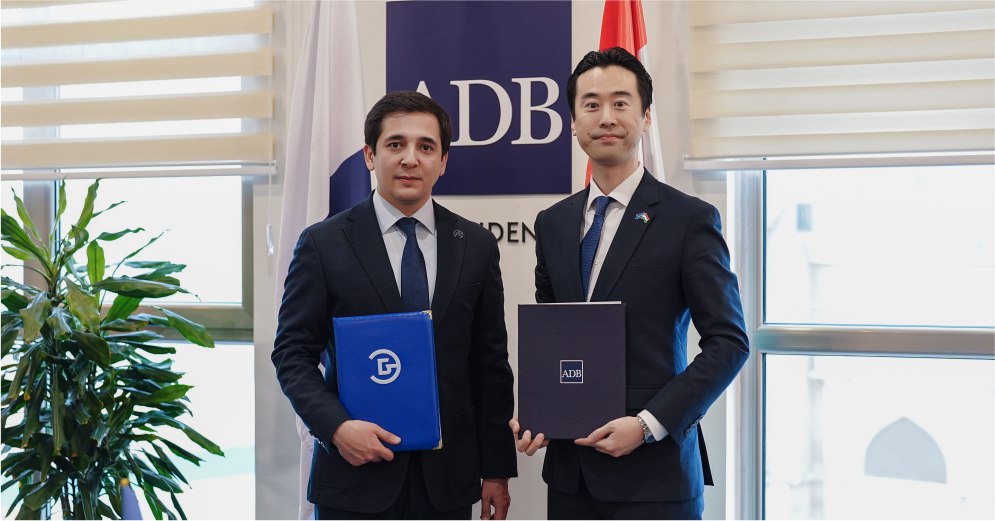
Bank Eskhata OJSC (Open Joint-Stock Company) and the Asian Development Bank (ADB) have signed a direct lending agreement, marking a new stage in financing for small and medium-sized enterprises (SMEs) in Tajikistan. This is the first time the ADB has issued a direct loan to a Tajik bank, bypassing intermediary financial institutions. The ADB stated that the format reflects a high level of trust in the partner bank and confidence in its stability within the national financial market. Tajikistan has been a member of the ADB since 1998. Under the terms of the agreement, the ADB is providing a loan in local currency equivalent to $10 million. The funds are intended to support entrepreneurs implementing environmentally friendly and energy-efficient technologies, as well as projects that reduce environmental impact and contribute to building a sustainable economy. Akmaljon Saifidinov, CEO of Bank Eskhata, described the agreement as strategically important. “We are honored to be the first financial institution in Tajikistan to receive direct lending from the ADB. This landmark event opens new horizons for supporting MSMEs and advancing green finance,” he said, referring to micro, small, and medium-sized enterprises. He added that the partnership with the ADB further strengthens the bank’s role as a leader in innovative financial solutions. The ADB expects the direct lending mechanism to significantly improve access to financing for businesses. “Direct lending will significantly expand enterprises’ access to financing and serve as a key stimulus for the development of green initiatives in Tajikistan,” said Ko Sakamoto, head of the ADB office in Dushanbe. The loan is expected to support projects in energy efficiency, green technologies, and sustainable business models, areas that have traditionally lacked access to long-term financing. In a separate initiative, the ADB recently approved a $3 million grant to enhance Tajikistan’s capacity for glacier monitoring and natural disaster forecasting.  The project includes the creation of a unified digital system for analyzing risks related to snow and ice melt and aims to improve public safety in mountainous regions.

ADB Approves $3M for Glacier Monitoring in Tajikistan

The Asian Development Bank (ADB) has approved a $3 million grant to enhance Tajikistan’s glacier monitoring and natural disaster warning capabilities. The initiative aims to reduce risks linked to accelerated snow and ice melt, particularly in the country’s mountainous regions, and improve public safety. The grant is financed by the Japan Fund for Prosperous and Sustainable Asia and the Pacific (JFSB), which is supported by the Government of Japan through the ADB. Ko Sakamoto, ADB’s Permanent Representative in Tajikistan, emphasized the project's importance for the country. “Glaciers and snow are important for water supply, agriculture, and hydropower, but their rapid melting caused by extreme weather events can trigger devastating floods, avalanches, and other disasters,” he said. Sakamoto noted that the initiative will provide Tajikistan with modern tools for forecasting and responding to climate-related threats. The project is scheduled to be completed by 2029, with most activities to be implemented in high-risk areas of the Gorno-Badakhshan Autonomous Region. The Hydrometeorological Agency has been designated as the project’s executive body. Among the key components is the creation of a unified digital data system to improve the accuracy and timeliness of glacier and snow cover monitoring. The system will enhance the collection, storage, and analysis of data critical for disaster risk assessment. To manage the new infrastructure, technical specialists from the Hydrometeorological Agency will receive training in modern monitoring and data management methods. The project also emphasizes the active inclusion of women in the training process, aligning with ADB’s commitment to inclusive development. Improving early warning systems is another central element of the initiative. Plans include updating disaster risk management strategies, strengthening coordination between local authorities and communities, and enhancing the clarity and timeliness of public alerts related to glacial and snowmelt hazards. Tajikistan joined the ADB in 1998. Since then, the partnership has supported a wide range of infrastructure and development projects, including the modernization of major highways, such as the Obigarm-Nurobod, Dushanbe-Bokhtar, Aini-Penjikent, Dushanbe-Tursunzade, and Vose-Khovaling corridors, as well as the restoration of irrigation systems, expansion of water supply networks, and construction of schools and hospitals.

Uzbekistan’s External Debt Reaches $43.97 Billion

Uzbekistan’s external debt reached 43.97 billion dollars as of October 1, according to data released by the Ministry of Economy and Finance. The increase of 473 million dollars over the previous quarter reflects a slowdown in borrowing, even as the government continues to rely on foreign funding to sustain public spending and major infrastructure projects. The country’s largest creditor remains the World Bank, which has extended 8 billion dollars in loans. This is followed by the Asian Development Bank with 7.5 billion dollars and international investors who hold 5.8 billion dollars in Eurobonds. Loans from Chinese financial institutions total 3.7 billion dollars, while Japanese lenders account for 3.1 billion dollars. Additional borrowing includes 1.7 billion dollars from the Asian Infrastructure Investment Bank and 1.2 billion dollars from France. Multilateral lenders such as the Islamic Development Bank also contribute to the total, along with a group of smaller international creditors that collectively account for 2.5 billion dollars. Debt denominated in U.S. dollars comprises 63% of Uzbekistan’s total external debt, while 12% is in Uzbek som, 8% in euros, and 6% in Japanese yen. The remainder is held in Special Drawing Rights and other currencies. In a related development, RIA Novosti, citing World Bank figures, reported that Uzbekistan increased its debt to Russia by 39 million dollars in 2024. This small rise came amid a broader trend across 38 countries whose combined debt to Russia grew to 33.1 billion dollars last year, the highest level since 1998.

ADB Commits $10 Billion to CAREC, $700 Million to Kyrgyzstan

At the 24th Ministerial Conference of the Central Asia Regional Economic Cooperation (CAREC) Program held in Bishkek on November 20, Asian Development Bank (ADB) President Masato Kanda announced a commitment of more than $10 billion in financing through 2030 to strengthen regional integration, connectivity, and resilience. The CAREC Program brings together 11 member countries – Afghanistan, Azerbaijan, China, Georgia, Kazakhstan, Kyrgyzstan, Mongolia, Pakistan, Tajikistan, Turkmenistan, and Uzbekistan – along with international development partners, to promote sustainable economic growth through regional cooperation. Since its inception in 2001, CAREC has mobilized approximately $54 billion in funding for regional projects. The ADB serves as the host institution for the CAREC Secretariat. “Our vision for CAREC is clear: a region that is economically resilient, environmentally sustainable, socially inclusive, and digitally connected,” Kanda said in his keynote address. “We are scaling up support with over $10 billion in financing through 2030. These projects will catalyze greater integration, resilience, and shared growth.” During the conference, ministers endorsed the Bishkek Declaration, initiating formal negotiations on trade and investment facilitation. The initiative aims to reduce cross-border barriers, increase investment flows, and promote cooperation in emerging areas such as digital trade and the green economy. On the sidelines of the conference, Kanda met with Kyrgyz President Sadyr Japarov to reaffirm ADB’s commitment to Kyrgyzstan’s development goals. ADB plans to provide over $700 million in financing for the country between 2025 and 2027. “The Kyrgyz Republic has shown remarkable commitment to building a greener, more connected, and resilient future,” Kanda said. “As the country’s largest multilateral development partner, ADB is ready to deepen support for national priorities and strengthen Kyrgyzstan’s role as a regional leader in connectivity and clean energy.” Kanda also met with Chairman of the Cabinet of Ministers Adylbek Kasymaliev to sign a memorandum of understanding with the Ministry of Finance. The agreement outlines a new financing framework for 2026-2027 and includes three projects under the existing 2025 framework. These focus areas include green transformation, disaster resilience, and affordable housing. Altogether, the 2025 and planned 2026-2027 packages will provide more than $700 million in ADB support for Kyrgyzstan. Upcoming projects will aim to boost energy efficiency and climate resilience in public infrastructure, enhance water resource management and disaster preparedness, and improve access to energy-efficient housing and affordable mortgage financing.

ADB Approves $56.4 Million Disaster-Response Package for Tajikistan and Kyrgyzstan

The Asian Development Bank (ADB) has approved a $56.4 million program aimed at strengthening disaster-response capacity in Tajikistan and Kyrgyzstan, the bank announced in an official statement. According to the ADB, both countries face high exposure to earthquakes, floods, and other climate-related hazards. Their ability to respond effectively remains limited by constrained fiscal resources and a lack of risk-transfer mechanisms. The newly approved program is designed to enhance financial preparedness through two pre-arranged ADB financing instruments, each tailored to different levels of disaster risk. Innovative Tools for Disaster-Risk Financing The program incorporates two key components: Contingent Disaster Financing (CDF) and Disaster Resilience Bonds (DRB). CDF provides budgetary support during medium-scale natural disasters or public health emergencies. DRBs, issued on international capital markets, offer rapid liquidity for major, high-severity disasters. “This program will help reduce the fiscal burden on both countries following natural disasters, including geophysical events, extreme weather, and health emergencies,” said Leah Gutierrez, ADB Director General for Central and West Asia. She emphasized that the combination of policy reforms, institutional strengthening, and innovative financing marks a shift from reactive response to proactive disaster-risk management. Focus on Institutional Reforms and Regional Cooperation The initiative also emphasizes strategic policy reforms, capacity building, and governance improvements to ensure a coordinated and transparent disaster-risk management system. It was developed under ADB’s technical assistance program to establish disaster-risk transfer mechanisms in the Central Asia Regional Economic Cooperation (CAREC) region, a partnership supporting sustainable development and regional integration. The program will be financed through a $53.1 million grant from the Asian Development Fund (ADF), with an additional $3.3 million from the Asia-Pacific Climate Fund. ADF grants are targeted at the poorest and most vulnerable countries in the Asia-Pacific. From 2021 to 2024, the fund supported the lifting of 384,000 people out of poverty and the creation of approximately 500,000 jobs.