• KGS/USD = 0.01143 0%
  • KZT/USD = 0.00200 0%
  • TJS/USD = 0.10593 -0.19%
  • UZS/USD = 0.00008 0%
  • TMT/USD = 0.28575 0%
  • KGS/USD = 0.01143 0%
  • KZT/USD = 0.00200 0%
  • TJS/USD = 0.10593 -0.19%
  • UZS/USD = 0.00008 0%
  • TMT/USD = 0.28575 0%
  • KGS/USD = 0.01143 0%
  • KZT/USD = 0.00200 0%
  • TJS/USD = 0.10593 -0.19%
  • UZS/USD = 0.00008 0%
  • TMT/USD = 0.28575 0%
  • KGS/USD = 0.01143 0%
  • KZT/USD = 0.00200 0%
  • TJS/USD = 0.10593 -0.19%
  • UZS/USD = 0.00008 0%
  • TMT/USD = 0.28575 0%
  • KGS/USD = 0.01143 0%
  • KZT/USD = 0.00200 0%
  • TJS/USD = 0.10593 -0.19%
  • UZS/USD = 0.00008 0%
  • TMT/USD = 0.28575 0%
  • KGS/USD = 0.01143 0%
  • KZT/USD = 0.00200 0%
  • TJS/USD = 0.10593 -0.19%
  • UZS/USD = 0.00008 0%
  • TMT/USD = 0.28575 0%
  • KGS/USD = 0.01143 0%
  • KZT/USD = 0.00200 0%
  • TJS/USD = 0.10593 -0.19%
  • UZS/USD = 0.00008 0%
  • TMT/USD = 0.28575 0%
  • KGS/USD = 0.01143 0%
  • KZT/USD = 0.00200 0%
  • TJS/USD = 0.10593 -0.19%
  • UZS/USD = 0.00008 0%
  • TMT/USD = 0.28575 0%
22 February 2026

Viewing results 1 - 6 of 19

Astana Forum to Generate Over $5 Million as Global Delegates Flock to Kazakhstan

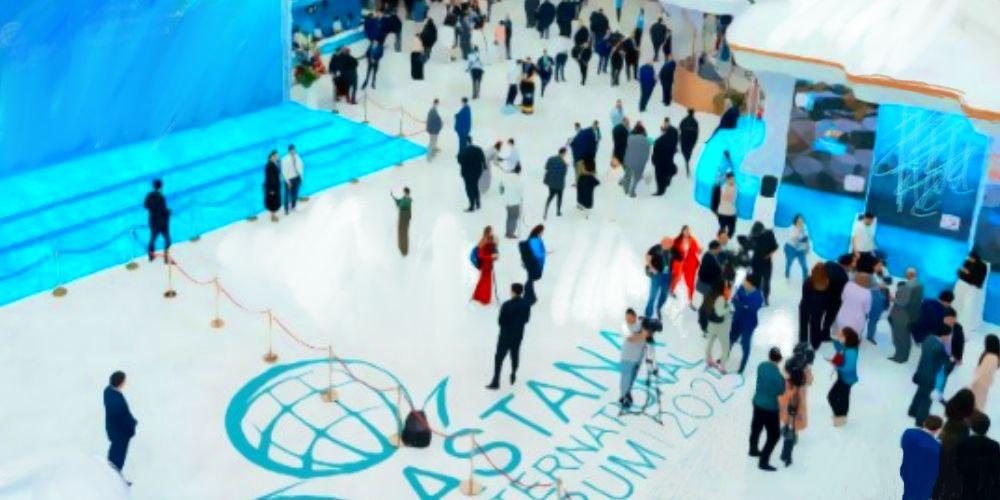
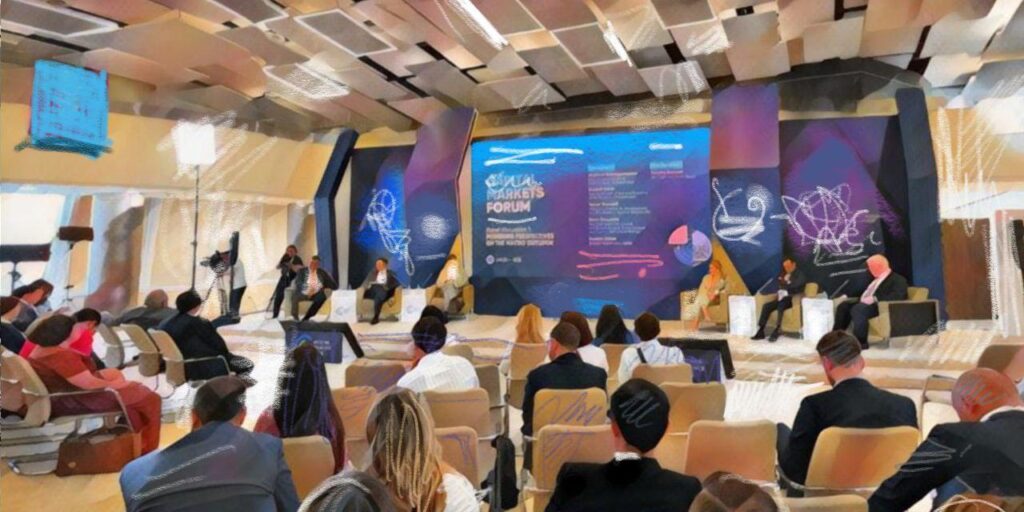
The 2025 Astana International Forum (AIF) is expected to generate over 2.6 billion KZT, approximately US$5.1 million for the Kazakh capital, largely driven by an influx of business tourism. Record Influx of Business Tourists According to organizers, most of the revenue will come from business guests, who spend on average 177,000 KZT (around $350) per day on accommodation, dining, transportation, entertainment, and shopping. Visitors typically stay for three days. Scheduled for May 29-30, the forum will bring together over 5,000 attendees, including delegates, businesspeople, journalists, and accompanying guests. Hotel bookings have surged: five-star hotels in Astana are now 90-100% booked, while four-star hotels are at 50-90% capacity. By comparison, occupancy rates during the same period in 2024 were significantly lower, at 50-60% and 30-60%, respectively. From Economic Forum to Global Platform Launched in 2008 as the Astana Economic Forum, the event initially concentrated on macroeconomic issues and public sector reform. It primarily attracted regional financial experts, central bankers, and development institutions. As Kazakhstan positioned itself more assertively in global affairs, the forum evolved. In 2023, it was relaunched as the Astana International Forum with a broader agenda in response to challenges in the global multilateral governance system. The 2024 edition, however, was cancelled due to historic flooding, the worst in 80 years, with President Kassym-Jomart Tokayev directing state resources toward disaster recovery. Focus on Investment and Dialogue This year’s forum will be held under the theme “Connecting Minds, Creating the Future.” It aims to foster open dialogue, promote strategic initiatives, and attract international investment. Tokayev is set to open the event. Among the 600 international participants are political leaders, heads of international organizations, business executives, academics, and investors. The forum will focus on three core areas: international security and politics, energy and climate, and economics and finance. Organizers say the event reflects Kazakhstan’s ambition to modernize legally and economically, while competing globally for capital. AIF 2025 also underscores Kazakhstan’s efforts to position itself as a diplomatic and economic bridge, particularly for countries of the Global South. Two key business forums will be held on the sidelines: the Kazakhstan-France Investment Forum and the Kazakhstan-Italy Business Forum. Italian Prime Minister Giorgia Meloni will be in Astana to attend both the AIF and the Central Asia-Italy Summit. As previously reported by The Times of Central Asia, Italy remains one of the most engaged EU countries in Central Asia, and the political and economic dimensions of the forum are expected to receive substantial international media coverage.
Astana Gathers the World: Forum Elevates Kazakhstan’s Diplomatic Stature

The Astana International Forum 2025 (AIF2025), themed “Connecting Minds, Shaping the Future,” will take place in Kazakhstan’s capital on May 29-30. World leaders, business executives, investors, and experts will convene to address pressing global challenges and explore avenues for mutually beneficial agreements. Who is Expected in Astana? The AIF2025 aims to serve as a platform for open dialogue and to attract foreign capital. Participants will also seek to forge strategic partnerships and promote economic development initiatives. Approximately 600 international guests are expected, including prominent political figures, heads of international organizations, business leaders, investors, and members of the academic community. Confirmed attendees include Paul Kagame, President of Rwanda; Edi Rama, Prime Minister of Albania; Andrej Plenković, Prime Minister of Croatia, Gordana Siljanovska Davkova, President of the Republic of North Macedonia; and Sheikh Mohammed bin Abdulrahman Al Thani, Prime Minister and Minister of Foreign Affairs of Qatar. Ban Ki-moon, former UN Secretary-General and Chair of the Global Green Growth Institute and the Boao Forum for Asia, will also participate. Other distinguished guests include Alain Berset, Secretary General of the Council of Europe; Qu Dongyu, Director-General of the UN Food and Agriculture Organization (FAO); Amy Pope, Director General of the International Organization for Migration (IOM); Mathias Cormann, Secretary General of the OECD; and Daren Tang, Director General of the World Intellectual Property Organization. Also expected are Antonella Bassani, World Bank Vice President for Europe and Central Asia; Haoliang Xu, UNDP Deputy Secretary-General and Deputy Administrator; Jin Liqun, President of the Asian Infrastructure Investment Bank (AIIB); Jürgen Rigterink, First Vice President of the EBRD; Kubanychbek Omuraliev, Secretary General of the Organization of Turkic States; and Sebastian Kurz, former Federal Chancellor of Austria. This year, the forum will focus on three global themes: politics and international security, energy and climate change, and economics and finance. According to the Kazakh government, AIF2025 takes place amid intensifying global competition for investment and showcases Kazakhstan’s openness to international collaboration. The country continues to solidify its global presence through comprehensive reforms, legal modernization, and a strengthened investment climate. On May 28, two bilateral business forums, Kazakhstan-France and Kazakhstan-Italy will precede the main event. Italian Prime Minister Giorgia Meloni will also attend a Central Asia-Italy summit. As previously reported by The Times of Central Asia, in recent years Italy has emerged as one of the European countries most keen to maintain close relations with the countries of Central Asia. President Kassym-Jomart Tokayev is scheduled to open the forum. Global Anticipation Builds In the run-up to the event, several participants have already shared their expectations, with Maha Al-Kuwari, General Manager of the Doha Forum, saying that it was a privilege to be involved. “Together with the Qatar Development Fund, the Doha Forum will host a session focused on innovative approaches to enhancing global sustainability. Given geopolitical fragmentation, post-pandemic recovery, and disrupted supply chains, this discussion is vital, especially for developing and least developed countries,” she stated. The session will highlight new investment models and successful partnership frameworks spanning from Astana to Doha. Interviews...

Astana International Forum: Not Just Another Davos

Kazakhstan’s Astana International Forum (AIF) has quietly entered a new phase in its development. Set to convene again this month, it began in 2008 as a targeted economic forum. Over time it has gradually evolved into a broader diplomatic platform aspiring to serve the so-called “Global South” as a whole. The AIF seeks to offer a deliberately open space for structured yet flexible dialogue across economic, political, and security domains, in a world full of international gatherings either overdetermined by legacy institutions or narrowly focused on crisis response. The AIF does not model itself on any existing institution. It is meant neither to replicate global summits nor to impose consensus, nor to replace regional blocs or legacy mechanisms. Rather, it reflects Kazakhstan’s own diplomatic philosophy — what President Kassym-Jomart Tokayev calls “multi-vector foreign policy” — seeking to extend this philosophy outward through a forum that prioritizes engagement over alignment and dialogue over doctrine. The AIF’s early period, from 2008 through roughly 2015, was defined by foundational work. Then called the Astana Economic Forum, it brought together central bankers, financial policymakers, and development agencies. The scope was technocratic, focusing on macroeconomic modernization and public-sector reform. Even in this limited format, however, the initiative revealed Kazakhstan's national aspiration to connect with wider global trends in institutional development and governance. Those formative years correspond to what, in terms of complex-systems theory, might be called the Forum’s phase of “emergence”: a period of assembling functions, testing formats, and learning the rhythms of international convening. These years were not marked by geopolitical ambition, but they did set in motion a process of institutional self-recognition. Kazakhstan was not just hosting events; it was experimenting with a type of global presence that would grow more distinct in later years. From 2015 to 2022, the Forum entered a more self-defining stage. It retained its core economic focus, but it increasingly attracted participants from beyond financial and development sectors. This broadened its scope to include questions of connectivity, regional stability, and sustainable development. The shift was not an accident. It accompanied Kazakhstan’s growing involvement in regional diplomacy and its active participation in a range of other multilateral structures. During this second period, the Forum took on the character of an institution with internal momentum. (This is what complex-systems theorists might term “autopoiesis,” i.e., the ability of a system to reproduce and maintain itself.) By adapting to a wider field of participants and issues, the AIF began to articulate a mission no longer limited to showcasing Kazakhstan’s domestic reforms but extending toward the creation of new transnational linkages. The rebranding of the old Astana Economic Forum as the Astana International Forum affirmed this shift in mandate, scope, and ambition. That rebranding marked the beginning of what now appears to be a critical inflection point. The cancellation of the 2024 edition due to catastrophic flooding created a rupture; but the organizers, rather than rush a replacement, deferred the Forum and used the intervening time to clarify its structure and message. The...

Kazakhstan’s Astana Forum Offers Global South a New Multi-Vector Platform

Kazakhstan will convene the Astana International Forum (AIF) later this month, on May 29–30, emphasizing its profile as an active mediator in the evolving architecture of global diplomacy. The AIF began in 2008 as the Astana Economic Forum, originally conceived as a technocratic venue focused on macroeconomic development, fiscal strategy, and public-sector reform. In its early iterations, it drew regional economists, central bankers, and international development agencies together to discuss Kazakhstan’s integration into global financial institutions. While modest in its geopolitical profile, the Forum reflected Astana’s broader ambitions to participate in the global rules-based order without overt alignment. In 2023, the AIF was reconstituted with its new, broader mandate in response to international demands for such forums, given the evident erosion of consensus in multilateral governance structures. President Kassym-Jomart Tokayev has invoked Kazakhstan’s unique geopolitical position to advocate for the AIF as a new platform of balanced engagement, to serve as a “bridge between East and West,” reflecting Astana’s accumulated experience in dialogue facilitation and its ambition to ameliorate the deepening fragmentation of the international system. The rebranding of the Forum was more than cosmetic. It marked a deliberate effort by Kazakhstan to reach out beyond its customary Eurasian frame of reference. The Forum aspires to be a diplomatic innovation, seeking to complement existing institutions like the UN or OSCE without replacing them: a more flexible platform that would be more responsive to emergent global dynamics. This aspiration is of a piece with Kazakhstan’s growing participation in multilateral forums, serving different geopolitical functions, such as the Conference on Interaction and Confidence Building Measures in Asia (CICA) and its engagements within the Shanghai Cooperation Organisation (SCO) and Organization of Turkic States (OTS). The AIF is envisioned as a complementary structure that transcends bloc affiliations, facilitating fluid dialogue among ideologically diverse actors. The 2024 edition of the Forum was intended to be larger-scale than the 2023 version, but it was abruptly canceled after catastrophic flooding struck several regions, an event President Tokayev described as the most devastating natural disaster in the country in eight decades. The state redirected its attention and resources toward recovery, and the Forum was deferred. The 2025 iteration, now reactivated, has adopted the banner message, “Connecting Minds, Shaping the Future.” This reflects an underlying logic in Kazakhstan’s foreign policy that privileges "multi-vectorialism" as a structure for autonomy. Within that structure, the AIF is seeking to create space for engagement among actors that often find themselves excluded from the inner circles of traditional diplomacy: the so-called "Global South," mid-sized Western powers, and immediate regional stakeholders. The agenda of the 2025 AIF consolidates four previous thematic streams into three: Foreign Policy and International Security, Energy and Climate Change, and Economy and Finance. This thematic restructuring signals an intention to deepen the Forum’s analytical focus while retaining general breadth across domains characterizing Kazakhstan’s long-term strategic interests. These interests are conditioned by the continuing development of Kazakhstan's economy. Domestic economic growth is projected to reach 4.5 to 5.0% in 2025, driven by...

How Tokayev’s Kazakhstan Bridges Global Powers

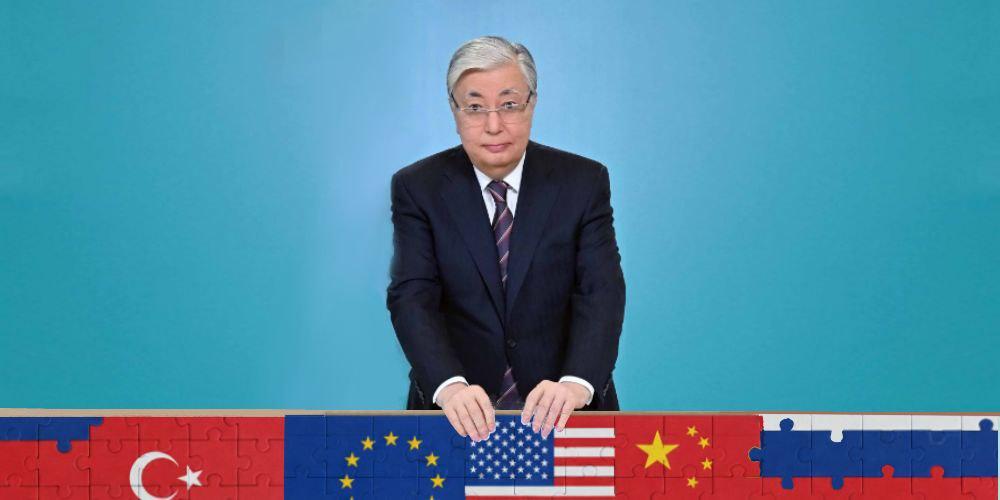
Amid the ongoing reshaping of the global order, Kazakhstan is seeking to enhance its role as an emerging middle power. Preserving strong relations with all key geopolitical actors, strengthening its position as a de facto leader in Central Asia, and developing closer ties with other influential states on the world stage appear to be Astana’s top foreign policy priorities. The largest Central Asian state is one of the few countries that maintains good relations with geopolitical rivals such as China and the United States, as well as Russia and the European Union. At the same time, Astana is actively developing closer ties with the Turkey-led Organization of Turkic States, while firmly upholding its longstanding commitment to international law. It is, therefore, no surprise that, during the recently held EU- Central Asia summit in Samarkand, Kazakhstan, along with Turkmenistan and Uzbekistan, backed two UN resolution from the 1980s that reject the unilaterally-declared independence of the Turkish Republic of Northern Cyprus and deem all secessionist actions there legally invalid. Such a policy perfectly aligns with Kazakhstan President’s Kassym-Jomart Tokayev’s 2022 statement, in which he affirmed Astana’s non-recognition of Taiwan, Kosovo, South Ossetia, or Abkhazia, and the entities he described as quasi-states, namely Luhansk and Donetsk. “In general, it has been calculated that if the right of nations to self-determination is actually realized throughout the globe, then instead of the 193 states that are now members of the UN, more than 500 or 600 states will emerge on Earth. Of course, it will be chaos,” Tokayev stressed. In other words, Kazakhstan upholds the principle of territorial integrity for all UN-member states, a stance similar to China’s policy. Despite their history of often supporting the right to self-determination over the principle of territorial integrity, Russia and the West do not seem to oppose Tokayev’s approach. As a result, the President of Kazakhstan remains one of the few world leaders who can attend the May 9 Victory Day parade in Moscow, regularly meet with EU officials, and participate in China-led initiatives. As the first Central Asian leader to speak with newly elected U.S. President Donald Trump in December 2024, Tokayev is also signaling his intention to deepen relations with the United States. All these actions demonstrate that, for Kazakhstan under Tokayev, the well-known multi-vector foreign policy remains without an alternative at this point. Although it is Nursultan Nazarbayev, Kazakhstan’s first president, who initiated this approach, it is Tokayev who has been actively implementing it since he came to power in 2019. That, however, does not mean that "multivectorism" has become Astana’s official ideology. It is rather a tool the energy-rich nation’s policymakers are using to improve their country’s position in the international arena. Nowhere is that more obvious than at the Astana International Forum – an annual summit taking place in Kazakhstan’s capital – where leaders from diverse countries, often with differing goals and values, come together to discuss global challenges, foster dialogue, and seek common ground. The fact that this year Astana will host...

Middle Powers Rising: Shaping a Balanced Global Order at the Astana Think Tank Forum

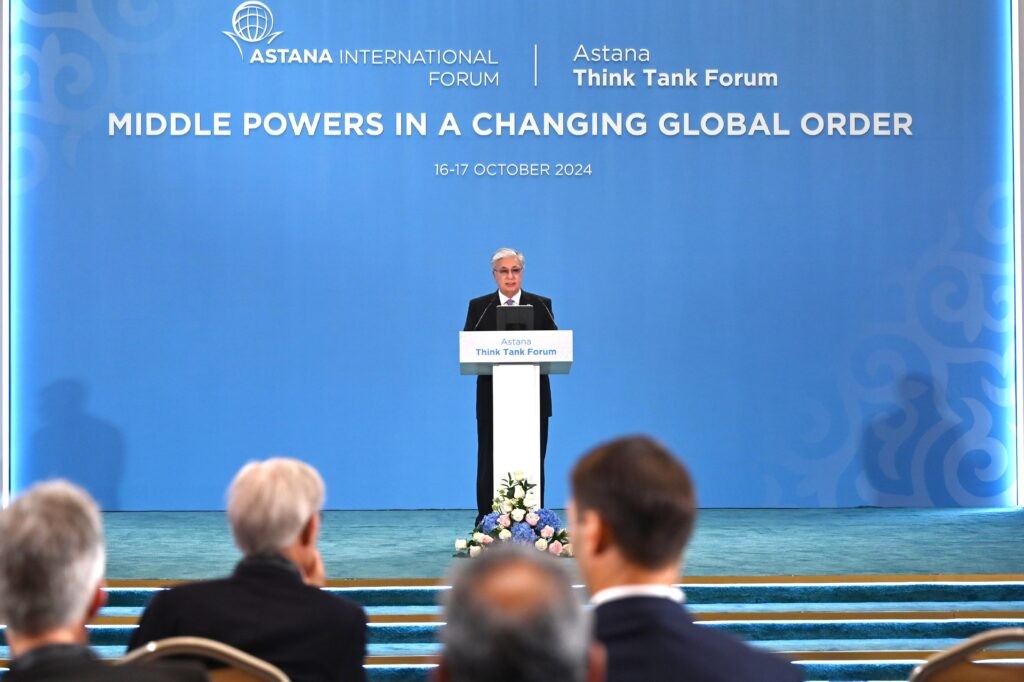
On October 16-17, the capital of Kazakhstan hosted the Astana Think Tank International Forum. The theme of the two-day meeting was “Middle Powers in the Changing Global Order: Strengthening Security, Stability and Sustainable Development.” Experts from 22 countries — heads of leading think tanks, politicians and diplomats — participated and spoke at the event. Kazakhstan's President Kassym-Jomart Tokayev addressed the forum. The two-day event focused on geopolitical, economic and strategic issues, including the role of mediating countries in resolving global conflicts. One of the main topics was determining the potential of intermediate states in forming a new world system under conditions of geopolitical tension. The experts tried to define the term "middle power" and what countries can be classified as middle powers. The moderator of the key session, Charles McLean, Managing Director of Borderless Consulting Group, invited the participants to answer several questions about the criteria, characteristics, and influence of middle powers in the modern geopolitical context. Dino Patti Djalal, Chair of the Foreign Policy Community of Indonesia (FPCI), suggested categorizing all the of the world's states using analogies to boxing weight classes: heavyweights, middleweights, and lightweights. According to Djalal, middle powers have great potential to create a new world order. “There are several dimensions of middle powers. The first is potential, encompassing territorial and demographic size factors, political and economic weight, and a state's foreign policy ambitions. The second dimension is a moderate stance on major global issues,” Djalal said. Citing Kazakhstan as an example of a middle power, Djalal stated that Kazakhstan has achieved this status due to its balanced position, which allows it to exert some influence on the formation of the world order. Djalal emphasized that, even today, middle states (the bulk of which are concentrated in the Global South) can solve regional issues without the participation of so-called 'world powers'. “Look at Southeast Asia. Indonesia and Singapore solve their issues directly, without external influence. Naturally, this situation is developing in the conditions of weakening U.S. influence. Middle powers are dictating new rules,” Djalal noted, and should voice their positions on the global agenda, so their “voice” will be heard and become more “powerful.” Michel Duclos, Special Advisor on Geopolitics, suggested that regional powers whose activities have a global impact should be considered middle powers. “The great challenge for middle powers is establishing peace and stabilizing the situation. However, a common platform for all middle powers must be formed. This applies to the Global South and the Global North. France and others are reforming the UN Security Council,” Duclos stated. Joshua Lincoln from the Center for International Law and Governance at the Fletcher School (Tufts University), meanwhile, believes that increasing competition between great powers opens a “window of opportunity” for medium-sized states. “Geopolitical rivalries, the fragmentation of the world order, and the disillusionment of many with existing international institutions offer middle powers an opportunity to bring order to today's chaos. Their stance can enormously contribute to the world's security, stability, and sustainability. However, no country, even...