• KGS/USD = 0.01144 0%
  • KZT/USD = 0.00216 0%
  • TJS/USD = 0.10637 0%
  • UZS/USD = 0.00008 0%
  • TMT/USD = 0.28530 0%
  • KGS/USD = 0.01144 0%
  • KZT/USD = 0.00216 0%
  • TJS/USD = 0.10637 0%
  • UZS/USD = 0.00008 0%
  • TMT/USD = 0.28530 0%
  • KGS/USD = 0.01144 0%
  • KZT/USD = 0.00216 0%
  • TJS/USD = 0.10637 0%
  • UZS/USD = 0.00008 0%
  • TMT/USD = 0.28530 0%
  • KGS/USD = 0.01144 0%
  • KZT/USD = 0.00216 0%
  • TJS/USD = 0.10637 0%
  • UZS/USD = 0.00008 0%
  • TMT/USD = 0.28530 0%
  • KGS/USD = 0.01144 0%
  • KZT/USD = 0.00216 0%
  • TJS/USD = 0.10637 0%
  • UZS/USD = 0.00008 0%
  • TMT/USD = 0.28530 0%
  • KGS/USD = 0.01144 0%
  • KZT/USD = 0.00216 0%
  • TJS/USD = 0.10637 0%
  • UZS/USD = 0.00008 0%
  • TMT/USD = 0.28530 0%
  • KGS/USD = 0.01144 0%
  • KZT/USD = 0.00216 0%
  • TJS/USD = 0.10637 0%
  • UZS/USD = 0.00008 0%
  • TMT/USD = 0.28530 0%
  • KGS/USD = 0.01144 0%
  • KZT/USD = 0.00216 0%
  • TJS/USD = 0.10637 0%
  • UZS/USD = 0.00008 0%
  • TMT/USD = 0.28530 0%

Viewing results 1 - 6 of 120

China’s Jiangsu Province and Soho Holding Group to Build Multifunctional Center in Astana

Kazakhstan’s Minister of Trade and Integration, Arman Shakkaliyev, visited China on April 3, where he met with officials from Jiangsu Province and representatives of Jiangsu Soho Holding Group in Nanjing, the province’s capital. During the meeting, the Chinese side presented design concepts for a planned multifunctional center to be built in Kazakhstan’s capital, Astana, in 2026. According to the trade ministry, the future center will strengthen Kazakh-Chinese trade and business relations. It will serve as a venue for showcasing Chinese and Kazakh goods, hosting business negotiations, registering trade transactions, and providing consulting services. The complex will also include a trade pavilion, a cultural center, and an office for Jiangsu Soho Holding Group. The sides also discussed plans to hold a Jiangsu Province goods exhibition in Astana from June 11 to 13, to coincide with the upcoming Central Asia-China summit. As part of his visit, Shakkaliyev toured the Central Asia-Jiangsu Trade Center and the National Pavilion of Kazakhstan in Nanjing, which opened in September 2024. The trade center is a multifunctional platform promoting exports from Kazakhstan, Uzbekistan, Tajikistan, and Turkmenistan, and is designed to increase Central Asian access to the Chinese market. Shakkaliyev also held talks with Eurasia Construction Capital Co. Ltd, which is planning to launch an investment project in Kazakhstan’s Atyrau region to establish a private special economic zone (SEZ) or industrial park. The initial investment is estimated at $100 million. Seven major Chinese companies, specializing in petrochemical products, renewable energy, and construction materials, have expressed interest in participating in the SEZ. The minister affirmed the government’s full support for the initiative, highlighting its potential to develop high value-added production in Kazakhstan.

New York Film Academy Launches Branch in Kazakhstan

The New York Film Academy (NYFA) has officially opened a branch in Kazakhstan, marking its third campus outside the United States and the first world-class creative university to establish a presence in the country, the Ministry of Science and Higher Education of Kazakhstan announced. The launch agreement was signed virtually on March 1 by Sayasat Nurbek, Kazakhstan’s Minister of Science and Higher Education, and Michael Yang, President of the New York Film Academy. Academic programs at the new campus are set to begin on September 29 at the Energo University Creative Industries Park in Kaskelen, near Almaty. Instruction will be delivered in person by professional NYFA faculty from the United States. The Kazakhstan branch will offer one-year and short-term training programs in five core disciplines: Filmmaking Producing Screenwriting Animation and Visual Effects (3D Animation & VFX) Game Development (Game Design) The inaugural class will enroll up to 200 students from Kazakhstan and neighboring countries, including China, India, and Russia. Graduates will receive diplomas from the U.S.-based NYFA and will have the opportunity to continue their studies at the Academy’s campuses in New York or Los Angeles, with credits transferred from their coursework in Kazakhstan.

Cardiff University to Open New Campus in Kazakhstan

Cardiff University in Wales has announced plans to open a new campus in Astana, Kazakhstan’s capital, later this year. The move represents a major step in the university’s global expansion and underscores its commitment to providing world-class education in Central Asia. According to Kazakhstan’s Ministry of Science and Higher Education, Cardiff University Kazakhstan will begin offering programs in STEM (Science, Technology, Engineering, and Mathematics) and Business in 2025, with undergraduate programs to follow in 2026​. The Astana campus is being developed in partnership with the not-for-profit Public Foundation “Qualified Centre of Education” (QCEF). To ensure broad access, the Kazakh government has pledged to provide up to 500 fully funded scholarships over the first three years of the campus's operation. The initiative aims to make high-quality education accessible to talented students across Kazakhstan. Once fully operational, the campus is expected to accommodate more than 2,500 students annually, contributing to the development of a skilled workforce and supporting economic growth in the region. Cardiff University’s President and Vice-Chancellor, Professor Wendy Larner, said: “We are excited about the opportunities that the Cardiff University Kazakhstan campus will create. It is clear from our extensive discussions with the Kazakh government, investors, and other stakeholders that this initiative will be truly reciprocal and mutually beneficial.”

Bridging Borders: Louis Albertini on Central Asia’s Tech Growth, Startup Challenges, and Building Global Connections

Louis Albertini has been involved in technology and startups across the United States and Kazakhstan for a decade, working with Silicon Valley and venture capital-backed startups based in Kazakhstan, including ORBI and Farel. He is passionate about supporting founders in succeeding in the U.S. market and building connections between the U.S. and Kazakhstan. TCA spoke with Louis to gain insights from his experiences in the Kazakhstan market.   TCA: Can you share your career journey in Kazakhstan and what motivated you to work in diverse roles like marketing, consulting, and startups? Louis: I arrived in Kazakhstan in July 2015 as a Princeton in Asia fellow and spent a year working in the President's Office at KIMEP University with Dr. Chan Young Bang. I served as his communications officer, writing official correspondence, liaising with different departments, and managing the day-to-day affairs of the office. After my PiA fellowship ended, I decided to stay in Almaty and start exploring the nascent startup scene. In 2016, I joined the founding team of a startup called ORBI, which developed 360-degree video recording glasses. This was the first Kazakhstani startup that attracted significant venture financing and was invited to interview at Y Combinator in 2016. We raised about $7 million for the company and secured $350 thousand in pre-orders, the largest ever for a Kazakh start-up. Back then, the YC batches were extremely small, and interviews were conducted in person at their historic but now-closed 320 Pioneer Way office in Mountain View. This was my first applied experience with Kazakhstan startups, and I've been involved ever since.   TCA: What inspired you to create Redfern Partners, and how did you help address the challenges SMBs and tech companies face in Central Asia? Louis: Working at the American Chamber of Commerce gave me some insight into the market research landscape in Kazakhstan, primarily by listening to business leaders complain about available options. Besides the major consulting firms like McKinsey and BCG, which are more focused on quasi-state projects that need stamps of approval, the SMB space for high-quality independent research was largely empty. The Big 4 have variations of market research services, but their core specialty is audit and tax. Most local incumbents were formed in the early 1990s and use outdated methodologies that produce inaccurate or trivial insights. International research firms lack local coverage and rely on a loose patchwork of freelancers. Redfern was formed to offer high-quality, independent market research services to fill this void. We completed about twenty projects and continue to be a partner for the European Bank for Reconstruction and Development (EBRD) small business initiative.   TCA: What common mistakes did you see SMBs in the region make, and how did you help them overcome these? Louis: The SMB space in Kazakhstan is hugely underserved and overlooked, offering the largest surface area regarding technology adoption. In the US, SMBs employ nearly half of the American workforce, representing 45% of America's GDP. In Kazakhstan, the market is mainly asymmetrical, with large players...

Trump’s Bid for Ukraine-Russia Peace: Could Kazakhstan Be the Key Mediator?

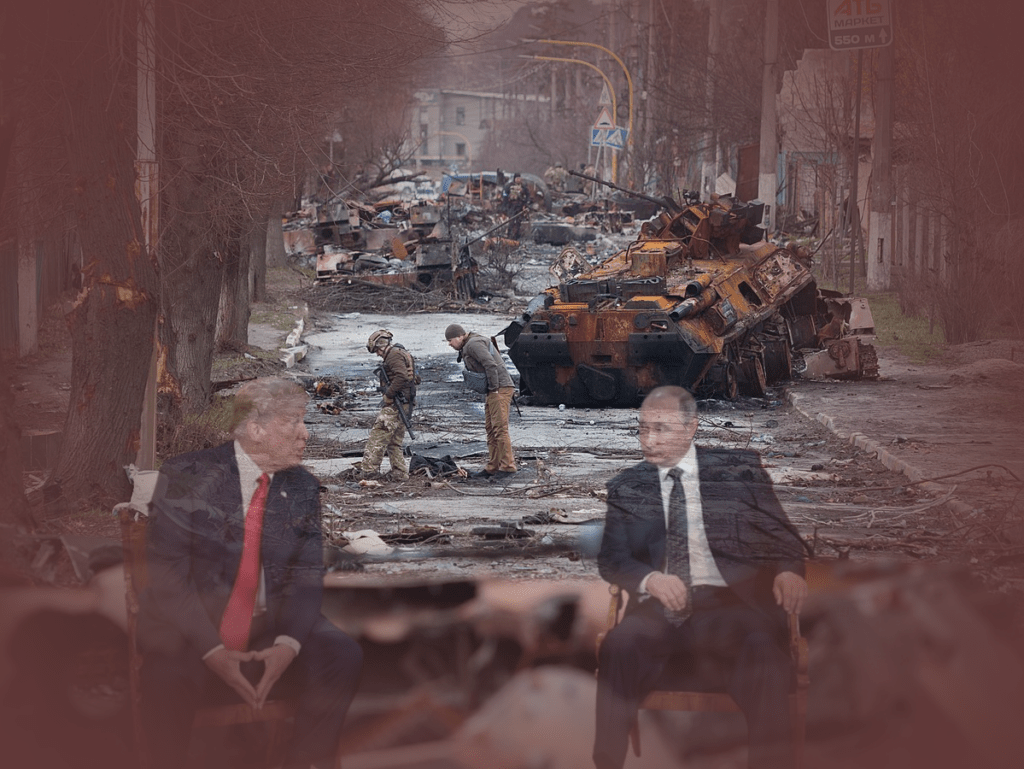
One of the anticipated top priorities of Donald Trump’s presidency is ending Russia's war in Ukraine while normalizing relations with Moscow. Writing on his Truth Social channel, Trump stated that, “Together, we will secure PEACE THROUGH STRENGTH, and Make America, and the World, SAFE AGAIN!” Trump’s nominee to serve as Special Envoy for Ukraine and Russia, 80-year-old former national security advisor, General Keith Kellogg, laid out his plan in writing for the America First policy institute, whilst focusing on characterizing the war “an avoidable crisis that, due to the Biden Administration’s incompetent policies [which] has entangled America in an endless war.” There are fears, however, that Kellogg’s proposal to reach a ceasefire by freezing the frontlines and forcing both sides the negotiating table will lead to a tumultuously violent period as Moscow seeks to swallow up territory. Meanwhile, NATO’s new secretary-general, Mark Rutte, has warned that compelling Ukraine into a “bad peace” would pose a “dire threat” to the U.S. itself. Whilst the framework for bringing a pause to hostilities is becoming clearer, it appears that Trump (or his representative) will need to meet with Vladimir Putin, and Kazakhstan has emerged as a potential venue for this high-stakes meeting. Kazakhstan's Role as Mediator Russian political analyst, Arkady Dubnov, has argued that Putin’s recent state visit to Astana may be an indication that Kazakhstan could play a pivotal role, and that given Putin’s limited travel options due to the International Criminal Court’s arrest warrant against him, Kazakhstan, with its reputation for diplomacy, would be a logical choice. “Putin is essentially restricted from visiting most of the Western Hemisphere,” Dubnov explained. “This leaves the Eurasian East, and among its cities, Astana stands out. Kazakhstan has hosted OSCE and CICA summits, mediated in the Syrian conflict, and facilitated peace talks over the future of the South Caucasus.” Dubnov sees Putin’s visit to Astana as indirectly tied to a possible meeting with Trump. “The Kremlin trusts Kazakhstan as an ally while respecting its constructive relations with the U.S. and the broader West,” he stated. Kazakhstan has long been recognized as a neutral ground where East and West can find commonality. The Astana process on Syria, initiated in 2017, helped prevent the escalation of hostilities for years, whilst Kazakhstan has mediated in other long-standing disputes, such as the conflict between Armenian and Azerbaijan. Given this history, it is conceivable that a reconciliation process between Russia and Ukraine could start in Astana. Neither the Minsk agreements of 2014, nor discussions in Istanbul in 2022 achieved lasting peace, but Kazakhstan’s diplomatic efforts could provide fresh impetus. Early Peace Efforts In March 2022, Kazakh President Kassym-Jomart Tokayev spoke with Ukrainian President Volodymyr Zelensky, emphasized the urgency of negotiations to bring a halt to hostilities, a stance that has since gained momentum as the war drags on. By 2024, the validity of Tokayev’s view — that negotiations are the only viable path to end the bloodshed — has become increasingly apparent. Kazakhstan’s diplomatic corps has actively pushed for peace....

Galloping Traditions: Kokpar and Kok Boru Unleash Cultural Pride at the World Nomad Games

The Kazanat Hippodrome, with a track length of 1,800 meters, and the Astana Grand Mosque — the biggest mosque in Central Asia — dominating the background, hosted the preliminary kokpar and kok boru games, known for their respective pursuits of a headless goat carcass, on day two of the World Nomad Games. [caption id="attachment_22919" align="aligncenter" width="1600"] Image: TCA, K. Krombie[/caption] The layout of the Hippodrome track presents a great divide. The distance between the field and the spectators means that distinguishing the traditional headless goat carcass from the PC dummy version (serke) of the Games is an eye-squinting challenge if one doesn't engage with the obligatory big screen. The two games, which appear to be very similar if not identical, are separated by cultural nomadic origins. Kokpar is Kazakh, while kok boru is from Kyrgyzstan. The Kyrgyz origins of kok boru (gray wolf) are rooted in an ancient post-wolf hunting tradition, where the carcass of the animal would be passed around — as in taken — among the hunters as a sporting activity while riding back to their village. [video width="848" height="478" mp4="https://timesca.com/wp-content/uploads/2024/09/WhatsApp-Video-2024-09-09-at-22.33.14.mp4"][/video] To the unacquainted spectator, kok boru (and kokpar) is where various other sports — equestrianism, polo, hockey, and football — merge in a rugged horseback chase and scrum. The aim of the game is to steer the goat carcass into the donut-shaped tai kazan — or goal — of the opposing team. Each team has twelve horses and players, while four players from each team play for three 20-minute spurts with 10-minute breaks in between. In those 20-minute periods, not a single minute is wasted. [caption id="attachment_22921" align="aligncenter" width="1600"] Image: TCA, K. Krombie[/caption] In the kok boru games, following Turkey’s 1 - 0 win with Hungary, the mostly home crowd reserved their audible enthusiasm for Kazakhstan versus the United States in a literal East versus West match (U.S. team player and MMA fighter Nick Willert is also a competitor in horseback wrestling at the neighboring Ethnoaul). Much fanfare accompanied a parade of marching, flag-waving Kazakhs ahead of the game. From the off, the Kazakhs wiped the sandy floor with the American Cowboys. Almost every member of the Kazakh team scored points in quick succession, following taut human/horse throngs in the final stages of maneuvering the serke into the tai kazan. A general impression of the U.S. team was that they accepted their defeat with grace and humor, and were happy to be where they were. The same sentiment appeared to be shared by the Kazakh spectators, who are proud that these Central Asian games are gaining recognition on the international stage. [caption id="attachment_22922" align="aligncenter" width="739"] Image: TCA, K. Krombie[/caption] In the 2024 WNG, representation from the West is a growing trend for both the participants and the observers. American spectator Lisa Wagner, who was present at the kok boru games with friends and family specifically to support her fellow countrymen remarked that the Kyrgyzstan spectators in her midst were just as enthusiastic for the American team. Wagner...