• KGS/USD = 0.01144 0%
  • KZT/USD = 0.00213 0%
  • TJS/USD = 0.10569 0.09%
  • UZS/USD = 0.00008 0%
  • TMT/USD = 0.28530 0%
  • KGS/USD = 0.01144 0%
  • KZT/USD = 0.00213 0%
  • TJS/USD = 0.10569 0.09%
  • UZS/USD = 0.00008 0%
  • TMT/USD = 0.28530 0%
  • KGS/USD = 0.01144 0%
  • KZT/USD = 0.00213 0%
  • TJS/USD = 0.10569 0.09%
  • UZS/USD = 0.00008 0%
  • TMT/USD = 0.28530 0%
  • KGS/USD = 0.01144 0%
  • KZT/USD = 0.00213 0%
  • TJS/USD = 0.10569 0.09%
  • UZS/USD = 0.00008 0%
  • TMT/USD = 0.28530 0%
  • KGS/USD = 0.01144 0%
  • KZT/USD = 0.00213 0%
  • TJS/USD = 0.10569 0.09%
  • UZS/USD = 0.00008 0%
  • TMT/USD = 0.28530 0%
  • KGS/USD = 0.01144 0%
  • KZT/USD = 0.00213 0%
  • TJS/USD = 0.10569 0.09%
  • UZS/USD = 0.00008 0%
  • TMT/USD = 0.28530 0%
  • KGS/USD = 0.01144 0%
  • KZT/USD = 0.00213 0%
  • TJS/USD = 0.10569 0.09%
  • UZS/USD = 0.00008 0%
  • TMT/USD = 0.28530 0%
  • KGS/USD = 0.01144 0%
  • KZT/USD = 0.00213 0%
  • TJS/USD = 0.10569 0.09%
  • UZS/USD = 0.00008 0%
  • TMT/USD = 0.28530 0%

Viewing results 1 - 6 of 9

IAEA Approves Site for Nuclear Power Plant in Eastern Kazakhstan

The International Atomic Energy Agency (IAEA) has approved a site near the city of Kurchatov in Kazakhstan’s eastern Abai region for the potential construction of a nuclear power plant, according to its Chairman Almasadam Satkaliyev. Kazakhstan held a national referendum last year on nuclear energy development, with over 71 percent of voters endorsing the construction of a nuclear power plant. Following the vote, the government selected Russia’s Rosatom as the contractor for the country’s first facility, located in the Almaty region. Construction has already begun near the village of Ulken on the shores of Lake Balkhash, approximately 400 kilometers from Almaty. President Kassym-Jomart Tokayev has since outlined plans to build a network of two to three nuclear power plants across the country. He has instructed the government to finalize both the vendor selection and site locations. China’s National Nuclear Corporation (CNNC) has been chosen to construct two additional plants, although their locations remain undecided. Kurchatov, adjacent to the former Semipalatinsk nuclear test site, and the Mangystau region on the Caspian Sea coast are under consideration. Speaking before parliament, Satkaliyev confirmed that the Kurchatov site has received IAEA approval. “We have a very transparent procedure before any decision on construction: mandatory public hearings, mandatory conclusions from the Ministry of Emergency Situations and other authorized state bodies, a full site survey, and an assessment by international experts. The IAEA has already approved the Kurchatov site, but without the consent of the local population, construction will not begin anywhere in Kazakhstan,” he said. Satkaliyev emphasized that no final decision has been made regarding construction in Kurchatov, but he expressed personal support for deploying small and medium modular reactors in the Abai region, which he described as “not as critically dangerous.” A decision has also not been finalized on the potential western site. Satkaliyev noted that the Caspian coast remains under review for the installation of small or medium reactors. “A corresponding study will soon be carried out to assess the feasibility of construction, based on IAEA criteria: seismic activity, safety, availability of a reservoir, and sufficient water supply. We believe this site has strong potential,” he said. During a recent meeting of the State Commission on the Atomic Industry, the Zhambyl district in the Almaty region was identified as another prospective site. “This means the second plant will also be in the south of the country, where there is currently an energy deficit. Electricity is transmitted there via the North-South transit line. A plant in this region would improve the reliability and stability of energy supply,” Satkaliyev explained. As previously reported by The Times of Central Asia, Tokayev also announced plans to establish nuclear science cities in Almaty and Kurchatov to support the development of nuclear energy and nuclear medicine.

Kazakhstan Details Use of Russian Loan for First Nuclear Power Plant

Kazakhstan’s Atomic Energy Agency (AEA) has confirmed that Russian preferential export financing for the country’s first nuclear power plant will be directed toward the purchase of long-cycle equipment and major construction works. Key components to be covered include the reactor, steam generators, and main circulation pumps. The 2.4 GW twin-unit plant will be built near the village of Ulken on the shores of Lake Balkhash in the Almaty region. The loan’s terms and parameters will be set during the drafting of an intergovernmental agreement. Construction Management The project has been entrusted to Kazakhstan Atomic Power Plants LLP (KAP), a subsidiary of Samruk-Kazyna. In July, KAP was placed under the trust management of the AEA and will later become state property. The agency is also studying potential sites for the second and third nuclear power plants, taking into account geological, seismic, infrastructural, and environmental factors, along with electricity demand and public opinion. All studies are being conducted in line with International Atomic Energy Agency (IAEA) standards. Fuel Production in Kazakhstan The AEA also highlighted plans to produce nuclear fuel domestically. The Ulba-TVS plant has reached its design capacity of 200 tons of finished fuel in low-enriched uranium terms, equivalent to about 1,600 tons of natural uranium annually, enough to reload six reactors. A joint venture with China’s CGNPC, the plant currently manufactures 440 fuel assemblies per year for Chinese nuclear power stations, each weighing about half a ton and produced to a French Framatome design. Moving to two-shift production could double output. While Kazakhstan lacks uranium conversion and enrichment facilities, authorities plan to develop this segment to establish a full nuclear fuel cycle. The AEA and Kazatomprom aim to ensure a steady fuel supply for the plant’s entire operational life. Project Costs and Local Involvement Russia’s financing will primarily fund equipment with long manufacturing lead times. The total cost of construction will be set after design completion and expert review. The AEA noted that costs will depend on site-specific engineering and survey results, local seismic and meteorological conditions, use of international equipment, the degree of domestic production of materials, and the involvement of local contractors and specialists. Kazakh suppliers will have priority in providing materials and labor, provided they meet certification standards. “It is economically unfeasible to import construction materials and workers from Russia if the necessary resources and specialists are available in Kazakhstan at more competitive prices,” the agency stated.

Kazakhstan to Launch Nuclear Power Plant Training Program

From the 2025/26 academic year, Serikbayev East Kazakhstan Technical University will offer a new “Nuclear Power Plant Operation” program, developed in collaboration with experts from the International Atomic Energy Agency (IAEA). The initiative aims to prepare highly qualified personnel for Kazakhstan’s first nuclear power plant, scheduled to come online in about a decade. Internationally Supported Program The curriculum was created under two projects, “Expert Mission to Strengthen National Capacity in Education and Training to Support the Nuclear Power Plant Construction Program” and “KAZ2010: Support for Infrastructure Development for the Implementation of the Nuclear Energy Program (Phase 3).” Courses will cover nuclear reactor physics, radiation safety, the nuclear fuel cycle, and equipment modernization. Practical training will take place at the National Nuclear Center in Kurchatov and at a metallurgical plant in Ust-Kamenogorsk, where heat-releasing assemblies are produced from Kazakh raw materials. In April 2025, the university hosted an international forum with participation from the IAEA and Russia’s National Research Nuclear University MEPhI. In June, lecturers Aizhan Baidildina and Nadezhda Prokhorenkova trained at a nuclear power plant in Hungary. In October, Dean Aibek Akayev will attend an IAEA StarNet network meeting in Vienna. Training Specialists Nationwide According to the Atomic Energy Agency, Kazakhstan currently has 18 educational programs related to the nuclear industry, offered at six universities including L.N. Gumilyov Eurasian National University, Al-Farabi Kazakh National University, Almaty University of Energy and Communications, East Kazakhstan University named after Amanzholov, and Shakhimety State University. Plans include training at foreign universities and awarding double degrees in nuclear physics and engineering. More than 5,000 grants have been allocated for the 2024/2025 academic year, compared with approximately 250 students enrolled in the previous year. Between 2011 and 2023, more than 1,600 specialists graduated from nuclear-related programs. Over 5,000 workers for the nuclear sector have already been trained at research institutions such as the National Nuclear Center and the Institute of Nuclear Physics. The government also plans to expand international internships, with future placements in France, Russia, and Hungary. Nuclear Power Plant Construction Kazakhstan has considered nuclear power a strategic priority since the 1990s, aiming to reduce electricity shortages, cut reliance on imports, and stabilize prices, while also contributing to the goal of carbon neutrality by 2060. In October 2024, more than 5.5 million Kazakhstani citizens voted in a referendum to support construction of the first plant. In January 2025, President Kassym-Jomart Tokayev approved the concept for a second plant. A month later, the site for the first plant was approved in the Zhambyl district of the Almaty region. French engineering firm Assystem conducted the technical evaluation of proposals. Russia’s Rosatom won the tender with its reactor design, followed by a Chinese company in second place, and French and South Korean firms in third and fourth.

Kazakhstan Breaks Ground on First Nuclear Power Plant

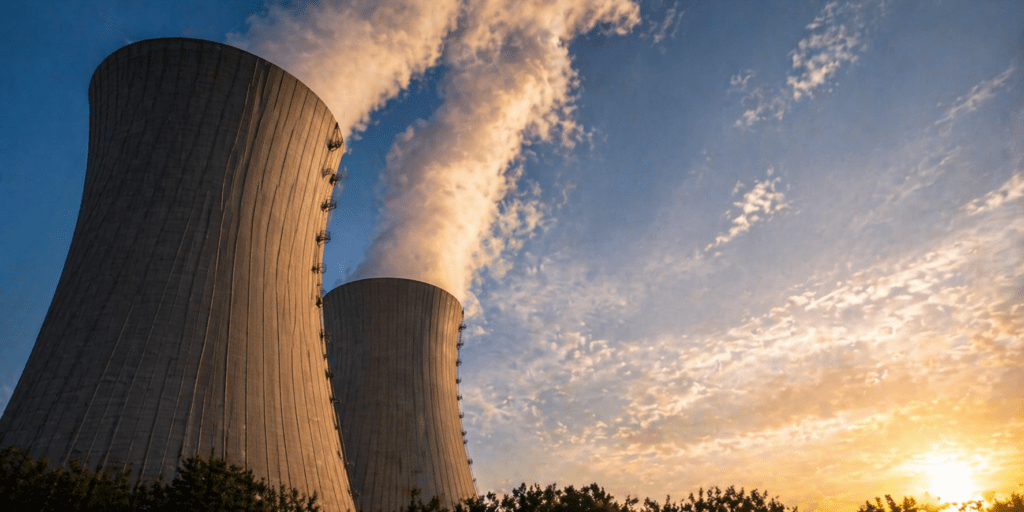
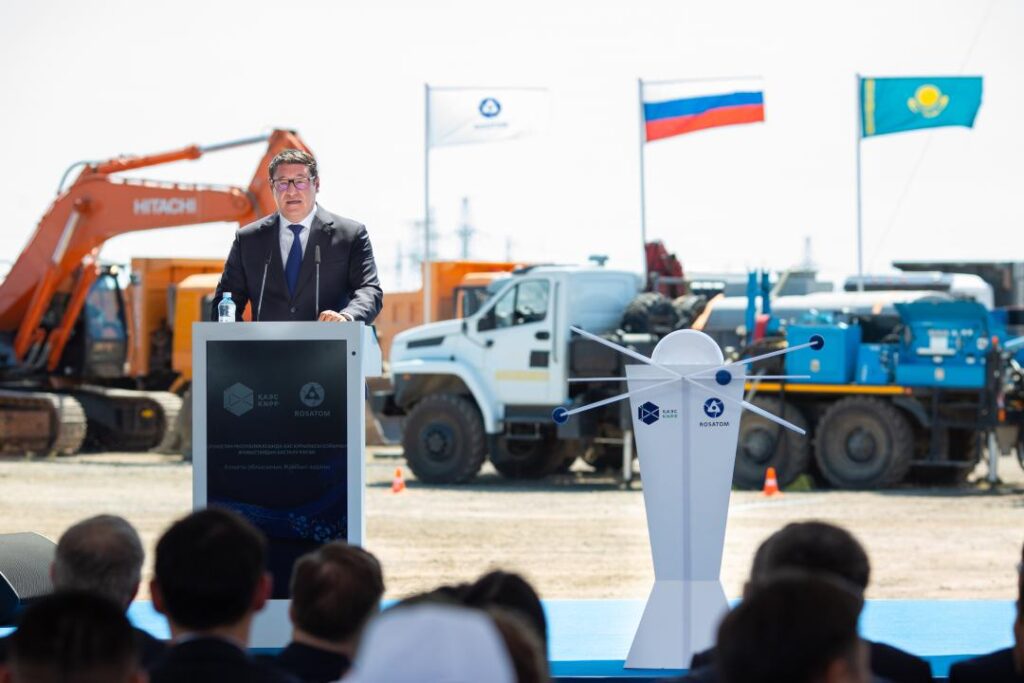
Kazakhstan has officially launched the construction of its first nuclear power plant, marking a significant milestone in the country’s long-term energy strategy. A groundbreaking ceremony was held on Friday in the Almaty region, in the south of the country. The project is being led by a consortium headed by Rosatom, Russia’s state nuclear energy corporation. The facility will be located near the village of Ulken on the shores of Lake Balkhash, approximately 400 kilometers from Almaty, Kazakhstan’s largest city. The plant will feature two reactors with a combined capacity of 2.4 gigawatts by 2035 and is expected to meet a substantial share of the country’s future electricity demand. According to Almasadam Satkaliyev, Chairman of the Atomic Energy Agency of the Republic of Kazakhstan, the total investment in the project is estimated at $14-15 billion. An additional $1 billion has been allocated for the development of social infrastructure in the surrounding region. “Today’s ceremony marks the start of engineering and survey work, a critical preparatory stage that will determine not only the final site and configuration of the plant, but also the safety, reliability, and economic efficiency of the entire project,” Satkaliyev said. Rosatom Director General Alexey Likhachev presented a model of the plant, which will be based on the design of Russia’s Novovoronezh Nuclear Power Plant and utilize Generation III+ reactor technology. This design is recognized for its improved fuel efficiency, advanced safety systems, and standardized construction process, which aims to reduce both construction and operational costs. Satkaliyev stressed that Kazakhstani enterprises and research institutions would play a central role in the project, with the aim of bolstering domestic industry, creating thousands of jobs, and advancing the country's nuclear science capabilities to international standards. According to the Agency’s press service, Satkaliyev recently met with Professor Jozef Konings, Dean of the Nazarbayev University Graduate School of Business, and Professor David Robinson of Duke University (USA) to discuss collaboration on nuclear workforce development. Discussions focused on potential joint academic programs, faculty exchanges, and international research partnerships. “Human capital development is a key pillar of the safe and sustainable introduction of nuclear technologies in Kazakhstan. I am confident that cooperation with leading academic institutions will contribute to forming a new generation of specialists capable of ensuring the safe and efficient operation of future nuclear power plants,” Satkaliyev stated. As previously reported by The Times of Central Asia, Kazakhstan plans to build at least three nuclear power plants. The second and third facilities are slated for development by the China National Nuclear Corporation (CNNC).

China’s CNNC to Build Third Nuclear Power Plant in Kazakhstan

China National Nuclear Corporation (CNNC), which previously secured the contract for Kazakhstan’s second nuclear power plant, will now lead the construction of a third facility, according to First Deputy Prime Minister Roman Sklyar. In October 2024, Kazakh citizens voted in a national referendum in favor of nuclear energy development. Following the vote, President Kassym-Jomart Tokayev announced the need to construct at least two, and ideally three, nuclear power plants. In June 2025, Russia’s Rosatom was selected to build the first plant near the village of Ulken, on the western shore of Lake Balkhash, approximately 400 kilometers northwest of Almaty. Simultaneously, CNNC was announced as the builder for the second facility. Potential locations for this project include Kurchatov, near the former Semipalatinsk nuclear test site in eastern Kazakhstan, and Aktau, the former site of the Soviet-era BN-350 fast neutron reactor in the west. The identity of the third project’s contractor remained unclear until now. Alongside Rosatom and CNNC, South Korea’s KHNP and France’s EDF had been shortlisted. “The third nuclear power plant will also be built by China,” Sklyar confirmed during a press briefing. When asked whether this referred to CNNC specifically, he replied in the affirmative. Kazakhstan’s Atomic Energy Agency and Kazakhstan Atomic Power Plants LLP are currently evaluating potential sites for the second and third nuclear plants. “Work is underway, and I believe the locations will be announced later this year,” Sklyar said. “Each plant requires a permanent source of water and electricity, and the exact districts must be carefully selected.” Meanwhile, negotiations on the intergovernmental agreement for the first nuclear plant, being developed by Rosatom, are ongoing with Russian officials. “Once finalized, the agreement will be submitted to parliament for ratification,” Sklyar added. The first nuclear power plant is planned to have two units with a combined capacity of 2.4 gigawatts and is expected to be operational by 2035. The project is intended to help offset Kazakhstan’s growing electricity deficit, which reached 5.7 billion kWh in January 2025, up from 2.4 billion kWh a year earlier. To meet its current energy needs, Kazakhstan imports electricity primarily from Russia and recently signed an agreement with Tajikistan to purchase additional power from the Rogun Hydroelectric Power Plant.

Kazakhstan Prioritizes Nuclear Energy in Long-Term Development Strategy

Kazakhstan has identified the development of nuclear energy as a strategic priority for the country's economic future, President Kassym-Jomart Tokayev announced at the Astana International Forum (AIF). “Kazakhstan, which possesses 40% of the world's uranium reserves, views nuclear energy as a key pillar of its national development strategy,” Tokayev stated. “However, sustainable development is impossible without addressing the climate crisis, particularly as Central Asia is among the region’s most vulnerable to climate change. Global warming is occurring here at twice the global average rate.” To address this, Tokayev outlined Kazakhstan’s commitment to a pragmatic and regionally coordinated climate agenda. He noted the country’s participation in various international organizations and agreements focused on environmental sustainability. In 2026, Kazakhstan, in partnership with the United Nations, will host a Regional Climate Summit, aimed at aligning Central Asian strategies with global environmental ambitions. Tokayev also highlighted the recent establishment of the UN Regional Center for Sustainable Development Goals for Central Asia and Afghanistan in Almaty. “This marks a significant step in our multilateral cooperation. The center will facilitate joint projects, provide technical support, and coordinate international efforts,” he said. At the same time, Kazakhstan continues to promote nuclear non-proliferation. “Today, nine countries possess more than 13,000 nuclear warheads. Experts warn that the risk of their use is rising, whether through miscalculation, accident, or escalation,” Tokayev cautioned. He emphasized the lasting impact of 450 nuclear tests conducted on Kazakh territory during the Soviet era. Public support for nuclear energy has been growing. In a referendum held last fall, over 70% of Kazakh citizens voted in favor of developing the country’s nuclear energy capacity. In January 2025, the government finalized a shortlist of potential technology suppliers for Kazakhstan’s first nuclear power plant. The contenders include Russia’s Rosatom, South Korea’s KHNP, China’s CNNC, and France’s EDF. The inaugural plant is expected to be built in the Almaty region and operational by 2035. Authorities are also evaluating sites for two additional facilities, with possible locations in Balkhash (southeastern Kazakhstan), Kurchatov (in the Abai region, near the former Semipalatinsk nuclear test site), and Aktau (Mangistau region, home to a Soviet-era experimental reactor). To oversee the development and regulation of the sector, Kazakhstan established the Atomic Energy Agency in March. Reporting directly to the president, the agency is responsible for uranium mining, atomic energy use, radiation safety, and management of the Semipalatinsk Nuclear Safety Zone.