
• KGS/USD = 0.01144 0%
  • KZT/USD = 0.00210 0%
  • TJS/USD = 0.10563 0%
  • UZS/USD = 0.00008 0%
  • TMT/USD = 0.28530 0%
  • KGS/USD = 0.01144 0%
  • KZT/USD = 0.00210 0%
  • TJS/USD = 0.10563 0%
  • UZS/USD = 0.00008 0%
  • TMT/USD = 0.28530 0%
  • KGS/USD = 0.01144 0%
  • KZT/USD = 0.00210 0%
  • TJS/USD = 0.10563 0%
  • UZS/USD = 0.00008 0%
  • TMT/USD = 0.28530 0%
  • KGS/USD = 0.01144 0%
  • KZT/USD = 0.00210 0%
  • TJS/USD = 0.10563 0%
  • UZS/USD = 0.00008 0%
  • TMT/USD = 0.28530 0%
  • KGS/USD = 0.01144 0%
  • KZT/USD = 0.00210 0%
  • TJS/USD = 0.10563 0%
  • UZS/USD = 0.00008 0%
  • TMT/USD = 0.28530 0%
  • KGS/USD = 0.01144 0%
  • KZT/USD = 0.00210 0%
  • TJS/USD = 0.10563 0%
  • UZS/USD = 0.00008 0%
  • TMT/USD = 0.28530 0%
  • KGS/USD = 0.01144 0%
  • KZT/USD = 0.00210 0%
  • TJS/USD = 0.10563 0%
  • UZS/USD = 0.00008 0%
  • TMT/USD = 0.28530 0%
  • KGS/USD = 0.01144 0%
  • KZT/USD = 0.00210 0%
  • TJS/USD = 0.10563 0%
  • UZS/USD = 0.00008 0%
  • TMT/USD = 0.28530 0%

Viewing results 1 - 6 of 7

Six New Oil Fields Added to Kazakhstan’s Reserves

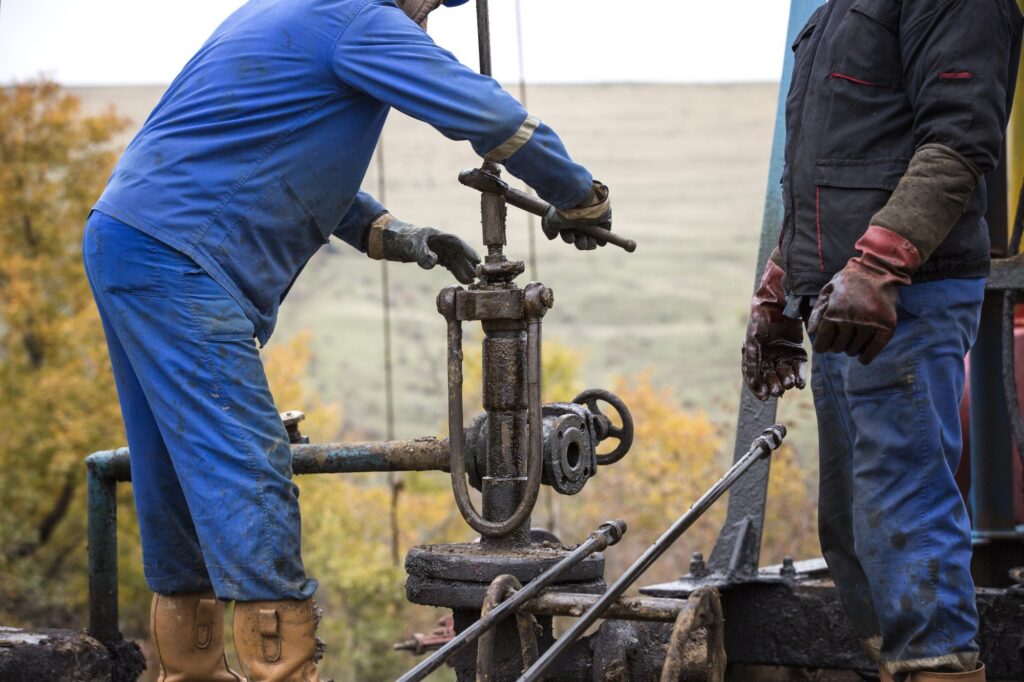
Six new oil fields in western Kazakhstan, with combined reserves exceeding 127 million tons, were added to the country’s national reserves in 2025, Vice Energy Minister Yerlan Akbarov has announced. “Production will be carried out primarily by local, small companies that discovered these fields,” Akbarov said in response to journalists’ questions. He added that Kazakhstan has 15 sedimentary basins with potential hydrocarbon resources; five are currently under development, while geological exploration is ongoing in the others. Earlier, at the Geoscience & Exploration Central Asia forum, Minister of Industry and Construction Yersayin Nagaspayev said that exploration aimed at discovering new oil and gas reserves is planned in the west, as well as in the southeast and north of the country. “Seismic exploration work is planned in the Shu-Sarysu and North Torgay sedimentary basins, which remain underexplored. The results are expected to provide a basis for more detailed prospecting and exploration,” Nagaspayev said. According to the minister, approximately 10,000 deposits are currently recorded in Kazakhstan, of which only 359 are hydrocarbon deposits. In addition, more than 1,000 solid mineral deposits, over 3,700 sites of common minerals, and around 4,900 groundwater sources have been added to the national balance sheet. At the same forum, Askhat Khasenov, Chairman of the Management Board of JSC National Company KazMunayGas (KMG), said the company’s remaining recoverable oil reserves amount to about 445 million tons, with more than 50% classified as hard to recover. He noted that KMG is implementing innovative technologies to bring these reserves into production. As part of this effort, the company has adopted a Technological Challenges Program focused on deploying advanced solutions. Under this program, an additional 434,000 tons of oil were produced in 2025. By 2040, the initiative is expected to generate a further 54 million tons of output, helping to sustain production and preserve jobs at mature fields around which local communities have developed over many years. As previously reported by The Times of Central Asia, Kazakhstan is launching its most ambitious geological exploration program in the past 15 years. Over the next three years, the government plans to invest more than $470 million in the study of mineral resources. A major hydrocarbon field has already been discovered in the Atyrau region, with reserves potentially comparable to those of Kashagan, the country’s largest oil field.
Major Hydrocarbon Field Discovered in Kazakhstan

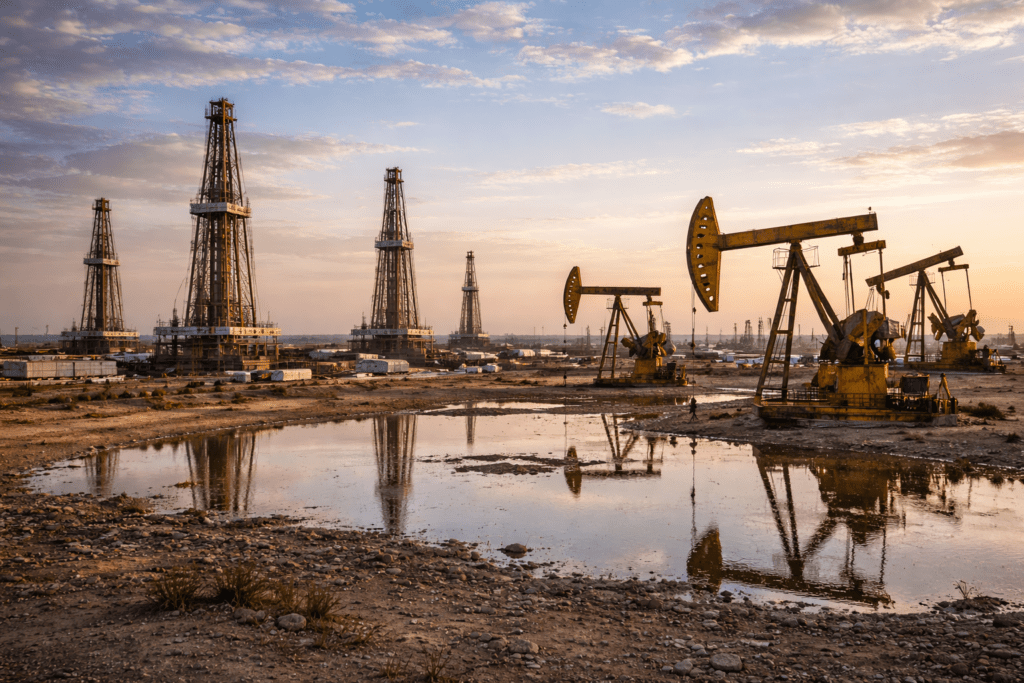
A major hydrocarbon field has been discovered in Kazakhstan’s Atyrau Region, with reserves potentially comparable to those of the Kashagan oil field, the country’s largest oil source, according to Kurmangazy Iskaziyev, First Deputy Chairman of the Management Board of KazMunayGas. The site is located on the Zhylyoi Platform near the Caspian Sea coast. Its onshore location could significantly reduce development costs, although the deposits are believed to lie at considerable depths. Kashagan has long stood as the symbol of both Kazakhstan’s oil wealth and the technical difficulty of extracting it. The offshore field cemented the country’s position as a major crude producer, but also became known for cost overruns, delays, and the engineering challenges of operating in the northern Caspian. Any onshore discovery mentioned in the same breath immediately raises expectations that it could avoid some of those constraints while delivering comparable scale. Kashagan, discovered in the northern Caspian Sea, remains one of the largest oil fields found globally in recent decades. Its recoverable reserves are estimated at 9–13 billion barrels of oil, with gas reserves exceeding 1 trillion cubic meters. Development is carried out by the North Caspian Operating Company consortium, which includes Shell, TotalEnergies, ExxonMobil, Eni, China National Petroleum Corporation, Inpex, and KazMunayGas. Speaking at the Geoscience & Exploration Central Asia forum, Iskaziyev said the resource potential of the Zhylyoi Block, including Karaton, Kazhygali, and Zhylyoi, is estimated at 4.7 billion tons, with total geological potential reaching up to 20 billion tons of oil equivalent. At this stage, such figures reflect geological potential rather than proven, recoverable reserves. In Kazakhstan, as elsewhere, moving from estimate to production depends on depth, pressure, sulfur content, and the cost of drilling and processing. Large discoveries can take years to confirm commercially, particularly in high-pressure or technically complex formations. KazMunayGas has already begun exploration work. A well 5,750 meters deep has been drilled at the Karaton site, and five promising targets have been identified as part of a joint project with Tatneft. During testing at one of these sites, a gas flow containing hydrogen sulfide was recorded. The main challenge remains the depth of the deposits, which may reach up to 9 km. According to Iskaziyev, these conditions are comparable to projects undertaken by KazMunayGas’s Chinese partners, including Sinopec and China National Petroleum Corporation, where drilling depths can reach up to 11 km. The company plans to expand geological exploration into neighboring areas, including Kazhygali, and is negotiating subsoil use contracts. The timing is significant. Kazakhstan is under growing pressure to demonstrate that its oil sector can still deliver major new projects as existing fields mature. A large onshore discovery in Atyrau would reinforce the region’s role as the core of the country’s energy system and support efforts to sustain export volumes and investor interest. At the forum, a memorandum of understanding was also signed between KazMunayGas and BP on cooperation in geological exploration and the development of the Ustyurt Block in the Mangistau Region. The Times of Central Asia previously reported...

Britain’s Victoria Oil & Gas Files Multimillion-Dollar Lawsuit Against Kazakhstan

British company Victoria Oil & Gas has filed a multimillion-dollar lawsuit against the government of Kazakhstan under the Energy Charter Treaty. The development was reported by Energy Monitor, a Telegram channel focused on Kazakhstan’s energy sector. Dispute Centers on Kemerkol Oil Field The legal proceedings are registered with the International Centre for Settlement of Investment Disputes (ICSID), a World Bank-affiliated body. The case stems from a longstanding dispute over the Kemerkol oil field in Kazakhstan's Atyrau region. In 2005, Victoria Oil & Gas acquired a 100% stake in the field from Saga Creek Gold Ltd for $8.5 million. After drilling several wells, the company estimated the field’s geological reserves at approximately 15 million tons of oil. Unexplained Contract Termination In 2008, Kazakhstan’s authorities terminated the subsoil use contract without providing an official explanation. That same year, Kazakh company Bakyt Tau purchased the rights to the field from Saga Creek Gold Ltd for 360 million tenge (approximately $3 million at the 2008 exchange rate). In 2016, Bakyt Tau transferred the development license to Up-Nafta Operating for 1.36 billion tenge (nearly $4 million at the 2016 rate). The company continued exploration and drilling operations. By 2022, the State Reserves Commission reported the following: C1 category geological reserves: 2.35 million tons; recoverable: 588,000 tons C2 category reserves: 652,000 tons; recoverable: 29,000 tons As of 2023, actual oil production totaled just 14,700 tons, with 12 active wells and an average water cut of 79%. Legal Strategy or Political Statement? Given the field’s modest reserves and limited output, some experts suggest the lawsuit may be more political than economic. Energy Monitor noted: “The field is clearly not worth hundreds of millions of dollars, unlike the Stati case involving the Borankol and Tolkyn fields. Most likely, the lawsuit has a political context rather than an economic one.” Victoria Oil & Gas first raised the prospect of arbitration in April 2021. The case has now been officially registered under ICSID case number ARB/25/13, signaling the start of formal legal proceedings. Implications for Kazakhstan While the precise amount of the claim has not been disclosed, Victoria Oil & Gas is expected to seek compensation for lost investments and projected profits. However, given the field’s limited commercial viability, many industry observers question the likelihood of a favorable ruling. The case adds to Kazakhstan’s growing docket of international arbitrations, including the high-profile Stati brothers’ case. Analysts warn the dispute could affect the country’s investment climate and its bargaining position in future energy negotiations.
