

• KGS/USD = 0.01144 0%
  • KZT/USD = 0.00201 0%
  • TJS/USD = 0.10503 -0.19%
  • UZS/USD = 0.00008 0%
  • TMT/USD = 0.28571 0%
  • KGS/USD = 0.01144 0%
  • KZT/USD = 0.00201 0%
  • TJS/USD = 0.10503 -0.19%
  • UZS/USD = 0.00008 0%
  • TMT/USD = 0.28571 0%
  • KGS/USD = 0.01144 0%
  • KZT/USD = 0.00201 0%
  • TJS/USD = 0.10503 -0.19%
  • UZS/USD = 0.00008 0%
  • TMT/USD = 0.28571 0%
  • KGS/USD = 0.01144 0%
  • KZT/USD = 0.00201 0%
  • TJS/USD = 0.10503 -0.19%
  • UZS/USD = 0.00008 0%
  • TMT/USD = 0.28571 0%
  • KGS/USD = 0.01144 0%
  • KZT/USD = 0.00201 0%
  • TJS/USD = 0.10503 -0.19%
  • UZS/USD = 0.00008 0%
  • TMT/USD = 0.28571 0%
  • KGS/USD = 0.01144 0%
  • KZT/USD = 0.00201 0%
  • TJS/USD = 0.10503 -0.19%
  • UZS/USD = 0.00008 0%
  • TMT/USD = 0.28571 0%
  • KGS/USD = 0.01144 0%
  • KZT/USD = 0.00201 0%
  • TJS/USD = 0.10503 -0.19%
  • UZS/USD = 0.00008 0%
  • TMT/USD = 0.28571 0%
  • KGS/USD = 0.01144 0%
  • KZT/USD = 0.00201 0%
  • TJS/USD = 0.10503 -0.19%
  • UZS/USD = 0.00008 0%
  • TMT/USD = 0.28571 0%

Viewing results 1 - 6 of 7

Kazakh Government Transfers Control of Controversial Medical Fund to Ministry of Finance

The Kazakh government has restructured the management of the Social Medical Insurance Fund (SMIF), transferring oversight of its operations to the Ministry of Finance. The decision was formalized by Prime Minister Olzhas Bektenov following a comprehensive audit of the fund’s financial activities conducted over the past month. The SMIF serves as the principal operator of Kazakhstan’s Compulsory Social Medical Insurance (CSMI) system. It collects contributions from employees, employers, and the state, then allocates these funds to medical institutions based on the volume of services rendered. However, the fund’s operations have faced sustained public and parliamentary criticism. In January 2025, members of parliament declared that the SMIF had lost the public’s trust and called for tighter oversight of its expenditures. Delayed Audit and Financial Irregularities Despite growing concerns, a large-scale audit had long been postponed. It was not until December 2025 that the Prime Minister tasked the Ministry of Finance with analyzing the fund’s financial flows. Finance Minister Madi Takiev presented the audit’s findings last week. According to the government press service, the results raised serious concerns about the overall effectiveness of the country’s healthcare financing model. Despite a steady rise in expenditures, the Ministry of Finance found that SMIF’s efficiency had not improved. Since 2020, the fund’s investment income totaled $1.1 billion, including $383 million in 2025 alone. A significant portion of these funds, however, was not allocated toward medical services, and instead accumulated in the fund’s reserves. Overbilling and Digital System Failures An IT audit of the healthcare information system revealed extensive violations in service reporting. These included billing for fictitious patients, services provided without medical necessity, and instances of double financing. Numerous cases documented implausibly high volumes of procedures performed within short timeframes. Several high-profile anomalies stood out. In some reports, medical services were recorded for individuals who were deceased at the time. In another case, minors were allegedly prescribed more than a thousand medications in a single day. Tax authorities also conducted a desk audit of the directors of medical institutions, comparing declared incomes with actual property holdings. Transition to Centralized Oversight In response to the audit, Bektenov ordered that all materials be forwarded to law enforcement agencies for further investigation. This marks the effective dismantling of SMIF’s former autonomous governance model in favor of centralized control by the Ministry of Finance. The move comes amid rising fiscal pressure on the healthcare system. In 2026, the government will continue to fund medical insurance premiums for socially vulnerable groups. As previously reported by The Times of Central Asia, the state will finance insurance coverage for over one million unemployed citizens.
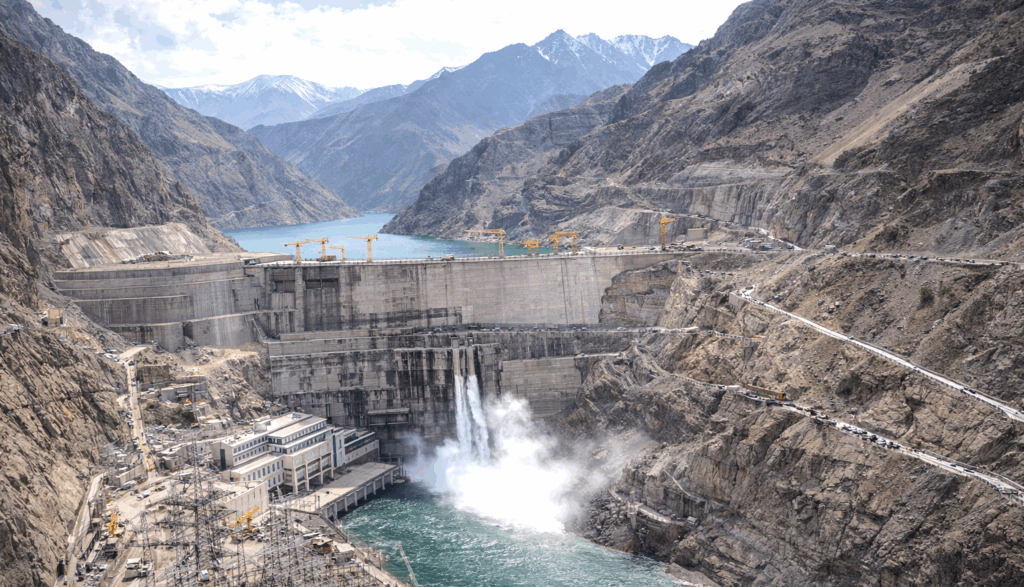
Independent Audit Raises Concerns Over Financial Reporting at Tajikistan’s Rogun Hydropower Plant

An independent audit of Tajikistan’s flagship Rogun Hydropower Plant (HPP) has flagged serious financial reporting concerns, including a possible understatement of the company’s share capital. The findings, cited by Asia-Plus from the auditor’s conclusion, point to broader risks in the management of one of Central Asia’s most ambitious infrastructure projects. The audit, covering Rogun’s 2024 financial statements, was conducted by Baker Tilly Tajikistan, a registered member of the international Baker Tilly network. The auditors issued a qualified opinion, meaning they were unable to fully confirm the accuracy of the company’s accounts and highlighted several material issues. The audited report has been published on the official Rogun HPP website. Among the key concerns, auditors stated they had not been involved in scheduled or annual inventories of cash, fixed assets, or other inventories as of December 31, 2024. This limited their ability to verify the existence and condition of parts of the company’s assets through alternative procedures, raising the risk of potential misstatements in the financial records. The audit also noted that Rogun’s fixed assets had not been revalued in recent years, despite signs that their book value may significantly differ from their fair market value. Under International Financial Reporting Standards (IFRS), such assets are required to be revalued periodically. The failure to do so may distort the company’s true financial position. A particularly striking finding involved discrepancies in the company’s reported share capital. Rogun’s financial statements list share capital at 40.03 billion somoni, while the Unified State Register of Legal Entities records it at 45 billion somoni. The difference, 4.97 billion somoni, or approximately $540 million, may indicate that the company has understated its equity. According to the audit, Rogun’s management did not provide adequate documentation to support the lower figure. As of the end of 2024, Rogun reported total assets of 49.48 billion somoni, up from the previous year. The bulk, 35.33 billion somoni, was classified as construction in progress, reflecting the plant’s ongoing development phase. The book value of fixed assets stood at 9.28 billion somoni, with most 2024 expenditures directed toward equipment and construction work. The company reported 2024 revenues of 258.4 million somoni, primarily from electricity sales. However, operating costs exceeded income, totaling 367.4 million somoni, resulting in a net loss of 277.3 million somoni. This marks a modest improvement over 2023, when the net loss was 332.8 million somoni. The auditors described these losses as systemic, emphasizing that the plant has not yet reached full operational capacity. Despite the loss, Rogun HPP generated a positive operating cash flow of more than 3.2 billion somoni in 2024. This was largely attributed to increased liabilities from founders and settlements with state institutions. Baker Tilly stressed that the company’s continued operation depends heavily on sustained government support, which is regularly allocated through Tajikistan’s state budget. The auditors also issued a warning over material uncertainty regarding the company’s ability to continue as a going concern. However, Rogun’s management maintains that the project is a strategic national asset, vital to Tajikistan’s...

Frequent Textbook Revisions Cost Kazakhstan Over $32 Million, Audit Reveals

Frequent reissues of school textbooks have cost Kazakhstan’s state budget more than 16 billion KZT (over $32 million) in the past five years, according to a report by the country’s Supreme Audit Chamber (SAC). “Reforms in educational standards are being carried out unsystematically. Frequent changes in curricula have led to revisions of already issued textbooks and inefficient budget expenditures. Over the past five years, economic losses due to textbook revisions have exceeded 16 billion KZT,” the report stated. Supreme Audit Chamber head Alikhan Smailov explained that the criteria for evaluating textbooks have changed about 12 times in recent years, leading to repeated reprints of secondary school textbooks at the state’s expense. In 2023, the Ministry of Education updated textbooks for third, fifth, seventh, eighth, ninth, tenth, and eleventh grades, affecting 14 subjects as well as curricula for children with special educational needs. As a result, budget funds were allocated for the purchase of nearly 20 new textbooks aligned with the revised program. Since 2023, a regulation has been in place requiring publishers to cover the cost of reprinting textbooks but only in cases of printing defects or deviations from the approved version reviewed by the expert commission. When changes are made to school curricula, the government remains responsible for financing new textbook editions. The Supreme Audit Chamber believes that many of these revisions stem from deficiencies in the initial expert review of textbooks. Moreover, the expertise process is still not conducted through the public service monitoring system, which would allow for better oversight of its effectiveness. The audit revealed further inefficiencies in budget planning for schools, identifying: 62.4 billion KZT ($126 million) in misallocated funds 1.1 billion KZT ($2.2 million) in financial violations 3.2 billion KZT ($6.4 million) in misuse of public funds One example cited was discrepancies between the Ministry of Labor’s teacher demand forecasts and the actual needs of the education system when allocating funding for teacher training programs. Auditors also found that 66 schools across Kazakhstan, both public and private, were operating without valid licenses for educational activities. Additionally, only 18.2% of schools pass their certification on the first attempt, highlighting systemic weaknesses in school administration. The report also noted serious deficiencies in teacher training, retraining programs, and methodological support for educators. “We have increased financing for secondary education more than threefold in recent years. Given this, the state expects better outcomes from these investments,” said SAC head Smailov. As The Times of Central Asia previously reported, one in ten Kazakh emigrants cites the pursuit of better education, both for themselves and their children, as a key reason for leaving the country.
