• KZT/USD = 0.00211
  • TJS/USD = 0.10810
  • UZS/USD = 0.00008
  • TMT/USD = 0.29760
  • KZT/USD = 0.00211
  • TJS/USD = 0.10810
  • UZS/USD = 0.00008
  • TMT/USD = 0.29760
  • KZT/USD = 0.00211
  • TJS/USD = 0.10810
  • UZS/USD = 0.00008
  • TMT/USD = 0.29760
  • KZT/USD = 0.00211
  • TJS/USD = 0.10810
  • UZS/USD = 0.00008
  • TMT/USD = 0.29760
  • KZT/USD = 0.00211
  • TJS/USD = 0.10810
  • UZS/USD = 0.00008
  • TMT/USD = 0.29760
  • KZT/USD = 0.00211
  • TJS/USD = 0.10810
  • UZS/USD = 0.00008
  • TMT/USD = 0.29760
  • KZT/USD = 0.00211
  • TJS/USD = 0.10810
  • UZS/USD = 0.00008
  • TMT/USD = 0.29760
  • KZT/USD = 0.00211
  • TJS/USD = 0.10810
  • UZS/USD = 0.00008
  • TMT/USD = 0.29760
01 August 2026

Viewing results 1 - 6 of 7

Tajikistan Prepares for Another Winter Power Shortfall

Tajikistan is preparing for another autumn and winter in which electricity demand may outstrip supply. Network losses have fallen, and investment in hydropower continues, but officials say the seasonal imbalance between generation and consumption will persist. Mahmadumar Asozoda, chairman of state-owned power company Barki Tojik, said the imbalance would persist through the colder months. Asked whether electricity rationing would return, he did not rule it out. Tajikistan generates almost all of its electricity from hydropower, leaving supply tied to seasonal river flows. Output rises during the warmer months, when the country can meet domestic demand and export surplus electricity. In winter, river flows decline as electricity use increases for heating, creating a recurring shortfall. To cover part of the winter shortfall, Tajikistan plans to import electricity from Uzbekistan again. The two countries use a seasonal exchange: Uzbekistan supplies power in autumn and winter, and Tajikistan returns an equivalent volume during summer. Tajikistan imported 306 million kilowatt-hours (kWh) last winter, down from 350 million kWh a year earlier. Asozoda said the countries expect to sign a new agreement before the next autumn-winter season. Imports can ease the shortage, but they do not remove Tajikistan's dependence on hydropower or the winter drop in output. The seasonal arrangement with Uzbekistan gives Tajikistan access to power when domestic generation is lowest. As previously reported by The Times of Central Asia, Kazakhstan has signed a 20-year agreement to buy electricity from Tajikistan. Deliveries are expected to depend on additional generating capacity at the Rogun Hydropower Plant. The Nurek Reservoir stood at 888.21 meters on July 13, but Energy and Water Resources Minister Daler Juma said Tajikistan was experiencing low water levels. The country has reduced electricity exports and is retaining more water in its reservoirs for winter. Losses in the electricity system fell during the first half of 2026. At Barki Tojik's generating facilities, losses were 0.32% of output, down 0.07 percentage points from a year earlier. Losses in high-voltage transmission networks fell to 2.96%, while distribution losses dropped from 17.93% to 12.42%. Barki Tojik generated 8.89 billion kWh during the period, 2.7 million kWh less than in the first half of 2025. Hydropower plants supplied 7.93 billion kWh, while thermal plants produced 964 million kWh. The utility also bought 2.7 billion kWh from independent producers in Tajikistan and abroad, with Sangtuda-1 supplying 1.48 billion kWh. Rogun and Sangtuda-2 supplied 667.2 million kWh and 474.2 million kWh, respectively. Demand continues to rise as Tajikistan's population grows and industrial production expands, President Emomali Rahmon said in December 2025. The World Bank expects Rogun to help meet domestic needs and reduce recurring winter cuts. Rahmon has said rationing should end in 2027, when the third generating unit is scheduled to enter service, although the World Bank projects full completion in 2033. For the coming winter, Tajikistan is conserving reservoir water and arranging imports from Uzbekistan, but Asozoda's comments leave open the possibility of renewed rationing.


World Bank Approves New $300 Million Grant for Tajikistan’s Rogun Hydropower Project

The World Bank’s Board of Executive Directors has approved a second phase of financing for Tajikistan’s Rogun Hydropower Plant, providing a $300 million grant to support construction of what is expected to become the largest power station in Central Asia. According to the World Bank, the new funding from the International Development Association will finance civil works, electromechanical equipment for electricity generation, project implementation support, and environmental and social measures, including resettlement assistance and livelihood restoration for affected households. The financing will also support reservoir monitoring, forecasting systems, and flood-risk management for downstream communities. The Rogun project is expected to generate 14,400 gigawatt-hours of renewable electricity annually, equivalent to roughly 60% of Tajikistan’s current electricity generation. The World Bank said the plant will help reduce the country’s chronic winter electricity shortages, improve access to reliable power for around 10 million people, create more than 30,000 direct and indirect jobs, and enable electricity exports to Kazakhstan and Uzbekistan. “In addition to reducing chronic power shortages, increased access to reliable electricity from the Rogun HPP will help power economic transformation and create jobs in Tajikistan,” said Najy Benhassine, the World Bank’s director for Central Asia. “By increasing the supply of clean electricity, this transformational project will help power homes, businesses, and public services, creating employment opportunities in the country.” The World Bank also said increased electricity exports would strengthen regional energy trade. “By facilitating electricity exports, the Rogun HPP will help revitalize the regional power market, allowing Central Asian countries to use their energy assets more efficiently,” said Charles Cormier, the bank’s director for infrastructure in Europe and Central Asia. “Enhanced regional connectivity is expected to reduce supply constraints in the region and contribute to improved reliability and energy security.” At the request of the government of Tajikistan, the World Bank is coordinating international support for the project through the Rogun Coordination Group. The group includes development partners that have approved or expressed interest in supporting the project, including the Asian Development Bank, Asian Infrastructure Investment Bank, European Investment Bank, Islamic Development Bank, OPEC Fund, and several Gulf-based development funds. The latest financing comes as the project continues to face environmental scrutiny. Last year, The Times of Central Asia reported that the World Bank’s Inspection Panel had registered and reviewed a complaint concerning the bank’s involvement in the Rogun project. The complaint was submitted by the environmental coalition Rivers Without Boundaries on behalf of communities living downstream in Uzbekistan and Turkmenistan. The complainants argued that the project’s environmental and social assessments were outdated and did not fully evaluate potential downstream impacts. Environmental groups warned that filling the Rogun reservoir could reduce water flow to the Amu Darya delta, potentially accelerating desertification, increasing soil salinity, and affecting livelihoods in Uzbekistan and Turkmenistan. In November 2025, environmental groups criticized the World Bank Board after it declined to authorize a full investigation, despite an Inspection Panel recommendation for a comprehensive review. The World Bank has said the project is subject to environmental and social safeguards,...

Kazakhstan Expects to Double Renewable Energy Capacity by 2029

Kazakhstan expects to fully meet domestic electricity demand by early 2027 and move into a stable power surplus by 2029, partly through a planned doubling of renewable energy capacity, Energy Minister Yerlan Akkenzhenov said at a government meeting. Akkenzhenov said Kazakhstan’s power system currently includes 254 generation facilities, including 172 renewable energy installations. Conventional energy sources still dominate the country’s power mix. Coal-fired plants account for 13.7 gigawatts (GW) of installed capacity, gas-fired plants for 7.1 GW, and large hydropower stations for 2.5 GW. Kazakhstan’s total installed generating capacity stands at 27.1 GW, while renewable energy facilities account for 3.8 GW. Kazakhstan generated a record 123.1 billion kilowatt-hours (kWh) of electricity last year, while consumption reached 124.6 billion kWh. This year, output is expected to rise further to 126.5 billion kWh, the ministry said. The gap between production and consumption has been narrowing steadily, and the government plans to commission 13.3 GW of new capacity by the end of 2029, including 5.9 GW from renewable energy sources. “By 2029, 13.3 GW of new capacity will be commissioned. Of this volume, 12.56 GW will come from entirely new generation facilities, while 0.74 GW will replace existing capacity,” Akkenzhenov said. “The commissioning of new facilities will allow us to fully meet the economy’s electricity demand starting from early 2027, followed by a surplus. This additional generation will also support energy-intensive artificial intelligence infrastructure and large data centers,” he added. Under Kazakhstan’s Energy Sector Development Plan through 2035, the government also plans to introduce more than 26.3 GW of additional generating capacity. The ministry said the decision to build new facilities is based on long-term projections of rising electricity demand. Kazakhstan is also implementing a national project to expand coal-fired generation using what officials describe as cleaner coal technologies in line with environmental regulations. That program includes investment projects with a combined installed capacity of around 7.8 GW. Key projects include the construction of the Ekibastuz GRES-3 power plant, a thermal power station in Kurchatov, and three new combined heat and power plants in Kokshetau, Semey, and Ust-Kamenogorsk. In total, the national energy project includes 19 initiatives, eight new projects and 11 focused on the expansion and modernization of existing facilities. As previously reported by The Times of Central Asia, Kazakhstan’s electricity deficit was projected to reach 5.7 billion kWh in January 2025, up from 2.4 billion kWh a year earlier. The country currently imports most of its shortfall from Russia and signed an agreement with Tajikistan in May 2025 to import electricity from the Rogun Hydropower Plant.

Tajikistan Plans Over $1 Billion for Rogun Hydropower Project in 2026

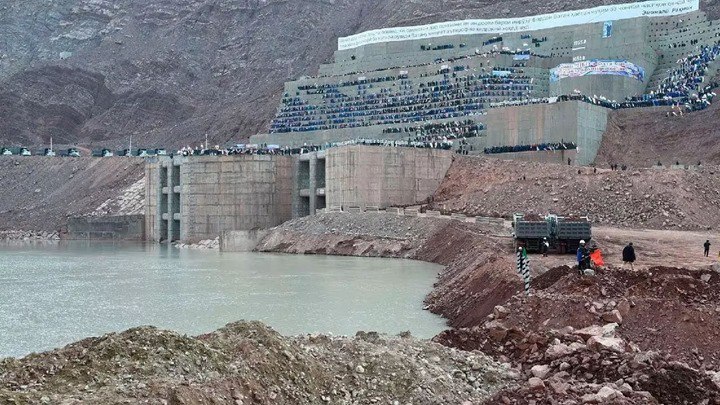
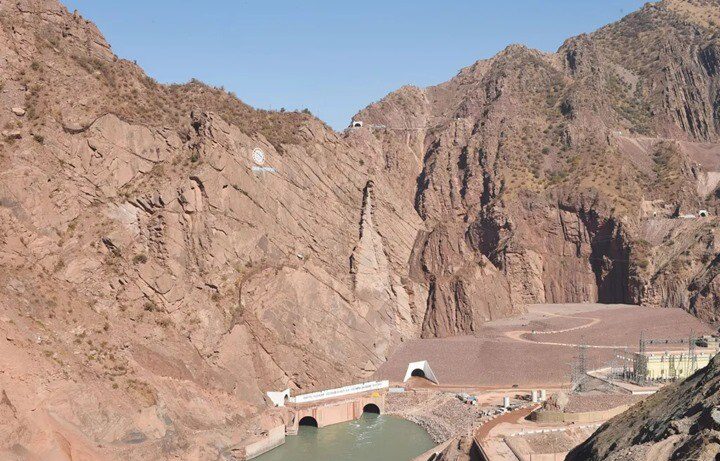
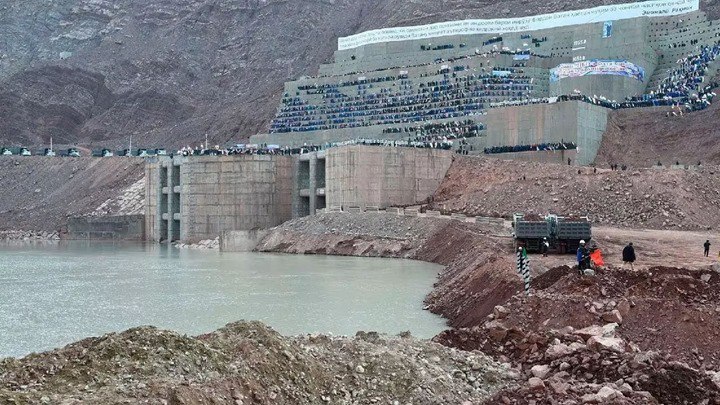
The government of Tajikistan plans to allocate at least 10 billion TJS (more than $1 billion) to finance the Rogun hydropower project in 2026, Finance Minister Faiziddin Qahhorzoda said on February 13 at a press conference in Dushanbe. The statement was later released by the Ministry of Finance and reported by Asia-Plus. Qahhorzoda specified that 8.2 billion TJS has already been earmarked in the state budget for completion of the Rogun hydropower plant. He added that additional financing could be mobilized through development partners, as agreements have been signed and the required domestic procedures and partner conditions have been fulfilled. “Certain conditions had to be met by the government of Tajikistan to access these funds. All conditions have been completed, and financing under the first tranche of $350 million has begun,” the minister said, referring to grant funding from the World Bank. He added that negotiations for an additional $300 million from the institution have been concluded successfully, with the funds expected to become available by mid-year. The minister also stated that domestic procedures are being finalized to attract $150 million from the Islamic Development Bank, as well as $100 million each from the Saudi Fund for Development, the Kuwait Fund for Arab Economic Development, and the OPEC Fund for International Development. According to Qahhorzoda, the remaining step is the completion of tender procedures. In addition, all procedures have reportedly been completed to secure $500 million from the Asian Infrastructure Investment Bank, of which $270 million is expected to be disbursed in the first tranche. According to the Finance Ministry, approximately 11 billion TJS was allocated in 2025 for the completion of Rogun, including 2 billion TJS designated for servicing Eurobonds issued to support the project. Earlier, at the end of January, the Energy Ministry stated during a separate press conference that several financing agreements signed with international partners in 2024-2025 had already entered into force. Officials noted that activating these agreements required fulfilling a number of technical and procedural conditions. The Rogun hydropower plant, located 110 kilometers from Dushanbe on the Vakhsh River, is the largest energy project in Tajikistan. Construction began in 1976 but was suspended following the collapse of the Soviet Union. Work resumed after independence. Of the six planned generating units, each with a capacity of 600 MW, two are currently operational and had produced 9.9 billion kWh of electricity by the end of last year. In December 2025, President Emomali Rahmon announced that the third unit is scheduled to be commissioned in September 2027. Once all six units are operational, the plant’s total installed capacity will reach 3.78 GW, and its 335-meter dam is projected to become the tallest in the world. The total cost of construction has been estimated at $6.2 billion.

Rogun Dam’s Cross-Border Environmental Impact Draws Scrutiny

An international environmental coalition has raised new concerns about the environmental assessment of Tajikistan’s Rogun Hydropower Plant, warning that its potential cross-border and cumulative impacts on downstream countries are being underestimated. The group, Rivers without Boundaries, presented its latest report, Eyes Wide Shut: Ignoring the Transboundary and Cumulative Impacts of the Rogun Hydropower Plant, highlighting what it describes as serious shortcomings in the project’s environmental and social review. According to the report, the current assessment of Rogun’s transboundary effects does not fully comply with the environmental and social standards of the World Bank. Experts argue the analysis relies on outdated data from 2014 and uses static modeling scenarios that fail to reflect climate change trends and the current hydrological realities of the Amu Darya basin. Rivers without Boundaries contends that this approach prevents a realistic understanding of how the project could affect downstream water availability and ecosystems. The coalition also criticizes what it describes as a failure to account for key external factors, particularly the construction of Afghanistan’s Qosh Tepa canal, which is expected to significantly alter regional water balances. Rather than applying a basin-wide and cumulative assessment, the developers have labeled Rogun’s impact as “neutral”, a claim environmental experts deem misleading. “The authors of the impact assessment preferred to act with their eyes wide shut, excluding the most sensitive and uncomfortable scenarios,” said Evgeny Simonov, international coordinator of Rivers without Boundaries. He added that portraying the world’s tallest dam as environmentally neutral contradicts the very premise of cumulative impact assessment. Without binding commitments on environmental water releases and artificial floods, Simonov warned, the project risks prolonging ecological degradation in downstream areas for decades. The report flags particular threats to biodiversity and wetlands in the Amu Darya delta, many of which are protected under the Ramsar Convention. It notes that the Rogun assessment lacks clear mechanisms to guarantee water flows to these critical habitats during dry periods. The coalition also points to significant gaps in public consultation processes, especially in downstream countries, raising questions about the legitimacy of conclusions drawn regarding the project’s social acceptability. Alexander Kolotov, the coalition’s Central Asia regional coordinator, said consultations were not conducted in affected areas of Uzbekistan and Turkmenistan. “The risks linked to seasonal water redistribution and the launch of the Qosh Tepa canal were effectively left out of the analysis,” he said, calling this a dangerous precedent for a project of regional significance. Rivers without Boundaries is calling for a full Strategic Environmental Assessment of the entire Amu Darya basin, along with the development of legally binding water management plans that include climate adaptation strategies and biodiversity protection measures. Without a fundamental revision of the current approach, the coalition warns, Rogun could become a long-term source of environmental and social tension in Central Asia. At the heart of the concern is the filling of the Rogun reservoir, which experts say could reduce water flows to the Amu Darya delta by 25% or more, accelerating desertification and threatening the livelihoods of up to 10...

Tajikistan Approves Use of Central Bank Reserves to Fund Rogun Hydropower Plant

Tajikistan’s lower house of parliament on January 22 approved a draft law allowing funds from the reserve fund of the National Bank of Tajikistan to be used to finance construction of the Rogun Hydropower Plant, a project viewed as central to the country’s long-term energy strategy. The decision was reported by Sadoi Mardum, the official newspaper of the lower chamber. According to the publication, the bill was introduced at the initiative of President Emomali Rahmon. Speaking before lawmakers, Finance Minister Faiziddin Qahhorzoda said the legislation creates a legal mechanism for channeling reserve fund resources through the state budget toward completion of Rogun, which authorities describe as a strategically important facility. Qahhorzoda explained that the law provides for the transfer of 916 million Tajik somoni (approximately $100 million), representing the remaining balance of the National Bank’s reserve fund generated from its financial performance in 2024. He told deputies that the measure is intended to help Tajikistan achieve energy independence by 2027 and reduce reliance on external loans and grants. The minister also pointed to broader budgetary support for the energy sector. Under the state budget for 2026, around 15 billion somoni (more than $1.6 billion) has been allocated for fuel and energy projects, with the majority of those funds earmarked for completion of the Rogun dam. The parliamentary decision follows earlier reports highlighting financial oversight challenges surrounding the hydropower project. As previously reported by The Times of Central Asia, an independent audit of Rogun’s 2024 financial statements identified serious concerns related to financial reporting and internal controls. The audit was conducted by Baker Tilly Tajikistan, a member of the international Baker Tilly network, and resulted in a qualified opinion. Auditors said they were unable to fully confirm the accuracy of the company’s accounts and cited several material issues, including a possible understatement of share capital. They also noted that they did not participate in scheduled inventories of cash, fixed assets, or other holdings as of December 31, 2024, limiting their ability to verify parts of the company’s assets.