• KZT/USD = 0.00214
  • TJS/USD = 0.10810
  • UZS/USD = 0.00008
  • TMT/USD = 0.29760
  • KZT/USD = 0.00214
  • TJS/USD = 0.10810
  • UZS/USD = 0.00008
  • TMT/USD = 0.29760
  • KZT/USD = 0.00214
  • TJS/USD = 0.10810
  • UZS/USD = 0.00008
  • TMT/USD = 0.29760
  • KZT/USD = 0.00214
  • TJS/USD = 0.10810
  • UZS/USD = 0.00008
  • TMT/USD = 0.29760
  • KZT/USD = 0.00214
  • TJS/USD = 0.10810
  • UZS/USD = 0.00008
  • TMT/USD = 0.29760
  • KZT/USD = 0.00214
  • TJS/USD = 0.10810
  • UZS/USD = 0.00008
  • TMT/USD = 0.29760
  • KZT/USD = 0.00214
  • TJS/USD = 0.10810
  • UZS/USD = 0.00008
  • TMT/USD = 0.29760
  • KZT/USD = 0.00214
  • TJS/USD = 0.10810
  • UZS/USD = 0.00008
  • TMT/USD = 0.29760
11 August 2026

Viewing results 1 - 6 of 2

Kazakhstan Allocates More Than $22 Million for New Communications Satellite

Kazakhstan has begun upgrading its national satellite infrastructure by financing the development of a new communications satellite, KazSat-3R, which is expected to replace the existing KazSat-3 by the end of the decade. The government is also working to expand the country’s Earth-observation satellite network and develop domestic manufacturing capacity. It is also preparing for commercial launches from the Baikonur Cosmodrome. The government has allocated approximately $22.3 million from its reserve for the KazSat-3R project. The new satellite will replace KazSat-3, whose planned service life expires in 2029. Kazakhstan’s national satellite communications system currently consists of two satellites, KazSat-2 and KazSat-3, as well as two ground control centers, Akkol and Kokterek. The system provides television and radio broadcasting, data transmission, telephone services, and internet access across Kazakhstan, Central Asia, and parts of Russia. KazSat-3’s approaching retirement is one reason for its replacement. In 2023, a power-system malfunction temporarily took the satellite out of service, disrupting satellite television broadcasts and exposing Kazakhstan’s dependence on its own orbital infrastructure. In May 2025, Senator Andrey Lukin, chair of the Senate Committee on International Relations, Defense and Security, previously said KazSat-3R could require 40.2 billion tenge, approximately $86 million, in state financing. He also warned that public procurement rules could restrict the participation of foreign satellite manufacturers and called for the project to be handled under a special procedure. The KazSat system is used by 19 telecommunications operators and provides television services to more than two million subscribers, the government said. It supports television and radio broadcasting, as well as data transmission. The system also provides mobile communications and internet access, particularly in remote areas where building ground-based infrastructure is difficult. Government figures indicate that 99% of Kazakhstan’s population has access to high-speed internet. The country’s population stood at 20,5 million on June 1, 2026, the Bureau of National Statistics reported. The new communications satellite is one element of Kazakhstan’s national space program. The country plans to launch three KazEOSat-MR Earth-observation satellites in 2027 to replace KazEOSat-2. Three more satellites are planned for 2029–2030, which would bring the constellation to six. Kazakhstan is also developing its own launch infrastructure. The Baiterek project, implemented with Russia, has modernized a launch complex at the Baikonur Cosmodrome for the Soyuz-5 launch vehicle. The first test launch took place successfully on April 30, 2026. The government said the test confirmed the complex’s operational readiness. The cost of a commercial Soyuz-5 launch is estimated at between $50 million and $60 million, depending on the rocket configuration and upper stage. By comparison, a commercial launch of SpaceX’s Falcon 9 is priced at approximately $67 million. Kazakh authorities expect this cost structure to allow the project to compete in the international launch-services market. Kazakhstan is also considering satellite exports as a potential area of commercial growth. Domestic companies are exploring projects to manufacture satellites for the Democratic Republic of the Congo, Mongolia, and Nigeria, with a combined potential value estimated at approximately $75 million. As previously reported by The Times of Central Asia,...

Baikonur Cosmodrome: Liftoff for Discovery and Diplomacy

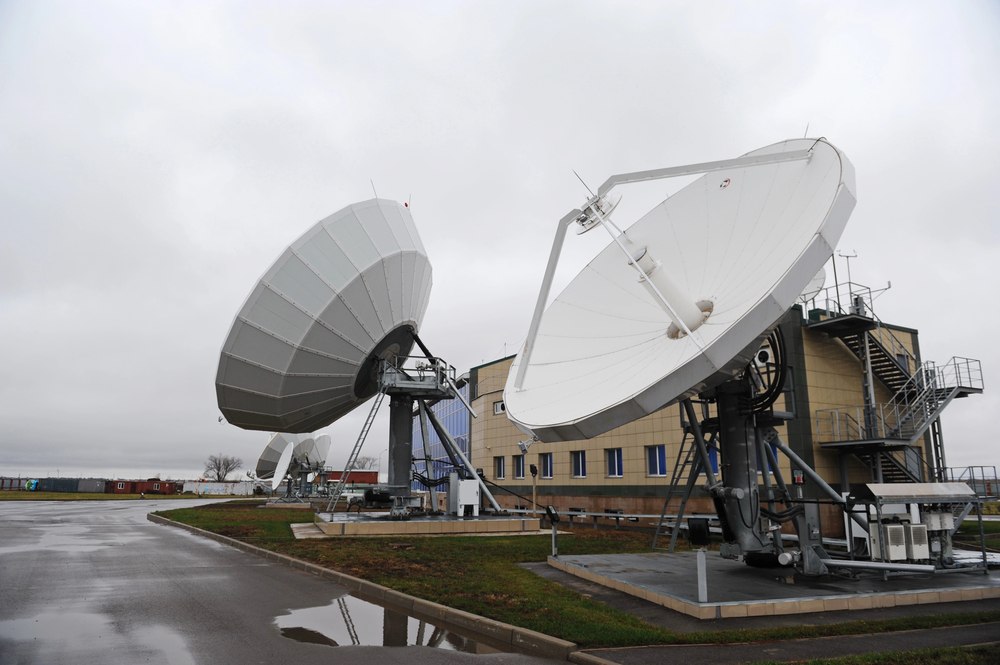
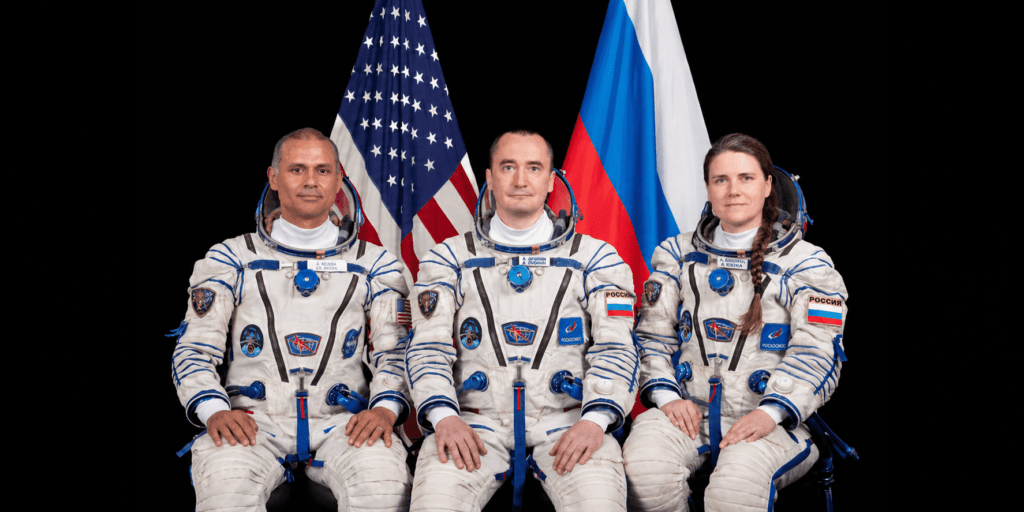
On July 14, 2026, Kazakhstan's Baikonur Cosmodrome will once again serve as the launchpad for discovery and diplomacy. As the site where Soyuz missions carry international crews into orbit, Baikonur continues to show how nations can cooperate in space even when relations are strained. According to NASA, astronaut Dr. Anil Menon and Roscosmos cosmonauts Pyotr Dubrov and Anna Kikina will travel aboard the Soyuz MS-29 spacecraft to the International Space Station (ISS), where they will spend eight months as members of Expeditions 74 and 75. They are scheduled to launch at 10:47 a.m. EDT (7:47 p.m. Baikonur time). The launch will be broadcast live on NASA+, Amazon Prime, and NASA's YouTube channel. According to Ambassador Erzhan Kazykhan, Permanent Representative of Kazakhstan in Geneva, who spoke with The Times of Central Asia, “Kazakhstan supports practical cooperation between the United States and the Russian Federation in space research and remains committed to facilitating such collaboration where appropriate. The Baikonur Cosmodrome will continue to support international space missions and scientific research. The city of Baikonur remains an important center for space science, engineering, and launch operations.” Since its establishment in 1955, the Baikonur Cosmodrome has played a historic role in space exploration, hosting the launch of Sputnik 1 and Yuri Gagarin’s first human spaceflight. Today, Kazakhstan and Russia continue to cooperate on the use of the facility, which remains an important launch site for missions to the International Space Station and other space programs. Baikonur contributes to Kazakhstan’s economic development through lease revenues, employment, infrastructure growth, and international partnerships. It also supports the development of the country’s space capabilities. For more than 25 years, astronauts and cosmonauts have lived and worked continuously aboard the International Space Station, demonstrating the durability of U.S.-Russian space cooperation even during periods of significant political tension. The ISS operates as an integrated platform, with the U.S. and Russian sections providing complementary capabilities, including propulsion, power, life support, and research support. Crew-exchange agreements have helped maintain continuous staffing, reflecting both nations’ commitment to operational safety, scientific cooperation, and mission continuity. [caption id="attachment_52042" align="aligncenter" width="2048"] Baikonur Cosmodrome in Kazakhstan. Credit: NASA/Joel Kowsky[/caption] The Soyuz MS-29 launch from Baikonur on July 14 symbolizes U.S.-Russian teamwork in space and suggests that scientific cooperation can provide a model for diplomacy beyond the launchpad. Ambassador Kazykhan added, “Kazakhstan believes that the path forward lies in advancing initiatives that produce tangible results, bridge differences, and rebuild confidence among nations. The cooperation enabled through the Baikonur Cosmodrome, as well as joint efforts in support of the International Space Station, demonstrate that space can remain a powerful platform for dialogue, partnership, and collective responsibility.” Toktar Aubakirov, Talgat Musabayev, and Aidyn Aimbetov are the three cosmonauts from Kazakhstan to have traveled into space. Musabayev traveled to the International Space Station in 2001, followed by Aimbetov in 2015.