Kazakhstan is home to Baikonur, the cosmodrome from which the Space Age began, but the country has spent three decades trying to turn that Soviet inheritance into a space sector of its own.
At Space Days Kazakhstan, held on September 7–9 in Astana and Baikonur, Kazakhstan presented new satellite projects and plans for international cooperation. A day later, talks with China were announced on a separate five-satellite network for Central Asia.
By 2030, Astana plans to assemble an international constellation of nine Earth-observation satellites, six of them Kazakh. The country is also upgrading its national satellite communications system, developing new Earth-observation spacecraft at home, and expanding cooperation with China and other partners.
Kazakhstan still relies heavily on Russia at Baikonur, and many of its newer projects depend on foreign technology and cooperation. Nevertheless, Astana is seeking greater control over the infrastructure and spacecraft on its own territory while widening the number of countries it works with.
Taking More Control at Baikonur
One of the clearest examples of Kazakhstan’s attempt to gain more control over its space sector is Baiterek, a joint project with Russia that dates back to 2004.
The original agreement called for a new launch complex at Baikonur. But the project spent much of the next two decades being redesigned as Russia changed the rocket it planned to use.
Baiterek was first intended for the Angara rocket, then Zenit, and finally Soyuz-5, known in Kazakhstan as Sunkar. Each change brought further delays.
After launch targets in 2023, 2024, and 2025 slipped, Soyuz-5 finally lifted off from Baikonur on April 30, 2026. The rocket carried a dummy payload on the first flight in the test program.
The launch mattered less for what it carried than for what it represented. Kazakhstan now operates the launch pad and ground infrastructure used by Baiterek, giving it a larger role at a cosmodrome long dominated by Russia. But Russia still builds the rocket.
That reflects the wider relationship at Baikonur. The cosmodrome remained on Kazakh territory after the collapse of the Soviet Union, but Russia leases it through 2050 for $115 million a year and continues to use it for its human spaceflight program. In July 2026, Baikonur was again used for an international mission to the ISS.
Kazakhstan is therefore not replacing Russia at Baikonur. It is trying to take a larger role in a space complex where Russia remains deeply embedded.
But launch infrastructure is only one part of Kazakhstan’s attempt to develop capabilities of its own. Increasingly, the focus is on satellites.
Building Satellites at Home
KazSat is the country’s national satellite communications and broadcasting system. KazSat-3 currently provides data transmission, television, and other communications services. Its planned operating life ends in late 2029.
KazSat-3R is being developed as its replacement. The national operator, the Republican Center for Space Communication, invited more than 40 spacecraft manufacturers to participate in the selection process. Fourteen companies responded: two from Kazakhstan and twelve from abroad.
The operator plans to cover more than half of the project’s cost from its own funds, with the remainder coming from the state budget. In 2026, the government allocated 10.4 billion tenge for the development of the new system.
Kazakhstan has another satellite program, KazEOSat. These craft perform Earth observation, photographing and measuring the planet’s surface from orbit. Their data are used in agriculture, land management, environmental monitoring, and emergency response.
KazEOSat-MR, a constellation of three medium-resolution spacecraft, is being developed to replace the existing KazEOSat-2. The contractor is Ghalam, a Kazakhstan-based spacecraft manufacturer.
Kazakhstan also has its own spacecraft assembly and testing complex in Astana, where satellites can be assembled and tested before launch.
Taken together, these projects mark a shift from Kazakhstan simply hosting launch infrastructure toward developing more of the technology and services associated with spaceflight itself.
From National Satellites to an International Network
At Space Days, Kazakhstan presented plans for an international Earth-observation constellation. By 2030, the project is expected to bring together nine satellites. Kazakhstan will contribute six, while Mongolia, the Republic of the Congo, and Nigeria will each provide one. The constellation could later expand to 14 spacecraft.
The satellites are expected to collect data on water resources, farmland, wildfires, floods, and droughts.
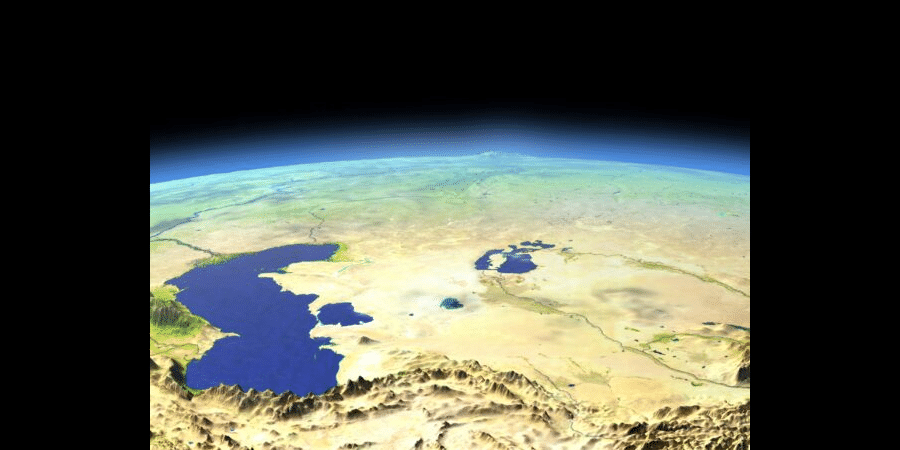
For Central Asia, such imagery could be particularly useful for monitoring shared water resources, agriculture, glaciers, and natural disasters across national borders.
“Space technologies must have practical applications and contribute to economic development, improve the efficiency of public administration, and enhance citizens’ quality of life,” Zhaslan Madiyev, Kazakhstan’s minister of artificial intelligence and digital development, said at the forum.
The proposed constellation also points to a wider ambition: for Kazakhstan to provide space services beyond its own borders rather than operate only a national satellite system.
China Becomes a Bigger Partner
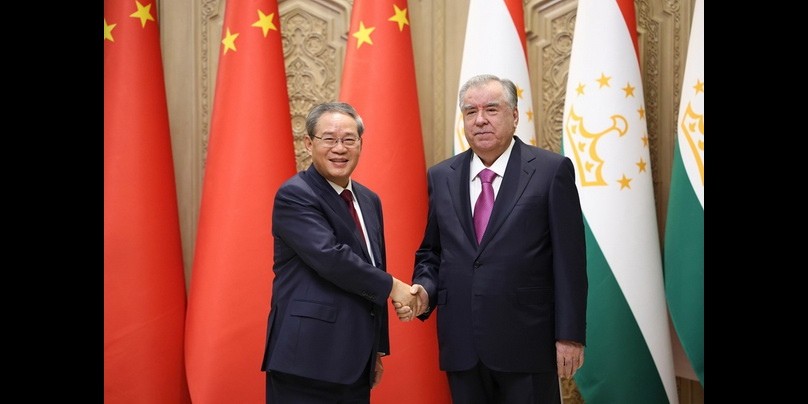
Another satellite system is under discussion with China. On September 10, Kazakhstan’s National Academy of Sciences reported talks with the Chinese Academy of Sciences on developing the China–Central Asia Satellite Network, a proposed system of five spacecraft.
The network is expected to include high-resolution satellites, hyperspectral spacecraft for analyzing water, soil, vegetation, and mineral resources, and radar satellites. The latter can collect imagery at night and through cloud cover.
The two sides are discussing the development and launch of the spacecraft, their subsequent operation, data sharing, and the use of artificial intelligence to process satellite imagery.
Some joint projects have already reached orbit. On December 13, 2025, a Kazakh-Chinese nanosatellite developed by Al-Farabi Kazakh National University and China’s Northwestern Polytechnical University was launched aboard the Di’er-5 spacecraft from China’s Jiuquan Satellite Launch Center.
A Kazakh-Chinese satellite data receiving station costing about $3 million is also being built in Almaty. It will be able to receive data from Kazakh and foreign spacecraft.
Kazakhstan is also pursuing smaller projects with other partners, including the OTS SAT scientific nanosatellite within the Organization of Turkic States and new astronomical facilities near Almaty.
The result is a space sector that looks very different from the one Kazakhstan inherited in 1991. Russia remains central at Baikonur, and Baiterek still depends on a Russian launch vehicle. However, Kazakhstan is operating more of its own infrastructure, developing satellites domestically, and building partnerships stretching from China to Mongolia, Africa, and Türkiye.
Astana is seeking greater independence in space, although its expanding satellite programs will continue to rely on international partners.