• KGS/USD = 0.01144 0%
  • KZT/USD = 0.00211 0%
  • TJS/USD = 0.10678 0%
  • UZS/USD = 0.00008 0%
  • TMT/USD = 0.28490 0%
  • KGS/USD = 0.01144 0%
  • KZT/USD = 0.00211 0%
  • TJS/USD = 0.10678 0%
  • UZS/USD = 0.00008 0%
  • TMT/USD = 0.28490 0%
  • KGS/USD = 0.01144 0%
  • KZT/USD = 0.00211 0%
  • TJS/USD = 0.10678 0%
  • UZS/USD = 0.00008 0%
  • TMT/USD = 0.28490 0%
  • KGS/USD = 0.01144 0%
  • KZT/USD = 0.00211 0%
  • TJS/USD = 0.10678 0%
  • UZS/USD = 0.00008 0%
  • TMT/USD = 0.28490 0%
  • KGS/USD = 0.01144 0%
  • KZT/USD = 0.00211 0%
  • TJS/USD = 0.10678 0%
  • UZS/USD = 0.00008 0%
  • TMT/USD = 0.28490 0%
  • KGS/USD = 0.01144 0%
  • KZT/USD = 0.00211 0%
  • TJS/USD = 0.10678 0%
  • UZS/USD = 0.00008 0%
  • TMT/USD = 0.28490 0%
  • KGS/USD = 0.01144 0%
  • KZT/USD = 0.00211 0%
  • TJS/USD = 0.10678 0%
  • UZS/USD = 0.00008 0%
  • TMT/USD = 0.28490 0%
  • KGS/USD = 0.01144 0%
  • KZT/USD = 0.00211 0%
  • TJS/USD = 0.10678 0%
  • UZS/USD = 0.00008 0%
  • TMT/USD = 0.28490 0%

Viewing results 1 - 6 of 50

Three Spaniards, One Australian Detained at Baikonur Cosmodrome

The Baikonur Cosmodrome in a remote part of Kazakhstan has long held allure for people – trespassers included - who are intrigued by its storied role as a facility that pioneered early space exploration and remains a vital part of Russia’s space program. Three Spanish citizens and one Australian were detained while trying to get into a restricted area housing old space infrastructure at Baikonur on Tuesday night, reported RIA Novosti, a Russian state-owned news agency. It cited an unidentified source. Another Russian media organization, Tass, later reported that the Spaniards had been released and that the Spanish embassy in Astana was working to help them. Tass did not report on the status of the Australian. The attempted break-in at the Russian-run base occurred in the area of ​​the disused assembly and refueling complex of the Buran spacecraft, a space shuttle that was developed in the 1970s and 1980s by the Soviet Union, whose leaders were concerned that the U.S. space shuttle program posed a possible military threat. The Buran flew once in 1988, but the program was abandoned because of high costs and a lack of purpose. In 2022, British YouTuber Benjamin Rich documented his trip to Baikonur, where he was also detained by Russian authorities. The journey involved walking with a companion for many hours across the desert, shielding themselves from the sun with umbrellas. They were able to enter the decrepit Buran hangar and see the space shuttle but got caught by guards as they were leaving the facility. Rich said he and his companion paid a fine of $50 each and were released. Last year, RIA Novosti reported that two French citizens tried to reach Baikonur by the same method, but one died of dehydration during the arduous journey on foot. The first man to go into space, Yuri Gagarin, and the first woman, Valentina Tereshkova, took off from the Baikonur cosmodrome, which is run by Roscosmos, the Russian space agency, under an agreement with the Kazakh government. Russia continues to launch spacecraft from there, sometimes in joint missions with NASA. The first launch from Baikonur in 2025 occurred on Feb. 28, when a Soyuz rocket hoisted a Russian spacecraft carrying three tons of food, fuel and other supplies that were delivered to the International Space Station.

Cargo Spacecraft Heads for Space Station in First Baikonur Launch of 2025

Three tons of food, fuel and other supplies are on their way to the International Space Station after a Russian spacecraft lifted off on a Soyuz rocket from the Baikonur Cosmodrome in Kazakhstan. It was the first launch from the space facility this year.   The Roscosmos Progress MS-30 cargo spacecraft, which is unpiloted, was launched early Friday and the trip to the station will take about two days. NASA refers to the space freighter as Progress 91 because it’s the 91st Russian resupply craft to launch in support of the International Space Station since its construction began in 1998. The Progress spacecraft will deliver equipment for scientific experiments, clothing and hygenic items for the crew, potable water, refueling propellant and nitrogen to replenish the atmosphere aboard the station, Russia’s state news agency Tass reported. It said the spacecraft is also carrying a new spacesuit, the Orlan-ISS No. 6, for the spacewalks of Russian cosmonauts. “Currently, Russian cosmonauts use Orlan-ISS No. 4 and Orlan-ISS No. 5 spacesuits for extravehicular activity outside the space station,” Tass said.  On the X platform, space journalist Anatoly Zak posted a photograph of what he said was a “rare view” of the Orlan spacesuit being loaded onto the spacecraft before launch.  There are three Russians and four Americans on the space station at this time. NASA and Roscosmos have a “cross-flights” deal involving travel to and from the station for three Russian cosmonauts on the U.S. Crew Dragon spacecraft and three U.S. astronauts on the Russian Soyuz spacecraft. The joint missions have been one of the rare areas of collaboration between Russia and the United States during the Ukraine war. “Delivery!” NASA declared after the launch on Friday. The U.S. space agency provided launch coverage on various platforms and will do the same for the arrival and docking of the Russian spacecraft at the station. Docking is scheduled at 6:03 p.m. EST on Saturday.  “The Progress 91 spacecraft will remain docked to the space station for approximately six months before departing for re-entry into Earth’s atmosphere to dispose of trash loaded by the crew,” NASA said.

Grounding the Stars: Andrew McConnell’s Lens on Space and the Steppe

Award-winning photographer and filmmaker Andrew McConnell has dedicated his career to illuminating the world’s overlooked regions and underreported stories. He has a distinctive ability to examine major global issues and events from fresh, often unexpected perspectives. Ordinary people in extraordinary circumstances are the focus of McConnell’s lens. From conflict zones in the Democratic Republic of the Congo to the hidden lives of the Sahrawi people in Western Sahara, his work frequently highlights human endurance in challenging environments. His new book, Some Worlds Have Two Suns, takes a different direction. It explores the vast, remote Kazakh Steppe, where the sparse local population coexists with the high-tech world of space travel. The project began in 2014 after he filmed his documentary Gaza. While decompressing at home in Ireland, he watched a BBC documentary about a Soyuz spacecraft landing in the Kazakh Steppe. The stark contrast between destruction and human achievement struck him. “I turned to my parents and said, ‘I’m gonna go and see that.’” That moment sparked an eight-year journey documenting the Russian ground crews recovering astronauts and the communities living beneath these celestial homecomings. TCA: You visited the Kazakh Steppe multiple times to document the Soyuz landings. How many trips did you make and what were the challenges of reaching such a remote location? Andrew: I probably made a dozen. I would join the ground crew in Karaganda, which is not far from Astana, and from there they head out to the Steppe, and depending on whether it's winter or summer they have different vehicles for either one. In summer, the Steppe is fine to drive on, so they have four by fours and we head out and set up camp the day before the Soyuz arrives. They know the exact time the Soyuz will land, right down to the second, and it always goes to the same location, which is a group of tombs. You can see those in the book, the two horsemen beside these tombs. These are old nomadic burial tombs, maybe 300 years old, so that, initially, was very interesting to me… you know, what are these? The Steppe is this unending boundless void of nothingness, just flat grassland. At first, as a photographer, it was quite underwhelming because visually, how do you make that interesting? But here were these tombs in the middle of nowhere and it was instantly fascinating. That was always the base camp. I don’t know if that’s where Rocosmos aimed Soyuz, but that’s where it came into the atmosphere every time I saw it. It would enter the atmosphere above these tombs. The parachute deploys and then it depends on the wind because they can drift for 20 kilometers. A couple of times it was a windless day, and the Soyuz dropped within sight of these tombs. I had a fantasy that it would drop in the middle of it. [caption id="attachment_28250" align="aligncenter" width="2000"] Nomadic burial tombs, Soyuz landing zone, Kazakhstan, 2018; image: Andrew McConnell[/caption] TCA: What shifted your focus from the...

Crew of Record-Breaking Cosmonauts Land in Kazakh Steppe

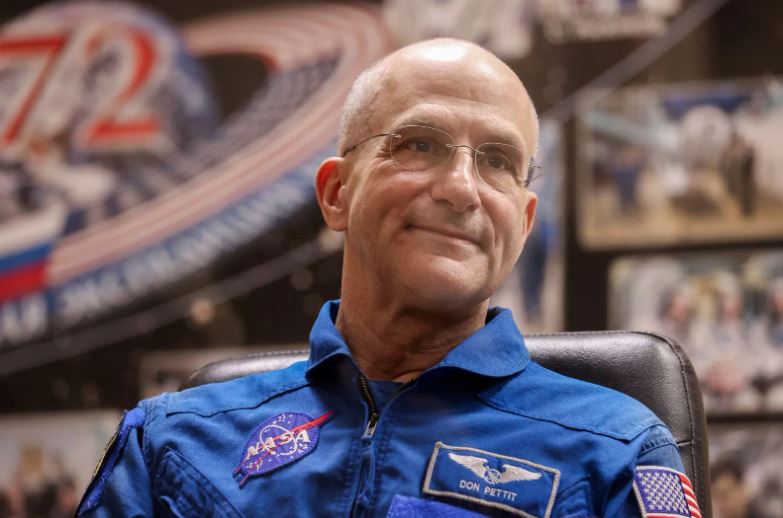
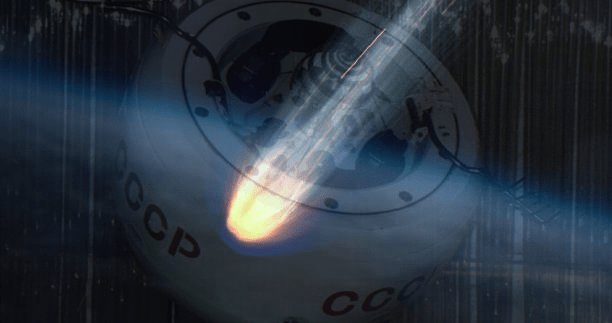
The descent vehicle of the Soyuz MS-25 spacecraft has successfully landed in the steppe of Kazakhstan, near the town of Zhezkazgan. Russian cosmonauts Oleg Kononenko, Nikolai Chub, and NASA astronaut Tracy Dyson were on board. Cosmonauts Kononenko and Chub spent 374 days in space, making their mission one of the longest in International Space Station (ISS) history. This is second only to the flights of Valery Polyakov and Sergey Avdeev, who spent 438 and 380 days in space, respectively, on the Mir station. Tracy Dyson stayed in orbit for 184 days. During their mission, Kononenko and Chub participated in several scientific experiments, took four Progress MS cargo ships, and conducted two spacewalks. The flight was an important contribution to the development of applied and fundamental research on the ISS. The spacecraft landed yesterday at 14:59, Moscow time. Kononenko and Chub's flight was a significant event for the space programs of Roscosmos and NASA. Despite completing their mission, the crew of the 72nd long-duration expedition, including Russian and American cosmonauts and astronauts, continues to work on the ISS. The station crew includes Roscosmos cosmonauts Alexei Ovchinin, Ivan Wagner, and Alexander Grebenkin, and NASA astronauts Donald Pettit, Matthew Dominick, Michael Barratt, Jeanette Epps, Barry Wilmore, and Sunita Williams. The International Space Station (ISS) is one of mankind's most impressive engineering projects. It was launched in 1998, and is the product of 16 countries. The station revolves around the Earth every 90 minutes, allowing the crew to observe 16 sunrises and sunsets daily. In addition, the ISS is the largest object ever built in space, measuring about 109 meters long. The ISS is also considered the most expensive object built by humans, costing an estimated $120 billion by 2014, alone. According to NASA, the ISS "costs about $3 billion a year, roughly a third of NASA’s annual human space flight budget."

Latest Baikonur Space Launch Helps to Set a Record

It seemed almost routine: One American astronaut and two Russian cosmonauts traveling to the International Space Station in a Soyuz MS-26 spacecraft from the Baikonur Cosmodrome in Kazakhstan. After all, the Russian-run facility in a remote, barren part of the Central Asian country has been a mainstay of travel to the station for many years. But the three-hour trip on the Soyuz on Wednesday made some space history, increasing the total number of people currently in Earth’s orbit to a record of 19. The previous record of 17 was set last year. The trip brings the number of people currently on the International Space Station to 12, including seven Americans and five Russians, according to NASA. The group will get a little smaller on Sept. 23, when one American and two Russians are scheduled to depart. There are also three people on China’s space station and four people led by billionaire Jared Isaacman on the five-day Polaris Dawn mission, for a total of 19. The new arrivals at the International Space Station are NASA astronaut Don Pettit and Roscosmos cosmonauts Alexey Ovchinin and Ivan Vagner. They’ll spend about six months in space and return to Earth in the spring of 2025. It’s the fourth trip to space for Pettit and Ovchinin and the second for Vagner. NASA and Roscosmos currently have a “cross-flights” deal involving travel to and from the International Space Station for three Russian cosmonauts on the U.S. Crew Dragon spacecraft and three U.S. astronauts on the Russian Soyuz spacecraft. The two space agencies are working on extending the agreement beyond the spring of 2025, the Russian news agency Interfax reported in a story with a Baikonur dateline. It quoted Kenneth Bowersox, NASA associate administrator for space operations. The joint missions are one of the rare areas of collaboration between Russia and the United States at a time of heightened tension over the Ukraine war.

Unveiling the Magic: Behind the Scenes of “Baikonur”

Space continues to capture our imagination and inspire our stories, as we try to make sense of this vast final frontier. In the last part of our series on Baikonur, we explore its depiction within cinema. In 2011, German filmmaker, Veit Helmer released Baikonur, a story about space, scavenging and misguided love that was shot within the region. TCA spoke to him about filming in this heavily restricted landscape.   TCA: What was the inspiration behind your film, Baikonur? What drew you to this subject matter? Helmer: I was fascinated by the actual place, or what I knew about it; a hidden city with such a glorious past. Whilst researching, I found out about the scavengers who collect the pieces which fall on the steppe when the rockets are heading to space. To tell both stories at the same time intrigued me: space exploration and hunting for scrap metal. TCA: Given you also directed Absurdistan and Tuvalu, would it be fair to say you’re drawn to far-flung places? Helmer: Yes, I love to explore and find locations which haven’t been filmed before. But compared to the locations of my previous films - Tuvalu, which was shot in Bulgaria, and Absurdistan, which was shot in Azerbaijan - to travel to Baikonur was a much longer journey. [caption id="attachment_21684" align="aligncenter" width="2560"] Still from the film, "Baikonur," Alexander Asochakov as "Gagarin" leaving, villagers standing near yurt; image: Veit Helmer[/caption]   TCA: As stated in the tagline of your film, “Whatever falls from heaven, you may keep. So goes the unwritten law of the Kazakh seppe. A law avidly adhered to by the inhabitants of a small village, who collect the space debris that falls downrange from the nearby Baikonur space station.” The village scavengers portrayed in your film are based in reality; how did you find out about them, and what was your experience with them? Helmer: It was very funny reading the first review from Kazakhstan, where a young journalist wrote that the film is based on the old Kazakh law “Whatever falls from heaven, you may keep,” which in reality was an invention by my screenwriter, Sergey Ashkenazy. But as this fable seems to feel so real, I never tried to dispel that myth. When writing the screenplay, Sergey and me went to Zheskaskan and the surrounding steppe, talking to the hunters of the scrap metal. It was not an ideal moment, because Roscosmos started to collect the debris themselves and the local villagers’ activity became illegal. The new reality was not villages against each other, but villagers against Roscosmos. [caption id="attachment_21685" align="aligncenter" width="2560"] Still from the film, "Baikonur," Alexander Asochakov as "Gagarin" (center) cleaning assembly hall in Baikonur ; image: Veit Helmer[/caption]   TCA: As a Western filmmaker you were granted a unique opportunity to film within Baikonur - what did you observe of the landscape? What were the highlights of this experience? Helmer: There was a saying among the early cosmonauts that the Central Asian steppe was for them...