• KGS/USD = 0.01144 0%
  • KZT/USD = 0.00205 0%
  • TJS/USD = 0.10784 0%
  • UZS/USD = 0.00008 0%
  • TMT/USD = 0.28490 0%
  • KGS/USD = 0.01144 0%
  • KZT/USD = 0.00205 0%
  • TJS/USD = 0.10784 0%
  • UZS/USD = 0.00008 0%
  • TMT/USD = 0.28490 0%
  • KGS/USD = 0.01144 0%
  • KZT/USD = 0.00205 0%
  • TJS/USD = 0.10784 0%
  • UZS/USD = 0.00008 0%
  • TMT/USD = 0.28490 0%
  • KGS/USD = 0.01144 0%
  • KZT/USD = 0.00205 0%
  • TJS/USD = 0.10784 0%
  • UZS/USD = 0.00008 0%
  • TMT/USD = 0.28490 0%
  • KGS/USD = 0.01144 0%
  • KZT/USD = 0.00205 0%
  • TJS/USD = 0.10784 0%
  • UZS/USD = 0.00008 0%
  • TMT/USD = 0.28490 0%
  • KGS/USD = 0.01144 0%
  • KZT/USD = 0.00205 0%
  • TJS/USD = 0.10784 0%
  • UZS/USD = 0.00008 0%
  • TMT/USD = 0.28490 0%
  • KGS/USD = 0.01144 0%
  • KZT/USD = 0.00205 0%
  • TJS/USD = 0.10784 0%
  • UZS/USD = 0.00008 0%
  • TMT/USD = 0.28490 0%
  • KGS/USD = 0.01144 0%
  • KZT/USD = 0.00205 0%
  • TJS/USD = 0.10784 0%
  • UZS/USD = 0.00008 0%
  • TMT/USD = 0.28490 0%

Viewing results 1 - 6 of 229

Uzbekistan Advances Draft Law to Introduce Islamic Banking System

Uzbekistan has taken a major step toward diversifying its financial sector with the approval of a draft law on Islamic banking in its first reading. Lawmakers in the legislative chamber of the parliament, the Oliy Majlis, debated the bill during a session held on September 16. The initiative is part of the government's broader effort to expand access to financial services for citizens and businesses, attract foreign investment, and create new mechanisms for economic support. To this end, the draft proposes amendments to the Tax Code, Civil Code, and eight other laws. The bill formally introduces into legislation the concepts of Islamic banks, financial operations, standards, and investment deposits. It also outlines a licensing regime allowing for the establishment of either fully-fledged Islamic banks or Islamic “windows” within existing conventional banks. Permitted financial instruments will include murabaha, mudaraba, musharaka, wakala, and salam, contracts widely used in Islamic finance. Abrorkhoja Turdaliev, Deputy Chairman of the Central Bank, stated that the reforms go beyond removing legal barriers and are aimed at building the institutional foundations of Islamic finance. He highlighted the need to establish dedicated councils, audit bodies, and accounting systems to ensure compliance with Islamic financial principles. The bill also includes provisions for a special tax regime tailored to Islamic finance operations. Turdaliev noted that Islamic banking prohibits the charging of interest, the financing of activities forbidden under Islamic law, and excessive uncertainty in contracts. Instead, it emphasizes partnership and risk-sharing. To support this model, the draft law would eliminate restrictions that currently prevent banks from directly participating in trade or acquiring equity stakes in companies. Drawing on international experience from Malaysia, Turkey, the UAE, and neighboring countries, the proposed legal framework seeks to build a modern infrastructure for Islamic finance in Uzbekistan. “This law will provide legal grounds for establishing Islamic banks, Islamic windows, and microfinance institutions, thereby expanding access to alternative financial services and introducing new tools to support business,” Turdaliev said.

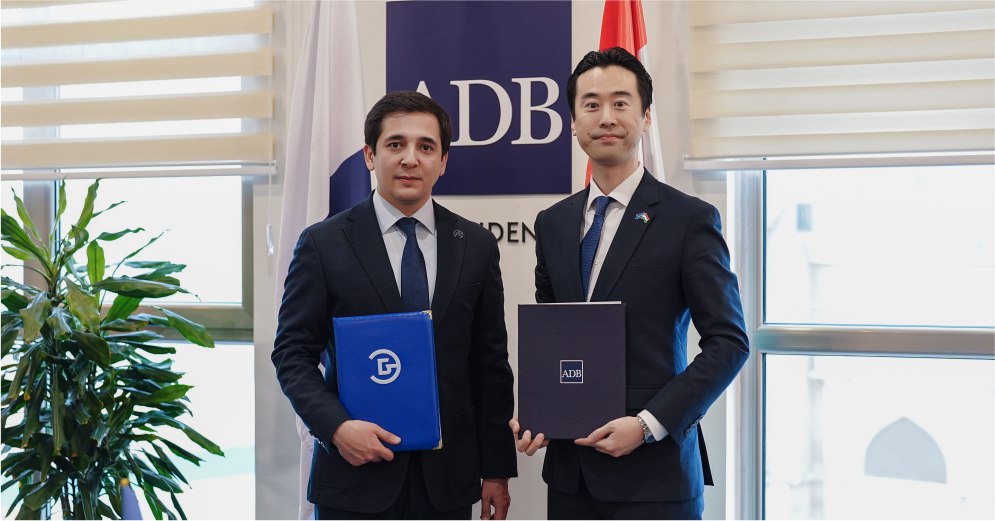
UNDP and Eldik Bank Partner to Advance Green Finance in Kyrgyzstan

Kyrgyzstan is taking a significant step toward building a greener and more resilient economy. On September 9, state-owned Eldik Bank and the United Nations Development Programme (UNDP) signed a memorandum of understanding to deepen cooperation in sustainable finance. The agreement aims to mobilize climate-related investments, develop sustainable financial products, and integrate Environmental, Social, and Governance (ESG) principles into Kyrgyzstan’s banking sector. It also outlines plans for joint research and knowledge exchange in climate finance, including the creation of tools to assess climate risks in lending operations. This initiative supports Kyrgyzstan’s updated Nationally Determined Contributions (NDC 3.0) under the Paris Agreement, which commit the country to reducing greenhouse gas emissions, expanding renewable energy, and enhancing climate resilience. It also aligns with the National Development Program through 2030, which prioritizes expanding the regulatory framework for green finance. “UNDP supports the development of sustainable finance solutions that reduce the carbon footprint of the economy, enable the green transformation of businesses, and create new opportunities for investment,” said Alexandra Solovieva, UNDP Resident Representative in Kyrgyzstan. For Eldik Bank, the partnership represents more than a financial commitment; it is a strategic step toward becoming a catalyst for climate-conscious economic development. “Together with UNDP, we aim to introduce products that promote green growth and sustainable business development for our clients,” said Ulanbek Nogaev, Chair of the bank’s Management Board. Green finance is gaining traction across Central Asia, a region still heavily reliant on extractive industries but increasingly vulnerable to climate risks such as water scarcity, extreme weather, and glacial melt. Kyrgyzstan’s efforts to empower domestic financial institutions signal that achieving climate goals will require more than policy declarations; it will demand concrete investments and innovation. The Eldik Bank-UNDP partnership also underscores the importance of regional cooperation. Similar initiatives are under discussion in neighboring countries, as Central Asia seeks to attract international capital for renewable energy, sustainable agriculture, and green infrastructure projects. If effectively implemented, Kyrgyzstan’s model could serve as a regional benchmark, demonstrating how national banks can help transform global climate commitments into tangible, growth-oriented outcomes.

Thousands of Kazakhstanis Added to Financial Watchlists Over Suspected Fraud

Several thousand citizens in Kazakhstan have been placed on so-called “dropper” lists, individuals suspected of using their bank accounts to facilitate the withdrawal of illicit funds. The announcement was made by Madina Abylkasymova, Chair of the Agency for Regulation and Development of the Financial Market (ARDFM). According to Abylkasymova, suspected individuals are initially placed on a “gray” list, where all financial transactions are temporarily blocked. If the allegations are confirmed, individuals are then transferred to a blacklist. “Currently, we already have several thousand people on these lists,” she said. The Prosecutor General’s Office recently reported identifying more than 6,000 individuals believed to be involved in embezzlement schemes using personal banking infrastructure. Beginning this fall, legislative amendments will introduce criminal liability for the unauthorized transfer of payment instruments. Abylkasymova emphasized that citizens will be prohibited from handing over bank cards even to relatives. “This reduces the risk of unauthorized access to funds and protects customers from disputed debits,” she explained. Since the start of the year, individuals have also been limited to a maximum of five bank cards per financial institution. The restriction was introduced in response to criminal cases where hundreds of cards were issued to a single person and later used in drug trafficking operations. Despite these tightening regulations, Abylkasymova reassured the public that cash will remain in circulation. “Paper tenge will always be used in Kazakhstan, alongside non-cash transactions and the digital tenge,” she said. As previously reported by The Times of Central Asia, banks and mobile operators will now be held jointly liable for internet fraud committed via their platforms, as part of broader efforts to curb financial cybercrime.

Kyrgyz President Denounces “Politicized” Sanctions on Banks

President Sadyr Japarov has sharply criticized the United States and United Kingdom for imposing what he has called unfounded sanctions on Kyrgyz financial institutions, urging Western leaders to stop “politicizing the economy.” In an interview with state news agency Kabar, Japarov defended two state-owned banks – Keremet Bank and Capital Bank – against allegations that they helped Russia skirt international sanctions, insisting that no evidence of violations has been presented. Neither the UK nor the U.S. has provided a single fact of violation… such facts simply do not exist,” Japarov said, dismissing the sanctions as politically motivated. UK and U.S. Target Kyrgyz Banks for Russia Sanctions Evasion Japarov’s comments come after a new wave of Western measures targeting Kyrgyzstan’s banking and crypto sectors for purported links to Russian sanctions evasion. On August 20, London sanctioned Kyrgyzstan-based Capital Bank – along with its director, Kantemir Chalbayev – alleging the bank was being used by Moscow to pay for military goods as part of a “convoluted scheme” to evade sanctions. The British authorities also blacklisted two Kyrgyz cryptocurrency exchanges - Grinex and Meer - that ran the infrastructure for a new rouble-backed crypto coin called A7A5, which moved an estimated $9.3 billion in just four months and was “intentionally created to evade sanctions.” The UK’s sanctions minister, Stephen Doughty, warned that “laundering transactions through dodgy crypto networks” would not soften the blow of Western sanctions. These steps followed a U.S. Treasury designation in January 2025 against Keremet Bank, a mid-sized Kyrgyz lender, for creating a hub for trade payments that helped Moscow evade restrictions. U.S. officials allege that Keremet Bank facilitated cross-border transactions for Russia’s sanctioned Promsvyazbank and even sold a controlling stake to a firm linked to a pro-Kremlin oligarch – moves Washington viewed as part of a secret channel to re-export dual-use goods and finance Russia’s defense sector. Those actions marked one of the first instances of Western “secondary sanctions” against Central Asian entities – penalties on third-country institutions accused of abetting a sanctioned nation’s activities. Kyrgyz Government’s Defensive Measures President Japarov contends that Kyrgyzstan has been proactive in compliance and that the West’s suspicions are misplaced. He noted that 21 banks operate in Kyrgyzstan, and authorities deliberately limited all Russian rouble transactions to just two state-controlled banks to shield the rest of the financial sector from any inadvertent sanctions breach. “To prevent any of them from falling under sanctions, we decided that only the state-owned Keremet Bank would work with the Russian rouble… All operations are under state control, and the income goes directly to the state treasury,” Japarov stated. Earlier this year, the government expanded this approach by channeling rouble remittances and payments through Capital Bank, which was brought under 100% state ownership in April. The National Bank of Kyrgyzstan ordered that all cross-border transfers in roubles – including the billions of roubles sent home by Kyrgyz migrant workers each day – be processed exclusively via Capital Bank. Kyrgyz officials argued this centralization was meant to “ensure transparency of...

Public Confidence in Kyrgyz Banking Sector Rises Amid Robust Growth

Kyrgyzstan’s banking sector recorded strong performance in the first half of 2025, signaling growing public trust and active private sector engagement. The latest data from the National Bank of the Kyrgyz Republic (NBKR) shows marked increases in total assets, deposits, and loans, reflecting both economic resilience and successful monetary policy implementation. According to the NBKR, the total assets of commercial banks have risen by 24% since the beginning of the year, reaching $11.63 billion. Deposits increased by 20% to over $8.05 billion, while the loan portfolio expanded by 22.5% to $4.8 billion. The central bank emphasized the sector’s stability and high liquidity in the national currency. “The monetary policy being pursued allows us to maintain stability in the interbank money market. The banking system continues to enjoy high liquidity in the national currency. The National Bank is conducting operations to maintain a balanced level of money supply in the economy,” the NBKR stated. The sector’s expansion has also been fueled by the adoption of digital banking technologies and the removal of fees for interbank transfers between individuals. In the first six months of 2025, QR code-based non-cash payments surged more than twelvefold in volume and twentyfold in value. Altogether, 167 million transactions totaling $3.16 billion were processed. “From October 23, 2024, until the end of 2025, Kyrgyzstan has a ban on charging individuals fees for transfers in som via mobile apps and internet banking,” said NBKR Chairman Melis Turgunbaev. The regulator also pointed to the strength of the broader Kyrgyz economy and the relative stability of the currency market. Nevertheless, inflationary pressures are mounting amid ongoing geopolitical tensions and shifting global trade dynamics. Price volatility in food and raw materials markets has been particularly acute, driven by external economic shocks and rising inflation in key partner countries. To curb inflation and stabilize the domestic economy, the NBKR raised its key policy rate by 25 basis points to 9.25%. The central bank expects the rate adjustment to help preserve consumer purchasing power and support household financial stability.

Halyk Bank Buys 49% Stake in Uzbekistan’s Click in Landmark Fintech Deal

Almaty - Kazakhstan’s Halyk Bank has announced it will acquire a 49% stake in Uzbek digital payments company Click for $176.4 million, marking one of the largest cross-border banking investments in Central Asia to date. The deal values Click at approximately $360 million, highlighting the growing importance of digital finance in the region’s rapidly evolving financial landscape. With over 20 million customers, Click is one of Uzbekistan’s most widely used payment providers. As part of the agreement, Click will also take a 49% stake in Tenge Bank, Halyk’s Uzbek subsidiary, for $60.76 million. The reciprocal structure of the deal is designed to foster tighter operational integration and shared technological infrastructure between the two institutions – a significant step toward regional financial harmonization. “This is a historic moment for Click. Partnering with Halyk Bank and expanding our capabilities through Tenge Bank represents a major step forward in delivering world-class digital financial services to millions of users,” said Ulugbek Rustamov, CEO of Click. “At the same time, the structure of the deal ensures Click retains its independence, continues to shape its strategic vision, and remains a proud national brand.” Strategic Push Toward Integration The announcement comes as both Kazakhstan and Uzbekistan continue efforts to modernize their financial systems and ease cross-border payments. Regional trade between the two nations has grown steadily in recent years, with bilateral trade turnover reaching $4.22 billion in 2024, up from $2.9 billion in 2020. Halyk Bank, already Kazakhstan’s dominant financial institution with a 29% market share and more than 10.9 million active retail clients, views the investment as a strategic step towards capturing Uzbekistan’s booming digital economy. Click, meanwhile, gains regulatory grounding via Tenge Bank and access to Halyk’s technology and ability to raise capital from its public listing on the London Stock Exchange. Uzbekistan, whose GDP grew by 7.2% in the first half of 2025, continues to open its financial sector to foreign capital – a key pillar of President Shavkat Mirziyoyev’s economic reform program. Competing Power Structures? This fintech alliance also throws an intriguing light on Central Asia’s most influential business families. Halyk Bank is majority-owned by Timur Kulibayev and his wife Dinara, the daughter of former Kazakh president Nursultan Nazarbayev, widely viewed as Kazakhstan’s most powerful couple. Their expanding presence in Uzbekistan via Click and Tenge Bank may once have had the potential to ruffle feathers amongst Uzbekistan’s elite. The fact that the deal has been allowed to proceed this far is in itself an acknowledgement of the shared interests of regional powerbrokers. A Shift in Regional Strategy The deal represents a strategic reversal for Halyk Bank. In recent years, the bank has divested from its Kyrgyz and Tajik operations, selling 100% of its Kyrgyz subsidiary to oligarch Aidan Karibzhanov in 2024 and liquidating its Tajik entity in 2022. The Click acquisition signals a renewed focus on Uzbekistan, with the potential to make the country Halyk’s primary external growth market. This renewed push comes as Halyk cements its dominance in Kazakhstan, where it controls...