• KZT/USD = 0.00218
  • TJS/USD = 0.10810
  • UZS/USD = 0.00009
  • TMT/USD = 0.29760
  • KZT/USD = 0.00218
  • TJS/USD = 0.10810
  • UZS/USD = 0.00009
  • TMT/USD = 0.29760
  • KZT/USD = 0.00218
  • TJS/USD = 0.10810
  • UZS/USD = 0.00009
  • TMT/USD = 0.29760
  • KZT/USD = 0.00218
  • TJS/USD = 0.10810
  • UZS/USD = 0.00009
  • TMT/USD = 0.29760
  • KZT/USD = 0.00218
  • TJS/USD = 0.10810
  • UZS/USD = 0.00009
  • TMT/USD = 0.29760
  • KZT/USD = 0.00218
  • TJS/USD = 0.10810
  • UZS/USD = 0.00009
  • TMT/USD = 0.29760
  • KZT/USD = 0.00218
  • TJS/USD = 0.10810
  • UZS/USD = 0.00009
  • TMT/USD = 0.29760
  • KZT/USD = 0.00218
  • TJS/USD = 0.10810
  • UZS/USD = 0.00009
  • TMT/USD = 0.29760
24 August 2026

Viewing results 1 - 6 of 5

Turkmenistan Cash Shortage Forces Residents to Pay Middlemen for Their Own Money

Residents of the town of Kaka in Turkmenistan’s Ahal region are facing a shortage of cash. Queues at ATMs stretch for dozens of people, but many residents are unable to withdraw money because the machines quickly run out of banknotes. As a result, some are turning to intermediaries who help them obtain cash for a fee. In recent weeks, an unusual service has become widespread in the town. So-called “cash-out agents” travel directly to customers with a bank terminal, check the balance on their card, and immediately hand over the requested amount in cash. For this service, they charge a commission of 10 manats for every 1,000 manats withdrawn, or roughly 1%. The intermediaries then take the owner’s bank card and withdraw the money themselves to recover the amount they have advanced. According to local residents, these agents likely know of ATMs with few or no queues, such as those located inside government institutions. The card is later returned to the owner. Despite the relatively small commission, residents use the service less for convenience than because of constant difficulties accessing cash. Many prefer paying a middleman to standing in line for several hours, only to find that the ATM is empty. The exact reasons for the current cash shortage remain unclear. So far, Turkmen.news sources have reported such difficulties only in Kaka. However, similar situations are not new in Turkmenistan. In spring 2025, the same problem was reported in the Mary and Lebap regions, while during the economic crisis of 2020-2021, cash was distributed across the country using vouchers. Authorities have regularly tried to ease the consequences of such crises. Measures have included restrictions on cash withdrawals, limits on withdrawal amounts, assigning specific ATMs to employees of particular enterprises, and allowing customers to use only machines linked to their servicing branch. In some cases, ATMs have even been moved to the outskirts of towns to keep long queues out of public view. Turkmenistan has also periodically imported new banknotes, which are printed in Malta. Residents cannot simply switch to cashless payments. Non-cash transactions are often disrupted by frequent internet outages, while the country’s banking system remains underdeveloped. According to sources, customers have reported missing funds, international transfers can take weeks, and foreign currency can be purchased at the official exchange rate only in limited circumstances and in small amounts. Under these conditions, alternative payment methods have become widespread. For domestic transfers, money is often sent to a mobile phone balance, after which it can be converted into cash through intermediaries for a commission. A similar system is also used for transfers from countries with large Turkmen diaspora communities. Money is handed over to intermediaries abroad, while their partners inside Turkmenistan provide recipients with the equivalent amount in manats. Such informal networks complicate oversight of financial flows. They have also emerged in response to the limitations and weak development of the country’s banking system.

Tajikistan’s 100 Somoni Banknote Shortlisted Among World’s Best

A 100 somoni banknote issued by Tajikistan in 2025 has been named among the world’s top new banknotes, according to international experts. The annual “Banknote of the Year” competition is organized by the International Bank Note Society. The organization said that around 100 new banknotes were issued globally in 2025, but only 17 were deemed sufficiently innovative in terms of design and security features to be shortlisted. Tajikistan’s 100 somoni note was among those selected. The banknote features a vibrant, multi-colored design and includes a watermark with a portrait of ancient ruler Ismoil Somoni. It incorporates advanced security elements such as Rolling Star color-shifting features, a windowed security thread with dynamic effects, and a concealed “100” numeral. Additional features include see-through registration elements and complex geometric patterns. The note was printed by German firm Giesecke+Devrient and entered circulation on October 30, 2025. Kazakhstan also received recognition in the competition, with its 1,000 tenge banknote making the shortlist as well. However, neither country ultimately emerged victorious. The top prize went to a 200 guilder banknote issued by Curaçao and Sint Maarten, themed around the underwater world. The design combines a horizontal obverse with a vertical reverse. Fiji’s 5-dollar note took second place, while Zambia’s 100 kwacha banknote ranked third. Banknotes from the Falkland Islands and Papua New Guinea made up the top five. The International Bank Note Society says the competition highlights excellence in currency design, with banknotes judged not only as means of payment but also as expressions of national identity.

Turkmenistan Introduces New 200 Manat Polymer Banknote

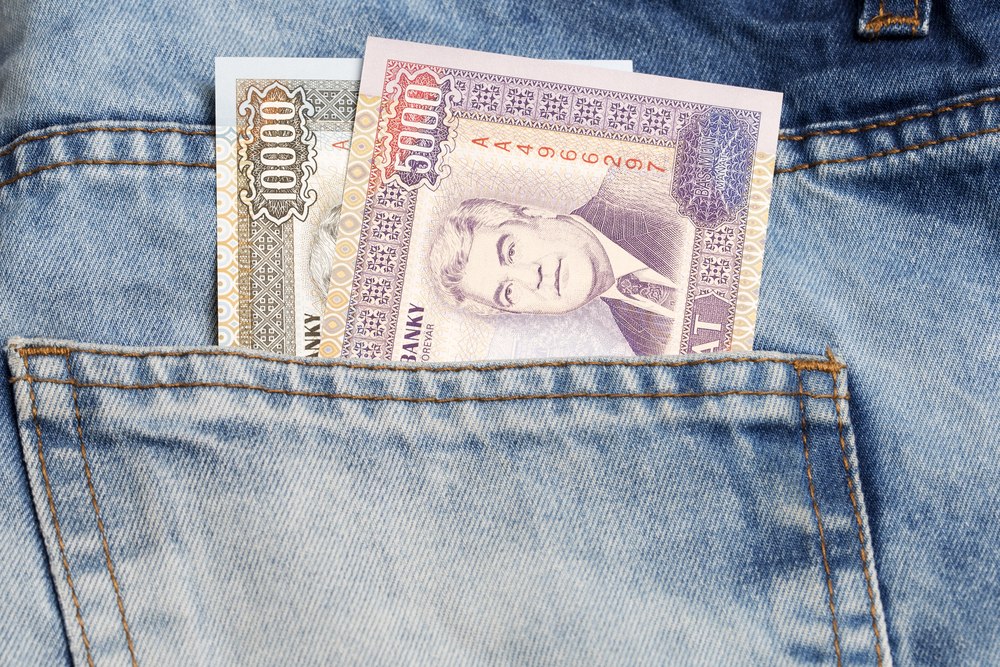
Turkmenistan has unveiled a new 200 manat polymer banknote as part of a broader upgrade to its national currency, state news agency TDH reported on December 1. The Central Bank announced that the new note, along with updated polymer versions of the 1, 5, and 10 manat denominations, has entered circulation in honor of the 30th anniversary of Turkmenistan’s recognition as a permanently neutral state. The release also coincides with the 2025 theme: the International Year of Peace and Trust. While the 1, 5, and 10 manat notes retain their existing color schemes and general designs, each now includes the emblem of the International Year of Peace and Trust. The newly introduced 200 manat note depicts the Arkadag Monument on the front and the administrative building of the Arkadag city khyakimlik (mayor’s office) on the reverse. All updated notes bear the year of issue and the facsimile signature of the Central Bank chairperson. The Central Bank emphasized that the new and modified banknotes must be accepted at face value by all institutions and businesses, regardless of ownership or sector. Earlier series issued in 2009, 2012, 2014, 2017, and 2020 remain valid legal tender. To combat counterfeiting, authorities advised the public to verify at least five security features when handling cash. Detailed guidance is available on the Central Bank’s official website. Last year, the Central Bank implemented a range of reforms aimed at improving cash quality and strengthening anti-counterfeiting controls throughout the financial system. In a related regional development, Kyrgyzstan in March began domestic production of its national currency, the som, for the first time since gaining independence. The new Kyrgyz banknotes are printed by the Bishkek-based Open Joint Stock Company Uchkun, replacing previous reliance on European printing facilities.

Video: Challenging Gender Stereotypes in Modern Kazakhstan

From factory workers to female boxing champions and long-distance lorry drivers, The Times of Central Asia explores the growing challenges to long-held gender stereotypes in modern Kazakhstan, as women feel more emboldened than ever to follow their dreams. [embed]https://timesca.com/wp-content/uploads/2025/04/%D0%93%D0%B5%D0%BD%D0%B4%D0%B5%D1%80%D0%BD%D1%8B%D0%B5%20%D1%81%D1%82%D0%B5%D1%80%D0%B5%D0%BE%D1%82%D0%B8%D0%BF%D1%8B.mp4[/embed] This video was made by UNFPA Kazakhstan with the financial support of the UK Government. All views expressed in the video do not reflect the official position of UNFPA or the UK Government.

Kyrgyzstan Begins Domestic Printing of National Currency Banknotes

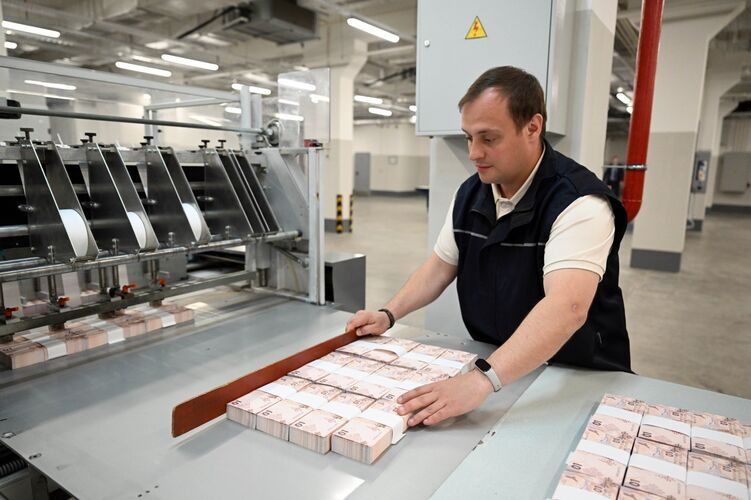
For the first time since gaining independence, Kyrgyzstan has begun printing its national currency, the som, within the country. Previously, Kyrgyz banknotes were produced in various European countries. The new notes are produced by the Bishkek-based Open Joint Stock Company Uchkun. Starting with Small Denominations Chairman of the National Bank Melis Turgunbayev announced that production has begun with small-denomination bills. This approach will enable a quicker replacement of worn or damaged notes scheduled for withdrawal from circulation. Turgunbayev stressed that the new banknotes adhere to the highest international standards for counterfeit protection. A Modernized National Printing Facility Uchkun has recently undergone a major modernization effort, acquiring state-of-the-art printing equipment. In addition to currency, the facility now produces passports, excise stamps, and educational materials. According to Uchkun's Director Bakytbek Sultanov, the enterprise has already begun printing passports and excise stamps. He stated that in his opinion the security features of Kyrgyz passports rank among the top ten globally for protection against counterfeiting. In 2024 alone, Uchkun produced over 770,000 passports and nearly one million books, marking a significant step forward in Kyrgyzstan’s self-reliance in secure printing technologies.