• KGS/USD = 0.01144 0%
  • KZT/USD = 0.00208 0%
  • TJS/USD = 0.10439 0%
  • UZS/USD = 0.00008 0%
  • TMT/USD = 0.28571 0%
  • KGS/USD = 0.01144 0%
  • KZT/USD = 0.00208 0%
  • TJS/USD = 0.10439 0%
  • UZS/USD = 0.00008 0%
  • TMT/USD = 0.28571 0%
  • KGS/USD = 0.01144 0%
  • KZT/USD = 0.00208 0%
  • TJS/USD = 0.10439 0%
  • UZS/USD = 0.00008 0%
  • TMT/USD = 0.28571 0%
  • KGS/USD = 0.01144 0%
  • KZT/USD = 0.00208 0%
  • TJS/USD = 0.10439 0%
  • UZS/USD = 0.00008 0%
  • TMT/USD = 0.28571 0%
  • KGS/USD = 0.01144 0%
  • KZT/USD = 0.00208 0%
  • TJS/USD = 0.10439 0%
  • UZS/USD = 0.00008 0%
  • TMT/USD = 0.28571 0%
  • KGS/USD = 0.01144 0%
  • KZT/USD = 0.00208 0%
  • TJS/USD = 0.10439 0%
  • UZS/USD = 0.00008 0%
  • TMT/USD = 0.28571 0%
  • KGS/USD = 0.01144 0%
  • KZT/USD = 0.00208 0%
  • TJS/USD = 0.10439 0%
  • UZS/USD = 0.00008 0%
  • TMT/USD = 0.28571 0%
  • KGS/USD = 0.01144 0%
  • KZT/USD = 0.00208 0%
  • TJS/USD = 0.10439 0%
  • UZS/USD = 0.00008 0%
  • TMT/USD = 0.28571 0%

Viewing results 1 - 6 of 130

Kyrgyzstan Offers Support to Tajikistan with Innovative Water-Saving Technology

Kyrgyzstan is offering a novel solution to Tajikistan’s mounting water scarcity and pasture degradation: the construction of artificial glaciers, or so-called “ice towers.” These structures store water during the winter and release it during the arid summer months, providing a lifeline for communities affected by climate change. Innovation Amid a Warming Climate The initiative was highlighted during the session “Activating Global Action to Enhance Glacier Resilience: Civil Society Experiences in Central Asia,” held as part of the recent International Conference on Glacier Conservation in Dushanbe. According to Anar Alymkulova, executive director of Kyrgyzstan’s Institute for Sustainable Development, artificial glaciers have proven effective in mitigating the effects of climate change and addressing water shortages. Since the first ice tower was constructed in 2022 in Jalal-Abad, the initiative has expanded significantly. Two more towers were added in 2023, and in 2024, seven were built in Batken region, collectively storing over 1.5 million cubic meters of ice during the winter. By the end of this year, four additional towers are planned in the Batken and Leylek districts. In total, approximately 30 such structures now operate across Kyrgyzstan. How Ice Towers Work The technology is simple yet effective. Water from springs is channeled via an underground pipeline, spanning several kilometers, to a vertical pipe up to 20 meters tall. During winter, water is sprayed from the pipe and freezes, forming an ice tower 30 to 50 meters high. In the spring and summer, the ice melts gradually, supplying water for people and livestock. Oleg Guchgeldiev, Kyrgyzstan's representative in the UN's Food and Agriculture Organization (FAO), noted that each ice tower costs between $3,000 and $4,000 and can store up to 50,000 cubic meters of water. This method offers a practical solution in remote, arid regions where traditional water sources have become unreliable. A Critical Issue for Tajikistan Sustainable water management is a growing concern in Tajikistan, where more than 1,000 glaciers have disappeared in the last 23 years. The country has lost about 20% of its glacier volume and 30% of its glacier area over the past five to six decades. According to UNEP projections, Central Asia could lose over half its glaciers by 2050, jeopardizing water security for more than 64 million people, particularly in rural and mountainous areas. In response, the Tajikistan's President Emomali Rahmon spearheaded a successful campaign at the UN General Assembly to declare 2025 the International Year of Glacier Conservation. The initiative culminated in a major conference from May 29 to 31 in Dushanbe, attracting over 2,500 delegates from 80 countries and numerous international organizations. A Scalable Regional Solution The Kyrgyz model of artificial glaciers presents a scalable solution for Tajikistan and potentially the broader Central Asian region. As glacier retreat accelerates and drought risks rise, such technologies could play a key role in national climate adaptation strategies. “Artificial glaciers are not only a way to store water, but also a tool for adapting to a changing climate,” experts at the Dushanbe conference emphasized. “They demonstrate how local communities...

Italy Courts Central Asia: Trade, Transit, and Tech Take Center Stage

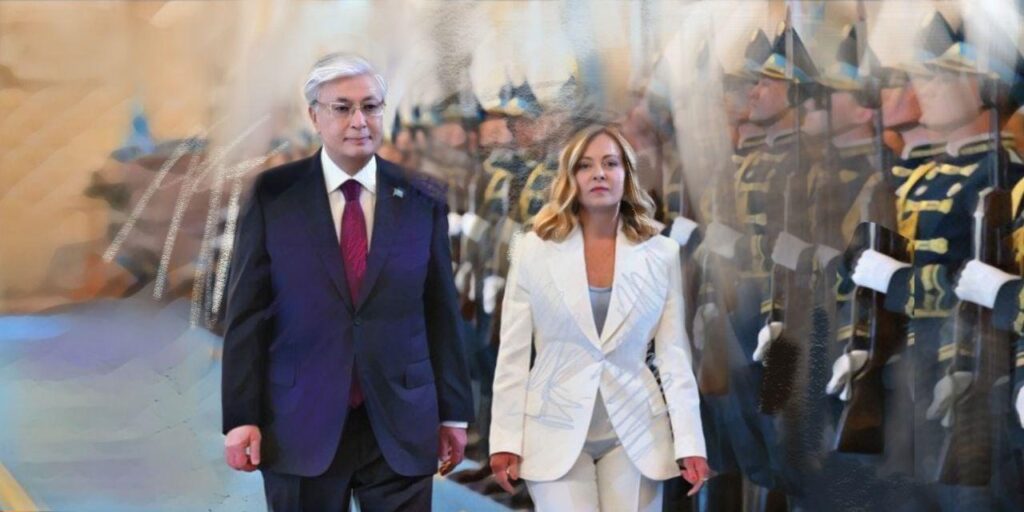
The inaugural Central Asia-Italy Summit, held on May 30, 2025, in Astana, marked a significant step in international diplomacy. It established a new framework for dialogue between the European Union and Kazakhstan, Kyrgyzstan, Uzbekistan, Tajikistan, and Turkmenistan. The participation of the leaders of all five Central Asian nations alongside Italian Prime Minister Giorgia Meloni underscores the region’s growing strategic and economic relevance. Bilateral Meetings Ahead of the summit, extended talks took place between Kazakh President Kassym-Jomart Tokayev and Italian Prime Minister Giorgia Meloni. Tokayev emphasized the depth and stability of bilateral ties, describing Italy as a key strategic partner. Trade between the two nations grew by 24% in 2024, reaching $20 billion. Italy is Kazakhstan’s third-largest trading partner and a major investor, with approximately $7.6 billion invested over the past two decades. Over 270 Italian companies currently operate in Kazakhstan. [caption id="attachment_32447" align="aligncenter" width="2560"] @akorda[/caption] Meloni praised the relationship as “exceptional,” highlighting Italy’s interest in expanding cooperation across trade, energy, and humanitarian domains. A pivotal outcome of the meeting was the signing of a Joint Statement on Strengthening Strategic Partnerships. [caption id="attachment_32448" align="aligncenter" width="2560"] @akorda[/caption] Additional agreements included: Security and Migration - Readmission agreement; Resources and Critical Materials - Cooperation on strategic mineral extraction; Investment and Industrial Development - Agreements involving Samruk-Kazyna, Maire Tecnimont, and Ansaldo; Water Management and Ecology - Memorandum with the Italian engineering association OICE; Finance and Project Lending - Agreements with Cassa Depositi e Prestiti and SACE SpA; Energy and Exports - Agreements with Samruk-Energo and Kazakh Invest. President Tokayev also met with Turkmen President Serdar Berdimuhamedov, emphasizing cultural and economic ties and expressing hope for the realization of joint projects. [caption id="attachment_32449" align="aligncenter" width="2560"] @akorda[/caption] Kazakhstan's Proposals Tokayev outlined proposals for expanding economic, technological, and humanitarian cooperation with Italy. He called for the development of logistics infrastructure and proposed establishing an Italian trading house in Almaty and launching the "Businessmen Plus Italy" platform. Tokayev highlighted Kazakhstan’s readiness to boost oil exports, already over 30 million tons in 2023, a 27% increase from the previous year, and expand exports of over 100 goods valued at $1 billion, particularly non-resource items. He also proposed increased cooperation in agro-industry and emphasized aligning certification standards with the EU. Kazakhstan invited Italian firms to participate in rare earth exploration under a model of “investment and technology in exchange for strategic raw materials.” Joint ventures in textiles, furniture, pharmaceuticals, and machinery were also encouraged. Tokayev stressed decarbonization as a national priority and praised Italian investments in renewable energy. He proposed collaboration on green hydrogen and ammonia production and urged Italy to engage with the Global Biofuels Alliance. [caption id="attachment_32450" align="aligncenter" width="2560"] @akorda[/caption] In education and research, Tokayev invited Italian technical universities to open branches in Kazakhstan, noting that 4,000 Kazakhstani students currently study in Italy. He proposed joint efforts in AI and innovation, including participation in the new Central Asia-EU Innovation Campus at the Astana Hub. Transport infrastructure also featured prominently. Tokayev advocated for integrating the Trans-Caspian International Transport Route (TMTR)...

Kazakhstan, Italy, and the Battle for Europe’s Energy Future

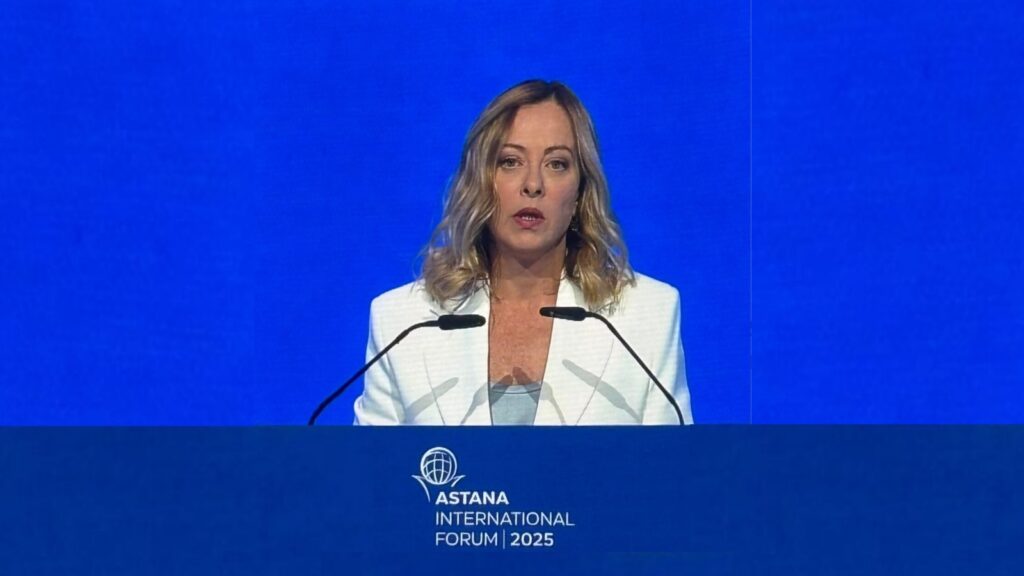
ASTANA - Central Asia is no longer on the periphery of global events, but a place where major countries come together with their ideas, money, and projects. In a turbulent and highly uncertain geopolitical environment, global powers are seeking to establish their presence in this strategic, energy-rich region. Italy is no exception. Italian Prime Minister Giorgia Meloni was initially scheduled to visit Kazakhstan in late April, but in light of Pope Francis' passing her trip to Astana was canceled. Coincidently or not, she came to the Kazakh capital on May 30 to attend the Astana International Forum (AIF) – a two-day event that saw the attendance of political, business, and thought leaders who gathered under an expanded agenda that included climate change, energy security, and sustainability. Meloni’s visit to Kazakhstan is part of her Central Asian tour; she previously visited Uzbekistan, where she met with the country’s President Shavkat Mirziyoyev. In Astana, she not only spoke at the AIF, emphasizing that the “Astana International Forum has become increasingly important in dialogue worldwide,” but also took part in the first-ever Central Asia–Italy summit. “Italy was the first Nation in the EU to decide to invest in relations with Central Asia and its individual member Nations, launching a permanent format in order to share ideas,” Meloni said at the AIF, emphasizing that the EU–Central Asia Summit, held in April in Samarkand, “elevated the relations between the region and the European Union to a strategic partnership.” In this relationship, Kazakhstan seems to play a crucial role. Italy is the largest Central Asian economy’s number one trading partner in Europe. According to Kazakhstan’s Ministry of Trade and Integration, trade turnover between Kazakhstan and Italy in 2024 amounted to $19.9 billion, which is 24% higher compared to the previous year ($16.1 billion). Oil is undoubtedly Kazakhstan’s main export to Italy, although critics argue that the third-most populous EU member is merely a transit country, as large amounts of Kazakh oil ultimately reach other European countries. “If we really want to shape the future, we must have the courage to look beyond our geographical boundaries and pave new paths. I am thinking of the energy sector, where our cooperation can help make a difference, and I am also referring to critical raw materials, where our collaboration aims to generate shared benefits and mutual opportunities,” Meloni stressed. Kazakhstan is one of the richest countries in the world in terms of natural resources. This makes it a nation of significant interest to Italy – with whom Astana signed a Strategic Partnership Agreement back in 2009 – as well as to other European states. But from the Kazakh perspective, it is important that this cooperation be mutually beneficial. Astana is seeking to avoid being seen merely as a source of raw materials and expects its partners to offer tangible benefits in return. That is why Kazakhstan’s President Tokayev has pushed forcefully for the renegotiation of oil agreements with foreign energy companies operating in the country. For Astana, it is...

Kazakhstan and Italy Forge a New Strategic Nexus

Italian Prime Minister Giorgia Meloni's visit to Kazakhstan marks a pivotal moment in the deepening relationship between the two nations. This diplomatic mission comes on the heels of historical ties reinforced by Pope Benedict XVI’s 2022 visit to the Central Asian nation, where he met with President Kassym-Jomart Tokayev. Benedict’s trip was a testament to Kazakhstan’s role in promoting interfaith dialogue and global peace, a legacy that continues to shape its international relationships. Now, with a new American Pope at the helm of the Vatican, Meloni has renewed Italy’s commitment to strengthening its partnership with Kazakhstan. Her meeting with Tokayev and participation in the C5+Italy Summit underline her focus on fostering collaboration in energy diversification, regional stability, and economic growth. The terms for Meloni’s arrival in Astana were set by Kazakhstan’s previous engagements with Italy, including President Kassym-Jomart Tokayev’s visit to Rome in early 2024 and his meeting with Meloni in Abu Dhabi in January 2025. Those substantive bilateral talks set the bilateral agenda in the joint context of Italian active Eurasian diplomacy and Kazakhstan’s own strategic vision. Meloni’s direct discussions with Tokayev focused on deepening bilateral diplomatic and economic ties; expanding cooperation in energy, trade, and defense; and discussing regional security and joint training programs. As she put it prior to departing Italy, “This visit confirms the strategic value of our collaboration and the excellent level of relations between our nations.” Kazakhstan’s geography, resource wealth, and evolving political posture since independence over a third of a century have also enabled it to craft a nuanced foreign policy balancing traditional ties with Russia and China against emerging alignments with Europe and beyond. Italy’s diplomacy, underpinned by proactive outreach and sustained by major trade and investment flows, has become Kazakhstan’s principal EU partner and third-largest global trading counterpart. Meloni’s engagement with Kazakhstan underscores her broader strategic vision of positioning Italy as a pivotal player in the evolving geopolitical landscape. Central to this ambition is her ability to connect Italy’s foreign policy with global power structures, including her relationship with former U.S. President Donald Trump, a bond that has bolstered both her personal stature and Italy’s diplomatic leverage. This alignment, rooted in shared ideologies of nationalism and sovereignty, allows Italy to project itself as a transatlantic bridge linking Europe, the United States, and strategically critical regions like Central Asia. Beyond energy and trade, Italy’s approach aims to institutionalize its presence in the region, as demonstrated by the simultaneous hosting of the Central Asia–Italy Summit, which builds on the “5+1” dialogue launched in 2019 and its 2024 iteration at the foreign-ministerial level. Convening this summit at the head-of-government/head-of-state level in Astana subtly underscores Kazakhstan’s linchpin role in regional coordination and Italy’s capacity to frame its engagement as a multilateral and strategic enterprise. Meloni’s ambitions extend to securing Italy’s role in stabilizing ties with Central Asia and former Soviet states. For instance, strengthening relationships with energy-rich nations like Kazakhstan underpins her focus on energy diversification, critical for reducing Europe’s reliance on Russian gas while...

Kazakhstan and Uzbekistan Strengthen Cooperation on Cancer Treatment and Child Health

At the high-level conference, “Dialogue for Children: Central Asia and UNICEF,” held recently in Tashkent, the health ministers of Kazakhstan and Uzbekistan met to expand bilateral cooperation in healthcare. Kazakhstan’s Health Minister Akmaral Alnazarova and her Uzbek counterpart Asilbek Khudayarov discussed a range of initiatives aimed at enhancing the quality of medical services in both countries. According to the Uzbek Health Ministry, the discussions focused on joint research projects, the exchange of medical expertise, and collaboration within the coalition of countries supporting primary healthcare. The two sides also considered conducting environmental studies in the Aral Sea region to assess the health impacts of local ecological conditions. Focus on Pediatric Health and Cancer Treatment Children’s health emerged as a central theme in the talks. Kazakhstan proposed establishing an international academic hub for childhood cancer and offered to take the lead on the initiative. Minister Alnazarova outlined Kazakhstan’s use of advanced diagnostic and treatment methods for pediatric cancer, including immunohistochemistry, immunophenotyping, tumor marker detection, high-dose chemotherapy for bone and soft tissue sarcomas, and organ-preserving surgeries. She also announced that a new Proton Therapy Center will open in Astana this October. The center is expected to treat over 800 patients annually and will offer radioiodine therapy for children from across Central Asia. Kazakhstan also proposed creating two additional international hubs: one for adult oncology and oncohematology, and another for pediatric heart surgery at the UMC Heart Center. The heart surgery hub would be open to patients from Uzbekistan, including children from Karakalpakstan. Alnazarova noted that several areas of Kazakhstan’s healthcare system now meet international standards, with hospitals adopting globally recognized technologies and practices. Expanding Bilateral Healthcare Ties To deepen bilateral engagement, the two ministers agreed to hold “Kazakhstan Medicine Days” in Uzbekistan in 2025, followed by “Uzbekistan Medicine Days” in Kazakhstan in 2026. They also endorsed the creation of an international healthcare hub to promote cross-border collaboration. In a related development, Kazakhstan’s Minister of Science and Higher Education, Sayasat Nurbek, announced in March that the country is developing a new anti-cancer drug. Phase II clinical trials, completed last year, showed promising results, including an average tumor size reduction of 30%. The drug is expected to be registered and released to the market by the end of 2024.

Tajikistan and Kyrgyzstan Hold Talks on Consular Cooperation and Citizen Rights

Officials from Tajikistan and Kyrgyzstan met in Dushanbe on May 27 to discuss consular cooperation and the protection of citizen rights, according to the Tajik Ministry of Foreign Affairs. The consultations brought together delegations from both countries’ foreign ministries. The Tajik delegation was led by Bahodur Safarzoda, Head of the Main Consular Department, while the Kyrgyz side was headed by Seitek Zhumakadyr uulu, Director of the Consular Service Department. Discussions focused on improving bilateral cooperation, including measures to protect the rights of citizens living or traveling in each other’s countries, streamlining border-crossing procedures, and enhancing the efficiency of consular services. The meeting was part of broader efforts to strengthen trust and cooperation between the two neighboring countries. In March, Kyrgyz President Sadyr Japarov and Tajik President Emomali Rahmon signed a landmark agreement in Bishkek to resolve the long-standing dispute over the Kyrgyz-Tajik border. Under the terms of that agreement, both national parliaments must ratify the deal before it becomes official. If approved, the final step will be the formal exchange of ratification documents, expected to occur on March 31 during a summit in the Fergana Valley. Uzbek President Shavkat Mirziyoyev is also expected to attend. Only after this exchange will the physical demarcation of the border begin.