• KGS/USD = 0.01144 0%
  • KZT/USD = 0.00213 0%
  • TJS/USD = 0.10456 0.19%
  • UZS/USD = 0.00008 0%
  • TMT/USD = 0.28490 0%
  • KGS/USD = 0.01144 0%
  • KZT/USD = 0.00213 0%
  • TJS/USD = 0.10456 0.19%
  • UZS/USD = 0.00008 0%
  • TMT/USD = 0.28490 0%
  • KGS/USD = 0.01144 0%
  • KZT/USD = 0.00213 0%
  • TJS/USD = 0.10456 0.19%
  • UZS/USD = 0.00008 0%
  • TMT/USD = 0.28490 0%
  • KGS/USD = 0.01144 0%
  • KZT/USD = 0.00213 0%
  • TJS/USD = 0.10456 0.19%
  • UZS/USD = 0.00008 0%
  • TMT/USD = 0.28490 0%
  • KGS/USD = 0.01144 0%
  • KZT/USD = 0.00213 0%
  • TJS/USD = 0.10456 0.19%
  • UZS/USD = 0.00008 0%
  • TMT/USD = 0.28490 0%
  • KGS/USD = 0.01144 0%
  • KZT/USD = 0.00213 0%
  • TJS/USD = 0.10456 0.19%
  • UZS/USD = 0.00008 0%
  • TMT/USD = 0.28490 0%
  • KGS/USD = 0.01144 0%
  • KZT/USD = 0.00213 0%
  • TJS/USD = 0.10456 0.19%
  • UZS/USD = 0.00008 0%
  • TMT/USD = 0.28490 0%
  • KGS/USD = 0.01144 0%
  • KZT/USD = 0.00213 0%
  • TJS/USD = 0.10456 0.19%
  • UZS/USD = 0.00008 0%
  • TMT/USD = 0.28490 0%

Viewing results 1 - 6 of 130

Russia Warns of Rising Security Threats in Central Asia During CSTO Talks in Bishkek

Kyrgyz Defense Minister Ruslan Mukambetov met with Russian Defense Minister Andrei Belousov in Bishkek to discuss the future of bilateral military cooperation. The meeting concluded with the signing of a Strategic Partnership Program in the Military Field extending through 2030. Belousov's visit comes ahead of the annual meeting of the Council of Defense Ministers of the Collective Security Treaty Organization (CSTO), also taking place in the Kyrgyz capital. As part of the lead-up to the event, the two ministers held direct bilateral talks. Speaking at the meeting, Belousov stated that CSTO member states are “living in conditions of global instability” and must remain vigilant. “Both within the CSTO and in our bilateral relations, we must treat the emerging threats with the utmost care. And there are more and more of them,” he said. Belousov identified radical groups operating in Afghanistan as the primary security threat in Central Asia, citing Russian intelligence estimates that place their numbers at over 15,000 fighters. He also pointed to growing instability in the Middle East, which, according to Russian officials, has led to an increase in foreign fighters entering the region. Mukambetov, for his part, expressed satisfaction with the depth of military cooperation with Russia and highlighted continued collaboration across all defense sectors. The ministers discussed both current and prospective issues related to military and military-technical cooperation. Despite Moscow’s ongoing warnings about extremist threats in the region, some experts argue that Russia may be inflating the scale of the danger. The narrative of a looming Islamic threat remains a consistent theme in Russian security rhetoric. In a potentially contradictory move, the Russian Supreme Court recently lifted its long-standing ban on the Taliban movement. Nevertheless, Russian officials continue to present information on Afghan-based terrorist threats to their CSTO allies. The Kremlin has also voiced concerns about growing Western influence in Central Asia. According to reports, Russian officials believe Western countries have gained excessive sway in the region, a development Moscow sees as a strategic challenge.

Russian-Kyrgyz Development Fund Approves New Projects for 2025

The Russian-Kyrgyz Development Fund (RKDF) has approved a $150 million budget to support Kyrgyzstan’s economy in 2025, with six new projects already greenlit for more than $95 million in financing. According to Artem Novikov, Chairman of the RKDF Board, the newly approved initiatives include industrial cooperation with the national railway company, Kyrgyz Temir Jolu, support for the domestic sugar industry, and the implementation of new trade financing mechanisms to enhance trade turnover between Kyrgyzstan and Russia. Kyrgyzstan’s Minister of Economy and Commerce, Bakyt Sydykov, underscored the strategic role of the RKDF, calling it a key tool in the country’s economic development. “The RKDF remains Kyrgyzstan’s key partner in financing strategically important projects,” he said. Sydykov also highlighted Kyrgyzstan’s recent industrial growth. In 2024, the country opened 102 new industrial enterprises, with plans to launch an additional 128 facilities this year. The RKDF was established in 2014 by the governments of Kyrgyzstan and Russia to promote bilateral economic cooperation, modernize Kyrgyzstan’s economy, and capitalize on opportunities offered by regional integration within the Eurasian Economic Union (EAEU), which includes Armenia, Belarus, Kazakhstan, Kyrgyzstan, and Russia. In a related development, the Azerbaijan-Kyrgyz Development Fund (AKDF) recently approved financing for two projects in Kyrgyzstan: the construction of a 9 MW small hydroelectric power plant and a modern sewing factory expected to create 300 jobs.

Afghanistan Delivers White Marble to Uzbekistan for Imam Bukhari Complex

Afghanistan has delivered 16 truckloads of white marble from Herat to Uzbekistan for use in the construction of the Imam Bukhari complex in Samarkand, according to the Surkhandarya regional administration. The marble will contribute to the ongoing development of the religious and cultural site dedicated to the revered Islamic scholar. The marble was officially transferred at the Termez International Trade Center during a meeting between Uzbek and Afghan officials. According to Uzbekistan’s state news agency UzA, the first shipment comprises 324 boxes of rare white marble, with each slab measuring 3.5 to 4 centimeters thick. Expanding Bilateral Relations Uzbekistan and Afghanistan have been expanding bilateral relations in recent years. In March, Uzbekistan sent nearly 200 tons of humanitarian aid to Afghanistan, including flour, pasta, oil, sugar, and other essential supplies. Looking ahead, the two nations aim to boost annual trade to $3 billion. In 2023, trade turnover between Uzbekistan and Afghanistan totaled $866 million.

Kazakhstan to Import Electricity from Tajikistan to Address Energy Shortages

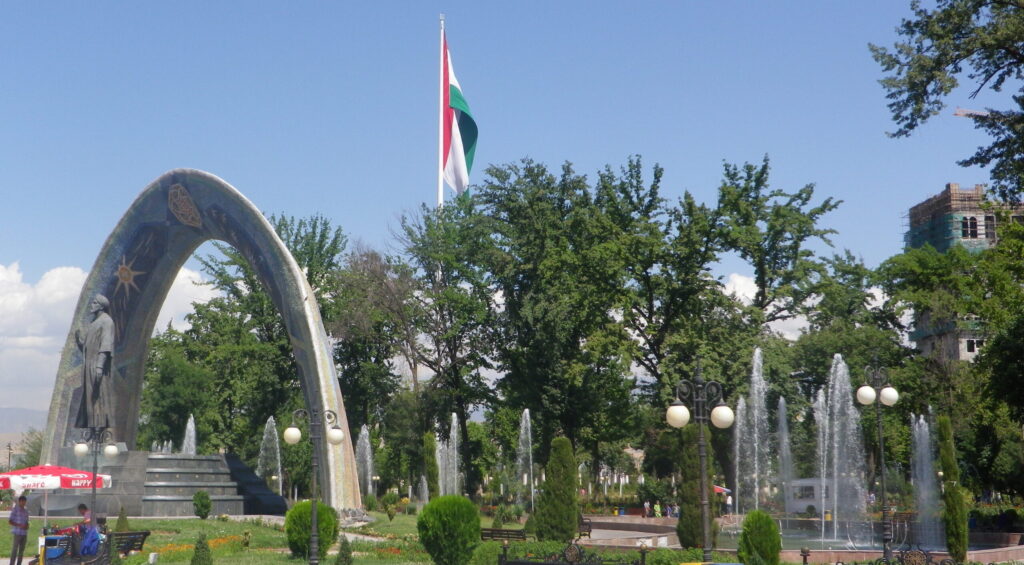
Kazakhstan and Tajikistan have signed an agreement on long-term cooperation in the energy sector. The agreement will remain in effect for 20 years, with the possibility of a 10-year extension. The document aims to strengthen energy security, promote environmentally friendly technologies, and reduce greenhouse gas emissions. Monitoring and telemetry Under the agreement, Kazakhstan will receive scheduled electricity supplies from Tajikistan, particularly from the Rogun Hydroelectric Power Plant (HPP). These imports are intended to cover planned shortages in the North-South zone of Kazakhstan’s unified power system. The price is set at $0.034 per kilowatt-hour (kWh), including VAT at a zero rate. The agreement also includes the introduction of hourly electricity metering at connection points between Kazakhstan's and Central Asia’s power grids, as well as along the Tajik border. Kazakhstan's system operator, KEGOC JSC, will receive real-time telemetry data from Tajikistan via interstate transmission lines to ensure accurate metering and efficient coordination. Electricity deliveries will follow the routes specified in the purchase agreements. The primary source will be the Rogun HPP, with supplies timed to match Kazakhstan's peak shortage periods. A long-awaited step Energy cooperation between the two countries has been under discussion for some time. In August 2024, former Kazakh Energy Minister Almasadam Satkaliev held talks on importing electricity from Tajikistan. These discussions also addressed the issue of unscheduled electricity flows between their power grids. By December 2024, plans were already in place to finalize a 20-year agreement. In February 2025, the deal was confirmed during talks between Kazakhstan’s Foreign Minister Murat Nurtleu and his Tajik counterpart, Sirojiddin Mukhriddin. “We agree that Tajik-Kazakh energy cooperation has broad prospects. We have agreed that an intergovernmental agreement on electricity will be signed in the very near future,” the Tajik foreign minister said at the time. The potential of the Rogun HPP and prospects for Kazakhstan A key element of the agreement will be the Rogun hydroelectric power plant on the Vakhsh River. Once completed, its dam will reach a height of 335 meters, making it the tallest in the world. The power plant will have a capacity of 3,600 MW, making it the largest power plant in Central Asia. This makes the project strategically important not only for Tajikistan but for the entire region. The official website of the Rogun HPP states that the facility will be the upper stage of the Vakhsh cascade and will play a key role in ensuring sustainable energy supplies. The agreement is expected to not only enable Kazakhstan to stabilize its energy balance during peak loads, but also open up new opportunities for cross-border cooperation. With the growing demand for green energy, the strategic alliance with Tajikistan could become an important element of the country's energy transition. The resolution enters into force on the day of its signing and effectively launches an intergovernmental mechanism capable of strengthening Kazakhstan's energy security for decades to come.

Russian Foreign Minister Sergey Lavrov: Kazakhstan Is Our Ally and Partner

Russian Foreign Minister Sergey Lavrov arrived in Almaty this week to participate in two significant diplomatic events: a meeting of the CIS Council of Foreign Ministers and the eighth gathering of foreign ministers from Russia and Central Asia. On April 10, Lavrov held a bilateral meeting with Kazakh Foreign Minister Murat Nurtleu, during which both sides reviewed the implementation of earlier high-level agreements and discussed expanding cooperation in political, economic, and humanitarian spheres. “Maintaining the high dynamics of political dialogue and the consistent implementation of the agreements reached remain priorities in our bilateral cooperation. This is the direction set by our presidents,” Nurtleu stated. Lavrov, for his part, emphasized the depth of the strategic partnership between the two countries: “Kazakhstan is our reliable ally and neighbor. We traditionally support each other both at the bilateral level and on the international stage.” The foreign ministers also gave particular attention to strengthening trade and economic ties. On April 11, Lavrov will participate in a CIS Council of Foreign Ministers meeting. According to Russian Foreign Ministry Spokeswoman Maria Zakharova, the ministers will discuss major international and regional issues, including preparations for the 80th anniversary of Victory in the Great Patriotic War, and matters related to cultural and humanitarian cooperation, as well as border security. Later that day, Lavrov is expected to take part in the eighth meeting of foreign ministers of Russia and Central Asian states, Kazakhstan, Kyrgyzstan, Tajikistan, Turkmenistan, and Uzbekistan. The agenda includes political and economic priorities, joint humanitarian initiatives, and measures aimed at enhancing regional stability. Discussions will also focus on global challenges, particularly the coordination of security efforts in Central Asia. Lavrov's last visit to Kazakhstan was in November 2024, as part of preparations for President Vladimir Putin’s official visit to the country. Earlier, in 2023, Foreign Minister Nurtleu had met Lavrov in Moscow, highlighting the ongoing diplomatic engagement between the two nations.

Uzbekistan and France Sign €6.5 Billion Partnership Agreements

Uzbekistan’s President Shavkat Mirziyoyev arrived in Paris on March 12 for a state visit at the invitation of French President Emmanuel Macron. The visit focused on strengthening political, economic, and cultural ties between the two countries. Expanding Cooperation with UNESCO As part of his visit, President Mirziyoyev met with Audrey Azoulay, Director-General of UNESCO, to discuss Uzbekistan’s growing collaboration with the organization. The talks also covered preparations for the 43rd UNESCO General Conference, set to take place in Samarkand this autumn, the first time the event will be held outside UNESCO’s Paris headquarters in 40 years. Uzbekistan has been actively engaged with UNESCO on various cultural and educational projects. The country has joined the International Center for the Preservation and Restoration of Cultural Heritage, and Bukhara has been added to the Network of Creative Cities. Several Uzbek traditions and artifacts, such as sericulture, pottery, and the archives of the Emir of Bukhara, have also been recognized by UNESCO. Bilateral Talks and Strengthened Economic Ties During his meeting with President Macron at the Élysée Palace, Mirziyoyev discussed ways to enhance Uzbek-French relations. Both leaders noted that agreements made during their 2023 meeting in Samarkand were already being implemented. Trade between the two nations has grown significantly, surpassing €1 billion last year. The number of joint ventures has quadrupled, with French businesses increasing their presence in Uzbekistan. A series of business forums and cultural events were held in Paris, Toulouse, Lyon, and Nice, covering key areas such as medicine, science, and education. Notably, a bust of Abu Rayhan Beruni, the renowned Uzbek scholar, was unveiled in the French town of Grez-Armainville. €6.5 Billion Innovation and Industrial Partnership One of the most significant outcomes of the visit was the launch of a new Innovation and Industrial Partnership Program, which includes €6.5 billion worth of joint projects in energy, infrastructure, mining, and transport. With this, the total value of Uzbek-French projects now exceeds €12 billion. In education, an agreement was signed to establish the Uzbek-French University in Tashkent, with experienced French specialists expected to teach there. Additionally, cooperation will continue in training French language teachers in Uzbekistan. To further boost business, tourism, and cultural exchanges, both sides discussed increasing the number of direct flights between Uzbekistan and France. Signed Agreements and Strategic Partnership Following the talks, Mirziyoyev and Macron adopted a joint declaration on the establishment of a strategic partnership. Key agreements signed include: An intergovernmental agreement on the establishment of the Uzbek-French University A mutual visa exemption for diplomatic passport holders A cooperation program for investment and innovation covering €6.5 billion in projects Agreements on healthcare, music, cinema, and theater collaboration A protocol to strengthen French language education A partnership agreement between the cities of Tashkent and Paris