• KGS/USD = 0.01144 0%
  • KZT/USD = 0.00205 0%
  • TJS/USD = 0.10569 -0.38%
  • UZS/USD = 0.00008 0%
  • TMT/USD = 0.28571 0%
  • KGS/USD = 0.01144 0%
  • KZT/USD = 0.00205 0%
  • TJS/USD = 0.10569 -0.38%
  • UZS/USD = 0.00008 0%
  • TMT/USD = 0.28571 0%
  • KGS/USD = 0.01144 0%
  • KZT/USD = 0.00205 0%
  • TJS/USD = 0.10569 -0.38%
  • UZS/USD = 0.00008 0%
  • TMT/USD = 0.28571 0%
  • KGS/USD = 0.01144 0%
  • KZT/USD = 0.00205 0%
  • TJS/USD = 0.10569 -0.38%
  • UZS/USD = 0.00008 0%
  • TMT/USD = 0.28571 0%
  • KGS/USD = 0.01144 0%
  • KZT/USD = 0.00205 0%
  • TJS/USD = 0.10569 -0.38%
  • UZS/USD = 0.00008 0%
  • TMT/USD = 0.28571 0%
  • KGS/USD = 0.01144 0%
  • KZT/USD = 0.00205 0%
  • TJS/USD = 0.10569 -0.38%
  • UZS/USD = 0.00008 0%
  • TMT/USD = 0.28571 0%
  • KGS/USD = 0.01144 0%
  • KZT/USD = 0.00205 0%
  • TJS/USD = 0.10569 -0.38%
  • UZS/USD = 0.00008 0%
  • TMT/USD = 0.28571 0%
  • KGS/USD = 0.01144 0%
  • KZT/USD = 0.00205 0%
  • TJS/USD = 0.10569 -0.38%
  • UZS/USD = 0.00008 0%
  • TMT/USD = 0.28571 0%
19 February 2026

Viewing results 1 - 6 of 52

Six Months to Rewrite the State: Kazakhstan Accelerates Its Constitutional Reset

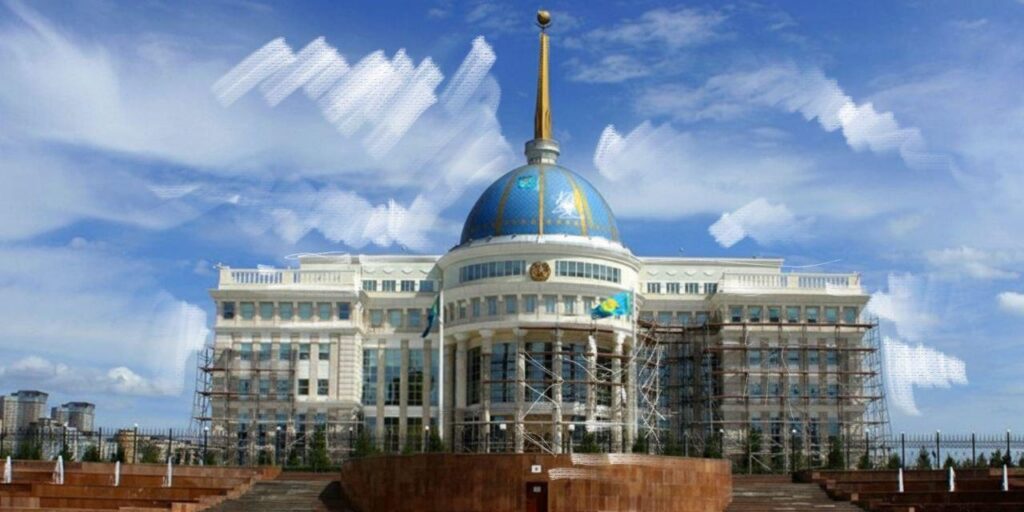
Speaking on September 8, 2025, in his Address to the People of Kazakhstan in Parliament, President Kassym-Jomart Tokayev outlined plans for new political reforms. At the time, nothing in his remarks suggested either the scale of the changes his initiative would entail or the speed with which they would be implemented. Yet on March 15 of this year, Kazakh citizens will vote in a referendum on a new draft Constitution, developed at high speed over roughly six months, including a period of state-organized public consultations and expert review. According to materials published on the Constitutional Court’s page on the state portal, where the final version of the draft Basic Law was published, the starting point for constitutional reform was Tokayev’s proposal to create a unicameral Parliament. The president announced the idea on September 8, 2025. A month later, on October 8, an order was signed establishing a working group on parliamentary reform. Over the following months, the group reviewed more than 2,000 proposals from citizens and experts. At the fifth session of the National Kurultai in January 2026, Tokayev summarized the proposals on parliamentary reform, the scope of which had already expanded beyond restructuring Parliament to revising the Constitution as a whole. On January 21, a Constitutional Commission was established, comprising 130 members, including representatives of the National Kurultai, legal experts, officials from central government agencies, media executives, chairpersons of maslikhats, members of regional public councils, and academics. The first draft of the Basic Law was published on January 31. On February 11, a “referendum” version of the draft was presented to the president, incorporating comments received, including his own. Tokayev had outlined his remarks the previous day during an expanded government meeting. The question to be put to voters in March is: “Do you accept the new Constitution of the Republic of Kazakhstan, the draft of which was published in the mass media on February 12, 2026?” What is particularly notable is that on September 8, the president had cautioned against haste, calling parliamentary reform a “very serious issue” and stating that rushing it would be inappropriate. “This reform must be the subject of detailed discussion in civil society, among experts, and, of course, in the current Parliament… I believe that, given the extraordinary nature of the reform, the discussion will take at least a year, after which a nationwide referendum could be held in 2027, and then the necessary amendments could be made to the Constitution,” Tokayev said at the time. A little over five months later, however, the country is preparing for changes that extend beyond the initial proposal to abolish the upper house. At a government meeting, Tokayev emphasized that “no one is setting the task of negating the significance of the current Constitution, which has played a huge role in all of our country's achievements over the past 30 years. “Nevertheless, it should be noted that it was adopted when our country was just getting on its feet and bears the imprint of the first...

Bishkek Unveils New Master Plan for 2050

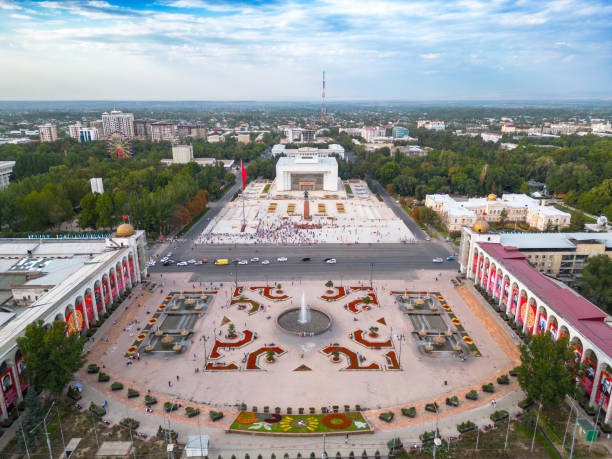
Kyrgyz authorities have submitted a draft law outlining a new master plan for the development of Bishkek through 2050, now open for public discussion. The document defines long-term priorities for the capital's growth across several sectors, including transport infrastructure, environmental management, economic development, and spatial expansion. Once adopted, the plan will become the principal framework for territorial planning and will be legally binding for decisions related to construction and land use. According to the draft, Bishkek's official population is expected to rise from 1.3 million to 1.9 million by 2050. However, the city is already believed to house approximately 2 million people, with urban development having long exceeded administrative boundaries. As a result, Bishkek is currently facing critical shortages of housing, employment, and transport infrastructure. The plan's authors stress that continued development of the city center alone is no longer viable, as it is already overburdened in terms of both transport and utilities. To address this, the master plan proposes moving away from the current "center-bedroom" model. Instead, employment opportunities should be created within districts and suburbs, supported by improved transport accessibility across all parts of the city. This approach aims to reduce commuting to the center, alleviate traffic congestion, and lessen pressure on the road network. Key infrastructure upgrades include the introduction of an intra-city railway and a high-speed bus system operating along dedicated corridors. A network of transport hubs will also be established, with the goal of reducing residents’ reliance on private vehicles. Developed in 2025 by the Bishkek City Hall in cooperation with the Scientific Research Institute of Prospective Urban Development in St. Petersburg, the plan is now being updated based on public feedback. The most contentious element of the proposal is the renovation program, which calls for the demolition of a substantial number of two, three, and four-storey buildings in central areas and along major roads. Many residents are concerned that state compensation for demolished properties may fall short of market value, a topic that has become one of the most debated during public consultations. Environmental improvements are also a core component. Bishkek frequently ranks among the most polluted cities in the Eurasia region. To address this, the plan includes a “green framework” for the city: expanding river and canal beds, creating green corridors, and enhancing recreational zones.

Bishkek to Host Kyrgyzstan’s First-Ever Full Marathon as Part of Snow Leopard Run 2025

The Bishkek Snow Leopard Run 2025 will take place in the Kyrgyz capital on September 21, combining long-distance running with wildlife conservation. This year’s event will mark a milestone for the country, featuring Kyrgyzstan’s first-ever 42.2 km marathon. Organized by the Public Association Nomad Sport, the race is part of the Association of International Marathons and Distance Races (AIMS) calendar and has also joined the Turkic Alliance of Long Runs (TAN), the first such alliance in Central Asia and the Caucasus. In addition to the full marathon, runners will compete in 5 km, 14 km, and 21.1 km races. All routes will begin at Bishkek’s central Ala-Too Square and pass through the city's main thoroughfares. Nomad Sport General Director Arslan Maldybaev said more than 5,000 runners are expected this year, including participants from Kazakhstan, Uzbekistan, Azerbaijan, Russia, Belarus, and Ukraine. “It is important to us that people learn about Kyrgyzstan and our symbol, the snow leopard, through sport. This is an opportunity to make a name for ourselves and become a magnet for sports tourism,” he told local media. A portion of the entry fees will support snow leopard conservation. Proceeds from this year’s race will fund the purchase of telescopes for wildlife monitoring. First held in 2019, the Bishkek Snow Leopard Run drew 3,600 runners from 20 countries in its inaugural year. The event highlights the growing symbolic role of the snow leopard in Kyrgyzstan. In December 2023, The Times of Central Asia reported that President Sadyr Japarov had signed a decree officially designating the snow leopard as a national emblem.

Russian Organization Builds Amusement Park in Bishkek

On August 28, a new amusement park named Eurasia officially opened in Bishkek. Covering approximately 10 hectares, the park offers free admission and features around 30 amusement rides, sports facilities, and a food court. The project began in 2024 as part of a collaboration between Kyrgyzstan’s Cabinet of Ministers and Russia’s non-profit organization for international cooperation, Eurasia. Total investment in the park reached $35 million. The initiative commemorates the 10th anniversary of the Eurasian Economic Union (EAEU), a regional integration bloc comprising Armenia, Belarus, Kazakhstan, Kyrgyzstan, and Russia. All construction and equipment costs were funded by the Eurasia organization. Expanding Russia’s Soft Power Since 2024, Eurasia has been active in Kyrgyzstan through various social and humanitarian projects. In partnership with Russia’s Ministry of Education, the organization has deployed young Russian teachers to secondary schools across Kyrgyzstan to instruct in specialized subjects taught in Russian. Eurasia has also donated 100 school buses to rural Kyrgyz villages and funded renovations of schools in Bishkek and Kyzyl-Kyya. On August 26, the organization opened its first social store, also named Eurasia, in Bishkek. The store aims to support vulnerable populations, including pensioners, veterans, large families, and people with disabilities, by offering essential food items at reduced prices.

Kyrgyzstan Launches New IT Hub in Bishkek

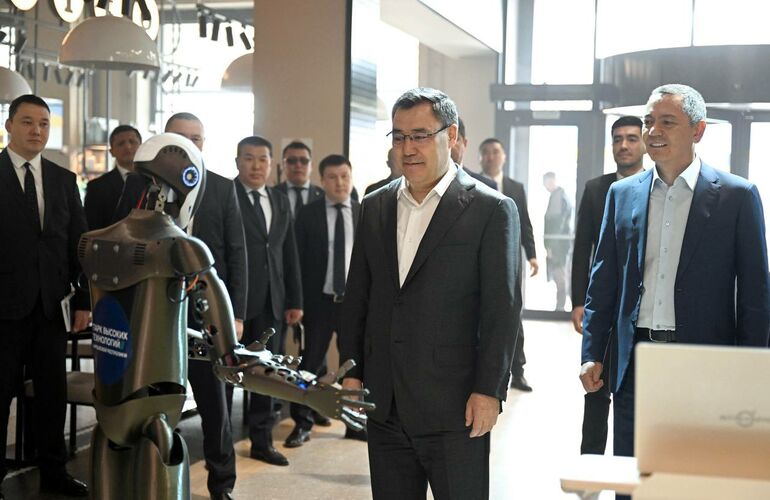
On April 10, the Technopark IT hub officially opened in Bishkek, marking a significant milestone in the development of Kyrgyzstan’s fast-growing tech sector. Spanning 14,000 square meters and designed to accommodate 1,500 jobs, the new hub was built with private investments totaling 2 billion KGS (more than $22 million). The facility serves as a center for digital innovation, entrepreneurship, and creative collaboration, featuring office spaces, co-working areas, conference rooms, and a professional podcast recording studio. Current residents of the IT hub include some of Kyrgyzstan’s largest online services for trade, employment, real estate, and cryptocurrency exchange platforms. The opening ceremony was attended by President Sadyr Japarov, who was welcomed by BilimBot, a Kyrgyz-speaking robot developed by local programmers. In his remarks, Japarov highlighted the central role of digitalization and technology in modern economic development. “Today, the world is undergoing rapid changes. The development of countries no longer depends only on natural resources. In the past, the global economy was dominated by countries rich in minerals or with access to the sea. Now, these factors are no longer decisive. We live in the digital age. The ability to use knowledge and technology as resources that can compete with natural ones has come to the fore,” he said. The president also discussed legislative reforms aimed at fostering Kyrgyzstan’s IT landscape. In 2023, Japarov signed amendments to the Law on the High Technology Park of the Kyrgyz Republic, which extended its preferential tax regime indefinitely, a move designed to attract both local and international tech companies. Established in 2011, the High Technology Park (HTP) was created to stimulate IT business development by offering substantial tax relief to companies exporting digital goods and services. Previously, tax exemptions were set for a 15-year term expiring in 2026. Under the new legislation, these tax benefits are now permanent. Resident companies of the HTP enjoy exemptions from sales tax, profit tax, and value-added tax (VAT). Employees benefit from a reduced income tax rate of 5%, and the social insurance tax is fixed at 12% of the average monthly wage. The IT sector is now one of Kyrgyzstan’s most dynamic industries. In 2021, the government created the Ministry of Digital Development to lead efforts in e-government services and to expand digital access across the country.

Bishkek Activists Demand Comeback for City’s Scrapped Trolleybuses

As Bishkek prepares to introduce its first fleet of electric buses, local activists are mounting a legal campaign to save the city’s trolleybus system from complete dismantlement. Municipality’s Modernization Push The first two electric buses from China’s Anhui Ankai Automobile Co. have already arrived in Bishkek and will soon begin operating on city routes. In total, the city has procured 120 electric buses, with the remaining 118 expected to be delivered by May, according to Daiyrbek Orunbekov, head of information policy at the President’s Office. Orunbekov said the new vehicles will replace outdated public transport and help improve the capital’s environmental conditions. “City streets used to be clogged with shuttle buses, and the roads were in disarray. Now modern buses are replacing minibuses. Last year, the roads were reconstructed and old trolleybus lines dismantled. Some residents were initially unhappy, but electric buses, more spacious and comfortable, are now on the routes,” he explained. A Contested Phase-Out Despite these upgrades, the decision to remove trolleybus lines has sparked a backlash. Bishkek residents and activists have sued the mayor’s office, arguing that officials acted without proper authorization in dismantling the network. All trolleybus lines in Bishkek were removed in a short period. Of the remaining fleet, 100 trolleybuses, many still under loan repayment, were transferred to Osh, six to Naryn, and 42 remain parked on the outskirts of the capital. Meanwhile, Kyrgyz MP Ulan Bishimbayev has announced that the authorities plan to retrofit some of the old trolleybuses with batteries to convert them into electric buses. One pilot project is already underway. “We invited specialists who confirmed it was possible. One trolleybus is being remodeled in pilot mode and should be launched within 10 days,” Bishimbayev said. Legal Battle and Environmental Concerns The next court hearing on the trolleybus issue is scheduled for April 9 at the Bishkek City Court. Activists argue that trolleybuses, powered by a network of 19 existing substations, remain one of the most sustainable forms of transport. “Trolleybus wires are a consumable material that needs replacement every 20 years. The challenge of restoring them is manageable. What matters are the substations, and they are still intact,” activist Bermet Borubayeva told The Times of Central Asia. She also questioned the narrative that the old system was outdated. “A representative from the president’s staff claimed the trolleybuses were outdated and would be replaced with electric buses. But that’s misleading. The trolleybuses bought with a €23.5 million European Bank for Reconstruction and Development (EBRD) loan just six years ago are still modern, with a service life of 20 years,” she said. Borubayeva also pointed out that the batteries used in electric buses typically last only 5-10 years and pose environmental risks when recycled. According to earlier electrification plans approved by European lenders, Bishkek was expected to combine trolleybus and electric bus networks. However, city authorities have opted for a different course.