• KGS/USD = 0.01144 0%
  • KZT/USD = 0.00206 0%
  • TJS/USD = 0.10760 -0.46%
  • UZS/USD = 0.00008 0%
  • TMT/USD = 0.28571 0%
  • KGS/USD = 0.01144 0%
  • KZT/USD = 0.00206 0%
  • TJS/USD = 0.10760 -0.46%
  • UZS/USD = 0.00008 0%
  • TMT/USD = 0.28571 0%
  • KGS/USD = 0.01144 0%
  • KZT/USD = 0.00206 0%
  • TJS/USD = 0.10760 -0.46%
  • UZS/USD = 0.00008 0%
  • TMT/USD = 0.28571 0%
  • KGS/USD = 0.01144 0%
  • KZT/USD = 0.00206 0%
  • TJS/USD = 0.10760 -0.46%
  • UZS/USD = 0.00008 0%
  • TMT/USD = 0.28571 0%
  • KGS/USD = 0.01144 0%
  • KZT/USD = 0.00206 0%
  • TJS/USD = 0.10760 -0.46%
  • UZS/USD = 0.00008 0%
  • TMT/USD = 0.28571 0%
  • KGS/USD = 0.01144 0%
  • KZT/USD = 0.00206 0%
  • TJS/USD = 0.10760 -0.46%
  • UZS/USD = 0.00008 0%
  • TMT/USD = 0.28571 0%
  • KGS/USD = 0.01144 0%
  • KZT/USD = 0.00206 0%
  • TJS/USD = 0.10760 -0.46%
  • UZS/USD = 0.00008 0%
  • TMT/USD = 0.28571 0%
  • KGS/USD = 0.01144 0%
  • KZT/USD = 0.00206 0%
  • TJS/USD = 0.10760 -0.46%
  • UZS/USD = 0.00008 0%
  • TMT/USD = 0.28571 0%

Viewing results 1 - 6 of 57

Turkmenistan’s White City Casts Itself as Cutting Edge

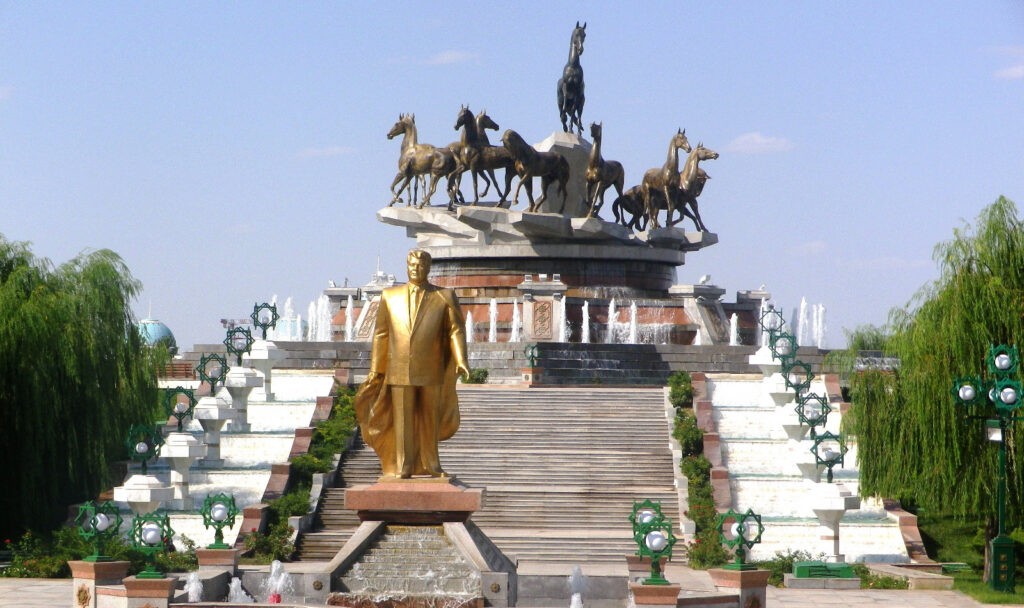
Turkmenistan’s so-called “white city” of Ashgabat, where hundreds of buildings are clad in white marble, will host a conference this month aimed at attracting international investment and innovation to the showcase capital. Organizers of the government-backed White City Ashgabat 2026 forum, scheduled for May 24-25, say the delegates will include investors, architects, and engineers, and that the agenda will cover urban planning, digital technologies, and the modernization of water, transport, and other infrastructure. Organizers of the government-backed White City Ashgabat 2026 forum, scheduled for May 24-25, say delegates will include investors, architects, and engineers, and that urban planning, digital technologies, and the modernization of water, transport, and other infrastructure will be discussed. Turkish Airlines and S&P Global Energy are listed as partners for the event. Media partners include several Middle Eastern outlets. Listed speakers include Rahym Gandymov, mayor of Ashgabat; Japanese Ambassador Sasaki Hiroshi; and Francesco La Camera, director-general of the Abu Dhabi-based International Renewable Energy Agency. First-time visitors to Turkmenistan’s capital, with its broad avenues, squares and elaborate monuments, sometimes describe it as eerie and unusual. In 2013, the city made it into the Guinness World Records for the highest density of white marble-clad buildings. Perceptions of Ashgabat can range from a futuristic “smart” city to a grandiose display only made possible by the wealth from Turkmenistan’s immense energy resources and the whims of its leaders. Turkmen officials are trying to shape a positive narrative about the city by hosting more international events and focusing on the idea of sustainability. Erfan Ali is director of the regional office for eastern Europe and Central Asia of UN-Habitat, which promotes social and environmental priorities in towns and cities. He said he was looking forward to the Ashgabat conference this month. “Discussions will focus on advancing resilient, inclusive, and smart cities, from climate action to digital transformation, while highlighting practical pathways for future-ready urban systems globally,” Ali said on X. In recent years, Turkmenistan has also focused on the development of Arkadag, a city that lies about 30 kilometers from Ashgabat and features plenty of white marble as well. Arkadag means “protector,” a reference to the formal title of Gurbanguly Berdimuhamedov, the former president who retains some power even though his son, Serdar, is now the president. This month, the elder Berdimuhamedov visited Arkadag to check on what state media described as the “second phase” of the construction of Arkadag, which formally opened in 2023. A delegation from the city will attend the World Urban Forum, a United Nations conference on sustainable urbanization in Baku, Azerbaijan, on May 17-22.

Alatau: Inside Kazakhstan’s $20 Billion “City of the Future”

Details about the ambitious plans for Alatau city were presented to a joint session of Kazakhstan’s parliament on March 20. Authorities are moving ahead full-speed on the project to build the new city that one day could be home to some two million people. According to the plans, Alatau will be a unique city, not only in Kazakhstan, but in the world. [caption id="attachment_45827" align="aligncenter" width="1704"] Image: Skidmore, Owings & Merrill (SOM) [/caption] From Village to Metropolis Alatau city is being built on the site of what was the village of Zhetygen, some 50 kilometers north of Almaty. It will occupy an area of some 88,000 hectares, “larger than both Singapore and Seoul.” Relieving the congestion of Kazakhstan’s commercial capital was one of the major concerns when selecting a site for the new city. Another consideration was Alatau’s location along the Middle Corridor, the developing East-West trade route linking Europe and China. Alatau city will have an airport and railway junctions. Alatau city will have four districts – Green, Growing, Golden, and Gate. [caption id="attachment_45826" align="aligncenter" width="1704"] Image: Skidmore, Owings & Merrill (SOM) [/caption] The Gate district will be the business and financial area and is where the airport and railways will be located. It will also be the southern-most area of the city and therefore closest to Almaty. The Golden district will be the “hub of knowledge, healthcare, and innovation,” the location of hospitals and other medical facilities, tech centers, and educational institutions able to take 40,000 students are planned for the district. The Growing district will be the industrial and logistics center for export-oriented trade. It will include clusters for food, chemicals, building materials, and light industry. The Green district, on the shore of Kapchagay Lake and with the Kaskelen River running through it, will be the recreational and tourist area of the city. [caption id="attachment_45828" align="aligncenter" width="1704"] Image: Skidmore, Owings & Merrill (SOM) [/caption] Alatau city lies along the main road between the cities of Almaty and Konayev (the “gambling capital of Kazakhstan"). Deputy Prime Minister Kanat Boumbayev told parliament on March 20 that testing of air taxis to ferry people between Almaty and Alatau would start this year, and within two to three years, operations would open to the public. Bozumbayev said the flight time would be 10-15 minutes. Additionally, expansion of the Almaty metro system is progressing with plans for the Green Line to eventually reach Alatau. Alatau will be a smart city and will be developed under the principle “digital by default,” meaning people will be encouraged to go online as much as possible for goods and services, but will still offer support for those who prefer to use traditional means. Financing The Kazakh authorities are expecting construction of Alatau city to require some 10 trillion tenge (about $20.836 billion) of investment by 2050. Kazakhstan is seeking foreign investment and offering advantageous conditions to foreign companies. Deputy Prime Minister Bozumbayev said, “The tax model is described separately: incentives are proposed to be granted only...

Bishkek Unveils New Master Plan for 2050

Kyrgyz authorities have submitted a draft law outlining a new master plan for the development of Bishkek through 2050, now open for public discussion. The document defines long-term priorities for the capital's growth across several sectors, including transport infrastructure, environmental management, economic development, and spatial expansion. Once adopted, the plan will become the principal framework for territorial planning and will be legally binding for decisions related to construction and land use. According to the draft, Bishkek's official population is expected to rise from 1.3 million to 1.9 million by 2050. However, the city is already believed to house approximately 2 million people, with urban development having long exceeded administrative boundaries. As a result, Bishkek is currently facing critical shortages of housing, employment, and transport infrastructure. The plan's authors stress that continued development of the city center alone is no longer viable, as it is already overburdened in terms of both transport and utilities. To address this, the master plan proposes moving away from the current "center-bedroom" model. Instead, employment opportunities should be created within districts and suburbs, supported by improved transport accessibility across all parts of the city. This approach aims to reduce commuting to the center, alleviate traffic congestion, and lessen pressure on the road network. Key infrastructure upgrades include the introduction of an intra-city railway and a high-speed bus system operating along dedicated corridors. A network of transport hubs will also be established, with the goal of reducing residents’ reliance on private vehicles. Developed in 2025 by the Bishkek City Hall in cooperation with the Scientific Research Institute of Prospective Urban Development in St. Petersburg, the plan is now being updated based on public feedback. The most contentious element of the proposal is the renovation program, which calls for the demolition of a substantial number of two, three, and four-storey buildings in central areas and along major roads. Many residents are concerned that state compensation for demolished properties may fall short of market value, a topic that has become one of the most debated during public consultations. Environmental improvements are also a core component. Bishkek frequently ranks among the most polluted cities in the Eurasia region. To address this, the plan includes a “green framework” for the city: expanding river and canal beds, creating green corridors, and enhancing recreational zones.

Kyrgyzstan Urged to Shift from Rural Focus to Urban Development

Kyrgyzstan must develop modern urban infrastructure and gradually move away from its predominantly rural development model, according to Nurdan Oruntayev, Director of the State Agency for Architecture, Construction, and Housing and Utilities. Speaking to local media, Oruntayev emphasized the need for a strategic transition toward urbanization to drive economic growth and job creation. Master plans for the development of the towns of Karakol, Manas, and Osh have already been approved. These include the construction of high-rise residential buildings, signaling a broader shift toward urban expansion. “We must develop cities and move toward an urban infrastructure system. We must have megacities. The construction industry makes a significant contribution to the economy and provides jobs for many citizens,” Oruntayev said. He noted that the average annual growth in real estate prices in Kyrgyzstan ranges between 20-30 percent, reflecting strong demand and rising investor interest. According to official data, construction has been a primary driver of economic growth in recent years, with GDP growth consistently exceeding 10 percent. However, this rapid development has raised concerns among local communities. In an interview with the Times of Central Asia, Albina Alimova, a tour guide from Karakol, criticized the city’s master plan for ignoring input from the tourism sector, despite tourism being a key regional revenue source. She warned that unchecked construction was compromising the city’s historical character. “New buildings are blocking historic sites and views. Karakol has streets with late 19th-century stonework, old merchant houses, and a museum. We take tourists there, in part for the mountain views. But all of this is gradually being built up, and the city's former appearance may be lost,” she said. Similar concerns have emerged in Bishkek, where city authorities are preparing a renovation program that would replace older buildings with high-rise developments. Residents say the city’s growing density has disrupted natural wind patterns and worsened environmental conditions. The capital’s master plan, developed with input from St. Petersburg-based urban planners, also flagged excessive building density in some districts as a key issue.

Kazakhstan Launches Smart City Project in Taldykorgan

The Taldykorgan City Administration (akimat), Kazakh telecommunications company ASTEL, and French Internet of Things (IoT) solutions developer Actility have signed a memorandum of cooperation to implement a Smart City project in the town of Taldykorgan. The initiative, based on LoRaWAN technology, will establish a comprehensive urban monitoring system aimed at improving city management and residents’ quality of life. The agreement was signed in Paris during the 16th meeting of the Intergovernmental Commission on Economic Cooperation between Kazakhstan and France. The project involves deploying a LoRaWAN-based IoT network that will collect real-time data from environmental sensors across the city. This data will feed into a centralized monitoring platform, enabling municipal services to respond swiftly to environmental changes. The initiative also includes urban transport management and measures to enhance safety in schools. Taldykorgan Governor (akim) Ernat Bazil told The Times of Central Asia that the memorandum represents a key milestone in the city’s digital development strategy. According to Bazil, the project aims not only to introduce cutting-edge technologies but also to deliver tangible improvements for residents, such as better environmental oversight, more efficient public services, enhanced public transport, and safer educational institutions. Full implementation of the Smart City system is scheduled for 2026. ASTEL President Miras Kasymov said the LoRaWAN-based project in Taldykorgan will serve as a model for scalable smart city solutions across Kazakhstan, marking an important advancement in the country’s digital infrastructure. The project is supported by the French government’s FASEP program (Fonds d'Études et d'Aide au Secteur Privé) and the French Embassy in Kazakhstan. Actility, a global leader in IoT and LoRaWAN technologies, serves as the technical partner. The company’s platform is currently used in over 70 countries. Actility CEO Olivier Hersent noted that the Taldykorgan project aligns with FASEP’s goals of promoting innovation in urban safety, environmental monitoring, and sustainable development, particularly in small and mid-sized cities. French Ambassador to Kazakhstan Sylvain Guillegot said the initiative highlights France’s commitment to supporting digital transformation in Kazakhstan’s regions. He described the project as a concrete example of Franco-Kazakh collaboration in infrastructure modernization and sustainable development. The system is set to launch in 2026. If successful, it could be replicated in other cities throughout Kazakhstan. LoRaWAN (Long Range Wide Area Network) is an energy-efficient, cost-effective wireless communication protocol widely used for IoT deployments, especially in smart urban infrastructure projects.

Pakistani Developer Proposes “New Uzbekistan” Complex in Islamabad

Uzbekistan and Pakistan are exploring new avenues for cooperation in urban development, with discussions underway to construct a “New Uzbekistan” residential complex and park in Pakistan's capital Islamabad. The talks were reported by the Dunyo news agency following a meeting between Uzbekistan’s Ambassador to Pakistan Alisher Tukhtaev and representatives of Pakistani developer Habib Rafiq Pvt. Ltd. According to Dunyo, both sides discussed launching joint initiatives and strengthening long-term partnerships. Tukhtaev briefed the company’s leadership on Uzbekistan’s investment climate, including the role of free economic zones, the nationwide construction of New Uzbekistan residential areas, and the ongoing New Tashkent city project. He also highlighted the tax and customs incentives available to foreign investors, administrative support for large-scale developments, and Uzbekistan’s strategic location along key Eurasian transport corridors. Habib Rafiq’s General Manager, Aslam Malik, praised Uzbekistan’s reform efforts, stating that they offer “very favorable conditions for foreign investors, especially in construction and infrastructure.” He noted that simplified procedures and expanded business guarantees are already yielding results. “We are well aware of the changes taking place in Uzbekistan’s construction sector,” Malik said. “In recent years, the country has gained substantial experience in infrastructure development, modern housing, and new urban planning. We are interested in studying this experience and participating in future projects.” The Pakistani side also showcased its flagship Capital Smart City development, a large-scale project near Islamabad covering 2,800 hectares. The complex already features residential buildings, schools, kindergartens, sports facilities, and modern recreational parks. Construction is also underway on Silicon Village, envisioned as a local version of Silicon Valley. Malik proposed establishing a New Uzbekistan residential area and park within Capital Smart City, contributing to projects in New Tashkent, and organizing leadership visits to Uzbekistan. He also invited leading Uzbek construction companies to participate in projects in Pakistan. Abid Kabir Chima, CEO of Silicon Village, expressed interest in expanding cooperation with Uzbekistan’s technopark.