
• KGS/USD = 0.01144 0%
  • KZT/USD = 0.00202 0%
  • TJS/USD = 0.10676 -0.09%
  • UZS/USD = 0.00008 0%
  • TMT/USD = 0.28530 0%
  • KGS/USD = 0.01144 0%
  • KZT/USD = 0.00202 0%
  • TJS/USD = 0.10676 -0.09%
  • UZS/USD = 0.00008 0%
  • TMT/USD = 0.28530 0%
  • KGS/USD = 0.01144 0%
  • KZT/USD = 0.00202 0%
  • TJS/USD = 0.10676 -0.09%
  • UZS/USD = 0.00008 0%
  • TMT/USD = 0.28530 0%
  • KGS/USD = 0.01144 0%
  • KZT/USD = 0.00202 0%
  • TJS/USD = 0.10676 -0.09%
  • UZS/USD = 0.00008 0%
  • TMT/USD = 0.28530 0%
  • KGS/USD = 0.01144 0%
  • KZT/USD = 0.00202 0%
  • TJS/USD = 0.10676 -0.09%
  • UZS/USD = 0.00008 0%
  • TMT/USD = 0.28530 0%
  • KGS/USD = 0.01144 0%
  • KZT/USD = 0.00202 0%
  • TJS/USD = 0.10676 -0.09%
  • UZS/USD = 0.00008 0%
  • TMT/USD = 0.28530 0%
  • KGS/USD = 0.01144 0%
  • KZT/USD = 0.00202 0%
  • TJS/USD = 0.10676 -0.09%
  • UZS/USD = 0.00008 0%
  • TMT/USD = 0.28530 0%
  • KGS/USD = 0.01144 0%
  • KZT/USD = 0.00202 0%
  • TJS/USD = 0.10676 -0.09%
  • UZS/USD = 0.00008 0%
  • TMT/USD = 0.28530 0%
06 February 2026

Viewing results 1 - 6 of 9

Kazakhstan Restructures Oil Exports Amid Disruptions at CPC

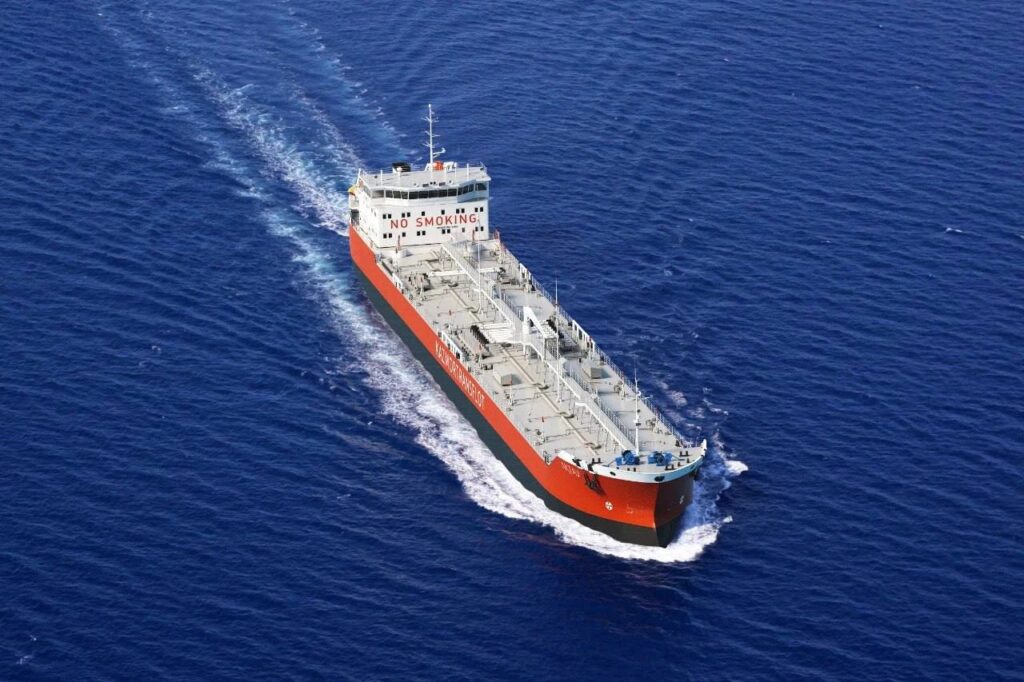
Kazakhstan is rapidly restructuring its oil export routes in response to disruptions affecting the Caspian Pipeline Consortium (CPC), a critical channel for the country’s crude shipments. To maintain export volumes and avoid production slowdowns, authorities have turned to alternative infrastructure. According to a statement from KazMunayGas, the national oil company, approximately 300,000 tons of oil were rerouted in December 2025 after restrictions limited the CPC’s intake capacity. In coordination with KazTransOil JSC (KTO), the country redirected oil flows to other export corridors. These rerouted volumes were exported to Germany, China, and via the Baku-Tbilisi-Ceyhan (BTC) pipeline, with shipments also handled through the ports of Novorossiysk and Ust-Luga. As CPC restrictions remained in place into January 2026, the redirection strategy continued. Amid these challenges, Kazakhstan’s use of alternative routes gained momentum. KazMunayGas reported that oil deliveries to Germany’s Schwedt refinery totaled 2.1 million tons by the end of 2025, with projections indicating a rise to 2.5 million tons in 2026. Exports through the port of Aktau to the BTC pipeline reached 1.3 million tons in 2025 and are expected to grow to 1.6 million tons this year. Shipments to China remained stable, with 1.1 million tons delivered by the end of 2025. These developments reflect a gradual shift aimed at reducing Kazakhstan’s dependency on the CPC which has faced repeated operational setbacks. The CPC disruptions stem from a series of security incidents. In February and March 2025, the Kropotkinskaya station was targeted in drone attacks. On 29 November, a strike on the consortium’s remote mooring device caused damage to its marine terminal. Following the November incident, Kazakhstan’s Ministry of Energy stated that the CPC pipeline is an international energy project and warned that “any forceful impact on its facilities poses direct risks to global energy security.” After another attack on 13 January 2026, when drones targeted three oil tankers near the CPC terminal in the Black Sea, the Ministry of Foreign Affairs issued a sharper response. In emergency consultations with European partners, the U.S., and other stakeholders, Kazakhstan called for reinforced protection of hydrocarbon transportation routes and maritime corridors, emphasizing the need for adherence to international law.
Attacks on Tankers in the Black Sea Raise Risks for Oil Markets and Kazakhstan’s Exports

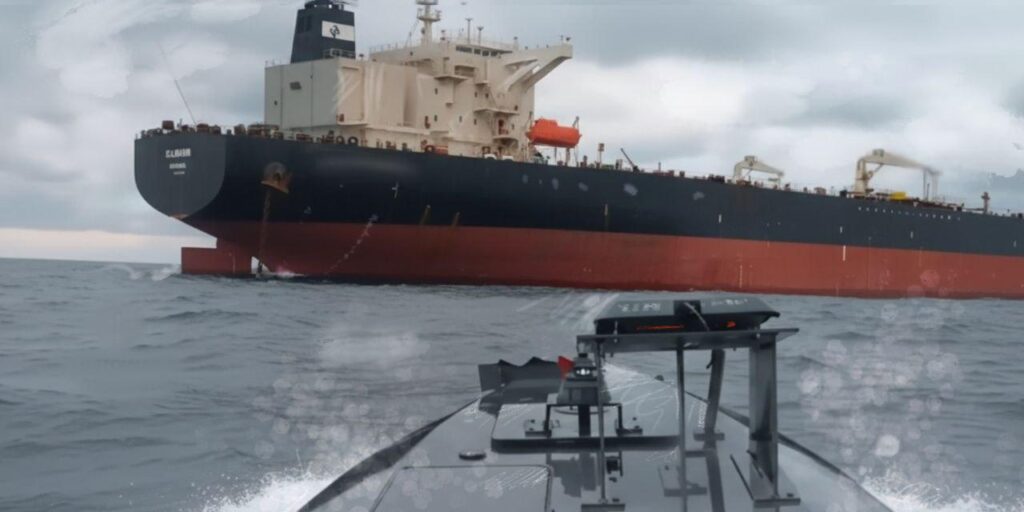
Recent drone attacks on the Delta Harmony and Matilda oil tankers in the Black Sea have added to the growing geopolitical risks facing the global oil market. Both tankers were awaiting loading to transport Kazakh crude via the Caspian Pipeline Consortium (CPC), which operates through the Novorossiysk port in southern Russia. The attacks have placed renewed attention on the exposure of Western energy majors operating in Kazakhstan, particularly Chevron, a key stakeholder in CPC-linked exports. “We are aware of reports of incidents involving vessels inbound to CPC loading facilities, including one Chevron-chartered tanker,” Chevron spokesperson Sally Jones told The Times of Central Asia. “All crew are safe, and the vessel has now reached a safe location. We are coordinating with the ship operator and relevant authorities. The safety of personnel and the protection of the environment remain our top priorities. There has been no impact on TCO operations or exports. Chevron continues to closely monitor the situation, and we refer all further inquiries to CPC.” According to Kazakhstan’s Ministry of Energy, export volumes were unaffected. The fact that attacks occurred near a key export hub has, however, deepened concerns among market participants over the security of regional oil infrastructure. The country's Ministry of Foreign Affairs added in a statement: "We emphasize that the Republic of Kazakhstan is not a party to any armed conflict, makes a significant contribution to strengthening global and European energy security, and ensures uninterrupted energy supplies in full compliance with established international standards." Reuters, citing unnamed sources, reported that up to three vessels may have been struck, suggesting a broader and potentially escalating threat to maritime safety in the area. The latest incidents follow a series of security-related disruptions in and around the Black Sea and Caspian regions that The Times of Central Asia has previously reported on, including attacks on energy and transport infrastructure linked to regional export routes. While earlier incidents did not result in prolonged outages, they have steadily heightened concerns among industry participants over the vulnerability of critical energy corridors. The CPC is a vital artery for Kazakhstan’s oil industry. More than 80% of the country’s crude exports, including output from major fields like Tengiz and Karachaganak, flow through this route. Disruptions in the Novorossiysk area could quickly affect shipping timetables, freight and insurance rates, and, ultimately, global oil prices. Some analysts warn that these repeated incidents near the CPC expose Kazakhstan’s strategic vulnerabilities, forcing markets to price in a “geopolitical premium.” More significantly, interruptions in oil product flows could have domestic political consequences, potentially prompting a reconfiguration of Kazakhstan’s political timetable. “The situation involving the CPC, the Orenburg Gas Processing Plant, and reported attempted attacks on the Central Asia-Center gas pipeline, used to transport Russian gas through Kazakhstan, could significantly destabilize the country’s economy,” wrote oil and gas analyst Olzhas Baidildinov on his personal Telegram channel. He added that, in his view, it could become politically rational either to accelerate elections in anticipation of further instability or to delay them until...

What Will Kazakhstan Make of the Novorossiysk Constraint?

Russia’s July decree requiring FSB approval for foreign vessels entering Novorossiysk introduces a new procedural constraint into the regional export environment. Modest in scope, the measure nevertheless grants Moscow a latent mechanism for influencing Kazakhstan’s primary oil export route via the CPC pipeline, and by extension, its westward orientation. The CPC terminus, long treated as infrastructurally neutral, has been “recoded” as a site of discretionary oversight. This development coincides with the gradual erosion of the energy governance model inaugurated by foreign concessions at Tengiz, Karachaganak, and Kashagan, where Production Sharing Agreements (PSAs) created juridical islands largely external to domestic legal and fiscal regimes. It is possible that a new phase is emerging whereby infrastructural flows are re-anchored in sovereign discretion, as an accumulation of procedural instruments favors regional currencies and reduces Western intermediation. Kazakhstan’s energy model was built on upstream Western capital and downstream Russian transit. The fragility of that erstwhile equilibrium has now been revealed, even though the disrupter is not a single actor but a convergence of pressures. This dual-dependency now appears more vulnerable, unsettled by converging geopolitical and institutional pressures. The superficial continuity of physical infrastructure masks deeper shifts in logistical autonomy, fiscal sovereignty, and international alignment. Structural Exposure and Strategic Compression The fiscal layer exposes the shifts. Revenues from Western-operated concessions are routed into the National Fund, which reinvests them into foreign debt instruments, often issued by the same economies that operate Kazakhstan’s extractive infrastructure. Kazakhstan’s export of physical assets and reinvestment into external liabilities constitutes a structural contradiction. The state’s constitutional control over subsoil resources is not matched by operational authority. The CPC pipeline, though formally multinational, is routed entirely through Russian territory. The new decree does not immediately alter its function, but it inserts a potential instrument of political leverage. The bargaining terrain has consequently already shifted: what was previously a matter of contractual detail is now entangled with external discretion. For the present, the decree’s practical impact is limited, but it reveals the current system’s embedded asymmetry. Moscow’s move signals a readiness to formalize political leverage. It lays the groundwork for a possible reconfiguration of Eurasian energy flows under post-conflict conditions. In this vision, transactions would be conducted through sovereign institutions, denominated in rubles, tenge, or other regional currencies. The intent is clear: to reduce reliance on Western frameworks and to re-anchor Russia’s “peripheries” within its institutional orbit. The maneuver unfolds within a broader context of strategic adjustment. Europe is searching for non-Russian energy inputs. Turkey is expanding corridor-based integration. China’s Belt and Road Initiative continues to institutionalize long-term infrastructural absorption. Kazakhstan has become a contested node within overlapping geopolitical networks that pull it in different vectorial directions. Against this backdrop, the once legal-technical re-negotiations over Tengiz, Karachaganak, and Kashagan are situated within a tectonically shifting geopolitical matrix. Trans-Caspian connectors, digital corridors, and regulatory frameworks are coalescing into a new infrastructural logic. The decree has little practical effect for now, but it points to a deeper condition where sovereignty is declared but not...

New Russian Regulations Halt Kazakhstan’s Black Sea Oil Exports

Kazakhstan has temporarily suspended oil exports via the Black Sea ports of Novorossiysk and Yuzhnaya Ozerovka due to newly enforced Russian regulations. The rules, which took effect on July 21, require foreign vessels entering Russian ports to receive prior approval from the Federal Security Service (FSB) and the port captain. Strategic Ports, Vulnerable Logistics According to Reuters, the new clearance procedures have effectively blocked shipments of Kazakh crude transported through the Caspian Pipeline Consortium (CPC) system. The disruption could reduce global oil supply by more than 2% (source). Over 80% of Kazakhstan’s oil exports are shipped through terminals in Novorossiysk and Yuzhnaya Ozerovka. The primary export product is CPC Blend, produced by major Kazakh oil firms, including ventures with significant American corporate participation. The decree by President Vladimir Putin, issued earlier this month, was introduced amid rising maritime threats. In 2025 alone, five tanker explosions have occurred in the region. One of the most serious incidents involved the tanker Koala, which was damaged in February while docked in the Russian port of Ust-Luga. Despite suspicions, none of the targeted tankers were carrying Russian crude sold above the G7 price cap. Tracking data revealed that each vessel had visited ports used for Kazakh oil exports, which are not subject to Western sanctions, according to the Financial Times. The CPC had planned to export 6.5 million tons of CPC Blend in August, maintaining the July level. Of that, 2.2 million tons were shipped via Novorossiysk. Mounting Risks, Limited Alternatives The security of Kazakhstan’s energy infrastructure is further threatened by ongoing regional instability. In February, seven Ukrainian drones attacked the CPC’s Krokotinskaya oil pumping station. While there were fears of a 30% drop in throughput, Kazakhstan’s Ministry of Energy denied any disruption, stating that “oil is being received according to schedule”. Financial analyst Rasul Rysmambetov, writing on his Telegram channel ArtFinanze, urged restraint but acknowledged the seriousness of the situation: “If attacks on infrastructure continue, it will become increasingly difficult to protect the underwater pipeline system.” He also warned that the involvement of Western firms such as Chevron may not deter further risks: “Contrary to popular belief, the participation of companies such as Chevron will not stop anyone. On the contrary, such infrastructure can be used to put pressure on entire countries”. Currently, nearly all of Kazakhstan’s oil exports transit Russian territory. The CPC handles 80%, while another 13% flows through the Atyrau-Samara pipeline, connected to Russia’s Transneft system. The remaining 7% is routed via the Kazakhstan, China pipeline, the Baku-Tbilisi-Ceyhan (BTC) pipeline, and railways. Even if capacity on the BTC route is expanded to 3 million tons annually, it would barely compensate for the over 60 million tons currently exported through the CPC system. Despite frequent official calls for diversification since 2022, Kazakhstan’s oil export infrastructure remains acutely vulnerable, highly dependent on transit decisions made by foreign governments.

Underground Tunnel Proposed to Channel Water from Black Sea to Caspian Sea

Azerbaijan’s ADOG company, in partnership with Zira Sea Port, has proposed an ambitious plan to construct an underground tunnel linking the Black Sea to the Caspian Sea. The goal is to counteract the rapid decline in the Caspian’s water level, which presents mounting environmental, economic, and infrastructural risks for the five littoral states. According to the analytical portal Minval Politika, the project envisions a 10-meter diameter tunnel connecting the Black Sea, either from the Georgian or Russian coastline, to the Caspian Sea. Engineers propose using the natural elevation difference between the two bodies of water to enable gravity-fed flow from the Black Sea into the Caspian, eliminating the need for pumps. ADOG has stated that the proposed project would undergo comprehensive environmental monitoring and include measures to preserve biodiversity in both marine ecosystems. The company has expressed readiness to begin a feasibility study and initiate the mobilization of necessary resources. Project proponents have submitted a request for the initiative to be considered at the state level and are calling for the launch of preliminary intergovernmental consultations. The urgency behind the proposal is grounded in alarming recent data. As previously reported by The Times of Central Asia, the Caspian Sea has been shrinking at a faster-than-expected rate. Environmental group Save The Caspian Sea reports that the sea level has dropped by two meters in the past 18 years, with projections warning of a further decline of up to 18 meters by 2100 if current trends continue. Such a drop could have catastrophic consequences for regional biodiversity, fisheries, port infrastructure, and climate stability, evoking fears of an ecological disaster akin to the desiccation of the Aral Sea. While the proposed tunnel remains at a conceptual stage, its geopolitical and environmental implications will likely generate serious debate among the Caspian littoral states: Azerbaijan, Iran, Kazakhstan, Russia, and Turkmenistan.
