
• KZT/USD = 0.00219
  • TJS/USD = 0.10800
  • UZS/USD = 0.00009
  • TMT/USD = 0.29850
  • KZT/USD = 0.00219
  • TJS/USD = 0.10800
  • UZS/USD = 0.00009
  • TMT/USD = 0.29850
  • KZT/USD = 0.00219
  • TJS/USD = 0.10800
  • UZS/USD = 0.00009
  • TMT/USD = 0.29850
  • KZT/USD = 0.00219
  • TJS/USD = 0.10800
  • UZS/USD = 0.00009
  • TMT/USD = 0.29850
  • KZT/USD = 0.00219
  • TJS/USD = 0.10800
  • UZS/USD = 0.00009
  • TMT/USD = 0.29850
  • KZT/USD = 0.00219
  • TJS/USD = 0.10800
  • UZS/USD = 0.00009
  • TMT/USD = 0.29850
  • KZT/USD = 0.00219
  • TJS/USD = 0.10800
  • UZS/USD = 0.00009
  • TMT/USD = 0.29850
  • KZT/USD = 0.00219
  • TJS/USD = 0.10800
  • UZS/USD = 0.00009
  • TMT/USD = 0.29850
07 September 2026

Viewing results 1 - 6 of 3

August 14 Blackout: Kazakhstan and Kyrgyzstan Continue to Dispute Its Cause

The blame game over Central Asia’s August 14 blackout continues. Kazakhstan’s Energy Minister Yerlan Akkenzhenov says the large-scale blackout began with the shutdown of two generating units at the Toktogul Hydroelectric Power Plant (HPP) in Kyrgyzstan. Bishkek does not dispute that the failure occurred but rejects the claim that it was the direct cause of the subsequent outages across several countries. Akkenzhenov identified the events in Kyrgyzstan as the starting point of the emergency. According to him, the initial disturbance occurred on August 14 at 2:37 p.m. Kazakhstan time, or 3:37 p.m. in Kyrgyzstan, when generating units No. 1 and No. 2 at the Toktogul HPP went offline. The loss of generation altered operating conditions in Central Asia’s interconnected power system and led to a redistribution of power flows in southern Kazakhstan. A government commission in Kazakhstan is expected to make the final determination. Kazakhstan’s grid operator KEGOC had earlier provided a more detailed chronology. At 2:37 p.m., three 500 kV transmission lines tripped, separating southern Kazakhstan and the Central Asian grid from the rest of Kazakhstan’s power system. About 2,810 MW of consumer load was temporarily cut off. KEGOC later said that immediately beforehand, two generating units at the Toktogul HPP, with a combined capacity of about 600 MW, had gone offline. The resulting changes in power flows overloaded Kazakhstan’s North–East–South transmission corridor, triggering emergency protection systems. Akkenzhenov said the protection systems had worked effectively and praised KEGOC’s response. Kazakhstan’s power system was restored in approximately 2.5 hours. Kyrgyzstan acknowledges that the two units went offline. The country’s Energy Ministry described the incident as the “initial disturbance” in the interconnected power system, but stressed that the first event in an emergency sequence cannot automatically be considered the cause of all subsequent outages. According to its account, by 3:55 p.m. Kyrgyzstan time — 2:55 p.m. in Kazakhstan — the frequency in the interconnected power system had returned to the normal 50 Hz. At that point, Kyrgyzstan was also supplying neighboring power systems with about 250 MW. Bishkek maintains that the outage affecting the Almaty power hub occurred after normal frequency had already been restored. Kyrgyz energy officials therefore consider it premature to directly attribute all subsequent events to the failure at the Toktogul HPP. The disagreement, therefore, is less about what happened first than about the causal link between the initial failure and the chain of outages that followed. Why the Regional Grid Is Vulnerable The vulnerability is rooted in the architecture of the region’s power system itself. During the Soviet period, its power plants and high-voltage transmission lines were designed to operate as a single interconnected system rather than around today’s national borders. Energy ties weakened after the collapse of the Soviet Union, but in recent years the countries have again expanded parallel operation of their power systems. Kazakhstan, Kyrgyzstan, Uzbekistan, and Tajikistan are connected through the Integrated Power System of Central Asia. Cross-border power flows are coordinated by the Energia Coordinating Dispatch Center in Tashkent. Hydropower in Kyrgyzstan and...
Kazakhstan and Kyrgyzstan Give Conflicting Accounts of Four-Country Blackout

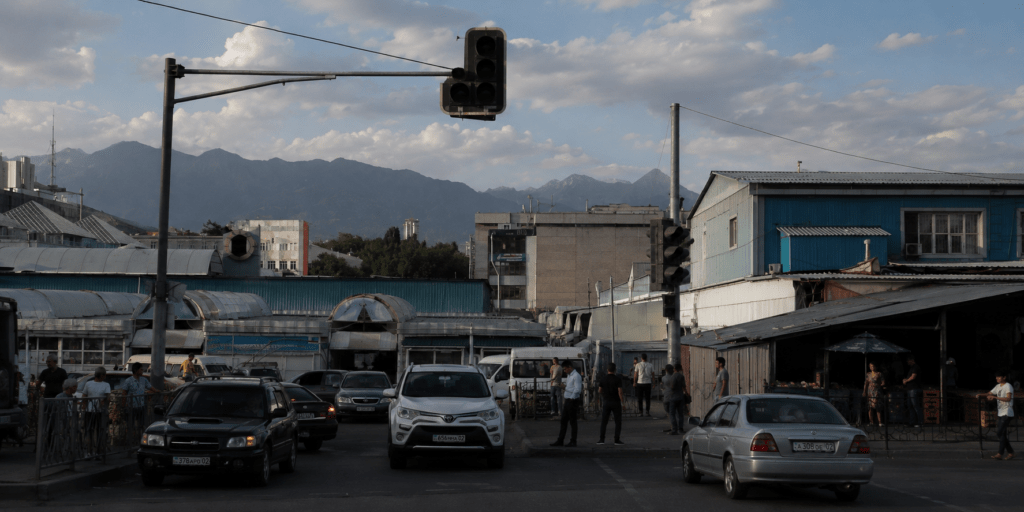
Kazakhstan and Kyrgyzstan have given differing accounts of what triggered the August 14 blackout that cut electricity across swathes of Central Asia. Three days later, the initiating event remains unresolved, and the times released by the two sides do not fit neatly into the same sequence. Kazakhstan’s national grid operator KEGOC says two hydrogenerators at Kyrgyzstan’s Toktogul Hydropower Plant, with a combined capacity of 600 MW, disconnected at 2:37 p.m. Kazakhstan time. KEGOC said the sudden loss of generation overloaded the North-East-South transit corridor, separating southern Kazakhstan from the rest of the national grid and the interconnected systems of Kyrgyzstan, Uzbekistan, and Tajikistan. A special commission is investigating the causes. Meanwhile, Kyrgyzstan’s National Electric Grid has given a different chronology. It said that at 3:34 p.m. Kyrgyzstan time, an external disconnection occurred on a high-voltage line linking the northern and southern parts of Kazakhstan’s power system. The Central Asian network then split into an isolated section, and Kyrgyzstan temporarily operated separately while automatic protection systems worked to protect equipment. The one-hour difference between the countries’ clocks makes the discrepancy clearer. Kazakhstan has used UTC+5 nationwide since 2024, while Kyrgyzstan uses UTC+6. That puts Kyrgyzstan’s reported line disconnection at 2:34 p.m. Kazakhstan time, three minutes before KEGOC’s stated 2:37 p.m. Toktogul shutdown. The two times may describe different stages of a fast-moving cascade, but they do not establish the same starting point. A third timestamp complicates the sequence. Alatau Zharyq Company said three 500 kV KEGOC transmission lines shut down at 2:38 p.m., and that those lines triggered automatic load-shedding and frequency protection in Almaty and the surrounding region. Taken together, the public statements leave a sequence of 2:34 p.m., 2:37 p.m., and 2:38 p.m. that investigators will need to reconcile. TCA reporters in Almaty and Bishkek experienced power cuts, while local media reported outages in Dushanbe, Khujand, and southern parts of Uzbekistan. In Kazakhstan, the disturbance affected consumers in the Zhambyl, Turkistan, Kyzylorda, Zhetysu, and Almaty regions, with further restrictions in Karaganda, Ulytau, and Abai. KEGOC said supplies were restored across the affected regions later that afternoon. The four-country impact reflects how tightly the systems are connected. Kazakhstan, Kyrgyzstan, Tajikistan, and Uzbekistan operate in parallel through the Central Asian power system. Cross-border links allow operators to share electricity and reserve capacity, but also mean that a sudden loss of generation or a major transmission line can be felt beyond one national grid before protection systems isolate the disturbance. Central Asia has been here before. In January 2022, a major blackout hit southern Kazakhstan, Kyrgyzstan, and Uzbekistan. The event also involved a sharp imbalance on the regional network and the separation of Kazakhstan’s northern and southern grids. Its precise starting point was disputed in the immediate aftermath. The regional grid dates to the Soviet period. Uzbekistan later withdrew from the old electricity ring, leaving Tajikistan largely isolated for years. Regional links have since been rebuilt; Tajikistan began reconnecting to the unified system in 2024. An Asian Development Bank project is adding...

Major Power Outage Hits Almaty as Blackouts Reported in Bishkek and Dushanbe

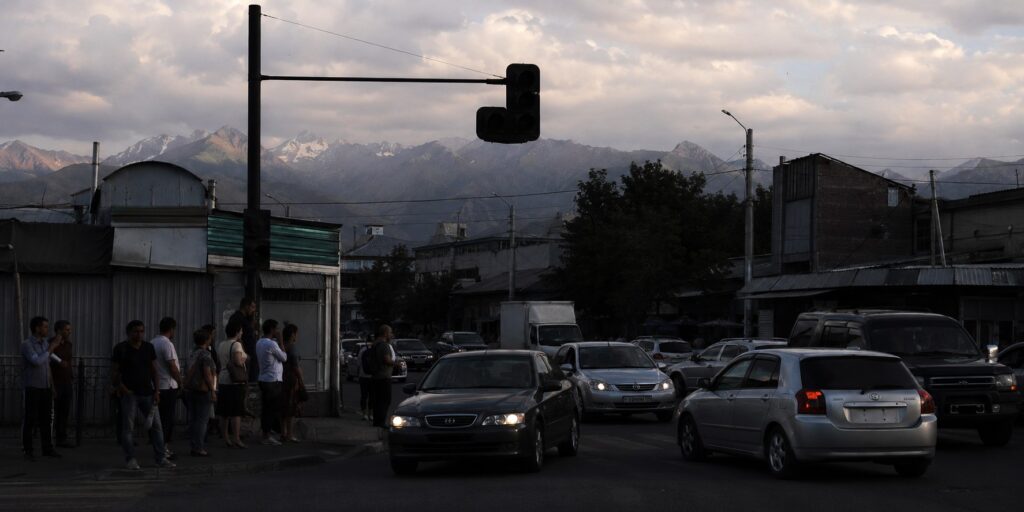
A major power outage hit Almaty and parts of the surrounding region on Friday afternoon after high-voltage transmission lines shut down, triggering automatic protection systems across the electricity network. The blackout affected Kazakhstan’s largest city, home to about 2.37 million people, and came amid reports of power cuts at around the same time in neighboring Kyrgyzstan and Tajikistan. According to Alatau Zharyq Company, the disruption began at 2:38 p.m. on August 14 when three 500 kV overhead transmission lines owned by national grid operator KEGOC shut down unexpectedly. The company identified the lines as L-5400, L-5300, and L-5320. Their shutdown activated special load-shedding and automatic frequency protection systems in Alatau Zharyq’s network, which the company said “led to the disconnection of electricity consumers in the city of Almaty and the Almaty Region.” The three lines form part of Kazakhstan’s North-South electricity transit system. There was no initial explanation from the company or KEGOC of what caused the three transmission lines to trip. Residents reported outages in communities across Almaty Region. Electricity failures were accompanied in some areas by disruption to internet and mobile services. TCA reporters on the ground confirmed outages across large parts of Bishkek. There was no immediate confirmation that the outages in Kazakhstan, Kyrgyzstan, and Tajikistan had the same root cause. KEGOC later said preliminary operational data indicated that the disruption was caused by a power surge from the Unified Power System of Central Asia. The company said the disturbance caused southern Kazakhstan and the interconnected Central Asian power system to separate into isolated operation. The underlying cause of the initial surge had not yet been established. The timing caused an additional complication in Almaty, where one of the city’s largest entertainment events of the year is scheduled for Friday evening. Ye, formerly known as Kanye West, is due to perform at Almaty’s Central Stadium on August 14 as part of his 2026 world tour. The blackout quickly produced a wave of jokes on social media. One image circulating widely depicted the rapper dressed as an electrician beside a fuse box, with “Yeezy Electrical” on his overalls. Other users joked that the city’s electricity had been diverted to prepare for the concert. The blackout also struck during a period of intensely hot summer weather, increasing the potential disruption for households and businesses reliant on air conditioning.
