Viewing results 1 - 6 of 3
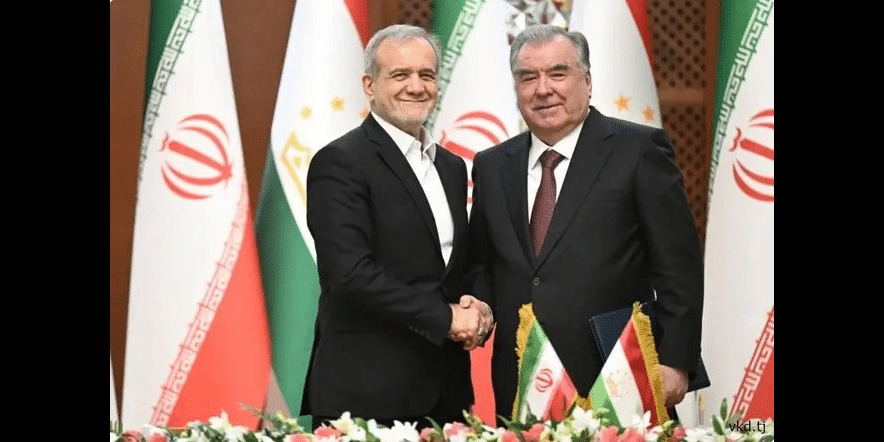
Tajikistan says a visa-free regime with Iran has been fully implemented, allowing citizens of each country to travel more freely to the other. As of October 5, Tajik and Iranian citizens with “ordinary foreign passports” can enter, transit through, and stay in the territory of the other country without a visa for up to 30 days within a 90-day period, Tajikistan’s Ministry of Foreign Affairs said. “This system is implemented through international border crossings, including land crossings, international airports, and air routes from third countries, in compliance with the requirements of the national legislation of both countries,” Tajikistan’s state Khovar news agency reported in a story about the ministry’s statement. The visa-free regime has been in the works for several years. Iran and Tajikistan signed a memorandum of understanding about it in 2023 and introduced the policy in stages. In early 2025, for example, Tajikistan said the measure applied only to air travel between the two countries and that citizens traveling through third countries and/or land border crossings still had to get a visa. Iran and Tajikistan don’t share a land border, but they have close economic and cultural links. Land travel between the two countries would require passing through Afghanistan, or Turkmenistan and Uzbekistan. Those countries have their own, separate visa and entry requirements. The full implementation of the visa-free regime between Iran and Tajikistan comes as other Central Asian countries look for ways to ease travel requirements and strengthen economic and other ties. Turkmenistan says it has introduced an online visa system from this month as part of a modernization drive, though some details about the new process are lacking.
Kazakhstan and Uzbekistan are moving to improve cross-border travel and trade by upgrading two road border checkpoints to international status and extending their operating hours to 24 hours a day. According to Kazinform, Kazakhstan’s Senate has ratified a protocol amending the 2006 agreement between the governments of Kazakhstan and Uzbekistan on border crossing points. The amendments change the status of the Syrdarya-Malik and Tselinny-Oqoltin checkpoints from bilateral crossings, which serve only the two countries, to international border posts open to travelers from other countries. The protocol also replaces the current daylight-only schedule with round-the-clock service at both crossings and expands the categories of vehicles permitted to use them. Under the new rules, the Tselinny-Oqoltin crossing will accommodate passenger vehicles, empty freight trucks, oversized and heavy vehicles, as well as commercial cargo. The Syrdarya-Malik crossing will be open to passenger cars and empty freight vehicles but will not handle commercial goods. According to the Senate committee’s conclusion, the changes, together with the ongoing modernization of border infrastructure along the Kazakhstan-Uzbekistan frontier, are expected to distribute passenger and freight traffic more evenly and improve the efficiency of border operations. The move has also received support in Kazakhstan’s lower house of parliament. As reported by 24KZ, deputies in the Mazhilis approved the amendments. Transport Minister Nurlan Sauranbayev said the measures would increase checkpoint capacity, make border crossings more convenient for travelers, and support tourism and transit links between the two neighboring countries. Kazakhstan’s Ministry of Transport added that implementing the changes will not require additional spending from the state budget.
Turkmenistan has opened several additional checkpoints on its border with Iran to allow foreign citizens to leave the country as fighting in the Middle East continues. The Russian Embassy in Ashgabat said the Turkmen authorities have opened four additional crossings along the Turkmen-Iranian frontier: Artyk–Lutfabad, Gaudan–Bajgiran, Akyayla–Incheburun, and Altyn Asyr–Incheburun. These operate alongside the Sarakhs crossing, which had already been used for evacuation transit. The move expands an overland route through Central Asia for foreigners seeking to leave Iran while air travel across parts of the Middle East remains disrupted. Uzbekistan has begun using this corridor to assist its citizens. The country’s Ministry of Foreign Affairs said diplomatic staff and official vehicles have been deployed to the Sarakhs crossing to receive Uzbek nationals arriving from Iran and organize their onward transport across Turkmenistan toward Uzbekistan. Uzbek outlet Daryo reported on March 4 that Uzbekistan had already repatriated 13 citizens from Iran via Turkmenistan. Russia has also pointed citizens toward the Turkmen route. The Russian Embassy in Ashgabat said its citizens unable to leave Iran by air could exit through Turkmenistan and should register with the Russian Embassy in Tehran, which is coordinating assistance for citizens inside Iran. The embassy noted that Turkmenistan maintains strict entry rules and normally requires special permits for foreign visitors. Despite those restrictions, the country has previously allowed evacuation transit from Iran during earlier regional crises. The additional crossings create another evacuation corridor alongside the route from Iran into Azerbaijan through the Astara border crossing on the Caspian coast. Foreign nationals have already used that crossing to leave Iran in recent days, including citizens from Central Asia. The Turkmenistan route provides a more direct path back into the region for evacuees traveling toward Uzbekistan and other Central Asian countries. Turkmenistan shares a 1,148-kilometer border with Iran. Ashgabat, the Turkmen capital, sits only about 25 kilometers north of the frontier, and several transport links connect the two countries. Sarakhs functions as an established rail and road gateway used for trade and freight movement between the two countries. In recent years, Turkmenistan and Iran have also discussed expanding rail and freight transit through the Sarakhs crossing as part of broader regional transport corridors linking Central Asia to southern markets. Turkmenistan also exports natural gas to northern Iran under swap arrangements in which Tehran delivers equivalent volumes to Azerbaijan, which could disrupt regional logistics and energy flows. The expansion of border crossings increases the capacity for organized departures from Iran and provides foreign governments with an additional land route when other exit corridors become congested. For Central Asian governments, the immediate priority remains the safe movement of their nationals out of the conflict zone. The opening of additional Turkmen checkpoints provides another corridor linking Iran to Central Asia and may ease pressure on evacuation routes through the South Caucasus.