• KGS/USD = 0.01144 0%
  • KZT/USD = 0.00216 0%
  • TJS/USD = 0.10698 0%
  • UZS/USD = 0.00008 0%
  • TMT/USD = 0.28530 0%
  • KGS/USD = 0.01144 0%
  • KZT/USD = 0.00216 0%
  • TJS/USD = 0.10698 0%
  • UZS/USD = 0.00008 0%
  • TMT/USD = 0.28530 0%
  • KGS/USD = 0.01144 0%
  • KZT/USD = 0.00216 0%
  • TJS/USD = 0.10698 0%
  • UZS/USD = 0.00008 0%
  • TMT/USD = 0.28530 0%
  • KGS/USD = 0.01144 0%
  • KZT/USD = 0.00216 0%
  • TJS/USD = 0.10698 0%
  • UZS/USD = 0.00008 0%
  • TMT/USD = 0.28530 0%
  • KGS/USD = 0.01144 0%
  • KZT/USD = 0.00216 0%
  • TJS/USD = 0.10698 0%
  • UZS/USD = 0.00008 0%
  • TMT/USD = 0.28530 0%
  • KGS/USD = 0.01144 0%
  • KZT/USD = 0.00216 0%
  • TJS/USD = 0.10698 0%
  • UZS/USD = 0.00008 0%
  • TMT/USD = 0.28530 0%
  • KGS/USD = 0.01144 0%
  • KZT/USD = 0.00216 0%
  • TJS/USD = 0.10698 0%
  • UZS/USD = 0.00008 0%
  • TMT/USD = 0.28530 0%
  • KGS/USD = 0.01144 0%
  • KZT/USD = 0.00216 0%
  • TJS/USD = 0.10698 0%
  • UZS/USD = 0.00008 0%
  • TMT/USD = 0.28530 0%

Viewing results 1 - 6 of 36

Traffic Jam of 1,500 Trucks Reported at Kazakhstan-China Border Crossing

Approximately 1,500 freight trucks have been stranded at the Nur Zholy border checkpoint between Kazakhstan and China, Nur.kz has reported, citing the State Revenue Committee (SRC) of Kazakhstan. According to the SRC, the congestion occurred despite a prior agreement with China to allow at least 800 trucks to pass through the crossing daily, with plans to increase that figure to 1,000 by year-end. However, from November 8 to 12, the actual number of vehicles processed by the Chinese side averaged only 700 to 750 per day. This shortfall was cited as the primary reason for the backlog on the Kazakh side. Compounding the issue, repair and installation work at the Kalzhat-Dulaty crossing significantly reduced its capacity for about a week. As a result, part of the freight traffic was diverted to Nur Zholy, placing additional pressure on its infrastructure. To alleviate the congestion, authorities have implemented a temporary adjustment to the electronic queue system. Starting November 13, daily vehicle entries will be capped at 650 to ensure a more balanced distribution of traffic and to support operational stability. The SRC stated that the situation is under constant monitoring and that negotiations with Chinese officials have resulted in mutual agreement on measures to improve border throughput. In May, President Kassym-Jomart Tokayev issued a formal reprimand to then Transport Minister Marat Karabayev for persistent problems at border crossings and delays in key transit infrastructure projects. Karabayev was dismissed from his post the following month.

Turkmen Border Guards Delay Medical Aid for Seriously Injured Man at Shavat Checkpoint

At the border between Turkmenistan and Uzbekistan, a seriously injured man was forced to wait for hours at the Shavat checkpoint after Turkmen border guards refused to allow immediate medical evacuation while verifying his documents. The incident involved a married couple from Kunya-Urgench, Turkmenistan, who were en route to visit relatives in Uzbekistan’s Andijan region when they were involved in a car accident on October 13. The man, who was sitting in the front seat, sustained multiple injuries, including broken ribs, a fractured shoulder and foot, and numerous bruises and lacerations. His wife, who was in the back seat, suffered only minor bruises. Following the accident, both were taken to the Khorezm Regional Hospital in Urgench, Uzbekistan, where the man underwent treatment for nine days. His injuries required extensive casting. On October 22, an Uzbek medical commission declared him fit for transport and approved his transfer to Turkmenistan for further treatment. An ambulance transported the patient to the Shavat checkpoint, accompanied by a doctor and his wife. At approximately 11:00 a.m., Turkmen border guards carried the man, still on a stretcher, across the border, assuring the family that an ambulance had already been dispatched from Dashoguz. However, no medical team arrived for another five hours. The man remained on a stretcher on the ground beside the border post until 4:00 p.m., while his wife repeatedly pleaded with officers to call the ambulance again. Although the border guards assisted the man twice when he needed to relieve himself, they did not provide medical assistance. It later emerged that officials were conducting background checks, verifying the authenticity of the couple’s visas, and contacting Ashgabat as well as the Uzbek embassy to confirm the couple’s stated purpose of visiting relatives rather than engaging in commercial activity. When the ambulance eventually arrived, yet another obstacle emerged: Dashoguz Regional Hospital refused to admit the patient, citing concerns over the validity of the diagnosis and the origin of the medical documentation. Only after the intervention of higher authorities was the man finally admitted for treatment.

Tajikistan and the Taliban – Talking and Fighting

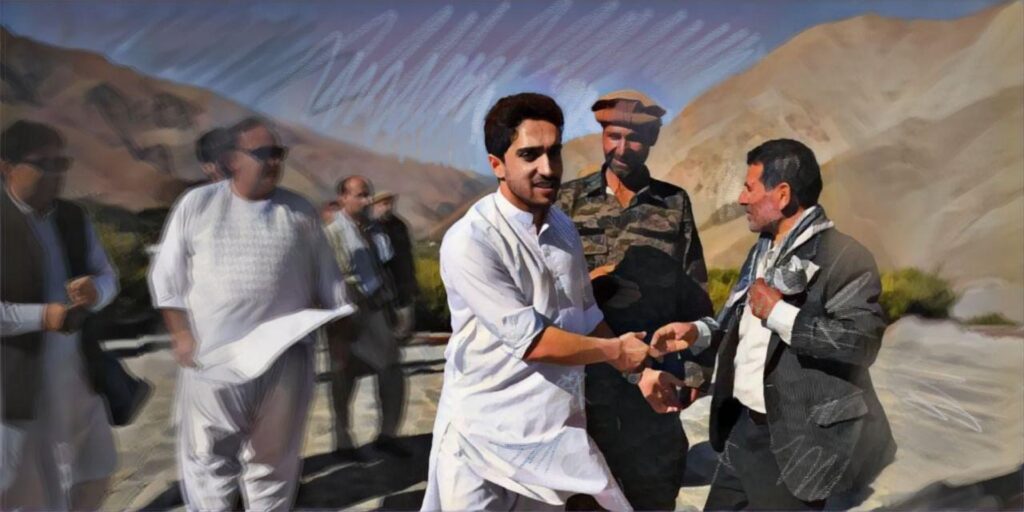
Peaceful coexistence is turning out to be complicated for Tajikistan and the Taliban government in Afghanistan. The Tajik government has viewed the Taliban as a threat since the militant group appeared in Afghanistan in the mid-1990s. But now that modest efforts are underway to establish some sort of amicable ties, there has been an uptick of violence directly involving the two sides along the Tajik-Afghan border. Let’s Keep This Between Us Tajikistan is the lone government in Central Asia that remained hostile to the Taliban after the latter returned to power in Afghanistan in August 2021. In the weeks that followed, the Taliban again exerted control over Afghanistan, and the Tajik government and the Taliban sent reinforcements to their common border. Russia and Pakistan had to intervene to ease tensions. The other Central Asian states, Kazakhstan, Kyrgyzstan, Turkmenistan, and Uzbekistan, have all established a business relationship with the Taliban government since the Taliban again seized control, but Tajikistan has remained aloof. Which is why the visit of Muhammad Yusuf Vafo, the governor of Afghanistan’s northern province of Balkh, to the Tajik capital Dushanbe on October 23 came as such a surprise. The Tajik government did not say anything about Vafo’s trip. The independent Tajik news agency Asia-Plus cited Afghan media as reporting on the visit, during which Vafo met with the head of Tajikistan’s National Security Committee (GKNB), Saimumin Yatimov. Vafo and Yatimov reportedly discussed ways to improve ties in a variety of spheres and pledged not to let any “hostile elements” use their territory to plot or carry out attacks on the country. An estimated several hundred Jamaat Ansarullah militants of Tajik origin continue to operate in Afghanistan. The group allied with the Taliban during the last years foreign forces were in Afghanistan, propping up the government of Ashraf Ghani, and stayed in Afghanistan after the Ghani government fell. Jamaat Ansarullah fighters were among the reinforcements the Taliban sent to the Tajik border during the weeks of tension in late 2021. There were reports soon after the Taliban returned to power that Tajikistan was aiding the National Resistance Front (NRF), a mainly ethnic Tajik group of former government soldiers who continue to wage a guerrilla campaign against the Taliban. NRF leader Ahmad Masoud, the son of the legendary Afghan field commander and ethnic Tajik, Ahmad Shah Masoud, has been in Dushanbe several times since August 2021, and there was a report that the NRF opened an office in Dushanbe in October that year. Shortly after Vafo’s visit to Dushanbe, Taliban sources in Balkh Province told the Pakistani-based Khorasan Diary website that Tajik authorities had banned the NRF, but the Tajik authorities stated that no such decision was made. Yatimov’s meeting with Vafo was not the first time the Tajik GKNB chief had met with Taliban representatives. In September 2024, Yatimov went to Kabul to hold security talks with Taliban officials, though the Tajik authorities never confirmed that meeting. Both parties are concerned about militants from the Islamic State of...

Tajik Border Guards Clash with Taliban Fighters Along Afghan Border

Armed clashes erupted between Tajik border guards and Taliban fighters on October 25 along the Tajik-Afghan frontier, according to local sources cited by the Afghan outlet 8 Subh. The confrontation reportedly occurred in the Davanga district of Shahr-e Buzurg, located in Afghanistan’s Badakhshan province. The dispute reportedly stemmed from disagreements over water diversion from the Amu Darya river, which serves as part of the natural boundary between Tajikistan and Afghanistan. The region is also home to Chinese-operated gold mining projects, further complicating the security landscape. Sources on the ground reported casualties and injuries, although official figures have not yet been released. The Tajik government has not issued an official statement. In response to the incident, Taliban representatives in Badakhshan held a meeting with the province’s appointed governor, Ismail Ghaznawi. This is not the first escalation in the area. On August 24, a shootout occurred near a Chinese-operated gold mining facility on the Afghan side of the border. That conflict was halted following emergency negotiations between the two sides, although accusations of harboring hostile groups persisted. The latest incident comes just days after a Taliban delegation visited Dushanbe. Led by Balkh province's Governor Yusuf Wafa, the delegation met with Tajikistan’s National Security Council Chairman Saimumin Yatimov and the Chairman of the Council of Ulemas, Saidmukarram Abdulkodirzoda. Despite this diplomatic contact, Tajikistan remains the only Central Asian country that has not recognized the Taliban government. Dushanbe continues to call for the formation of an inclusive government in Afghanistan and the protection of human rights. Nonetheless, limited trade and humanitarian engagement between the two countries persist. The Afghan embassy in Dushanbe is still headed by a diplomat appointed by the former government, while the Afghan consulate in Khorog is administered by a representative of the current Taliban-led administration. Tajikistan, in turn, maintains its embassy and consulate in Afghanistan.

Uzbekistan Says Border Troops Acted Lawfully in Shooting of Two Kyrgyz Citizens

Uzbekistan’s Border Troops have confirmed that Uzbek servicemen acted lawfully during a fatal shooting near the Kyrgyz-Uzbek border on August 15, which resulted in the deaths of two Kyrgyz nationals. The official statement was released by the press service of the Border Troops under the State Security Service on September 4. According to the report, the incident occurred near the Ugam-Chatkal nature reserve in Tashkent region’s Bostanlyk district. Border patrol officers reportedly spotted two unidentified individuals in a restricted area near the state boundary. When ordered to stop, the individuals attempted to flee. Border guards fired several warning shots into the air, but the individuals continued moving toward the border. Weapons were then used “as a last resort,” according to the statement. Both individuals were wounded and died at the scene, despite first aid being administered by border personnel. A search of the area revealed a tent, three horses, food supplies, and tracks indicating the presence of a third individual who reportedly fled back into Kyrgyz territory. The border services of both Kyrgyzstan and Kazakhstan were immediately notified. On August 31, authorities confirmed the deceased were Kyrgyz citizens, and their bodies were returned to their families. A joint site inspection by Uzbek and Kyrgyz border officials was conducted on September 2-3. Following the inspection, a bilateral commission concluded that the Uzbek border patrol had acted in accordance with national law and that the individuals had illegally crossed the state border. Both sides agreed to continue investigating the identity of the third individual and to pursue further action as appropriate.

Two Kyrgyz Citizens Shot Dead by Uzbek Border Guards Near Tripoint Frontier

According to the Kyrgyz Border Service, two Kyrgyz citizens were shot and killed on August 15 near the junction of the Kyrgyz, Uzbek, and Kazakh borders after allegedly failing to comply with Uzbek border guards during an attempted detention. Their bodies were returned to Kyrgyzstan via the Baymak checkpoint, and authorities from both countries are conducting a joint investigation. The two men, residents of Aygyr-Zhal village in Kyrgyzstan’s Chatkal District, were reported missing on August 25. During bilateral consultations held three days later, the Uzbek authorities informed their Kyrgyz counterparts that on August 15, an Uzbek border patrol had encountered two unidentified individuals in the border zone. According to the Uzbek side, the men ignored orders to stop, prompting border guards to open fire. Both men sustained fatal injuries. On August 31, family members of the deceased traveled to Uzbekistan to identify the bodies, which were subsequently returned to Kyrgyzstan for forensic examination. Uzbek officials also expressed their readiness to return the men's belongings, including three horses and a tent. Authorities in both countries have confirmed that the incident will be subject to a formal investigation, with its findings to be made public. The shooting follows the resolution of a decades-long border demarcation process involving Kyrgyzstan, Uzbekistan, and Tajikistan. In March 2025, after nearly twenty years of negotiations, the three countries agreed on the official tripoint demarcation during talks in Dushanbe. While that agreement was hailed as a breakthrough in regional cooperation, the recent incident underscores the lingering sensitivities and security challenges along portions of the border.