From Bukhara to Venice: How Uzbekistan Is Building a Contemporary Art Scene
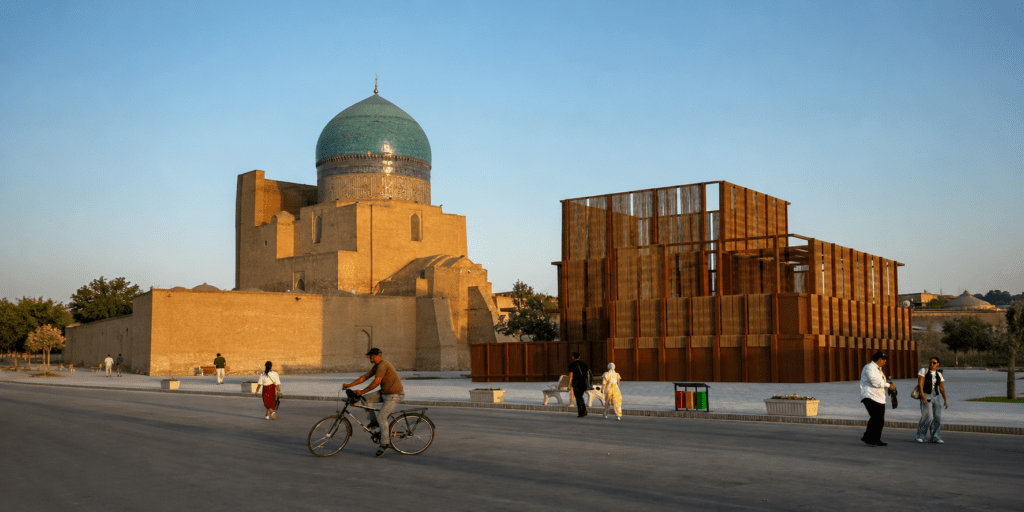
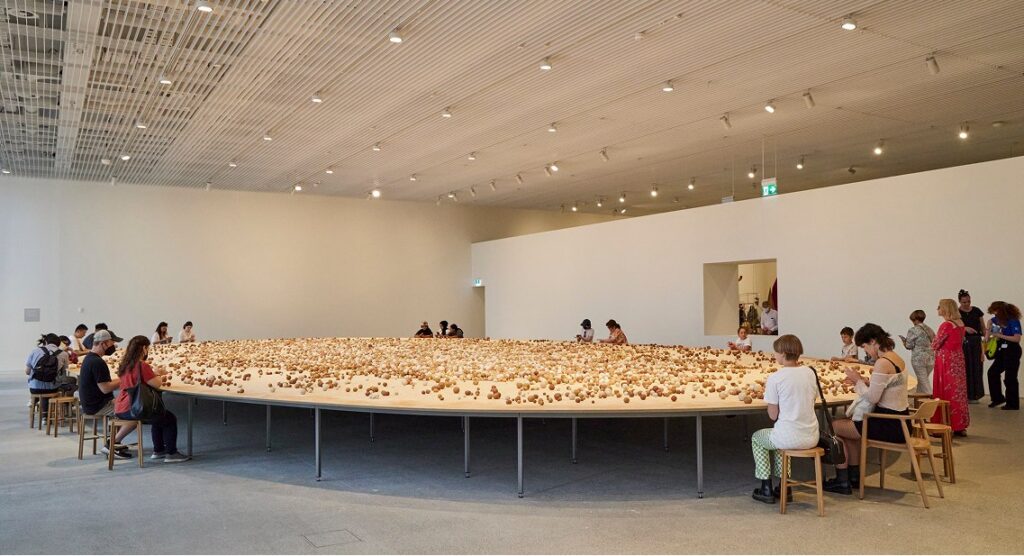
Uzbekistan has long known how to attract foreign visitors with its past – Samarkand, Bukhara, the Silk Road, and Islamic architecture. Now the country is trying to interest the world in what it is creating today. In just a few years, Uzbekistan has launched the Bukhara Biennial and established a national pavilion at the Venice Biennale. On September 6, the country’s first permanent center for contemporary art opened in Tashkent. The Centre for Contemporary Arts Tashkent (CCA Tashkent) occupies a 1912 industrial building that once served as a diesel station and tram depot. French architecture firm Studio KO preserved its industrial character while incorporating local materials and craft techniques. Sheikha Al Mayassa bint Hamad bin Khalifa Al Thani, chairperson of Qatar Museums, attended the opening. Three days earlier, Qatar Museums and the Uzbekistan Art and Culture Development Foundation launched a five-year collaboration covering exhibitions and artist residencies, professional development for museum specialists, and work with Islamic heritage. For the young Tashkent center, this offers a route into established international museum networks. Over the past two decades, Qatar has built one of the Middle East’s most prominent museum networks. The connection with Doha could give Tashkent access to artists, curators, and museum networks developed over years. [caption id="attachment_55705" align="aligncenter" width="819"] Image: ccat.uz[/caption] The Foundation Behind the Push One organization stands behind several of Uzbekistan’s major contemporary art projects: the Uzbekistan Art and Culture Development Foundation (ACDF). It organizes the Bukhara Biennial, oversees the new center in Tashkent, and presents the country’s national pavilion at the Venice Biennale. The foundation was established in 2017 and now operates within the Presidential Administration. It is headed by Gayane Umerova, who also leads the administration’s Department of Creative Economy and Tourism. The foundation’s projects have also received support from Saida Mirziyoyeva, head of the Presidential Administration. That context helps explain where the funding and scale come from. Contemporary art in Uzbekistan is developing with direct state support, while exhibitions and biennials have become part of a broader effort to reshape the country’s cultural image abroad. Bukhara provided the first major test. In 2025, the ancient city hosted its first contemporary art biennial, Recipes for Broken Hearts. Works were installed among madrasas, mosques, and other buildings in Bukhara’s historic center, a UNESCO World Heritage Site. According to the organizers, the biennial drew more than 1.8 million visitors over its run. It was an unusual experiment for the region: contemporary art was not separated from the architecture that has drawn tourists to Bukhara for decades, but placed directly inside it. Tashkent is trying something different. Here, artists now have a permanent space where they can not only exhibit but also work. [caption id="attachment_55708" align="alignnone" width="1024"] ccat.uz[/caption] From Uzbek Ceramics to Kimsooja The center’s inaugural exhibition is called Hikmah – “Wisdom.” Curated by the center’s chief curator, Sara Raza, it explores craft, memory, material, and knowledge passed between generations. Among the participating artists is Shokhrukh Rakhimov, who grew up in a family of Uzbek ceramicists. His work continues that tradition...