• KGS/USD = 0.01143 0%
  • KZT/USD = 0.00202 0%
  • TJS/USD = 0.10599 -0.19%
  • UZS/USD = 0.00008 0%
  • TMT/USD = 0.28575 0%
  • KGS/USD = 0.01143 0%
  • KZT/USD = 0.00202 0%
  • TJS/USD = 0.10599 -0.19%
  • UZS/USD = 0.00008 0%
  • TMT/USD = 0.28575 0%
  • KGS/USD = 0.01143 0%
  • KZT/USD = 0.00202 0%
  • TJS/USD = 0.10599 -0.19%
  • UZS/USD = 0.00008 0%
  • TMT/USD = 0.28575 0%
  • KGS/USD = 0.01143 0%
  • KZT/USD = 0.00202 0%
  • TJS/USD = 0.10599 -0.19%
  • UZS/USD = 0.00008 0%
  • TMT/USD = 0.28575 0%
  • KGS/USD = 0.01143 0%
  • KZT/USD = 0.00202 0%
  • TJS/USD = 0.10599 -0.19%
  • UZS/USD = 0.00008 0%
  • TMT/USD = 0.28575 0%
  • KGS/USD = 0.01143 0%
  • KZT/USD = 0.00202 0%
  • TJS/USD = 0.10599 -0.19%
  • UZS/USD = 0.00008 0%
  • TMT/USD = 0.28575 0%
  • KGS/USD = 0.01143 0%
  • KZT/USD = 0.00202 0%
  • TJS/USD = 0.10599 -0.19%
  • UZS/USD = 0.00008 0%
  • TMT/USD = 0.28575 0%
  • KGS/USD = 0.01143 0%
  • KZT/USD = 0.00202 0%
  • TJS/USD = 0.10599 -0.19%
  • UZS/USD = 0.00008 0%
  • TMT/USD = 0.28575 0%
15 February 2026

Viewing results 1 - 6 of 8

A Breakout Year for Contemporary Art in Kazakhstan

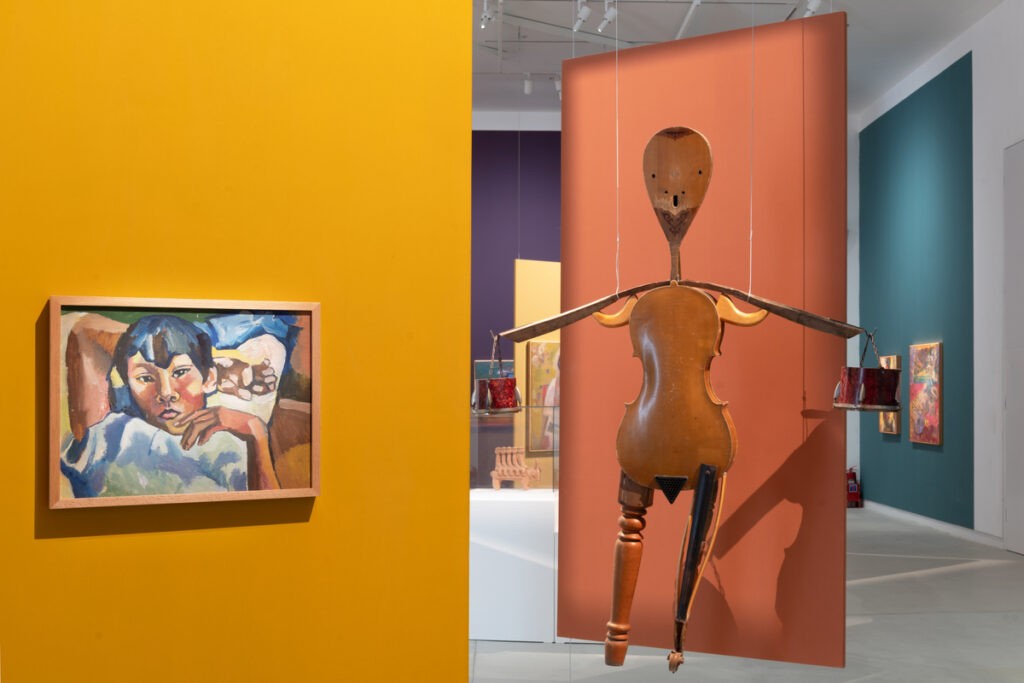
The year 2025 marked not only a busy period for contemporary art in Kazakhstan but also a decisive acceleration. Art moved beyond professional circles, claimed urban spaces, entered international agendas, and ceased to be a conversation “for insiders only.” The Kazakhstani art scene spoke with growing confidence both at home and abroad. New institutions, landmark exhibitions, festivals, and global collaborations signaled a pivotal shift: contemporary art has become a visible and integral component of the country’s cultural fabric. New Museums and Art Spaces in Kazakhstan Geographically, Almaty emerged as the epicenter of contemporary art activity in 2025. The city saw the opening of key institutions that became new focal points for artists, curators, and audiences. Opening of the Almaty Museum of Arts (ALMA) On September 12, 2025, the Almaty Museum of Arts (ALMA) opened its doors in Almaty, becoming one of the largest contemporary art museums in Central Asia. From the outset, ALMA signaled serious institutional ambitions, with a mission to support and study contemporary art processes and situate them within a global cultural context. The museum’s collection includes around 700 works, more than 70% of which are by notable Kazakhstani artists of the 20th century, such as Zhanatai Shardenov, Tokbolat Togyzbayev, Makym Kisameddinov, and Shaimardan Sariyev. Contemporary artists like Rustem Khalfin, Saule Suleimenova, and Said Atabekov are also prominently featured. Designed by the British architectural bureau Chapman Taylor, the 10,000-square-meter museum includes expansive exhibition halls (“The Great Steppe,” “Saryarka”), an Art Street atrium, storage and restoration facilities, and a creative workshop, setting a new standard for museum infrastructure in the region. [caption id="attachment_42431" align="aligncenter" width="1200"] Installation view of "I Understand Everything" – Almagul Menlibayeva (12 September 2025 - May 2026), Almaty Museum of Arts; image: Alexey Naroditsky[/caption] Tselinny Center of Contemporary Culture: Reclaiming a Building and Its Meaning Just days earlier, on September 5, 2025, the Tselinny Center of Contemporary Culture was inaugurated in Almaty. Housed in a restored 1964 Soviet-era cinema, the building underwent nearly seven years of renovation led by British architect Asif Khan. Notably, the facade’s unique sgraffito by artist Evgeny Sidorkin was preserved. The transformed space now features an exhibition hall, library, cafe, and workshop areas. Its opening was marked by the performance BARSAKELMES, with initial public access free of charge. Tselinny now operates three days a week and serves as a vital platform for exhibitions, education, and creative dialogue. [caption id="attachment_42433" align="aligncenter" width="2400"] The Tselinny Center of Contemporary Culture; image: SAPARLAS/Zhanarbek Amankulov[/caption] A. Kasteev State Museum of Arts: A New Status and Contemporary Focus Kazakhstan’s primary national art institution also redefined its role in 2025. Celebrating its 90th anniversary, the A. Kasteev State Museum of Arts was granted National Museum status. In conjunction with this milestone, a new gallery dedicated to contemporary Kazakhstani art from the independence period was unveiled. The exhibition Memory. Space. Progress brought together works from leading artists, charting the development of artistic practice from the 1990s to the present. Contributors included members of the Shymkent-based Red Tractor group, Almaty conceptualists,...

Almaty’s “Tselinny” Cultural Center Featured on Cover of Architectural Record

Kazakhstan’s architectural and cultural landscape has gained rare international recognition: Almaty’s Center for Contemporary Culture “Tselinny” has been featured on the cover of Architectural Record, the world’s oldest architectural magazine, published in the United States since 1891. International Recognition In its latest issue, journalist Andrew Ayers, who visited Almaty for Tselinny’s opening, described the project as “a new face for a former Soviet cinema” and “a gesture of reinterpreting Kazakhstan’s colonial past.” The article emphasized that the design team prioritized local context, with all work carried out by Kazakhstani contractors and interior contributions from young Almaty-based architects. [caption id="attachment_36890" align="aligncenter" width="351"] @Laurian Ghinițoiu[/caption] “Unlike many new museums, the architecture of the center sought to remain rooted in the local context,” the piece noted. Beyond its architectural merits, Architectural Record highlighted Tselinny’s institutional role, describing it as a platform for bolstering Kazakhstan’s still “fragile contemporary art scene.” The cover photograph was taken by Romanian photographer Laurian Ghinitoiu, renowned for his documentation of global architectural landmarks. History of the Building The center officially reopened in September 2025 following a seven-year reconstruction process that weathered both the COVID-19 pandemic and the legal troubles of its principal investor, businessman Kairat Boranbayev. Originally built in 1964 as the Tselinny cinema, the building underwent several renovations during the 1990s and early 2000s. A major overhaul in 2000 saw the main cinema hall divided, the foyer reconfigured, and a celebrated sgraffito mural by artist Yevgeny Sidorkin concealed behind plasterboard. [caption id="attachment_36892" align="aligncenter" width="353"] @Laurian Ghinițoiu[/caption] Boranbayev acquired the building in 2016. Four years later, a comprehensive reconstruction led by British architect Asif Khan began. The project restored the foyer’s original dimensions, revealed Sidorkin’s mural, though now in subdued tones, and transformed the cinema hall into a flexible space for exhibitions and screenings. Today, Tselinny includes a library, café, and workshop spaces. Notably, the reopening ceremony was led by Amantai Kusainbay, who has worked at the site since 1999 and continues to manage its daily operations.

Contemporary Art Center Tselinny Opens in Almaty

Summer in Almaty was rich with music festivals, concerts, and public projects, and this cultural momentum appears set to continue into fall. The grand opening of the Tselinny Center for Contemporary Culture last Friday marked the start of September with a major cultural milestone for the city. A Historic Space Reimagined At a recent press conference, organizers spotlighted the significance of this new cultural landmark within the evolving discourse of Central Asian contemporary art. Director Jamilya Nurkalieva led a short tour ahead of the official opening, sharing insights into the restoration and rethinking of the historic Tselinny cinema. Reinterpreting Almaty’s first panoramic cinema, an iconic piece of Soviet-era modernist architecture, was, in her words, about creating “an architectural pearl.” She described the new space as embodying “inclusivity and acceptance, the ultimate state of tranquility, almost like a hug.” [caption id="attachment_35968" align="aligncenter" width="960"] Image: TCA[/caption] [caption id="attachment_35950" align="aligncenter" width="8605"] Image: Atelier Cauchemar[/caption] The transformation was a deeply local effort. Nurkalieva emphasized the importance of working with Kazakhstani architects, builders, and craftsmen to ensure authenticity throughout the reconstruction process. Among the most unexpected discoveries during renovation were original works by renowned Soviet graphic artist Yevgeniy Sidorkin, long believed lost. His preserved sgraffito now welcomes visitors at the entrance. “Conceptually, we didn’t want the space to become a monument to Sidorkin alone, this is a place for new artists,” said Nurkalieva. “In some areas, craftsmen recreated panels from his sketches. We chose neutral tones so the sgraffito wouldn’t dominate the space.” [caption id="attachment_35983" align="aligncenter" width="782"] Image: tselinny.org[/caption] In just its first three days, Tselinny welcomed more than 12,000 visitors. The public experienced debut exhibitions, the interdisciplinary performance BARSAKELMES, and the launch of an educational program. The former Soviet cinema, now reimagined by British architect Asif Khan, has been reborn as a cultural hub for Almaty and the wider region. Tselinny will gradually extend its hours and programming over the coming months, with full operations set to begin in January 2026. [caption id="attachment_35966" align="aligncenter" width="1280"] Image: TCA[/caption] Asif Khan’s architectural vision reflects a concept of spatial unity rooted in the Kazakh cosmological balance of Tengri (sky) and Umai (earth), representing power and growth. Drawing inspiration from the steppe landscape, Khan has preserved the spirit of the original building while opening a new horizon for each visitor. Launching a New Dialogue Three exhibition projects opened in parallel with the center itself. These include installations by Gulnur Mukazhanova and Daria Temirkhan as part of BARSAKELMES; the architectural showcase From Sky to Earth: “Tselinny” by Asif Khan (curated by Markus Lahtinenmäki); and the archival project Documentation: Imagining Central Asia on the Map of Contemporary Art (curated by Asel Rashidova). These inaugural exhibitions are intended to initiate long-term dialogue between artists, institutions, and the broader public. A full program is available on Tselinny’s official website. The Return of Tselinny Once the largest cinema in Soviet Central Asia, Tselinny has now been transformed into a multifunctional art center. The revamped complex includes exhibition spaces, workshops, a library, a bookstore,...

Recipes for Broken Hearts: Bukhara Hosts Its First Contemporary Art Biennale

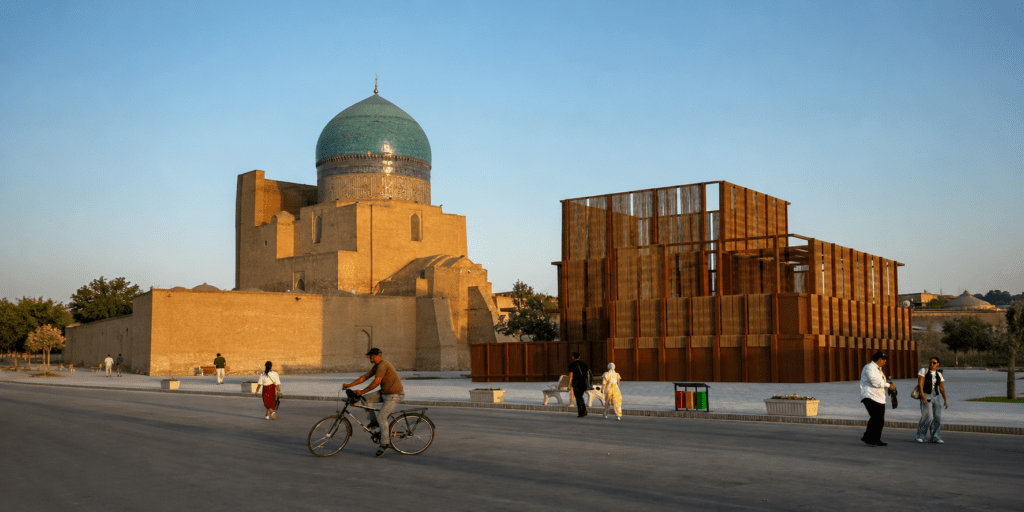
The heat of Bukhara’s old city does little to deter the crowds. Tourists squeeze through narrow lanes, pausing in the shade of centuries-old madrasas or beneath towering minarets. This September, the heart of the UNESCO Creative City of Crafts and Folk Art is hosting something new: the inaugural Bukhara Biennale of contemporary art. Running from September 5 to November 20, the biennale is already being hailed as one of Central Asia’s largest and most diverse art initiatives. Its title, Recipes for Broken Hearts, reflects both its ambition and tone, blending art, history, and community in a city long known for its spiritual and cultural heritage.   A Global Effort Rooted in Bukhara The Bukhara Biennale is commissioned by Gayane Umerova, Chairperson of the Uzbekistan Art and Culture Development Foundation, which has played a pivotal role in preserving and promoting the country’s cultural legacy. Artistic director Diana Campbell sees the biennale as a continuation of Bukhara’s historic role as a center of learning and exchange. [caption id="attachment_35919" align="aligncenter" width="900"] Isiriq (wild rue) is a traditional herbal medicine also widely used in purification rituals among Uzbeks. It is often burned or hung in homes to ward off misfortune and evil. In the installation, bunches of isiriq hanging from the roof appear to reflect this age-old custom; image: TCA, Sadokat Jalolova[/caption] “The heart’s creative power comes into view when we look to tenth-century Bukhara, a time and place that offer many ways of mending heartbreaks,” said Campbell. She referenced Bukhara’s legacy as the home of polymath Ibn Sina and a crossroads on the Silk Roads. “For more than a millennium, Bukhara has been a place where people gathered to seek knowledge, healing, and hope. We believe the city holds many extraordinary recipes in its heart.” The biennale unfolds in the newly developed Bukhara Cultural District, where restored monuments are paired with modern design, featuring contributions from architects Wael Al Awar and landscape designer Günther Vogt. From Jeddah to Bukhara: Palm Waste Becomes Structure A highlight of the biennale is the AlMusalla Prize-winning installation, a reimagined musalla, or prayer space, constructed entirely from palm tree waste. Originally built in Jeddah, the structure has been transported to Bukhara as a symbol of sustainability and reuse. [caption id="attachment_35922" align="aligncenter" width="1600"] AlMusalla Prize winning installation; image: TCA, Sadokat Jalolova[/caption] Christopher Blust, engineer at AKT II, explained the origins of the project: “We were inspired by the idea of courtyards as places of gathering. Even the Prophet Muhammad’s house in Medina began with a courtyard for prayer and community.” Equally important, he said, was the material itself. “Palm fronds are discarded and often burned. We asked: Why not return to how these were used centuries ago? We shredded them, pressed them into boards, and created structural timber. This is the world’s first project to use palm waste in this way.” Architect Nicolas Fayad of East Architecture Studio noted that their design was informed by Jeddah’s traditional materials, timber, mud, and stone, reinterpreted through modern technology. “Everything visible in...