


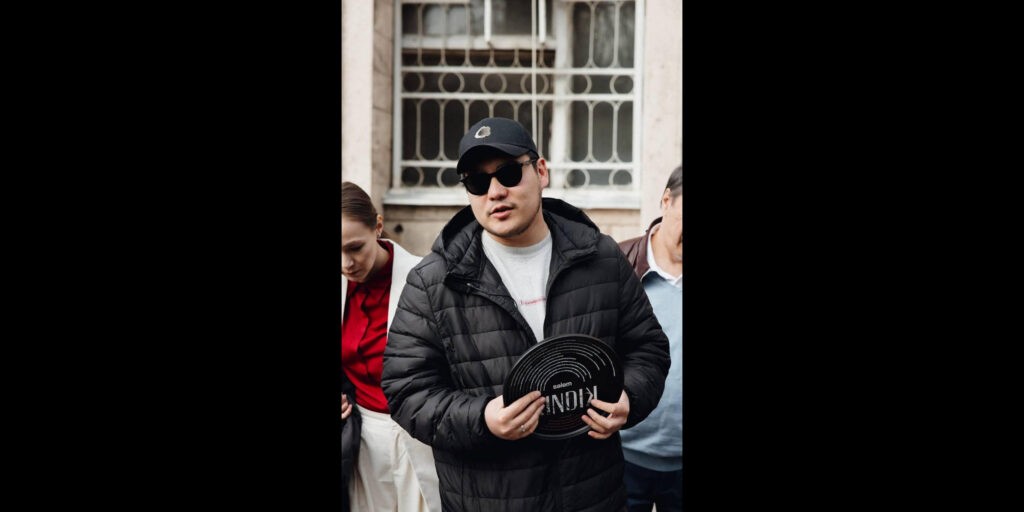
Kazakhstani Director Darkhan Tulegenov: “We Have Long Been Part of the Global Film Industry”
The Cord, the latest feature by Kazakhstani director Darkhan Tulegenov, will have its world premiere in the Vision section of the 31st Busan International Film Festival, held in South Korea from October 6 to 15. Developed from his series Kindik, the film has been described by its creators as a drama about blind maternal love, but further plot details remain under wraps. The Kazakhstani director’s recent television work also includes Mūnai and Khanskaya Okhota. Tulegenov studied acting before moving into directing, making eight short films and earning early recognition on the festival circuit before completing his first feature, Brothers, in 2022. In an interview with The Times of Central Asia, Tulegenov explained why filmmakers from Kazakhstan now have lessons of their own to share with international colleagues, how his acting education helps him on set, and how a director adapts when nature rewrites the plan, from unexpected snow in Aktau to the icy waters of the Caspian Sea. TCA: Your path into international cinema began while you were still a student. Which festival was your first? Tulegenov: Yes, essentially it all started with short films, which I began making while I was still a student. Before making my debut in full-length feature cinema, I made eight short films and several series. My short films won many awards around the world. My first trip abroad with one of my films was, I think, to Bishkek, to a short film festival, where I won the Grand Prix. That was the beginning. After that, I really traveled a lot thanks to cinema. TCA: One of those trips took you to Iran’s Fajr Film Festival. How did that experience influence you as a filmmaker? Tulegenov: In Iran, I participated in the Talent Campus program. It is similar to Berlinale Talents at the Berlin Film Festival, only at the Fajr Film Festival. They organize it for participants from Arab countries, Central Asia, other parts of Asia, and other regions. Well-known Iranian directors serve as mentors there: Majid Majidi was there, for example, and Asghar Farhadi had come the year before me. For a student, it is an amazing experience because you can attend lectures by masters of Iranian cinema while surrounded by people from all over the world. At some point, you realize that filmmakers everywhere actually speak the same language, and where you studied does not matter at all. You can study cinema in Iran, Kazakhstan, or America. The main thing is to speak the language of real cinema. [caption id="attachment_56009" align="aligncenter" width="1200"] All images courtesy of Darkhan Tulegenov[/caption] TCA: You also studied at the New York Film Academy. How different was that experience from studying in Kazakhstan? Tulegenov: Yes, it was what they called an “academic mobility program” at the Zhurgenov Academy, where I graduated. I don’t know whether it still exists, but at the time they sent us to Los Angeles for three months. The academy paid for our tickets, daily expenses, and other costs. For me, above all, it was an...
