• KGS/USD = 0.01143 0%
  • KZT/USD = 0.00213 0%
  • TJS/USD = 0.10593 0.47%
  • UZS/USD = 0.00008 0%
  • TMT/USD = 0.28571 0%
  • KGS/USD = 0.01143 0%
  • KZT/USD = 0.00213 0%
  • TJS/USD = 0.10593 0.47%
  • UZS/USD = 0.00008 0%
  • TMT/USD = 0.28571 0%
  • KGS/USD = 0.01143 0%
  • KZT/USD = 0.00213 0%
  • TJS/USD = 0.10593 0.47%
  • UZS/USD = 0.00008 0%
  • TMT/USD = 0.28571 0%
  • KGS/USD = 0.01143 0%
  • KZT/USD = 0.00213 0%
  • TJS/USD = 0.10593 0.47%
  • UZS/USD = 0.00008 0%
  • TMT/USD = 0.28571 0%
  • KGS/USD = 0.01143 0%
  • KZT/USD = 0.00213 0%
  • TJS/USD = 0.10593 0.47%
  • UZS/USD = 0.00008 0%
  • TMT/USD = 0.28571 0%
  • KGS/USD = 0.01143 0%
  • KZT/USD = 0.00213 0%
  • TJS/USD = 0.10593 0.47%
  • UZS/USD = 0.00008 0%
  • TMT/USD = 0.28571 0%
  • KGS/USD = 0.01143 0%
  • KZT/USD = 0.00213 0%
  • TJS/USD = 0.10593 0.47%
  • UZS/USD = 0.00008 0%
  • TMT/USD = 0.28571 0%
  • KGS/USD = 0.01143 0%
  • KZT/USD = 0.00213 0%
  • TJS/USD = 0.10593 0.47%
  • UZS/USD = 0.00008 0%
  • TMT/USD = 0.28571 0%

Viewing results 1 - 6 of 6

The American-Uzbek Business Council Launches in Washington

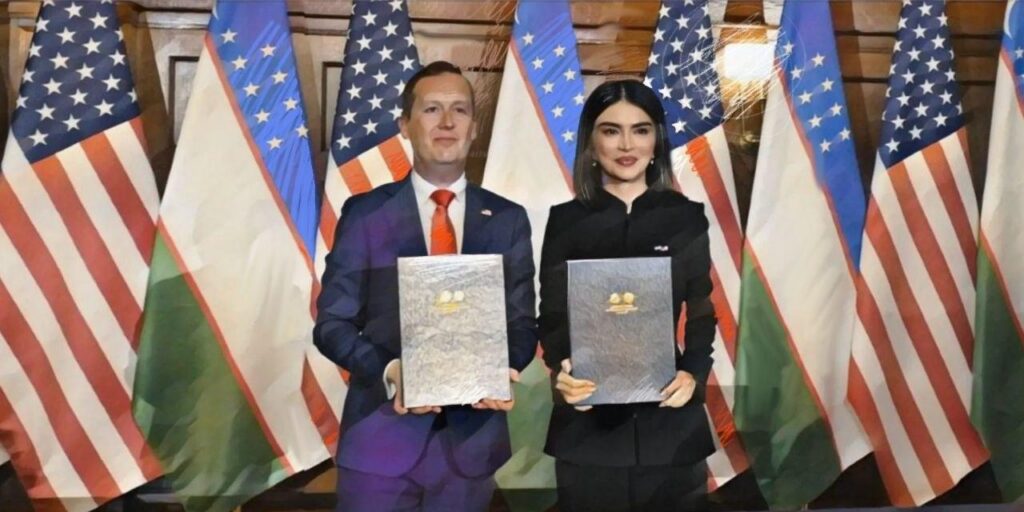
Washington D.C. - At the launch of the American-Uzbek Business and Investment Council in Washington on April 6, the most revealing line came early. Ambassador Sergio Gor, the White House’s special envoy for South and Central Asia, and Co-Chair of the Council, did not begin with trade statistics or a list of deliverables. He began with a blunt assessment of how the region has been treated in Washington. “For too long, this region has not found the attention that it deserves,” he said. That observation is hardly novel to anyone who follows Central Asia. What made it notable was the speaker and the setting. U.S. policy toward the region has often been episodic, driven at different times by Afghanistan, by Russia, by sanctions enforcement, or by concern over Chinese influence rather than sustained by a coherent regional economic strategy. Gor’s remarks suggested an attempt, at least by the current administration, to correct for that pattern. He was equally clear, however, that this was a political opening, not yet a settled doctrine. “Take this opportunity that the next two and a half years present,” he told the room, an unusually candid acknowledgment that Washington’s attention may be real without yet being durable. His other key formulation explained how the administration wants to make that attention count. “Never before in the history of the U.S. government has commercial diplomacy been such a major pillar of U.S. foreign policy,” Gor said. Whatever the phrasing, the intended shift was clear. Washington is signaling that in Central Asia, economic statecraft will not be treated as a side channel to politics, but as a primary instrument of policy. In that sense, the new council is less a ceremonial bilateral upgrade than a mechanism for turning political attention into projects, financing, and institutional follow-through. [caption id="attachment_46673" align="aligncenter" width="1600"] Image: TCA[/caption] Saida Mirziyoyeva, head of Uzbekistan’s presidential administration and the Uzbek co-chair of the council, answered that shift with a line that was just as pointed. “We are no longer at the stage where we speak about potential,” she said. “We are at the stage where we must deliver.” For a government that has spent years presenting Uzbekistan as a reforming economy open to outside capital, that was a significant change of emphasis. The argument is no longer that Uzbekistan deserves credit for opening up but that it now expects to be judged by execution. Her most substantive remarks were about institutions rather than ambition. The council matters, she said, because it should help “solve problems quickly, without unnecessary bureaucracy” and ensure that “no project is lost along the way.” That is a more serious claim than the language of partnership that usually fills these forums. Mirziyoyeva was effectively acknowledging the gap that often opens between political endorsement and project delivery. Uzbekistan’s challenge is no longer simply attracting attention from foreign partners but getting projects through financing, approvals, and implementation without losing momentum inside the state apparatus. That urgency reflects the scale of the opportunity. Uzbekistan, with a...

Uzbekistan and Afghanistan Establish Business Council to Boost Trade

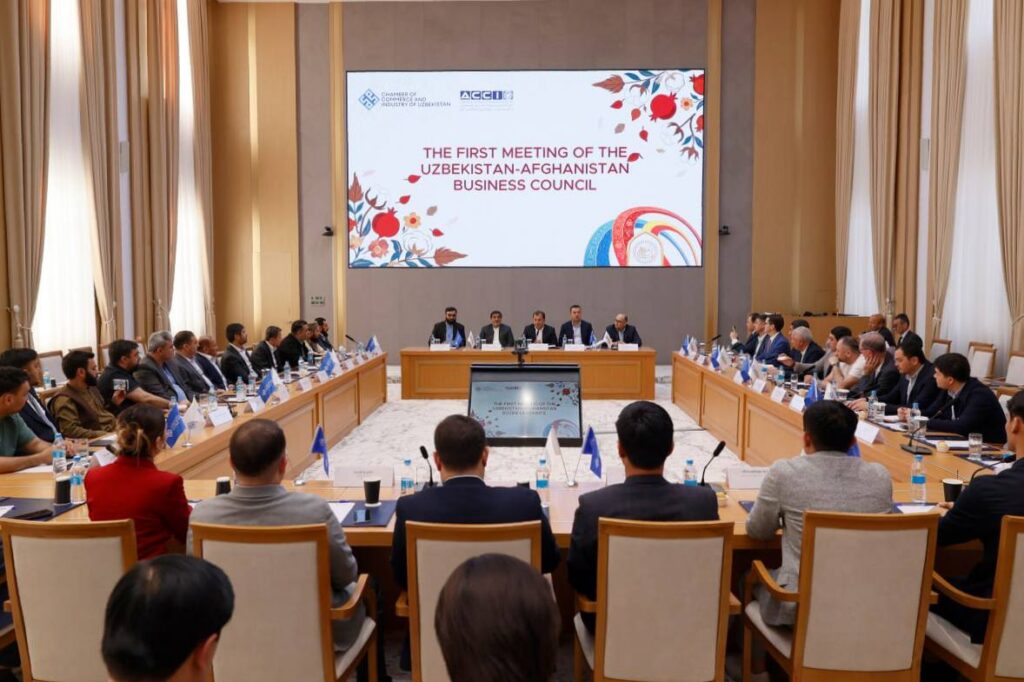
Uzbekistan and Afghanistan have established a joint Business Council aimed at strengthening trade and economic cooperation, according to Uzbekistan’s Chamber of Commerce and Industry. The council was formally launched on March 26 during a meeting in Tashkent attended by a delegation led by Mohammad Karim Hashimi, chairman of the Afghanistan Chamber of Commerce and Investment. The inaugural session brought together representatives from both countries’ business communities and relevant institutions. The council comprises 32 members. On the Uzbek side, participants include officials from the Chamber of Commerce and Industry and representatives of sectoral associations. The Afghan delegation includes members of the Chamber of Commerce and Investment as well as executives from leading private companies. Discussions focused on expanding bilateral trade, fostering direct business-to-business cooperation, and launching new joint projects. Priority sectors identified for collaboration include construction materials, pharmaceuticals, food production, textiles, electrical engineering, and petroleum products. Both sides set a target of increasing bilateral trade to $5 billion in the near term. To support this goal, they agreed on several priority measures, including expanding export capacity, introducing digital customs systems, improving financial and insurance services, and increasing transparency in trade procedures. Participants also emphasized the importance of regularly organizing exhibitions, business forums, and business-to-business meetings to strengthen ties between entrepreneurs and facilitate partnerships. Chairman of Uzbekistan’s Chamber of Commerce and Industry, Davron Vakhobov, highlighted the significance of the initiative, noting that it would help establish direct dialogue between businesses, create new partnerships, and boost investment activity. The creation of the Business Council builds on recent growth in economic ties between the two countries. Uzbekistan has described its relationship with Afghanistan as “friendly and constructive,” with bilateral trade reportedly increasing 2.5 times over the past five years-from $653 million in 2021 to $1.7 billion in 2025.