• KZT/USD = 0.00221
  • TJS/USD = 0.10860
  • UZS/USD = 0.00008
  • TMT/USD = 0.29760
  • KZT/USD = 0.00221
  • TJS/USD = 0.10860
  • UZS/USD = 0.00008
  • TMT/USD = 0.29760
  • KZT/USD = 0.00221
  • TJS/USD = 0.10860
  • UZS/USD = 0.00008
  • TMT/USD = 0.29760
  • KZT/USD = 0.00221
  • TJS/USD = 0.10860
  • UZS/USD = 0.00008
  • TMT/USD = 0.29760
  • KZT/USD = 0.00221
  • TJS/USD = 0.10860
  • UZS/USD = 0.00008
  • TMT/USD = 0.29760
  • KZT/USD = 0.00221
  • TJS/USD = 0.10860
  • UZS/USD = 0.00008
  • TMT/USD = 0.29760
  • KZT/USD = 0.00221
  • TJS/USD = 0.10860
  • UZS/USD = 0.00008
  • TMT/USD = 0.29760
  • KZT/USD = 0.00221
  • TJS/USD = 0.10860
  • UZS/USD = 0.00008
  • TMT/USD = 0.29760
04 November 2026

Viewing results 1 - 6 of 3

C5+1 and the Forgotten Geography of Central Asia

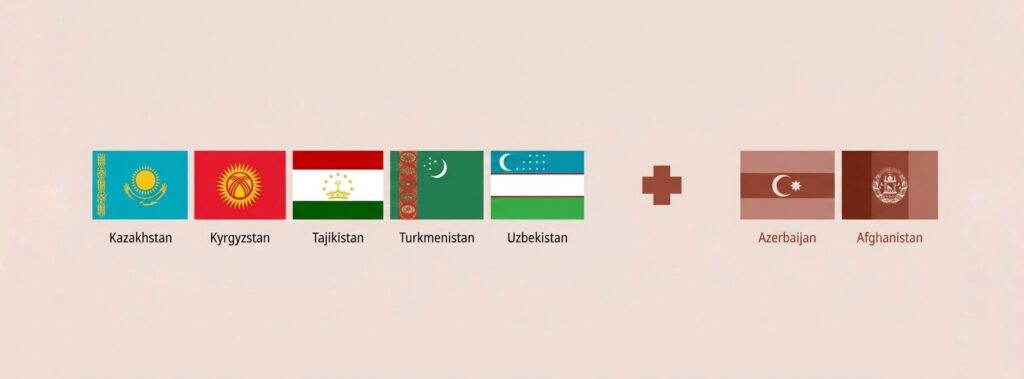
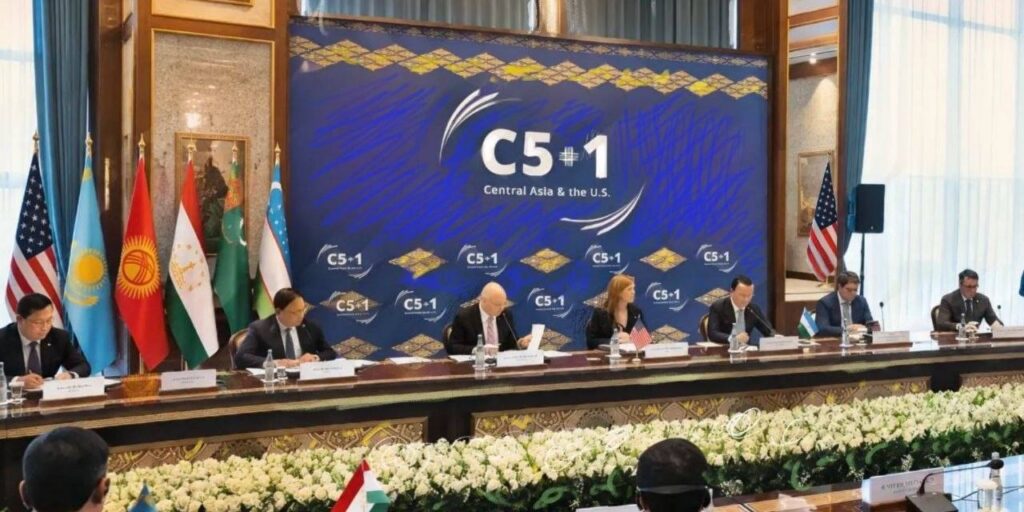
In modern diplomacy, Central Asia usually means five post-Soviet states: Kazakhstan, Kyrgyzstan, Tajikistan, Turkmenistan, and Uzbekistan. But how fixed are the region’s boundaries, and who gets to define them? Should Central Asia be understood as the five states that have emerged as a distinct political space? A broader historical and cultural region that includes Afghanistan, parts of Iran, western China, and Mongolia? Or an even more fluid system of economic, transportation, and strategic ties? New details about the origins of the C5+1 format involving the United States bring us back to precisely this question. Frederick Starr, one of the most consistent proponents of the Greater Central Asia concept, recently wrote that including Afghanistan was considered during early discussions of the American regional mechanism. In that case, the formula could have been C6+1. What makes this episode interesting is not that Afghanistan supposedly almost became the “sixth country of Central Asia.” More importantly, even before C5+1 was launched in 2015, there were different ways of understanding the region: political, historical and civilizational, and strategic. Those differences persist today, while closer relations with Afghanistan and Azerbaijan have once again raised questions about Central Asia’s boundaries. Political Central Asia and the C5 Politically, the definition is relatively clear. After the collapse of the Soviet Union, Kazakhstan, Kyrgyzstan, Tajikistan, Turkmenistan, and Uzbekistan gradually developed from a geographical grouping into a distinct political category. C5+1 reflects precisely this logic. The joint declaration adopted in Samarkand on November 1, 2015, established regular cooperation between the United States and the five Central Asian states. Afghanistan was part of the regional agenda but was not included in the format itself. The “five plus an external partner” model has since proliferated. Germany uses the Z5+1 formula, from the German Zentralasien. Similar regional mechanisms operate with Japan, South Korea, the European Union, China, India, Russia, Italy, the Gulf Cooperation Council, and other partners. The proliferation of these formats reflects the extent to which external partners increasingly treat the C5 as a regional actor in its own right, while the five countries themselves are also increasingly acting in that capacity. But political Central Asia is not the only way to view the region. As part of UNESCO’s multivolume History of Civilizations of Central Asia project, the region was understood much more broadly. This historical and cultural space included not only the five former Soviet republics but also Afghanistan, northeastern Iran, Pakistan, northern India, western China, and Mongolia. UNESCO specifically noted that these were not rigid political boundaries but an area shaped by long-standing cultural and historical ties. This does not offer a “correct” alternative map. Rather, it shows that the region’s political, historical, and civilizational boundaries do not necessarily coincide. It was against this background that Starr proposed the concept of Greater Central Asia in 2005. This represented a third, strategic way of viewing the region. His idea was less about redrawing the geographical map than about changing American policy. In Starr’s view, the five post-Soviet republics and Afghanistan should be...
Opinion: Central Asia Is More Than Minerals

For years, Central Asia was one of those regions that Washington periodically rediscovered and then forgot. Officials visited and announced new initiatives, but the relationship hardly changed. That is no longer the case. Many pundits see the current surge of American interest in Central Asia through the lens of transactional foreign policy: nowadays the focus has been on critical minerals, supply-chain security, and competition with China. Valid so far as it goes, this approach misses the larger story. Central Asia is not suddenly important because of its minerals or because Washington has decided that it is. Increasingly, Washington must pay attention to Central Asia because the region itself is changing, and in largely positive directions. Over three decades, American investors largely dismissed the region as too poorly governed and too distant. Now the region itself is working to change the conditions that made it unattractive. The transformation is far from complete, but it is real. When the Central Asian states emerged from the Soviet Union in 1991, they faced grave disadvantages. State enterprises dominated their economies, and they fell short of Western investors’ expectations in both the rule of law and transparency. While such problems have not disappeared, they are everywhere being worked on. Uzbekistan provides the clearest example. Since 2017, Tashkent has undertaken reforms to liberalize its economy and improve the environment for private investment. The World Bank now describes Uzbekistan as one of the world's top reformers. Kazakhstan has also built more sophisticated financial and regulatory institutions. Its goal is to position itself as a regional hub for logistics, energy, and finance. The World Bank's new 2026–31 country strategy emphasizes a "business-ready Kazakhstan," with greater private-sector participation, improved infrastructure, and better natural-resource management. The pace of change in Kyrgyzstan, Tajikistan, and Turkmenistan has been slower, for understandable reasons. Kyrgyzstan’s early political reforms long left the government rudderless, Tajikistan endured a five-year civil war, and Turkmenistan was stymied by Russia’s total control of its gas industry. Now these countries, too, are belatedly advancing. Central Asia has not become Switzerland. Corruption, political interference, and governance problems still afflict the countries’ economies, and the OECD continues to identify these as important obstacles to investment. The question is not whether Central Asia has solved these problems but whether it has changed enough to become investable. The answer increasingly is yes, it has. Moscow's offensive in Ukraine accelerated changes Washington had sought for decades. Secondary sanctions compelled Central Asians to develop new commercial avenues not subject to international restrictions. While Central Asian governments maintain important relations with Russia, they all seek pragmatic alternatives that reduce their former reliance on Moscow. The countries are expanding regional cooperation while reaching across the Caspian to the South Caucasus and beyond. The resulting Middle Corridor promises direct access to global markets. The measure of its success will be whether Kazakhstan and Turkmenistan gain trans-Caspian pipelines to transport their resources directly to Europe. In short, Central Asia is doing what Washington has long wanted it to do: become more...

Kazakhstan Confirms Tokayev Will Attend Miami G20 Summit

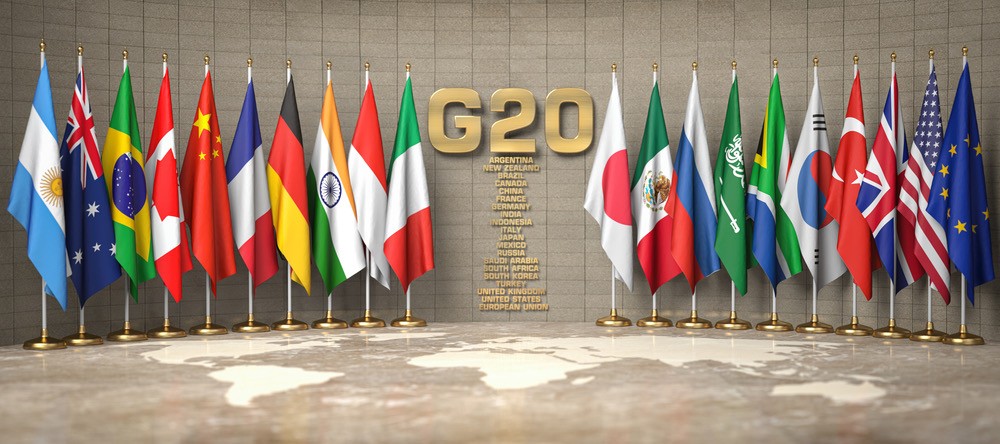
Kazakhstan’s Ministry of Foreign Affairs said on August 12 that President Kassym-Jomart Tokayev will attend the G20 Leaders’ Summit on December 14–15 at Trump National Doral Miami, President Donald Trump’s golf resort near Miami. Kazakhstan is not a member of the G20 and will attend as a guest of the United States, which holds the group’s presidency this year. Trump first said on December 23, 2025, that he would invite Tokayev and Uzbekistan’s President Shavkat Mirziyoyev following separate telephone calls with the two Central Asian leaders. In a Truth Social post, Trump said the relationship with both countries was “spectacular.” G20 hosts regularly invite countries outside the group to attend leaders’ summits. Two of Washington’s stated priorities for its G20 presidency are reducing regulatory burdens and expanding access to reliable, affordable energy. A third is developing new technologies, another area of recent U.S.-Kazakhstan cooperation. Kazakhstan is the world’s largest uranium producer, while American companies have pursued mineral and technology investments in the country. Relations between Astana and the Trump administration have grown closer. At the C5+1 summit in Washington in November 2025, Tokayev said Trump’s “wise and bold policy” deserved strong support worldwide and praised his “Make America Great Again” agenda. During the same visit, Kazakhstan announced that it would join the U.S.-brokered Abraham Accords, although it had maintained diplomatic relations with Israel since 1992. On January 22, Tokayev signed the charter establishing Trump’s Board of Peace. Uzbekistan has also been invited to the Miami summit, although as of August 13, Tashkent had not publicly confirmed that Mirziyoyev would attend. On June 25, Mirziyoyev met U.S. Trade Representative Jamieson Greer to discuss trade and investment, including continued U.S. support for Uzbekistan’s accession to the World Trade Organization.
