• KGS/USD = 0.01143 0%
  • KZT/USD = 0.00205 0%
  • TJS/USD = 0.10433 0.1%
  • UZS/USD = 0.00008 0%
  • TMT/USD = 0.28577 0%
  • KGS/USD = 0.01143 0%
  • KZT/USD = 0.00205 0%
  • TJS/USD = 0.10433 0.1%
  • UZS/USD = 0.00008 0%
  • TMT/USD = 0.28577 0%
  • KGS/USD = 0.01143 0%
  • KZT/USD = 0.00205 0%
  • TJS/USD = 0.10433 0.1%
  • UZS/USD = 0.00008 0%
  • TMT/USD = 0.28577 0%
  • KGS/USD = 0.01143 0%
  • KZT/USD = 0.00205 0%
  • TJS/USD = 0.10433 0.1%
  • UZS/USD = 0.00008 0%
  • TMT/USD = 0.28577 0%
  • KGS/USD = 0.01143 0%
  • KZT/USD = 0.00205 0%
  • TJS/USD = 0.10433 0.1%
  • UZS/USD = 0.00008 0%
  • TMT/USD = 0.28577 0%
  • KGS/USD = 0.01143 0%
  • KZT/USD = 0.00205 0%
  • TJS/USD = 0.10433 0.1%
  • UZS/USD = 0.00008 0%
  • TMT/USD = 0.28577 0%
  • KGS/USD = 0.01143 0%
  • KZT/USD = 0.00205 0%
  • TJS/USD = 0.10433 0.1%
  • UZS/USD = 0.00008 0%
  • TMT/USD = 0.28577 0%
  • KGS/USD = 0.01143 0%
  • KZT/USD = 0.00205 0%
  • TJS/USD = 0.10433 0.1%
  • UZS/USD = 0.00008 0%
  • TMT/USD = 0.28577 0%

Viewing results 1 - 6 of 25

The Board of Peace and Central Asia: Asserting Agency in a Fragmented Order

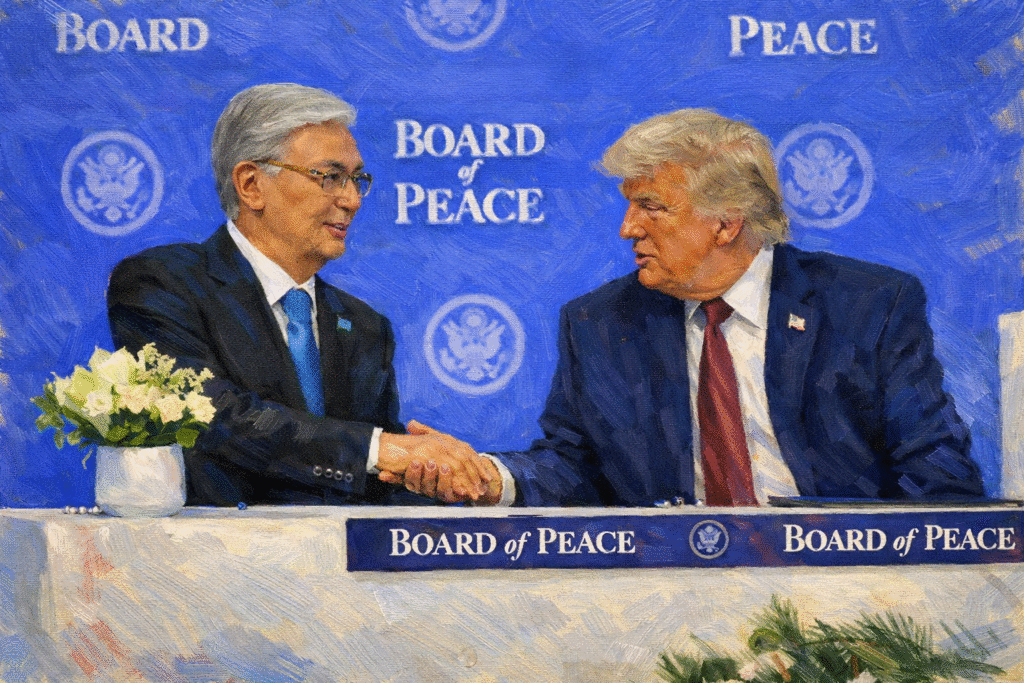
President Kassym-Jomart Tokayev’s speech at the inaugural meeting of U.S. President Donald Trump’s Board of Peace in Washington on February 19 was not only a foreign policy event, but one with significant domestic resonance. The initiatives announced include Kazakhstan’s participation in the reconstruction of Gaza, financial commitments, and readiness to send peacekeepers. Against the backdrop of economic challenges and ongoing constitutional reforms, however, a substantial segment of Kazakh society is questioning whether such an active foreign policy posture is justified at this time. The Board of Peace, the charter for which was ratified in Davos in January 2026 on the sidelines of the World Economic Forum, is positioned as an alternative to traditional multilateral institutions. According to Trump, the new body should not merely discuss conflicts, but will also "almost be looking over the United Nations and making sure it runs properly." Symbolically, the Board’s launch comes amid U.S. reductions and withholding of UN-related funding and withdrawals from multiple international bodies, alongside a partial U.S. payment toward UN arrears and the parallel creation of alternative financial and security mechanisms. According to the U.S. Mission to Kazakhstan, at the first meeting of the Board of Peace, nine members pledged a combined $7 billion aid package for the Gaza Strip. Kazakhstan, Uzbekistan, Azerbaijan, the UAE, Morocco, Bahrain, Qatar, Saudi Arabia, and Kuwait indicated their willingness to contribute. Additionally, Trump pledged $10B in U.S. funding, framing peace and reconstruction as a strategic priority. However, experts note that these sums fall far short of projected needs. According to joint UN-EU-World Bank estimates, the full reconstruction of Gaza could require up to $70 billion. In addition, the implementation of projects is complicated by the issue of disarming Hamas, which is designated as a terrorist organization in the U.S. and the European Union. At present, there is no indication that any Western or regional government intends to revise that designation. A notable feature of the Washington summit was the synchronized participation and subsequent public statements of key member states of the Organization of Turkic States (OTS). Kazakhstan, Uzbekistan, Azerbaijan, and Turkey effectively acted as what appeared to be an aligned geopolitical grouping, albeit without a formal declaration of joint action. What Is Kazakhstan Seeking? For Astana, participation in the Board of Peace appears to represent a renewed step in its multi-vector foreign policy doctrine. Tokayev directly stated Kazakhstan’s readiness to send medical units and observers to international stabilization forces and to allocate more than 500 educational grants for Palestinian students. In effect, Kazakhstan is reinforcing its image as a “Middle Power” prepared not only for diplomatic mediation but also for tangible contributions to international security efforts. This course aligns with the country’s existing participation in UN missions. Currently, 139 Kazakh military personnel are serving in the Golan Heights under the UN Disengagement Observer Force mandate. Nevertheless, the intensification of foreign policy engagement is raising domestic questions. Concerns voiced on social media and among experts include whether the international agenda risks diverting attention from internal economic pressures, including...

The Board of Peace and the Emerging C6 Regional Ecosystem

Washington is hosting the first summit of the Board of Peace, an initiative convened by U.S. President Donald Trump. Aircraft carrying leaders from several post-Soviet states have arrived at Joint Base Andrews. While Russia and Belarus have been invited - representation levels vary - the presidents of Kazakhstan, Uzbekistan, and Azerbaijan have traveled to the United States in person. Although each leader has a separate bilateral agenda, Kassym-Jomart Tokayev, Shavkat Mirziyoyev, and Ilham Aliyev share a broader objective: presenting a consolidated regional grouping, informally referred to as the C6, in which Kazakhstan is seen as playing a leading role. Tokayev, a career diplomat who previously served as a senior United Nations official, has developed a consistent approach to foreign visits, which typically includes a meeting with Kazakh citizens residing abroad, particularly students and young professionals, and the publication of an opinion piece in a leading outlet in the host country. During his current visit to the United States, he met members of the Kazakh diaspora and published an article in The National Interest outlining his vision for international stability. [caption id="attachment_44160" align="aligncenter" width="2560"] President Kassym-Jomart Tokayev meets with Kazakh citizens living and studying in the United States; image: Akorda.kz[/caption] According to Kazakh political analyst Andrei Chebotarev, the central theme of Tokayev’s article is the importance of stability amid intensifying geopolitical rivalry and growing international conflicts. Chebotarev emphasized Tokayev’s call for a pragmatic international order grounded in the rule of law, accountability, predictable commitments, and respect for national and cultural identities, arguing that ideologically driven frameworks have proven ineffective. Tokayev described the Board of Peace as “not just another forum for endless discussions,” but as a practical initiative aimed at delivering tangible outcomes, particularly in relation to the Gaza Strip and the broader Middle East. He characterized the White House’s approach as one that views peace “not as a slogan, but as a project” built around infrastructure, investment, employment, and long-term stability. “This initiative deserves respect and international attention,” Tokayev said. During his visit to the United States last November for the C5+1 summit, Tokayev held meetings with senior U.S. officials, including Commerce Secretary Howard Lutnick, as well as executives from major international corporations. A delegation led by Deputy Prime Minister and Minister of National Economy Serik Zhumangarin is also in Washington during the current visit. In addition to promoting investment and technology partnerships, the delegation engaged with members of Congress involved in efforts to repeal the Jackson-Vanik amendment, which continues to complicate trade relations between the United States and certain Central Asian countries. Mirziyoyev has pursued a similar agenda during his current visit, holding meetings with U.S. Commerce Secretary Howard Lutnick and U.S. Trade Representative Jamieson Greer. He also met representatives of American businesses and signed an agreement establishing a new investment platform. [caption id="attachment_44171" align="aligncenter" width="1280"] A set of bilateral agreements on priority areas of Uzbekistan-U.S. cooperation was signed; image: President.uz[/caption] Aliyev, for his part, met in Washington with the leadership of the American Israel Public Affairs Committee, including...

Jackson-Vanik Repeal Gains Momentum as U.S. Courts Central Asia

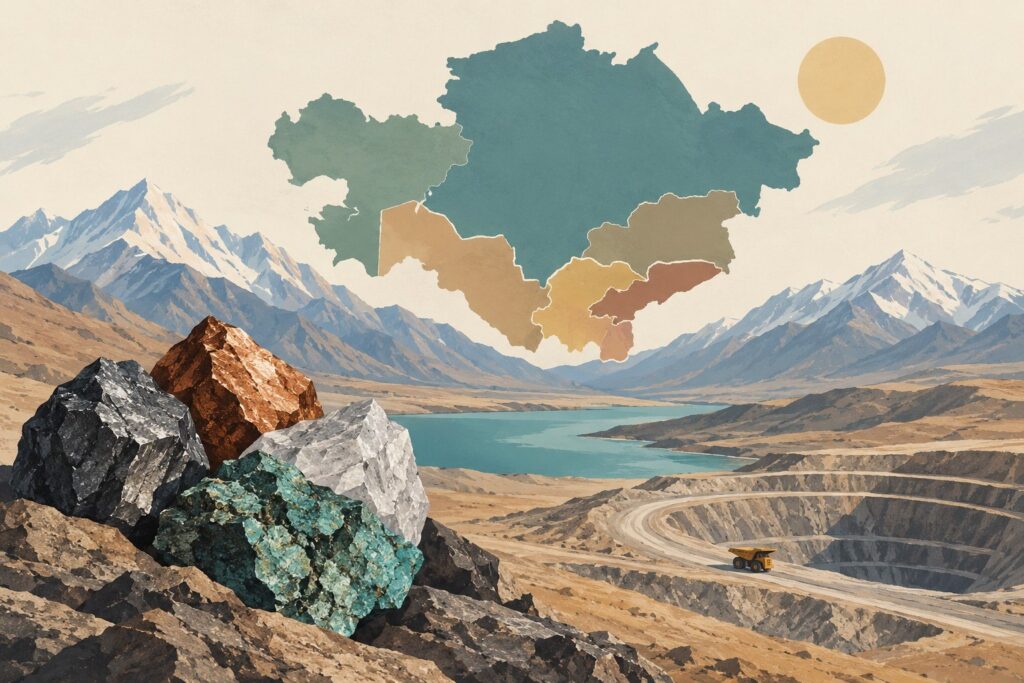
For many years, U.S. relations with Central Asia were primarily political in nature, while economic ties developed slowly. However, in the past year, engagement has intensified significantly, with recent agreements suggesting the U.S. is poised to strengthen its economic presence in the region. A recent statement by U.S. Secretary of State Marco Rubio reinforces this outlook. Calls to repeal the outdated Jackson-Vanik trade restrictions have been framed by U.S. officials as a way to facilitate trade with Central Asia and strengthen U.S. energy security. The Jackson-Vanik Amendment The Jackson-Vanik Amendment, enacted in 1974, restricts trade with countries that limit their citizens’ right to emigrate. At the time of its passage, Central Asia was still part of the Soviet Union.  The amendment prohibits granting most-favored-nation (MFN) status, government loans, and credit guarantees to countries that violate their citizens’ right to emigrate, and allows for discriminatory tariffs and fees on imports from non-market economies. The amendment was repealed for Ukraine in 2006, and for Russia and Moldova in 2012. However, it remains in effect for several countries, including Azerbaijan, Kazakhstan, Tajikistan, Turkmenistan, and Uzbekistan, which continue to receive only temporary normal trade relations. In May 2023, a bill proposing the establishment of permanent trade relations with Kazakhstan, which included repealing the Jackson-Vanik Amendment, was introduced in the U.S. Congress. A follow-up bill with similar provisions was submitted in February 2025. Then-nominee and now Secretary of State Marco Rubio previously noted that some policymakers viewed the amendment as a tool to extract concessions on human rights or to push Central Asian states toward the U.S. and away from Russia. However, he characterized such thinking as outdated, stating that, “In some cases, it is an absurd relic of the past.”  Rubio has consistently supported expanding U.S. ties with Central Asia. Expanding Cooperation In 2025, relations between the U.S. and Central Asia deepened significantly, particularly with Kazakhstan and Uzbekistan, which are seen by analysts as the primary beneficiaries of this cooperation. In late October 2025, U.S. Deputy Secretary of State Christopher Landau and U.S. Special Representative for South and Central Asia Sergio Gor visited Kazakhstan and Uzbekistan. One of the year’s major events was the Central Asia-U.S. (C5+1) summit held in Washington on November 6. Leaders of the five Central Asian states met with President Donald Trump and members of the U.S. business community. Uzbekistani President Shavkat Mirziyoyev also met with U.S. Senator Steve Daines, co-chair of the Senate Central Asia Caucus, with both sides focusing heavily on economic cooperation. At the summit, Uzbekistan finalized major commercial agreements with U.S. companies, including aircraft orders by Uzbekistan Airways and deals spanning aviation, energy, and industrial cooperation. Kazakhstan signed agreements worth $17 billion with U.S. companies in sectors including aviation, mineral resources, and digital technologies. This included a deal granting American company Cove Kaz Capital Group a 70% stake in a joint venture to develop one of Kazakhstan’s largest tungsten deposits, an agreement valued at $1.1 billion.  Further agreements were signed on critical minerals exploration. Kazakhstan and the...

Astana and Tashkent Engage Washington’s Central Asia Vector

On January 22 at the World Economic Forum in Davos, Kazakhstan’s President Kassym-Jomart Tokayev and Uzbekistan’s President Shavkat Mirziyoyev signed President Donald Trump’s new Board of Peace charter. The document matters less than what their participation signifies: recognized access to the White House and a willingness to be publicly associated with a U.S.-led initiative. This is all the more significant as Washington’s relations with several long-standing partners have recently become more fraught and publicly contested. The Central Asian response is part of that story. Their participation indicates that the Trump White House regards them as interlocutors of consequence, and that both Central Asian capitals are embracing that status. On December 1, Washington assumed the G20 presidency for 2026 and set three priorities: limiting regulatory burdens, strengthening affordable and secure energy supply chains, and advancing technology and innovation. It has also scheduled the leaders’ summit for December 14–15, 2026, in the Miami area. On December 23, Trump said that he was inviting Tokayev and Mirziyoyev to attend as guests. That invitation places Kazakhstan and Uzbekistan inside a host-defined agenda whose working tracks overlap with their strongest external bargaining assets, including energy, critical minerals potential, and transport connectivity. Trump publicly tied the invitations to discussions of peace, trade, and cooperation, which is in line with his subsequent Board of Peace invitations. Diplomatic Logic and Multi-Vectorism It is worthwhile situating these developments in the context of Central Asian cooperation, which Kazakhstan and Uzbekistan have driven as the regional core. At the August 2024 Consultative Meeting in Astana, all five leaders signed a Roadmap for the development of regional cooperation for 2025–2027, and adopted a “Central Asia 2040” conceptual framework. Tokayev and Mirziyoyev referenced their 2022 allied-relations agreement and announced plans to adopt a strategic partnership program through 2034, including large-scale joint economic and energy projects. Moscow’s preoccupation with the war in Ukraine has widened the room for maneuver by other external actors, and Central Asian capitals have pursued these opportunities selectively. For example, the EU’s then foreign-policy chief Josep Borrell visited Kazakhstan and Kyrgyzstan in early August 2024, Japan has pursued its “Central Asia plus Japan” line as a counterweight to China’s influence, and Azerbaijan has been building an energy bridge between Central Asia and Europe via the South Caucasus with Kazakhstan and Uzbekistan. Washington’s main channel into this complex is the C5+1, and the current U.S. emphasis is to create routines that survive individual summits. The U.S. Special Envoy for South and Central Asian Affairs Sergio Gor and Deputy Secretary of State Christopher Landau travelled to Kazakhstan and Uzbekistan in October 2025 ahead of the Washington summit that Trump hosted the following month for the five leaders. Such formats can concentrate attention on the implementation of standardized procurement procedures and regularized dispute resolution that new supply-chain corridors require for interoperable paperwork and predictable customs treatment. Kyrgyzstan is scheduled to host the second B5+1 forum (the business counterpart to C5+1) on February 4–5, 2026. This has already been prepared by a joint briefing...

Paul Kapur: “The United States’ Commitment to Central Asia Is Strong and Enduring”

WASHINGTON (TCA) — Assistant Secretary of State for South and Central Asian Affairs Paul Kapur reaffirmed Washington’s long-term commitment to Central Asia during remarks marking the 10th anniversary of the C5+1 partnership at the Kennedy Center hosted by the United States Department of State on November 6. Addressing an audience of officials, diplomats, and business leaders, Kapur said he was “honored to join an esteemed group” for the occasion. “I recently started my tenure as Assistant Secretary, and I’m particularly glad that I started as we celebrate the decade of C5+1 partnership,” he noted. Kapur, who oversees U.S. policy toward the region and serves as Secretary Marco Rubio’s chief advisor on Central Asia, is a veteran academic who has taught at the Naval Postgraduate School and Claremont McKenna College, and previously served on the State Department’s Policy Planning Staff during the first Trump administration. He opened his remarks by thanking the Kennedy Center and Ambassador Rick Vernell for hosting the event, as well as Special Envoy and Ambassador Sir Jim Gore and Deputy Secretary of State Chris Landau “for everything that they did, which included lots of diplomacy, many days and hours on the road.” He also recognized Senator Steve Daines “who’s done so much to support and promote ties” between Central Asia and the United States, and expressed appreciation to Central Asian delegations who “traveled a long way to be here.” “As we mark this anniversary, I want to reiterate that the United States is committed to this region, and that commitment is strong and enduring,” Kapur said. “Under President Trump’s and Secretary Rubio’s leadership, we’re elevating the C5+1 partnership as a priority — a strategic priority and an economic priority.” He said the partnership is already producing results in trade, investment, and innovation. “We’re making tangible progress toward increased trade and investment in areas ranging from aviation to cybersecurity to agriculture, and we’re ensuring a secure energy future for each of our countries,” he said. Kapur emphasized that economic ties are only part of the picture. “As we advance prosperity, we also promote peace,” he stated. “The United States remains committed to supporting each C5 country’s independence, sovereignty, and territorial integrity, protecting borders and strengthening security cooperation, both bilaterally and through the C5+1.” Reflecting on the partnership’s first decade, Kapur cited initiatives such as the C5+1 Critical Minerals Dialogue, the B5+1 Business Dialogue, training networks for regional law enforcement and border security, and English-language programs for young professionals. He also highlighted efforts to protect the region’s cultural heritage through historical preservation and law enforcement cooperation to combat antiquities trafficking. “Although we’re celebrating the future today, it’s important to remember that our new initiatives are built on a deep foundation of cooperation over the past decade,” he said. “As we elevate and modernize our collective efforts, C5+1 countries and the United States are increasingly prepared to deliver innovative regional solutions to our most pressing global problems.” He concluded with a personal message to Central Asian partners. “To my Central...

Sen. Daines: Central Asia Key to U.S. Strategic and Economic Future

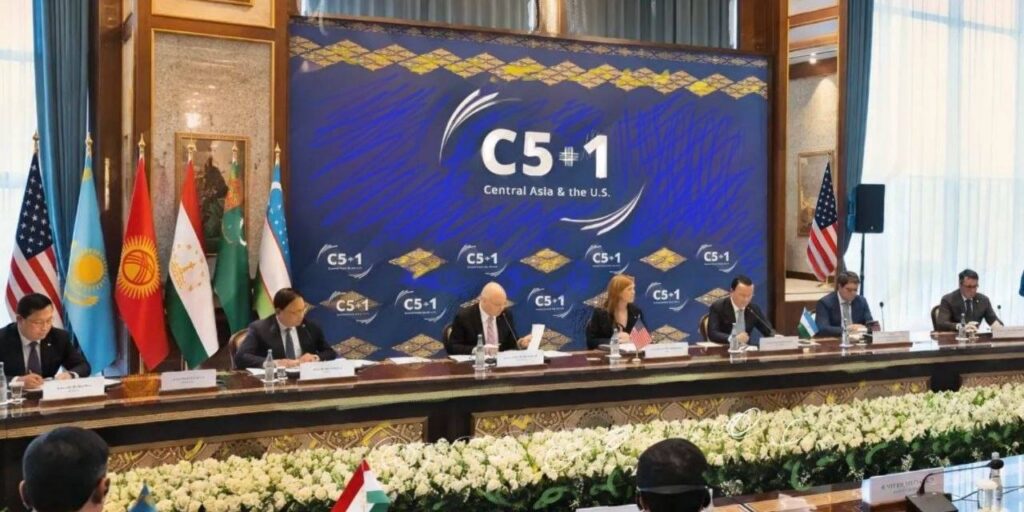
Washington, D.C., November 6, 2025 — At the 10th-anniversary forum of the C5+1 platform — which brings together the United States and the five Central Asian nations (Kazakhstan, Kyrgyzstan, Tajikistan, Turkmenistan, and Uzbekistan) — ministers from the C5 countries and leading business figures from the region and the United States gathered to mark a decade of cooperation. The event was co-hosted by the U.S. Department of State and the U.S. Department of Commerce, underscoring Washington’s growing focus on regional economic and strategic engagement. U.S. officials played key roles throughout the program. Senator Steve Daines chaired a high-level panel discussion alongside Sergio Gor, U.S. Special Envoy for South and Central Asian Affairs; S. Paul Kapur, Assistant Secretary of State for South and Central Asian Affairs; Howard Lutnick, Secretary of Commerce; Christopher Landau, Deputy Secretary of State; William Nitt, Under Secretary of Commerce; and Richard Grenell, Special Presidential Envoy. During the forum’s investment-focused “Deal Zone,” Daines underscored what he described as Central Asia’s growing role in U.S. foreign policy, energy security, and technology supply chains — calling the region “one of the world’s great opportunities for the future.” His remarks reflected both optimism and a sense of urgency about expanding ties. “There are few parts of the world that offer the opportunity that Central Asia does,” he said. “Closer ties between our nations can bring greater economic opportunity to millions of people and secure some of the West’s most vulnerable supply chains.” According to Daines, the United States has already made significant progress through initiatives such as the C5+1 platform, the appointment of a Special Envoy for Central Asia, and the Critical Minerals Dialogue, alongside expanded trade missions and commercial partnerships. Together, he said, these efforts “provide the necessary forums through which the United States and Central Asia can build the capacity and trust necessary for long-term cooperation.” The tenth anniversary also served as a platform for outlining the economic and strategic priorities that will define the next phase of U.S.–Central Asia engagement. Central Asia’s Resource Potential Daines highlighted what he described as the region’s abundant resources — saying the five Central Asian nations “represent over 31 billion barrels of oil reserves, 250 trillion cubic feet of gas reserves, and over 40 percent of global uranium production.” “As we look to a new day for Europe, one wherein the continent is not dependent on a bellicose adversary for energy supplies,” he said, “Central Asian nations can be the partners of the future — providing consistent flows of resources necessary for baseload power without the concern that those energy imports will be weaponized.” He added that, even years after Russia’s invasion of Ukraine, the U.S. continues to import uranium from Russia, which he called a practice with “profound national security implications.” Central Asia, by contrast, “could provide a more reliable source of the element necessary to the development of artificial intelligence, data-centers, and other energy-intensive industries.” Critical Minerals and the Tech Economy Daines also emphasized the region’s strategic role in the global technology...