• KZT/USD = 0.00220
  • TJS/USD = 0.10820
  • UZS/USD = 0.00008
  • TMT/USD = 0.29760
  • KZT/USD = 0.00220
  • TJS/USD = 0.10820
  • UZS/USD = 0.00008
  • TMT/USD = 0.29760
  • KZT/USD = 0.00220
  • TJS/USD = 0.10820
  • UZS/USD = 0.00008
  • TMT/USD = 0.29760
  • KZT/USD = 0.00220
  • TJS/USD = 0.10820
  • UZS/USD = 0.00008
  • TMT/USD = 0.29760
  • KZT/USD = 0.00220
  • TJS/USD = 0.10820
  • UZS/USD = 0.00008
  • TMT/USD = 0.29760
  • KZT/USD = 0.00220
  • TJS/USD = 0.10820
  • UZS/USD = 0.00008
  • TMT/USD = 0.29760
  • KZT/USD = 0.00220
  • TJS/USD = 0.10820
  • UZS/USD = 0.00008
  • TMT/USD = 0.29760
  • KZT/USD = 0.00220
  • TJS/USD = 0.10820
  • UZS/USD = 0.00008
  • TMT/USD = 0.29760
11 October 2026

Viewing results 1 - 6 of 9

Opinion: The 2026 CAMCA Regional Forum Concludes – What’s Next?

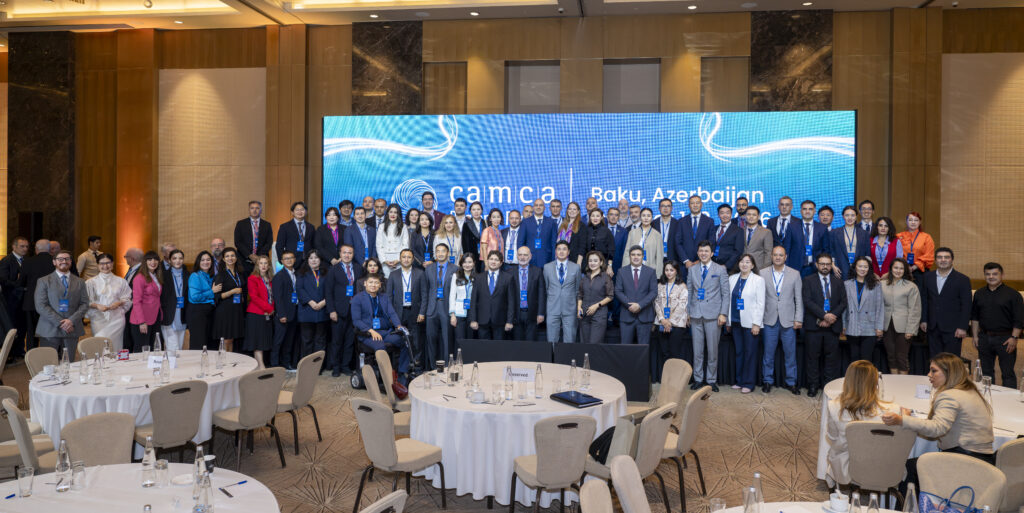
The 2026 CAMCA Regional Forum has concluded in Baku after two full days of conversation on a range of topics shaping the future of the region.  The closing ceremony included an official announcement that next year’s Forum will take place in Uzbekistan in June of 2027.  The question now is: in the lead-up to next year’s convening, how do we build on the connections, ideas and momentum built in Baku to truly advance regional cooperation in the months ahead?  How do we turn conversation into action?  The mechanism and catalyst for this will be the CAMCA Network – the dynamic collection of more than 300 talented leaders spread throughout the entire region and beyond – united by a common conviction that a successful future of the CAMCA region lies in intraregional cooperation and collaboration.  Through existing initiatives, such as CAMCA Talking magazine, and forthcoming projects – CAMCA TV and the CAMCA Conversations podcast – the network will utilize these innovative platforms to raise awareness around the important developments taking place within the CAMCA region, and, most importantly, to highlight where regional cooperation is well underway, where more is needed, and how leaders across sectors can do their part to drive tangible collaboration to the next level.  While the CAMCA Network can serve as an important stimulus of this effort, it is critical that we continue to expand the CAMCA community across all sectors and build partnerships with individuals, organizations and companies that share our vision for CAMCA’s connected, collaborative and prosperous future.  This is the charge we take from Baku and will be an integral part of CAMCA’s next chapter.  From his time in public service and at the outset of the Rumsfeld Foundation’s work with rising leaders from the region, Secretary Rumsfeld believed in the incredible potential of the CAMCA region, predicated on the ten countries themselves recognizing the benefit of their enhanced cooperation.  20 years ago, there were few who shared his vision or his optimism.    Today, on the heels of the 12th annual CAMCA Forum, this vision has come to life, and global interest and momentum are in CAMCA’s favor.  As we look towards the 2027 CAMCA convening in Uzbekistan, we are eager to invite partners from within the region and across the globe to join us in building CAMCA’s next chapter.  The groundwork has been laid, and a dedicated and energetic network of regional trailblazers now exists – let’s put it to work and bring CAMCA to a new level.  The CAMCA Regional Forum is an annual, non-partisan event dedicated to promoting dialogue, cooperation, and sustainable economic growth across Central Asia, Mongolia, the Caucasus, and Afghanistan. Established as a premier platform for high-level engagement, the Forum convenes diverse stakeholders from government, business, academia, civil society, and beyond.  The Forum is co-organized by the Rumsfeld Foundation, Central Asia-Caucasus Institute, and the CAMCA Network. Learn more at www.camcaforum.org.   The views expressed in this article are those of the author and do not necessarily reflect the official policy...

Opinion: Building Bridges, Backing the Future: Why Entrepreneurs Must Connect Across Borders

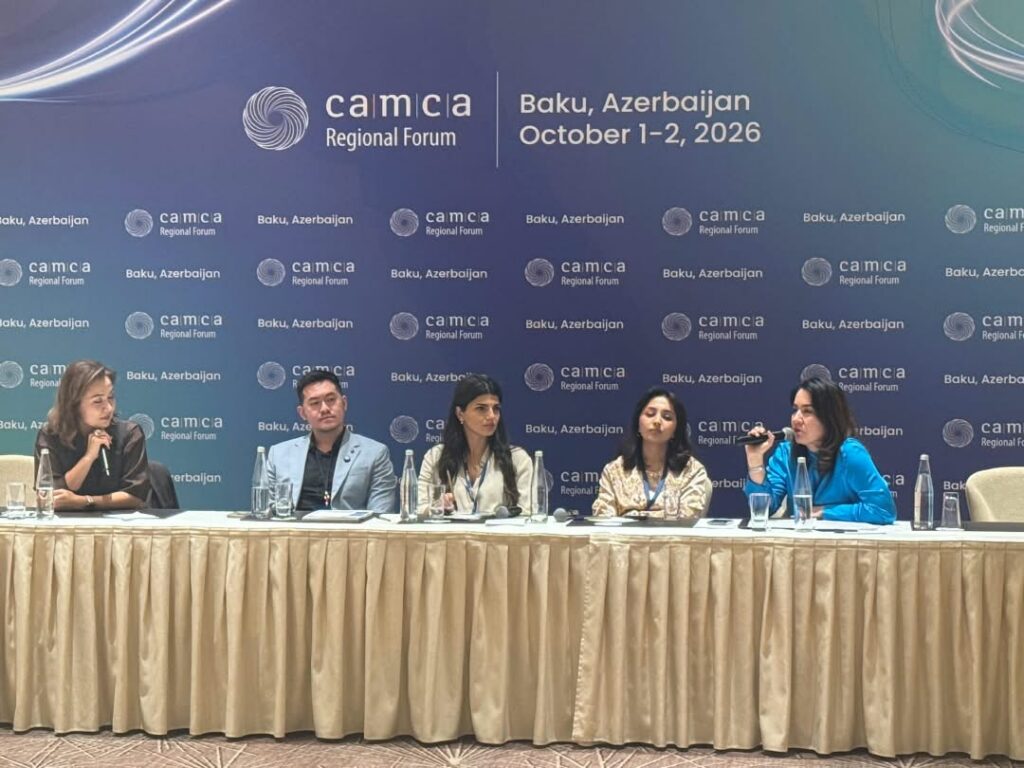
In the age of AI, capital and code travel fast. Trust does not. That is why the most valuable infrastructure our region can build right now is human: entrepreneurs who know each other across borders. This week in Baku, at the CAMCA Forum 2026, two moments stayed with me. The first was a conversation on stage with investor Lucy Chow about what it means to back the future when artificial intelligence is rewriting the rules of business. The second happened a day earlier, quietly, at a signing table. The CAMCA network signed a Memorandum of Understanding with YEGAP, the Young Entrepreneurs Group of Asia Pacific. Mr. Hiromi Aoki travelled from Japan to be with us. The purpose is simple to state and hard to do: build a lasting bridge between the founders of Central Asia, Mongolia, the Caucasus and Afghanistan and their peers across Asia-Pacific. Those two moments are connected. The more powerful technology becomes, the more the advantage shifts to people who are connected to other people. What "backing the future" means now I opened our session by asking Lucy what "backing the future" means to her. We spent the next hour testing that phrase against the realities of AI: what is truly different about this wave, where the signal ends and the hype begins, and where entrepreneurs still have room when so much capital flows to a handful of AI giants. The answer that emerged was reassuring. AI changes the tools, the speed and the cost of building a company. It does not change what makes a company worth backing: a visionary founder, a real problem, a great solution, a customer who will pay to solve it, and a team that can execute and adapt. What AI does change is the bar. When anyone can build a prototype in a weekend, a prototype is no longer proof. The proof is distribution, domain knowledge and trust with customers. Those are exactly the things the world's largest AI labs cannot buy in Almaty, Tashkent, Ulaanbaatar or Baku. That is where the space for our entrepreneurs lies. Not in competing to build the biggest foundation models, but in applying AI to the industries we know better than anyone: agriculture and herding, logistics along new trade corridors, remittances and financial inclusion, energy, health, education and natural resources. The main focus should be to really focus on our uniqueness and take that to the world and showcase our local identity. Investors back people, and people are shaped by their networks When technology moves this fast, how do you judge a founder? The qualities we discussed are not new: resilience, curiosity, honesty about what is not working, and the speed to learn and change course. What is new is how quickly those qualities are tested. A founder today may need to rebuild a product three times in the time it once took to build it once. One quality matters more than it used to: the ability to learn from others. No founder can track...

Opinion: CAMCA: From Regional Connectivity to Cross-Border Innovation

What would it take for a fintech company that succeeds in one CAMCA country to enter another without starting from zero? That question guided a roundtable on the next digital Silk Road at the CAMCA Regional Forum in Baku. The discussion brought together leaders in financial services, investment, and technology from a region spanning Central Asia, the Caucasus, Mongolia, and Afghanistan. As moderator, I wanted to move beyond the broad ambition of regional connectivity and examine what companies need to operate across borders: working payment systems, partnerships, regulatory clarity, and a path to their first customer in a new market. The panel featured Tughra Musayeva, Head of Innovations at PASHA Financial Holding; Jenny Jenish kyzy, Product Owner at MBank Junior and a CAMCA Network member from Kyrgyzstan; Muna Shukurova, Managing Director of Alif in Uzbekistan and a CAMCA Network member from Tajikistan; and Jonathan Low, Founder and Group CEO of Ampyre Group and Biptap. A central theme was financial infrastructure. The speakers explored the potential for pilots using existing platforms to connect CAMCA markets, including cross-border payments, business settlements, digital wallets, and new settlement technologies. Such pilots would require regulators and private companies to work together on defined problems and learn from results. Mr. Low argued that the region has an opportunity to make deliberate choices about the systems it wants to build: “Most regions overregulate before they even know what they're building. CAMCA has an advantage here, it can watch Europe's and ASEAN’s fintech buildout and skip the mistakes instead of repeating them and learn what works. But that only works if you decide what you want first. Regulation should follow the vision, not replace it. And the tool that actually unifies a region this spread out is banking orchestration, new technology stitching fragmented markets into one functioning system.” Expansion also raises a practical question for companies already active in more than one market: which capabilities can travel, and which parts of a product must change? Requirements for licensing, identity checks, anti-money-laundering controls, infrastructure, and consumer behavior differ across countries. Ms Shukurova drew on Alif’s experience of entering other CAMCA markets: “Regional expansion is not a copy-paste exercise. You can replicate technology, risk expertise and operating capabilities, but the product still has to be built around local regulation, infrastructure and customer behavior. The core can travel; the market fit has to be local.” The panel then turned to the role of established financial groups. For a startup, a successful pilot can demonstrate that a solution works. It becomes more valuable when that result helps the company find a partner or customer in its next market. Corporate networks and regional investors can help make that step less costly. Ms Musayeva described the gap between proving a product and expanding it: “In our region, a startup does not scale simply because its technology is scalable. It scales when the ecosystem reduces the cost of entering the next market. Today, a founder who has proven a solution in Tashkent still arrives in...

At CAMCA, Uzbekistan Revives Push for a Stronger Regional Body

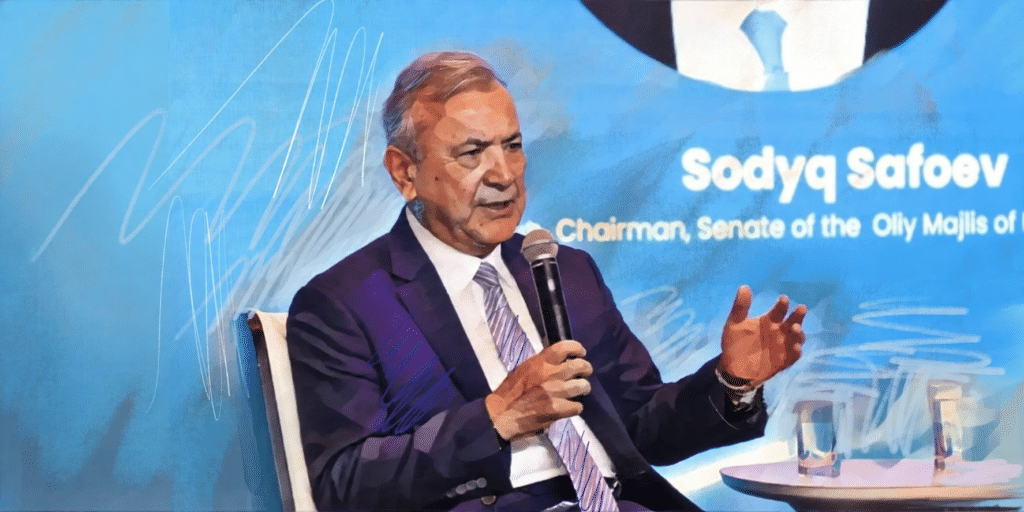
Uzbekistan has renewed its call for a stronger regional institution, with senior senator Sodiq Safoev urging Central Asian leaders to move beyond their consultative meeting format. His remarks in Baku return attention to a proposal President Shavkat Mirziyoyev outlined last November, when he called for a Community of Central Asia. Safoev, first deputy chairman of Uzbekistan’s Senate, told the CAMCA Regional Forum on October 1: “I think the time has come to transform the Consultative Meeting … into another institutional structure, not simply a Consultative Meeting, but something more.” S. Frederick Starr, chairman of the Central Asia-Caucasus Institute, also called for stronger regional institutions at the forum, arguing that institutional development needed to support the expansion of transport and commercial links across the region. At the November 16, 2025, summit in Tashkent, Mirziyoyev proposed a rotating secretariat and stronger rules governing the leaders’ meetings. He also proposed making national coordinators special presidential representatives, giving them greater political authority. The secretariat would coordinate work between summits. The machinery for regular cooperation is already developing. The Council of National Coordinators held its first meeting in Tashkent on January 30–31, 2025, where foreign ministry representatives from all five Central Asian states discussed preparations for Uzbekistan’s chairmanship and a schedule of joint events. Mirziyoyev returned to the institutional argument at the July 31 informal summit in Cholpon Ata, calling for closer contacts between government departments and long-term joint programs, alongside effective cooperation institutions. His agenda included further work on common digital services and investment platforms, as well as industrial links connecting production across national borders. He also urged stronger coordination in the Central Asia Plus diplomatic formats through which the region engages outside powers. Azerbaijan’s participation has widened the scope of those discussions. The five Central Asian presidents accepted Azerbaijan as a full participant in November 2025, extending the format across the Caspian. The six-country grouping, increasingly described as C6, connects Central Asian producers with a country whose ports and onward transport links provide access through the South Caucasus to European markets. At an August 12 discussion in Washington, Uzbekistan’s ambassador Furqat Sidiqov emphasized market access and called for further digitalization of the Middle Corridor. He said Uzbekistan had about 1,500 joint ventures with neighboring states, compared with close to 300 involving Central Asian countries in 2017. Turkmenistan’s ambassador, Esen Aydogdyyev, stressed simpler customs procedures and argued that his country’s permanent neutrality was compatible with deeper economic cooperation. The commercial ambition also extends to joint production. In Baku, Azerbaijan’s minister of the economy Mikayil Jabbarov urged countries to build regional value chains in sectors where their economies complement each other. “We should increasingly produce together,” he said, pointing to companies and financial institutions already operating in one another’s markets. Moving freight across the Caspian requires countries to coordinate customs procedures and transport services. The World Bank’s new Trans-Caspian corridor study identifies fragmented governance and uneven policy implementation as problems that compound infrastructure bottlenecks. It estimates that at least $25 billion is needed through 2040...

Opinion: Central Asia’s Wider Future: The CAMCA Network Brings Regional Cooperation to Baku

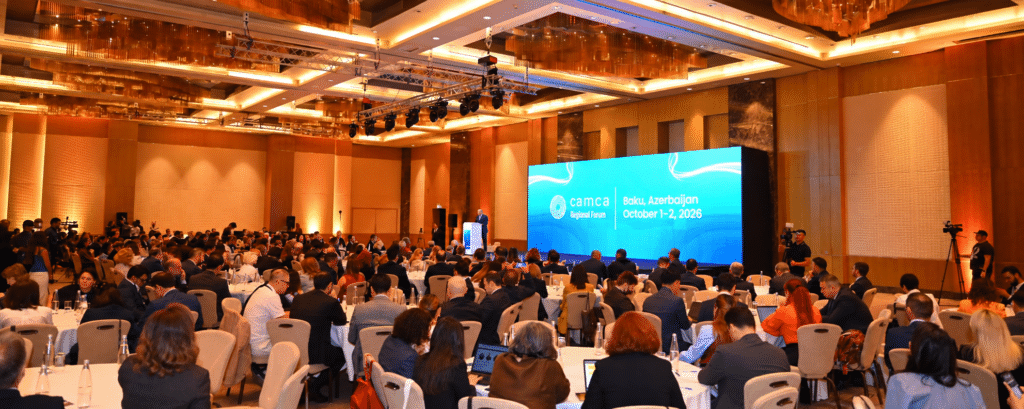
Central Asia is helping shape a wider regional agenda, one that connects trade and investment with technology, education, and security. In Baku, the CAMCA Regional Forum is bringing together the people who can carry that agenda forward, with the CAMCA Network helping turn shared interests into opportunities for cooperation. Taking place on October 1–2 at the Fairmont Baku Flame Towers, the 2026 CAMCA Regional Forum convenes policymakers, business leaders, investors, educators, researchers, and entrepreneurs under the theme “The World and CAMCA: A Region at the Crossroads.” Its central question is how regional cooperation can expand economic opportunities and strengthen the capacity of countries and communities to shape their future. The CAMCA Network helps shape this conversation. As a co-founder and co-organizer of the forum, it connects professionals across Central Asia, Mongolia, the Caucasus, and Afghanistan. Its members contribute expertise, lead discussions, and bring the experience of working in the region into the program. They also give the forum continuity: relationships strengthened in Baku can support collaboration long after the gathering concludes. For Central Asia, that wider community matters. The five countries have distinct economic structures, resources, and international relationships. Cooperation must reflect those differences while identifying where shared effort can expand their choices. Connections with the Caucasus, Mongolia, and Afghanistan offer different opportunities and challenges, each deserving a place in the regional conversation. The CAMCA Regional Forum’s discussions of global shifts through 2030 and greater Central Asia–Caucasus convergence address this strategic landscape. “From C5 to a Wider Framework” asks how a broader geography of cooperation might serve the region’s interests. The underlying issue is the ability of countries to shape their own decisions: how working with neighbors can strengthen their options in a changing international environment. Economic connectivity provides a concrete test. Routes across the Caspian and through the Caucasus can help Central Asian countries reach additional markets and partners. Their value depends on dependable transport, workable procedures, and institutions able to coordinate across borders. Businesses need enough certainty to invest, plan, and build lasting commercial relationships. Today’s discussion on connecting CAMCA to the world brings these questions together. For Central Asia, the opportunity extends beyond moving goods through the region. Better connections can support production, logistics, services, and investment within it. The strategic objective is to create more value locally and give regional enterprises a stronger place in wider markets. The forum’s paired sessions on public policy and the private sector approach that objective from complementary directions. Governments influence the conditions under which companies operate. Businesses decide where to commit capital, develop products, and employ people. Bringing these perspectives together helps clarify which barriers require public action and where commercial initiative can move cooperation forward. Technology adds another dimension. The discussion of artificial intelligence asks where CAMCA fits in a rapidly changing global economy. The Digital Silk Road roundtable connects that question with financial services and innovation. For entrepreneurs in Central Asia, digital connections can open access to customers, payments, financing, and partners across borders. The investment and entrepreneurship...

From Eurasia to Greater Central Asia: A Region Reclaims Its Voice

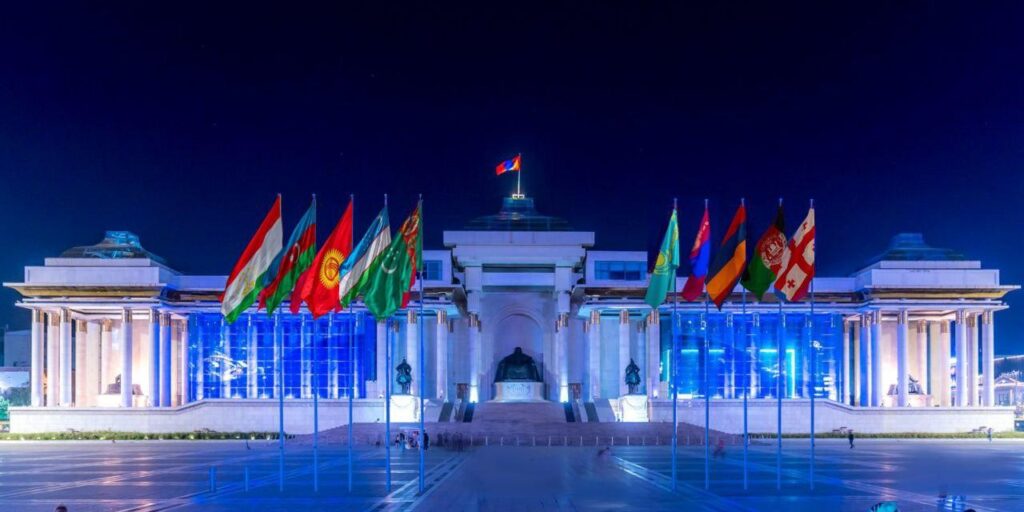
At its most basic, Eurasia refers to the combined landmass of Europe and Asia, stretching from the Atlantic Ocean in the west to the Pacific in the east, and from the Arctic in the north to South and Southeast Asia in the south. Yet when defined in political or economic terms, the concept becomes more complex. This vast region—covering over 36% of the world’s surface area—includes influential Western institutions in the west, such as the European Union and the Council of Europe. In contrast, the east is shaped by post-Soviet and Sino-Russian groupings, including the Commonwealth of Independent States (CIS), the Shanghai Cooperation Organization (SCO), and the Eurasian Economic Union (EAEU). In policy circles, the term "Eurasia" often refers more narrowly to the Caucasus (Armenia, Azerbaijan, Georgia) and Central Asia (Kazakhstan, Kyrgyzstan, Uzbekistan, Tajikistan, Turkmenistan, Mongolia, and Afghanistan). Yet countries in these regions rarely lead the institutions that shape their future. Instead, most regional organizations are dominated by larger powers, primarily Russia and China. One partial exception is the Organization of Turkic States (OTS), though it excludes non-Turkic members such as Tajikistan, Georgia, and Armenia. Many external actors—beginning with Japan's "Central Asia plus Japan" initiative in 2001—have formed dialogue platforms with the five post-Soviet Central Asian republics, often referred to collectively as the "C5." More recently, Turkey, China, the EU, and others have created similar frameworks. While these engagements have value, they are usually shaped by external agendas. The fundamental issue remains: Central Asia lacks strong, self-directed institutions of its own. In response to this institutional vacuum, Professor S. Frederick Starr proposed in 2015 a broader regional framing: Greater Central Asia. He called for moving beyond the Soviet-era definition of Central Asia to include neighboring regions with shared historical, cultural, and strategic ties. He also noted a stark reality: Greater Central Asia is the only region of its kind without its own exclusive institutions—ones not directed by outsiders. That may be starting to change. A more distinct regional identity is emerging, with new frameworks for cooperation gradually taking shape. As countries in the region increasingly define their own development priorities and diversify partnerships beyond Moscow and Beijing, there is growing momentum for a more autonomous and inclusive model of regional integration. One of the clearest examples is CAMCA—an initiative that reflects the full geographic and political scope of Greater Central Asia. Over the past decade, the Central Asia-Caucasus Institute (CACI), founded by Professor Starr, has worked with the Rumsfeld Foundation to support a new generation of regional leaders through the CAMCA Fellowship Program. Originally conceived by alumni of a joint initiative between Starr and former U.S. Secretary of Defense Donald Rumsfeld more than fifteen years ago, the CAMCA Network has become one of the few institutions uniting the entire Greater Central Asia region. Each year, the fellowship culminates in a regional forum hosted by a different CAMCA country. The most recent—held last week in Ulaanbaatar—marked the 11th such gathering and the second time the event has been hosted by CAMCA...