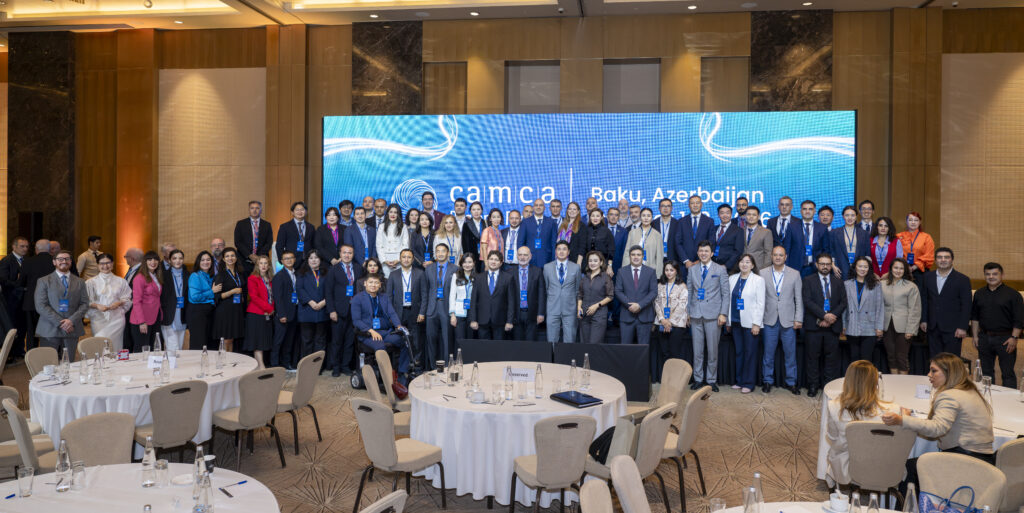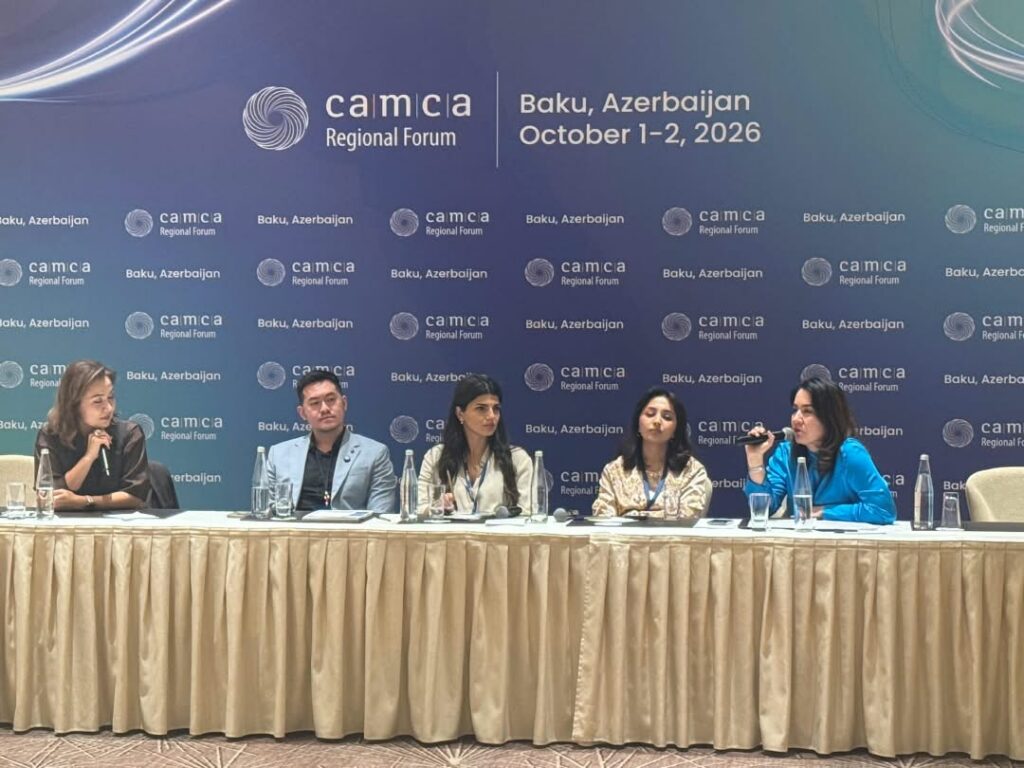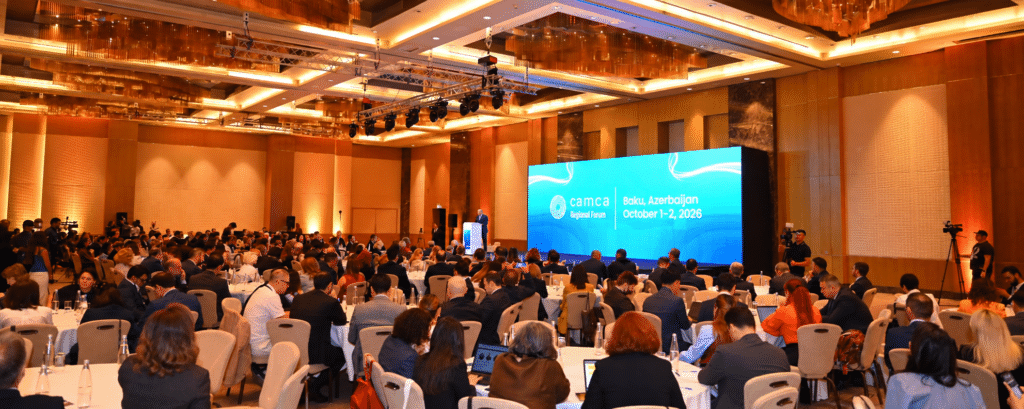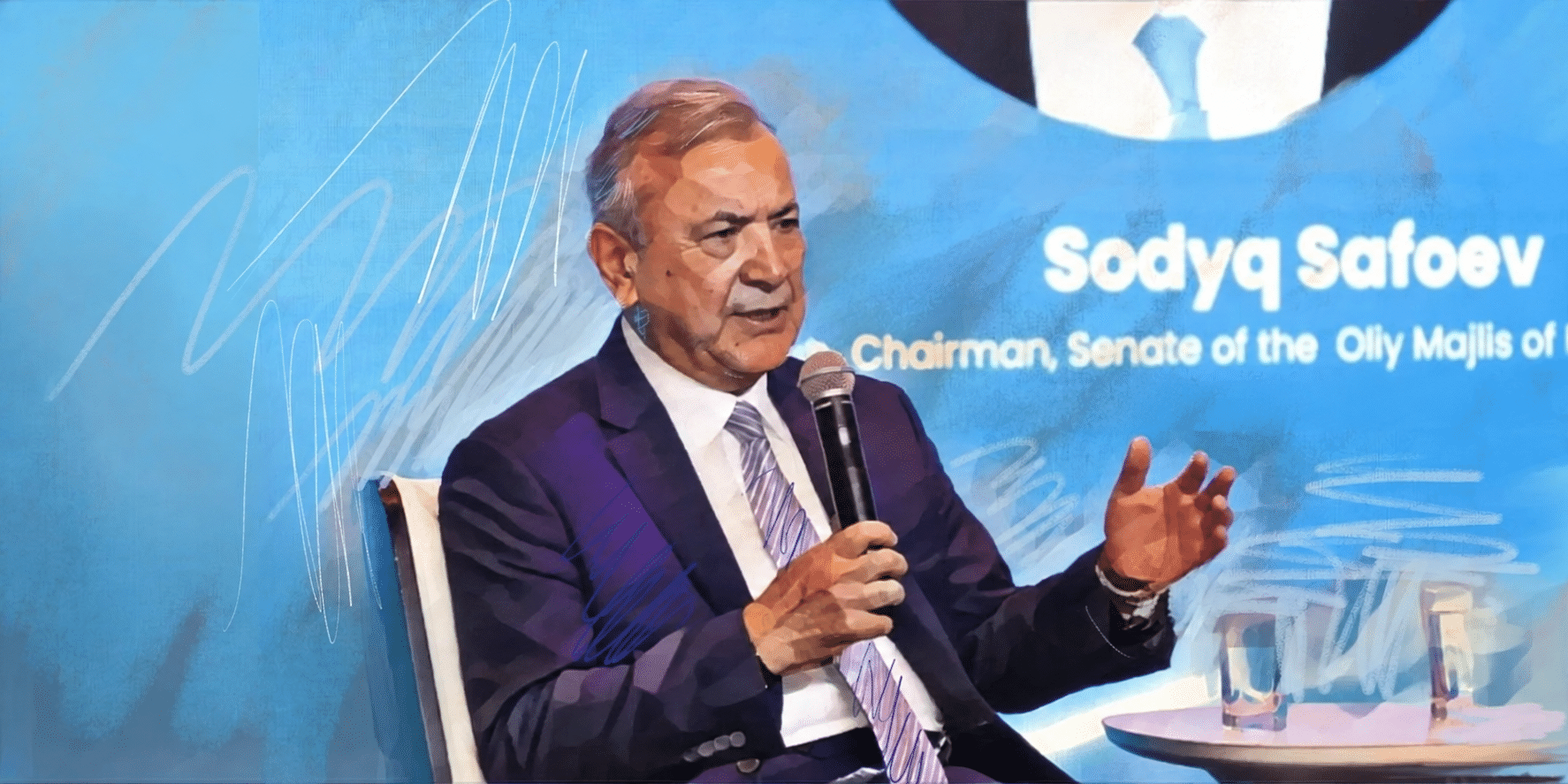
Uzbekistan has renewed its call for a stronger regional institution, with senior senator Sodiq Safoev urging Central Asian leaders to move beyond their consultative meeting format. His remarks in Baku return attention to a proposal President Shavkat Mirziyoyev outlined last November, when he called for a Community of Central Asia.
Safoev, first deputy chairman of Uzbekistan’s Senate, told the CAMCA Regional Forum on October 1: “I think the time has come to transform the Consultative Meeting … into another institutional structure, not simply a Consultative Meeting, but something more.”
S. Frederick Starr, chairman of the Central Asia-Caucasus Institute, also called for stronger regional institutions at the forum, arguing that institutional development needed to support the expansion of transport and commercial links across the region.
At the November 16, 2025, summit in Tashkent, Mirziyoyev proposed a rotating secretariat and stronger rules governing the leaders’ meetings. He also proposed making national coordinators special presidential representatives, giving them greater political authority. The secretariat would coordinate work between summits.
The machinery for regular cooperation is already developing. The Council of National Coordinators held its first meeting in Tashkent on January 30–31, 2025, where foreign ministry representatives from all five Central Asian states discussed preparations for Uzbekistan’s chairmanship and a schedule of joint events.
Mirziyoyev returned to the institutional argument at the July 31 informal summit in Cholpon Ata, calling for closer contacts between government departments and long-term joint programs, alongside effective cooperation institutions. His agenda included further work on common digital services and investment platforms, as well as industrial links connecting production across national borders. He also urged stronger coordination in the Central Asia Plus diplomatic formats through which the region engages outside powers.
Azerbaijan’s participation has widened the scope of those discussions. The five Central Asian presidents accepted Azerbaijan as a full participant in November 2025, extending the format across the Caspian. The six-country grouping, increasingly described as C6, connects Central Asian producers with a country whose ports and onward transport links provide access through the South Caucasus to European markets.
At an August 12 discussion in Washington, Uzbekistan’s ambassador Furqat Sidiqov emphasized market access and called for further digitalization of the Middle Corridor. He said Uzbekistan had about 1,500 joint ventures with neighboring states, compared with close to 300 involving Central Asian countries in 2017. Turkmenistan’s ambassador, Esen Aydogdyyev, stressed simpler customs procedures and argued that his country’s permanent neutrality was compatible with deeper economic cooperation.
The commercial ambition also extends to joint production. In Baku, Azerbaijan’s minister of the economy Mikayil Jabbarov urged countries to build regional value chains in sectors where their economies complement each other. “We should increasingly produce together,” he said, pointing to companies and financial institutions already operating in one another’s markets.
Moving freight across the Caspian requires countries to coordinate customs procedures and transport services. The World Bank’s new Trans-Caspian corridor study identifies fragmented governance and uneven policy implementation as problems that compound infrastructure bottlenecks. It estimates that at least $25 billion is needed through 2040 to address physical constraints, particularly on railways and at ports and maritime crossings.
Yet three-quarters of the 16 most critical infrastructure investments are already underway, with the remainder included in government plans. The bank identifies operational improvements as the likely main challenge ahead. It recommends replacing fragmented paperwork with a single digital entry point for trade and transport data, and creating a joint rail freight and shipping operator to connect services across the corridor.
The study also identifies around $30 billion in additional investment needed to connect the route to local economies, including feeder links and logistics hubs. Its scope extends beyond the six-country grouping to Armenia, Georgia and Türkiye, reflecting the corridor’s dependence on cooperation with countries along the onward route.
Mirziyoyev’s November proposals included simplifying tax and customs procedures and creating an infrastructure development council led by deputy prime ministers. He also proposed a common investment space with shared principles for protecting investors, alongside a regional trade and economic cooperation program running through to 2035.
Forum director Tamar Kekenadze emphasized the commercial need for reliable regional connections in an Op-Ed for The Times of Central Asia. “Businesses need enough certainty to invest, plan, and build lasting commercial relationships,” she wrote.
A regional secretariat could help national agencies follow through on commitments and identify where projects have stalled, but its effectiveness would depend on the responsibility governments give it and its access to information from those agencies. The practical work would involve aligning customs requirements and coordinating transport services, so that exporters can cross borders with fewer delays and more reliable delivery dates. Safoev is urging Uzbekistan’s neighbors to build a stronger regional institution around the cooperation their businesses already depend on.
Read more from our special coverage of the CAMCA Regional Forum in Baku here.