
• KGS/USD = 0.01144 0%
  • KZT/USD = 0.00201 0%
  • TJS/USD = 0.10470 -0.19%
  • UZS/USD = 0.00008 0%
  • TMT/USD = 0.28490 0%
  • KGS/USD = 0.01144 0%
  • KZT/USD = 0.00201 0%
  • TJS/USD = 0.10470 -0.19%
  • UZS/USD = 0.00008 0%
  • TMT/USD = 0.28490 0%
  • KGS/USD = 0.01144 0%
  • KZT/USD = 0.00201 0%
  • TJS/USD = 0.10470 -0.19%
  • UZS/USD = 0.00008 0%
  • TMT/USD = 0.28490 0%
  • KGS/USD = 0.01144 0%
  • KZT/USD = 0.00201 0%
  • TJS/USD = 0.10470 -0.19%
  • UZS/USD = 0.00008 0%
  • TMT/USD = 0.28490 0%
  • KGS/USD = 0.01144 0%
  • KZT/USD = 0.00201 0%
  • TJS/USD = 0.10470 -0.19%
  • UZS/USD = 0.00008 0%
  • TMT/USD = 0.28490 0%
  • KGS/USD = 0.01144 0%
  • KZT/USD = 0.00201 0%
  • TJS/USD = 0.10470 -0.19%
  • UZS/USD = 0.00008 0%
  • TMT/USD = 0.28490 0%
  • KGS/USD = 0.01144 0%
  • KZT/USD = 0.00201 0%
  • TJS/USD = 0.10470 -0.19%
  • UZS/USD = 0.00008 0%
  • TMT/USD = 0.28490 0%
  • KGS/USD = 0.01144 0%
  • KZT/USD = 0.00201 0%
  • TJS/USD = 0.10470 -0.19%
  • UZS/USD = 0.00008 0%
  • TMT/USD = 0.28490 0%

Viewing results 1 - 6 of 7

Can the New Multimodal Route Become a Sustainable Corridor for Central Asia?

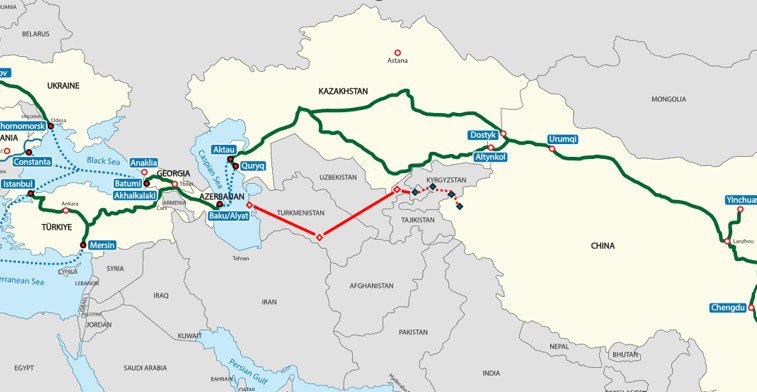
The launch of the China-Kyrgyzstan-Uzbekistan-Turkmenistan-Caspian multimodal corridor has generated significant interest as another attempt to expand Eurasian transport connectivity. A pilot shipment in the fall of 2025 demonstrated the technical feasibility of the new route: cargo transported from Kashgar, China, passed through Kyrgyzstan and Uzbekistan, reached Turkmenistan, and was then delivered to Azerbaijan via the Caspian Sea, continuing along the Baku-Tbilisi-Kars railway toward Europe. Despite its evident geopolitical appeal, questions remain over the route’s long-term sustainability and commercial viability. The central question is whether this demonstration project can evolve into a regularly functioning transport corridor. A Third Alternative Between the Northern and Middle Corridors This multimodal route can be seen as a potential alternative to the two existing pathways: the northern route, China-Kazakhstan-Russia-Europe; and the Trans-Caspian International Transport Route (TITR), or Middle Corridor, which passes through Kazakhstan, the Caspian Sea, the South Caucasus, and Turkey. The growing geopolitical risks along the northern route since 2022, combined with capacity limitations on the Caspian segment of the TITR, have spurred interest in a third option, a so-called “southern belt” traversing Kyrgyzstan, Uzbekistan, and Turkmenistan. Each country along this route has its own strategic calculus. Uzbekistan is seeking to overcome its “double continental isolation” and elevate its role as Central Asia’s transit hub. Kyrgyzstan is aiming to monetize its geographic position between China and the Ferghana Valley. Turkmenistan is developing the port of Turkmenbashi as an alternative to the increasingly congested hubs of Aktau and Alat. China, meanwhile, continues to diversify its westward overland trade routes. The Uzbek Factor: Geoeconomics vs. Logistics From Tashkent's perspective, this corridor aligns with its long-term transport strategy. Analysts frequently cite Uzbekistan’s ambition to transition from a landlocked to a “land-linked” state with direct access to China, the Caspian Sea, and southern routes to the Indian Ocean. The new route offers Uzbekistan three strategic advantages: alternative access to China via Kyrgyzstan, enhanced status as a regional transit hub, and deeper transport cooperation with Turkmenistan, including potential joint development of the Turkmenbashi port. However, when shifting from geopolitical ambition to logistical execution, serious limitations emerge, many outside Uzbekistan’s control. Kyrgyzstan: A Bottleneck in the Chain Documents from the Central Asia Regional Economic Cooperation (CAREC) program highlight the continued challenges facing multimodal transport in the region, namely slow transit, poor modal integration, border delays, and outdated logistics technologies. Within this corridor, Kyrgyzstan remains the primary bottleneck. Approximately 82% of its foreign trade by weight is transported by road, making the route through this mountainous country highly seasonal, expensive, and unpredictable. According to the International Road Transport Union, Kyrgyzstan’s transport system faces severe constraints from alpine terrain, avalanches, and impassable mountain passes that render winter transport nearly impossible in many areas. It is therefore unsurprising that, following the pilot shipment, no major logistics operators committed to shifting regular cargo to this route. The Caspian Sea: Structural Constraints The Caspian Sea leg, anchored by Turkmenbashi port, presents another critical challenge. The limitations here are systemic rather than national. Key issues include insufficient...

ADB Commits $10 Billion to CAREC, $700 Million to Kyrgyzstan

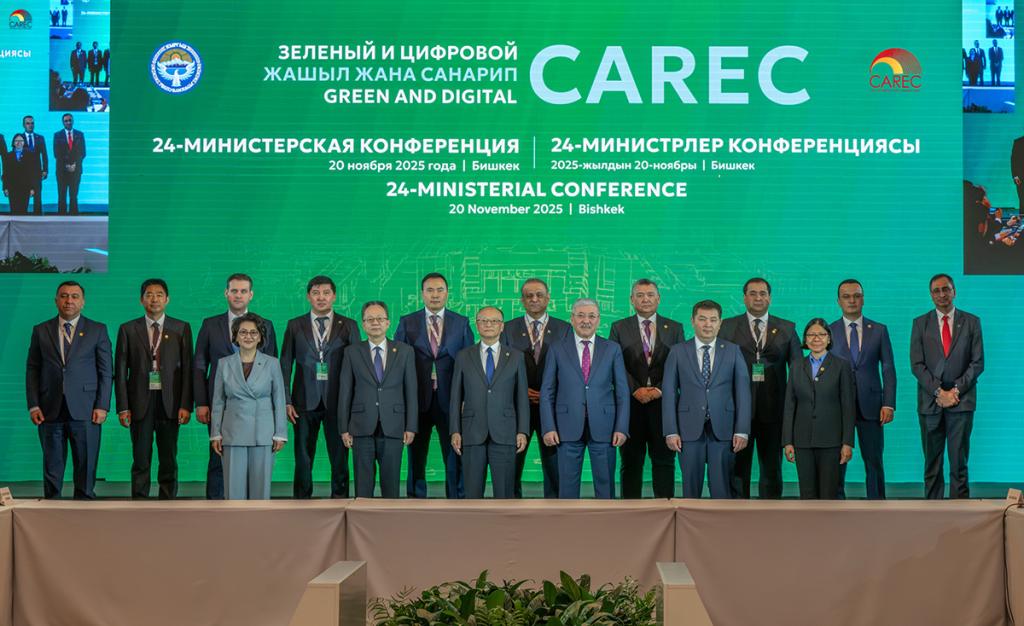
At the 24th Ministerial Conference of the Central Asia Regional Economic Cooperation (CAREC) Program held in Bishkek on November 20, Asian Development Bank (ADB) President Masato Kanda announced a commitment of more than $10 billion in financing through 2030 to strengthen regional integration, connectivity, and resilience. The CAREC Program brings together 11 member countries – Afghanistan, Azerbaijan, China, Georgia, Kazakhstan, Kyrgyzstan, Mongolia, Pakistan, Tajikistan, Turkmenistan, and Uzbekistan – along with international development partners, to promote sustainable economic growth through regional cooperation. Since its inception in 2001, CAREC has mobilized approximately $54 billion in funding for regional projects. The ADB serves as the host institution for the CAREC Secretariat. “Our vision for CAREC is clear: a region that is economically resilient, environmentally sustainable, socially inclusive, and digitally connected,” Kanda said in his keynote address. “We are scaling up support with over $10 billion in financing through 2030. These projects will catalyze greater integration, resilience, and shared growth.” During the conference, ministers endorsed the Bishkek Declaration, initiating formal negotiations on trade and investment facilitation. The initiative aims to reduce cross-border barriers, increase investment flows, and promote cooperation in emerging areas such as digital trade and the green economy. On the sidelines of the conference, Kanda met with Kyrgyz President Sadyr Japarov to reaffirm ADB’s commitment to Kyrgyzstan’s development goals. ADB plans to provide over $700 million in financing for the country between 2025 and 2027. “The Kyrgyz Republic has shown remarkable commitment to building a greener, more connected, and resilient future,” Kanda said. “As the country’s largest multilateral development partner, ADB is ready to deepen support for national priorities and strengthen Kyrgyzstan’s role as a regional leader in connectivity and clean energy.” Kanda also met with Chairman of the Cabinet of Ministers Adylbek Kasymaliev to sign a memorandum of understanding with the Ministry of Finance. The agreement outlines a new financing framework for 2026-2027 and includes three projects under the existing 2025 framework. These focus areas include green transformation, disaster resilience, and affordable housing. Altogether, the 2025 and planned 2026-2027 packages will provide more than $700 million in ADB support for Kyrgyzstan. Upcoming projects will aim to boost energy efficiency and climate resilience in public infrastructure, enhance water resource management and disaster preparedness, and improve access to energy-efficient housing and affordable mortgage financing.

Afghanistan and Central Asia: Pragmatism Instead of Illusions

“When the winds of change blow, some build walls, others build windmills.” — Chinese proverb Afghanistan remains one of the most complex and controversial spots on the map of Eurasia. After the Taliban came to power in 2021, it seemed the countries of Central Asia were faced with a choice: to distance themselves from the new regime or cautiously engage with it. However, it appears they have chosen a third path - pragmatic cooperation free from political intentions. Today, a window of opportunity is opening for the Central Asian states to reconsider their relationship with Afghanistan, not as a buffer zone or a source of instability, but as a potential element of a new regional architecture. At the same time, these countries are in no hurry to establish close political ties with Kabul. They avoid making declarations about "integrating" Afghanistan into Central Asia as a geopolitical region. Instead, the focus is on practical, rather than political or ideological, cooperation in areas such as transportation, trade, energy, food security, and humanitarian engagement. This pragmatic approach is shaping a new style of regional diplomacy, which is restrained yet determined. Against this backdrop, two key questions emerge: What role can Afghanistan play in regional development scenarios, and what steps are needed to minimize risks and maximize mutual benefit? Afghanistan After 2021: Between Stability and Dependency Since the end of the war and the Taliban’s return to power, Afghanistan has experienced a degree of relative order. However, the country remains economically and institutionally dependent on external assistance. Historically, Afghanistan has survived through subsidies and involvement in external conflicts, from the “Great Game” to the fight against international terrorism. Today, new actors, such as China, Russia, India, Turkey, and the Arab states, are stepping onto the stage alongside Russia, the United States, and the broader West. In the context of current geopolitical realities after the fall of its “democratic” regime, Afghanistan has found itself in a gap between the experiences of the past and a yet undetermined future. It has a unique opportunity to transcend its reputation as the “graveyard of empires” and determine its fate while simultaneously integrating into the international community. How the de facto authorities in Afghanistan handle this opportunity will not only shape the Afghan people's and the region's future but also influence the development of the entire global security paradigm. In parallel, the countries of Central Asian are building bilateral relations with Kabul on strictly pragmatic terms: participation in infrastructure and energy projects, food supply, and humanitarian aid. All of these steps have been taken without political commitments and without recognizing the regime. [caption id="attachment_30841" align="aligncenter" width="1062"] The border between Afghanistan and Tajikistan near Khorog, GBAO; image: TCA, Stephen M. Bland[/caption] Geo-Economics and Logistics: Afghanistan as a Strategic Hub The regional reality in Central Asia is increasingly taking on a geo-economic dimension. The region is not only an arena for the interests of external powers but also a zone for developing transport, logistics, and energy networks in which Afghanistan is playing an...
