• KZT/USD = 0.00218
  • TJS/USD = 0.10860
  • UZS/USD = 0.00008
  • TMT/USD = 0.29850
  • KZT/USD = 0.00218
  • TJS/USD = 0.10860
  • UZS/USD = 0.00008
  • TMT/USD = 0.29850
  • KZT/USD = 0.00218
  • TJS/USD = 0.10860
  • UZS/USD = 0.00008
  • TMT/USD = 0.29850
  • KZT/USD = 0.00218
  • TJS/USD = 0.10860
  • UZS/USD = 0.00008
  • TMT/USD = 0.29850
  • KZT/USD = 0.00218
  • TJS/USD = 0.10860
  • UZS/USD = 0.00008
  • TMT/USD = 0.29850
  • KZT/USD = 0.00218
  • TJS/USD = 0.10860
  • UZS/USD = 0.00008
  • TMT/USD = 0.29850
  • KZT/USD = 0.00218
  • TJS/USD = 0.10860
  • UZS/USD = 0.00008
  • TMT/USD = 0.29850
  • KZT/USD = 0.00218
  • TJS/USD = 0.10860
  • UZS/USD = 0.00008
  • TMT/USD = 0.29850
22 November 2026

Viewing results 1 - 6 of 25

Kyrgyz Authorities Upgrade Energy Infrastructure in Conflict-Affected Batken Region

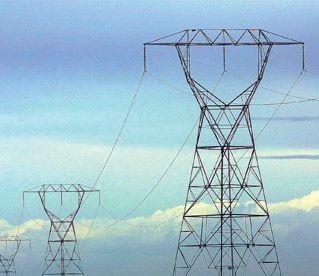
Authorities in Kyrgyzstan have modernized more than 600 kilometers of high-voltage power lines in the Batken region and launched construction of a new power substation near the Tajik border, an area impacted by armed clashes in 2022. According to the National Electric Grid of Kyrgyzstan (NEGK), stable and uninterrupted power supply has been ensured across all settlements in the region during the first half of 2025. Major repairs extended to remote mountainous areas prone to natural hazards, where energy workers replaced over 2,500 outdated porcelain insulators, enhancing grid reliability. Much of the infrastructure was located in landslide-prone and difficult-to-access terrain. “To prevent natural disasters, particularly floods, and ensure the safety of electrical equipment, we reinforced overhead power lines using gabions, stone materials, wire ties, and specialized equipment,” the NEGK reported. The Batken region experienced prolonged blackouts following the 2022 Kyrgyz-Tajik border conflict, which left 32 settlements without electricity. Although power was restored within a year, much of the infrastructure had not been updated for decades. Local officials now say outages should become rare. Construction has also begun on a new substation valued at $800,000 near the Tajik border, with completion expected by October 2025. The facility will supply electricity to an 800-hectare area, including the newly built village of Zhan Dostuk. The village is designated for residents displaced from areas transferred to Tajikistan under an intergovernmental agreement. Power will also extend to the planned city of Batken City, newly constructed state-owned mortgage housing, a large Russian-language school, and a stadium with a capacity of 10,000 spectators. Additionally, the region remains a key hub for the CASA-1000 project, which aims to export electricity from Kyrgyzstan and Tajikistan to Pakistan via Afghanistan, an initiative that officials say will strengthen energy infrastructure across Central Asia.

Afghanistan and Central Asia: Pragmatism Instead of Illusions

“When the winds of change blow, some build walls, others build windmills.” — Chinese proverb Afghanistan remains one of the most complex and controversial spots on the map of Eurasia. After the Taliban came to power in 2021, it seemed the countries of Central Asia were faced with a choice: to distance themselves from the new regime or cautiously engage with it. However, it appears they have chosen a third path - pragmatic cooperation free from political intentions. Today, a window of opportunity is opening for the Central Asian states to reconsider their relationship with Afghanistan, not as a buffer zone or a source of instability, but as a potential element of a new regional architecture. At the same time, these countries are in no hurry to establish close political ties with Kabul. They avoid making declarations about "integrating" Afghanistan into Central Asia as a geopolitical region. Instead, the focus is on practical, rather than political or ideological, cooperation in areas such as transportation, trade, energy, food security, and humanitarian engagement. This pragmatic approach is shaping a new style of regional diplomacy, which is restrained yet determined. Against this backdrop, two key questions emerge: What role can Afghanistan play in regional development scenarios, and what steps are needed to minimize risks and maximize mutual benefit? Afghanistan After 2021: Between Stability and Dependency Since the end of the war and the Taliban’s return to power, Afghanistan has experienced a degree of relative order. However, the country remains economically and institutionally dependent on external assistance. Historically, Afghanistan has survived through subsidies and involvement in external conflicts, from the “Great Game” to the fight against international terrorism. Today, new actors, such as China, Russia, India, Turkey, and the Arab states, are stepping onto the stage alongside Russia, the United States, and the broader West. In the context of current geopolitical realities after the fall of its “democratic” regime, Afghanistan has found itself in a gap between the experiences of the past and a yet undetermined future. It has a unique opportunity to transcend its reputation as the “graveyard of empires” and determine its fate while simultaneously integrating into the international community. How the de facto authorities in Afghanistan handle this opportunity will not only shape the Afghan people's and the region's future but also influence the development of the entire global security paradigm. In parallel, the countries of Central Asian are building bilateral relations with Kabul on strictly pragmatic terms: participation in infrastructure and energy projects, food supply, and humanitarian aid. All of these steps have been taken without political commitments and without recognizing the regime. [caption id="attachment_30841" align="aligncenter" width="1062"] The border between Afghanistan and Tajikistan near Khorog, GBAO; image: TCA, Stephen M. Bland[/caption] Geo-Economics and Logistics: Afghanistan as a Strategic Hub The regional reality in Central Asia is increasingly taking on a geo-economic dimension. The region is not only an arena for the interests of external powers but also a zone for developing transport, logistics, and energy networks in which Afghanistan is playing an...

Villagers in Tajikistan to benefit from infrastructure improvements along CASA1000 transmission line

DUSHANBE (TCA) — Villages that are home to around 200,000 citizens in rural Tajikistan will gain better local infrastructure thanks to support from the CASA1000 Community Support Project for Tajikistan (CASA1000 CSP), following approval on March 21 by the World Bank’s Board of Executive Directors for $24 million in grant financing from the International Development Association. Continue reading

Afghanistan: Work on CASA-1000 power project faces 8-month delay

KABUL (TCA) — Officials from Da Afghanistan Breshna Sherkat (DABS), Afghanistan’s power utility company, on February 2 said that work on construction of CASA-1000 power transmission project has been delayed for eight months due to some reasons including that of financial, Afghan broadcaster TOLOnews reported. Continue reading

World Bank to improve livelihoods of communities in Kyrgyzstan

BISHKEK (TCA) — More than 300,000 people are expected to benefit from improved services and facilities in their villages thanks to US$ 10 million in financing in the Community Support Project associated with the Central Asia South Asia Electricity Transmission and Trade Project (CASA-1000). The Kyrgyz CASA-1000 Community Support Project was approved on April 10 by the World Bank’s Board of Executive Directors, including US$ 5 million a concessional credit and US$ 5 million as a grant. An additional grant of US$ 2 million is being provided from the CASA-1000 Multi-Donor Trust Fund supported by the UK Department for International Development and the US Government. Continue reading

Afghanistan: authorities pledge to ensure security of CASA, TAPI projects

KABUL (TCA) — The government of Afghanistan is working to ensure the security of major regional economic projects that will be implemented in the war-torn country this year. The projects include the Central Asia-South Asia (CASA-1000) electricity transmission project from Kyrgyzstan and Tajikistan to Afghanistan and Pakistan, and Turkmenistan-Afghanistan-Pakistan-India (TAPI) natural gas pipeline project, TOLOnews reported. Continue reading