
• KZT/USD = 0.00216
  • TJS/USD = 0.10800
  • UZS/USD = 0.00008
  • TMT/USD = 0.29850
  • KZT/USD = 0.00216
  • TJS/USD = 0.10800
  • UZS/USD = 0.00008
  • TMT/USD = 0.29850
  • KZT/USD = 0.00216
  • TJS/USD = 0.10800
  • UZS/USD = 0.00008
  • TMT/USD = 0.29850
  • KZT/USD = 0.00216
  • TJS/USD = 0.10800
  • UZS/USD = 0.00008
  • TMT/USD = 0.29850
  • KZT/USD = 0.00216
  • TJS/USD = 0.10800
  • UZS/USD = 0.00008
  • TMT/USD = 0.29850
  • KZT/USD = 0.00216
  • TJS/USD = 0.10800
  • UZS/USD = 0.00008
  • TMT/USD = 0.29850
  • KZT/USD = 0.00216
  • TJS/USD = 0.10800
  • UZS/USD = 0.00008
  • TMT/USD = 0.29850
  • KZT/USD = 0.00216
  • TJS/USD = 0.10800
  • UZS/USD = 0.00008
  • TMT/USD = 0.29850
17 August 2026

Viewing results 1 - 6 of 2

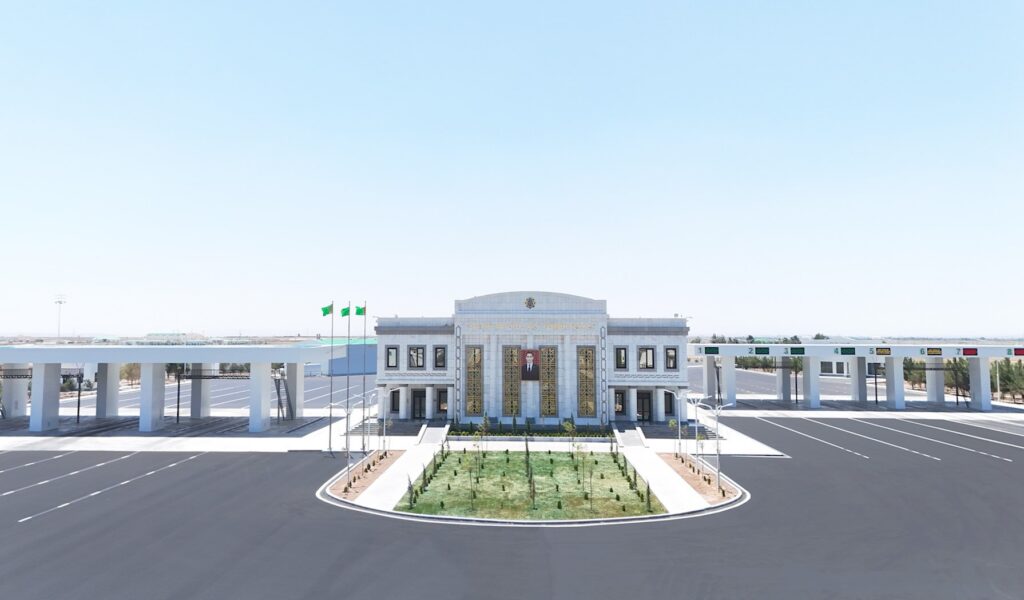
Turkmenistan Renovates Customs Post on Border with Iran

Turkmenistan took steps to expand economic ties with Iran this week, completing the upgrade of a customs checkpoint on the border with its neighbor to the south and hosting an Iranian cabinet minister. The modernization of the Sarahs Autoyollary customs post at the Turkmen-Iranian border follows upgrades earlier this year at the Artyk post, also on the border with Iran, and the Garabogaz checkpoint, on the northern border with Kazakhstan, according to Turkmenistan’s State Customs Service. It said improvements to the Sarahs Autoyollary post, which is located at “the intersection of several international transport corridors,” include renovated buildings and a digital monitoring system that will help agents process vehicles and goods faster and more reliably. Meanwhile, Turkmen President Serdar Berdimuhamedov discussed the expansion of Turkmen-Iranian trade in a meeting with Farzaneh Sadegh, Iran’s roads and urban development minister, in Ashgabat on Monday, Turkmenistan’s state media reported. The Iranian ministry said Sadegh and top Turkmen officials discussed joint projects in transportation, energy, electricity, and infrastructure development. Iran is a significant economic partner for Turkmenistan and other Central Asian countries that are trying to diversify and expand trade corridors to foreign markets, although Iran’s conflict with the United States has highlighted the vulnerability of transit through Iranian territory. Earlier this month, Iranian officials alleged that a U.S. strike hit a railway bridge on a northern Iranian line crossing into Turkmenistan, although there was no independent confirmation. Iran later said it had repaired the tracks and trains were running again. On Monday, Turkmenistan criticized an attack on an Iranian vessel in the Caspian Sea that the Iranian government blamed on Ukraine, which has acknowledged strikes on vessels in the sea that were allegedly carrying military cargo linked to Iran and Russia. The Caspian Sea is critical to Turkmenistan's ambition to play a larger role in the Middle Corridor, a trade network linking Asia and Europe via Central Asia and the Caucasus.

Uzbekistan Seeks More Freight Capacity Through Kazakhstan’s Caspian Ports

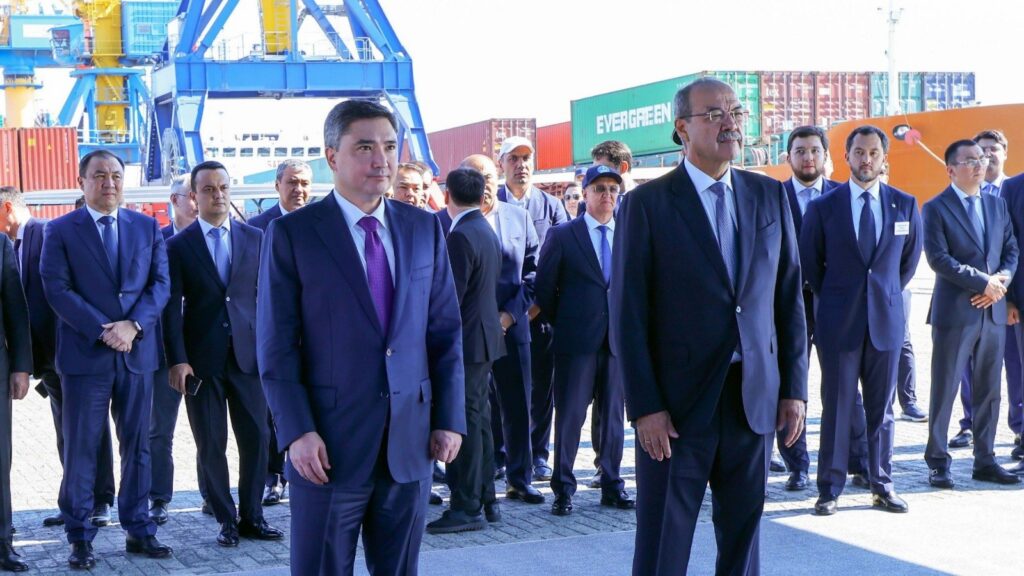
Kazakhstan and Uzbekistan have instructed their national railway companies to draw up a plan to increase Uzbek freight shipments through the ports of Aktau and Kuryk, expanding Tashkent’s access to markets across the Caspian Sea. Kazakh Prime Minister Olzhas Bektenov and his Uzbek counterpart, Abdulla Aripov, discussed the plan during a July 23 visit to the Aktau International Sea Trade Port. The volume of Uzbek freight handled through Aktau and Kuryk increased by more than 60% in 2025, according to the Kazakh government. “Our task is to provide cargo from Central Asian countries with fast and reliable access to the markets of the Caucasus, Turkey, and Europe,” Bektenov said. Aktau and Kuryk are the main Kazakh ports on the Trans-Caspian International Transport Route, commonly known as the Middle Corridor. The rail-and-sea route links China and Europe through Kazakhstan, the Caspian Sea, Azerbaijan, Georgia, and Turkey. For Uzbekistan, one of the world’s two double-landlocked countries, the Kazakh ports provide access to the western section of the corridor. Freight is carried by rail to the Caspian coast before being transferred to ships bound for Azerbaijan. The two governments did not say how much additional freight they expect to carry or when the railway companies must complete their plan. Further growth will depend on tariffs, the availability of railcars and vessels, border procedures, and the capacity of railway lines serving the ports. The combined infrastructure capacity of Aktau and Kuryk is about 22 million metric tons a year, according to Yelzhas Otynshiyev, chairman of Kazakhstan Temir Zholy, the state railway company. Aktau alone can handle as much as 12 million tons annually and operates throughout the year. Container transit through the Kazakh ports on the Middle Corridor increased 3.8-fold between 2022 and 2025, the government said. The first phase of a container hub with annual capacity of 140,000 twenty-foot equivalent units has opened at Aktau. A second phase, due in 2027-2028, is expected to lift capacity to 240,000 TEUs. Kazakhstan has also ordered six container vessels. Four are due for delivery in 2027 and two more in 2028. The additional ships are intended to reduce dependence on the limited pool of vessels operating on the Caspian Sea. Capacity constraints remain at the ports and on the rail network. Falling Caspian Sea levels have made it harder for fully loaded vessels to enter some harbors and increased the need for dredging. Kazakhstan completed dredging at Kuryk in 2025 and plans to finish similar work at Aktau by the end of 2026. The World Bank lists port capacity, rail access, and delays at the Kazakhstan-Uzbekistan border among the main bottlenecks affecting the Middle Corridor. Some freight operators use longer routes because existing border crossings and rail links cannot handle demand efficiently. The bank has also called for additional berths and modern cargo-handling equipment at Aktau as the Caspian becomes shallower. Kazakhstan is upgrading the Shalkar-Beineu and Beineu-Mangystau railway sections that carry traffic to Aktau and Kuryk. In February 2026, the World Bank approved an $846...