

• KGS/USD = 0.01144 0%
  • KZT/USD = 0.00205 0%
  • TJS/USD = 0.10771 -0.19%
  • UZS/USD = 0.00008 0%
  • TMT/USD = 0.28571 0.28%
  • KGS/USD = 0.01144 0%
  • KZT/USD = 0.00205 0%
  • TJS/USD = 0.10771 -0.19%
  • UZS/USD = 0.00008 0%
  • TMT/USD = 0.28571 0.28%
  • KGS/USD = 0.01144 0%
  • KZT/USD = 0.00205 0%
  • TJS/USD = 0.10771 -0.19%
  • UZS/USD = 0.00008 0%
  • TMT/USD = 0.28571 0.28%
  • KGS/USD = 0.01144 0%
  • KZT/USD = 0.00205 0%
  • TJS/USD = 0.10771 -0.19%
  • UZS/USD = 0.00008 0%
  • TMT/USD = 0.28571 0.28%
  • KGS/USD = 0.01144 0%
  • KZT/USD = 0.00205 0%
  • TJS/USD = 0.10771 -0.19%
  • UZS/USD = 0.00008 0%
  • TMT/USD = 0.28571 0.28%
  • KGS/USD = 0.01144 0%
  • KZT/USD = 0.00205 0%
  • TJS/USD = 0.10771 -0.19%
  • UZS/USD = 0.00008 0%
  • TMT/USD = 0.28571 0.28%
  • KGS/USD = 0.01144 0%
  • KZT/USD = 0.00205 0%
  • TJS/USD = 0.10771 -0.19%
  • UZS/USD = 0.00008 0%
  • TMT/USD = 0.28571 0.28%
  • KGS/USD = 0.01144 0%
  • KZT/USD = 0.00205 0%
  • TJS/USD = 0.10771 -0.19%
  • UZS/USD = 0.00008 0%
  • TMT/USD = 0.28571 0.28%

Viewing results 1 - 6 of 3

Japan Extends $229 Million Loan to Boost Energy Efficiency in Uzbekistan

Japan will lend Uzbekistan 36.8 billion yen, roughly $229 million, to cut energy waste in public buildings and industry, targeting two sectors that place heavy pressure on the country’s fuel and electricity systems. The financing was formalized on June 10 in Tashkent, where Japanese Ambassador Kenji Hirata and Uzbekistan’s Deputy Prime Minister and Minister of Economy and Finance Jamshid Kuchkarov signed exchange notes for two projects under Japan’s yen-loan program, according to the Embassy of Japan in Uzbekistan. The larger of the two projects, Energy Efficiency Improvement in Public Buildings, has a maximum value of 21.788 billion yen, about $136 million. A second project, Energy Efficiency Improvement in the Industrial Sector, is valued at up to 14.969 billion yen, about $93.4 million. Both loans carry an annual interest rate of 2.4% on the principal and 0.8% for consulting services. They will be repaid over 25 years, including a seven-year grace period. The financing is being provided on concessional and untied terms, allowing greater flexibility in procurement. The projects are aimed at lowering demand rather than adding new generating capacity. In practical terms, that means modernizing equipment and introducing energy-saving technologies in industrial and commercial operations, as well as in public buildings. The public-buildings component addresses one of the weaker points in Uzbekistan’s energy system. The country’s schools, preschools, hospitals and other state facilities are often expensive to heat and difficult to cool, particularly in buildings constructed during the Soviet period with little regard for energy efficiency. Previous World Bank work on Uzbekistan has identified public buildings from the 1970s and 1980s as poorly insulated and reliant on old boilers and water-heating systems with high energy intensity. The problem is visible in the country’s air as well as its energy bills. In winter, inefficient heating systems increase demand for fuel, while coal- and fuel-oil-based heating contributes to smog in cities such as Tashkent, alongside dust, traffic and industrial emissions. Energy-efficiency upgrades can reduce the fuel demand that worsens urban air pollution during cold weather. Uzbekistan remains heavily dependent on fossil fuels for its energy supply. The Japanese Embassy noted that the country’s energy consumption and greenhouse gas emissions per unit of gross domestic product remain higher than global averages, making improvements in energy efficiency a national priority. The industrial component addresses another pressure point. Uzbekistan is trying to expand manufacturing and exports, but that ambition depends on a power system still dominated by fossil fuels and burdened by aging infrastructure. For Tashkent, cutting the energy used by factories and commercial enterprises is part of the same energy-security challenge as building new power plants or adding renewable capacity. The agreement also gives practical form to one of the priorities in the Tokyo Declaration adopted at the first Central Asia-Japan Summit in December 2025. The declaration identified “Green and Resilience” as one of three major areas for future cooperation between Japan and the five Central Asian states. The loans follow President Shavkat Mirziyoyev’s visit to Japan late last year, when Uzbek and Japanese...

Opinion: Central Asia–Japan Summit Signals Shift in Eurasian Geoeconomics — and Russia’s Waning Role

In December 2025, Tokyo hosted the first leaders-level Central Asia + Japan summit — a watershed moment for Eurasian diplomacy that quietly reshapes the region’s strategic architecture. The declaration adopted at the summit lays out a clear economic-geostrategic vision: Japan is no longer a peripheral partner, but a central engine of multi-vector engagement with Central Asia. In the process, it exposes a growing gap in Russia’s regional influence — not because of rhetoric, but because of substance. Japan’s Agenda: Economy, Connectivity, Human Capital The Tokyo Declaration pivots on three pragmatic pillars that align tightly with Central Asian development priorities: Green growth and sustainability - decarbonization, energy security, and climate resilience; Connectivity - transport, logistics, customs facilitation, and digital corridors; Human resource development - education, training, exchanges, and technology transfer. This is not diplomatic abstraction. It reflects Japan’s long-term model of engagement: concessional finance, technology cooperation, and capacity building rather than quick geopolitical wins. In practical terms, there is now a numerical investment target - a combined public-private cooperation envelope of three trillion yen (approximately $20 billion) over five years -marking a shift from consultative dialogue to project delivery at scale. Importantly, the summit also reinforced cooperation in emerging domains such as artificial intelligence, digital transformation, and resilient supply chains - areas where Central Asia aims to leap ahead rather than merely catch up. This underscores how cooperation is being framed: not as charity, but as co-production of future-oriented infrastructure and capabilities. The significance of the summit lies not only in the declaration itself, but in the trajectory it has set for Japan–Central Asia engagement in the months ahead. What This Means for Russia: Substance Trumps Symbolism At first glance, Russia’s absence from explicit mention in the declaration may seem benign; after all, engagement with external partners often requires diplomatic balance. Yet silence in this case is meaningful. For decades, Russia’s influence in Central Asia was rooted in security ties, historical institutions, and energy networks. These were powerful structural levers in the twentieth century, but they are increasingly less relevant in an era defined by diversified markets and technological competition. The Tokyo summit highlights several structural realities: Russia does not offer a comparable economic agenda, particularly in green technologies, digital infrastructure, or human capital development. Russia’s model remains reactive, centered on existing corridors and legacy links rather than on new corridors of integration connecting Central Asia with Asian and European value chains. Russia is overweighted in traditional domains such as security and media presence, yet underweighted in economic agency suited to the twenty-first century. By contrast, Japan’s approach addresses precisely the gaps Central Asian states prioritize: employment, logistics, energy transition, and technological self-sufficiency. Even more strikingly, this shift is occurring without anti-Russian rhetoric. The summit was framed as an exercise in cooperation and development, not rivalry. Nevertheless, the outcomes effectively relegate Russia to the background — a clear indicator of the structural erosion of Moscow’s regional primacy. Multi-Vector Policy in Practice: Central Asia’s Agency For Central Asian states, the Tokyo summit...

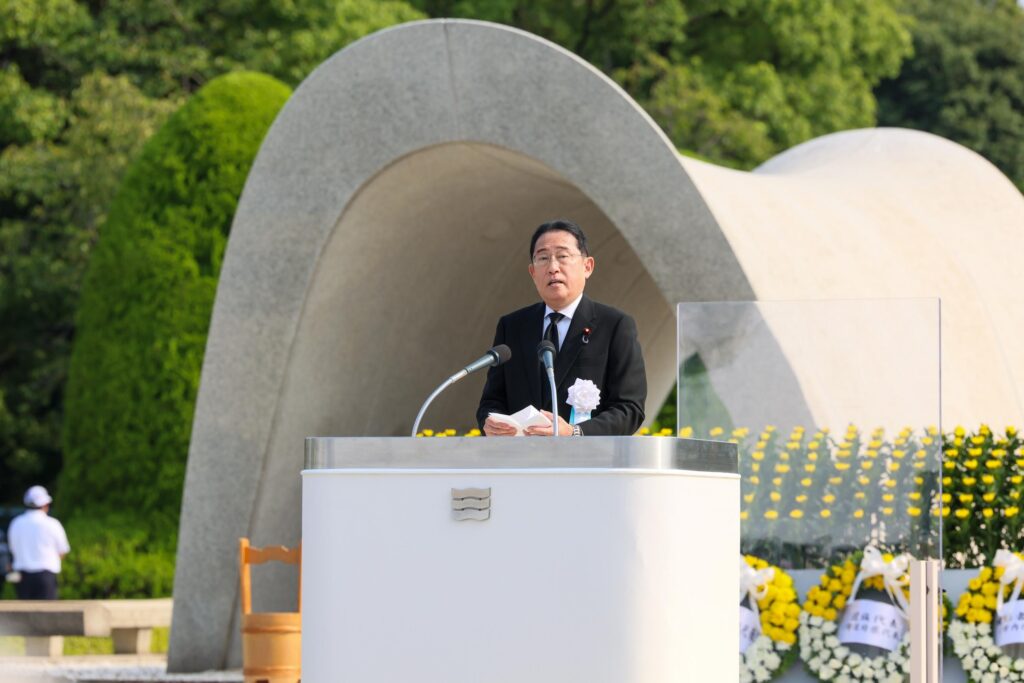
Japanese PM Cancels Attendance at Central Asia + Japan Summit.

A visit to Kazakhstan, Uzbekistan, and Mongolia by Japanese Prime Minister Fumio Kishida scheduled for August 9-12, has been cancelled. According to the publication Kyodo, the trip was cancelled in response to a warning issued by the Japan Meteorological Agency on the possibility of a strong earthquake and tsunami in Japan. In an apology made at a press conference today, the prime minister who was due to participate in the summit of Japan and the Central Asian countries in Astana, stated,  “As the top official in charge of the nation's crisis management, as an extra precaution, I should remain in Japan for at least about a week." Confirming the decision, official representative of the Ministry of Foreign Affairs Aibek Smadiyarov announced, "According to the information of the Embassy of Japan, in connection with the earthquake in their country, a decision was made to cancel the visit of Prime Minister Fumio Kishida to Kazakhstan." On August 8, a 7.1-magnitude earthquake occurred in Miyazaki prefecture in southwestern Japan and the Japan Meteorological Agency recorded earthquakes at a depth of 30 km. The Japanese government also issued a tsunami warning for Kochi and Miyazaki prefectures. The Times of Central Asia previously reported on the Prime Minister of Japan's intention to announce a package of economic assistance to Central Asia. According to the Japanese government, the initiative which Kishida planned to outline at the summit,  will reduce the heavy influence of both Russia and China on the region and afford Central Asia economic independence.
