Patient Capital, Fast Deals: Japan and South Korea Take Different Paths into Central Asia
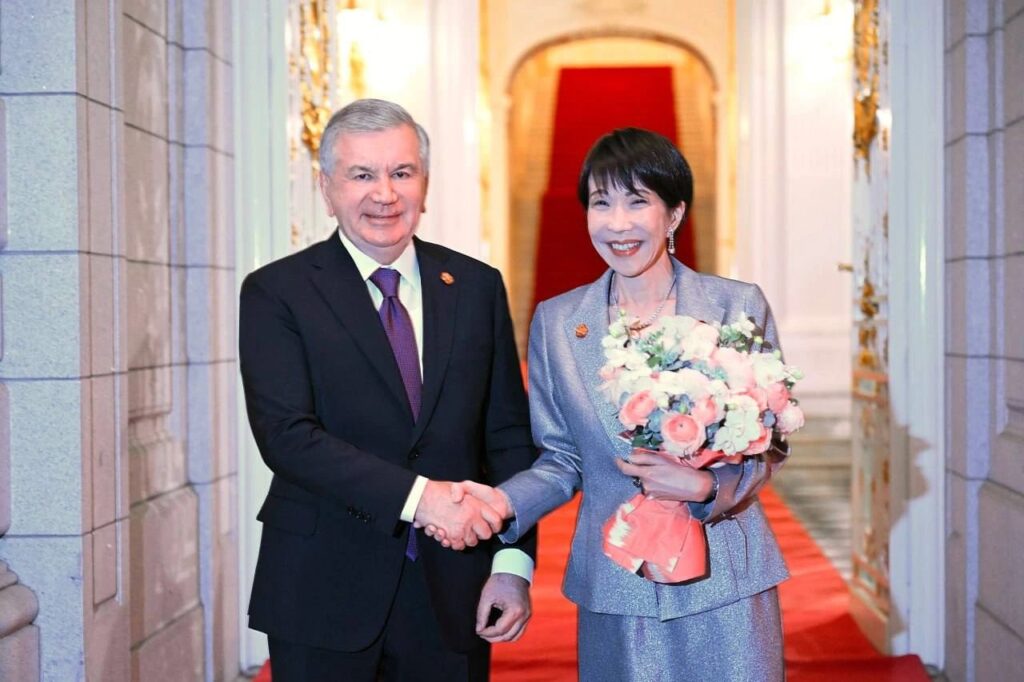
Japan and South Korea have reached the same strategic conclusion: Central Asia matters to their economic security. Yet they are pursuing that goal through markedly different playbooks. In December 2025, Tokyo hosted the first leaders' summit of the "Central Asia plus Japan" Dialogue, 21 years after the format was launched. All five Central Asian presidents attended. Japan set a target of three trillion yen in business projects across the region over five years - roughly $19 billion at the time - while placing critical-mineral supply chains among the summit's priority areas. The bilateral announcements were equally significant. Uzbekistan presented a proposed project portfolio worth more than $12 billion and called for a joint investment platform to advance it. Kazakhstan and Japan announced a package of public- and private-sector agreements worth $3.7 billion. These included a long-term uranium contract and an offtake agreement under which Kazakhstan's Eurasian Resources Group would supply gallium to Mitsubishi Corporation RTM Japan. The timing was no accident. By May 2026, Chinese shipments to Japan of dysprosium and terbium remained close to zero, while exports of finished rare earth magnets to Japan fell 35% from the previous month. These materials are essential to high-performance magnets. For Tokyo, diversifying critical mineral supply is no longer a distant policy objective; it is an immediate industrial requirement. South Korea has been moving toward the same destination by a different route. During then-President Yoon Suk Yeol's state visit to Kazakhstan in 2024, the two countries signed a critical minerals memorandum allowing Korean companies to participate in the exploration and development of lithium, chromium, uranium, and rare earths. Seoul is now preparing to host the first Korea-Central Asia summit on September 16-17, 2026, elevating years of bilateral and multilateral engagement to the leaders' level. [caption id="attachment_52351" align="aligncenter" width="1280"] Image: Japan Cabinet Public Affairs Office[/caption] Why Central Asia Counts Both Japan and South Korea are resource-poor manufacturing powers whose leading industries depend on secure supplies of imported minerals. South Korea imports more than 95% of the critical minerals it consumes. Japan received its own warning in 2010, when Chinese rare earth shipments were disrupted during a territorial dispute, and the pressure has returned in a sharper form in 2026. Central Asia cannot replace China in the short term, but it offers Tokyo and Seoul a credible route toward diversification. Kazakhstan and Uzbekistan combine substantial mineral potential with governments eager to attract investment, technology, and new export markets. Kazakhstan is already a major producer of uranium and chromium, and has significant copper, titanium, and rare earth prospects. In April 2025, Kazakhstan announced the possible discovery of a rare earth deposit containing more than 20 million metric tons of resources. If further exploration confirms that estimate, the country could possess one of the world's largest rare earth resource bases. However, the distinction between a resource estimate and a usable supply chain is crucial. A discovery is not a producing mine, and a mine is not a processing industry. Exploration, environmental approvals, infrastructure, separation, refining, and...