Japan and South Korea have reached the same strategic conclusion: Central Asia matters to their economic security. Yet they are pursuing that goal through markedly different playbooks.
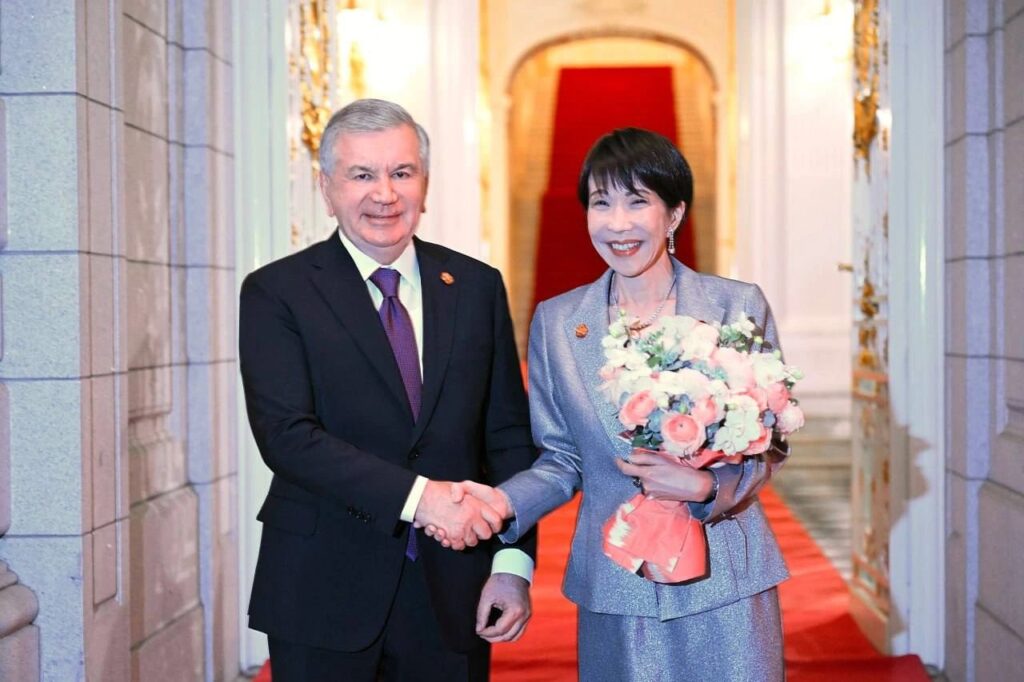
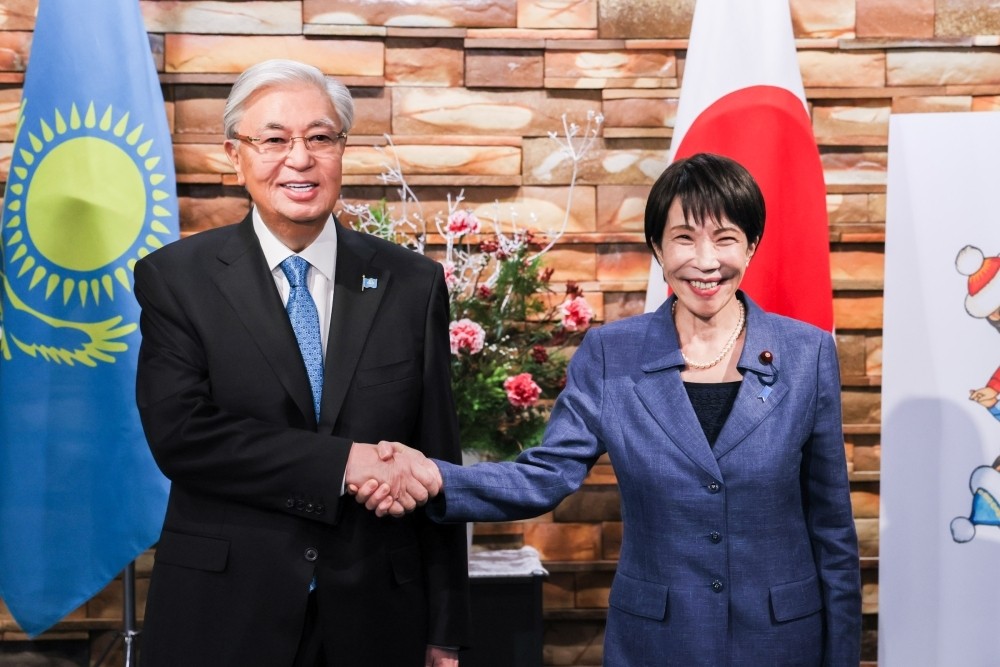
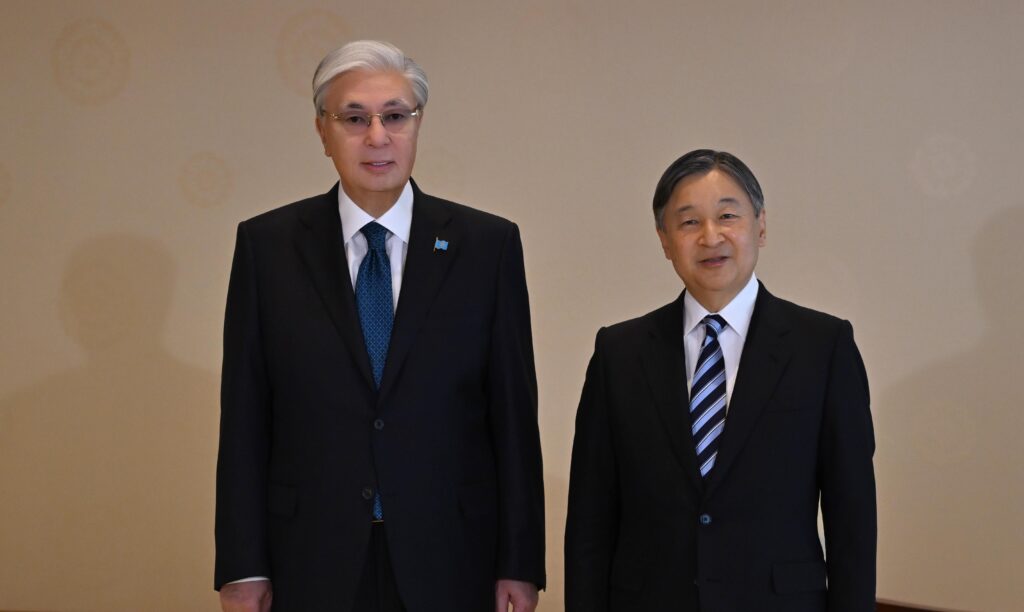
In December 2025, Tokyo hosted the first leaders’ summit of the “Central Asia plus Japan” Dialogue, 21 years after the format was launched. All five Central Asian presidents attended. Japan set a target of three trillion yen in business projects across the region over five years – roughly $19 billion at the time – while placing critical-mineral supply chains among the summit’s priority areas.
The bilateral announcements were equally significant. Uzbekistan presented a proposed project portfolio worth more than $12 billion and called for a joint investment platform to advance it. Kazakhstan and Japan announced a package of public- and private-sector agreements worth $3.7 billion. These included a long-term uranium contract and an offtake agreement under which Kazakhstan’s Eurasian Resources Group would supply gallium to Mitsubishi Corporation RTM Japan.
The timing was no accident. By May 2026, Chinese shipments to Japan of dysprosium and terbium remained close to zero, while exports of finished rare earth magnets to Japan fell 35% from the previous month. These materials are essential to high-performance magnets. For Tokyo, diversifying critical mineral supply is no longer a distant policy objective; it is an immediate industrial requirement.
South Korea has been moving toward the same destination by a different route. During then-President Yoon Suk Yeol’s state visit to Kazakhstan in 2024, the two countries signed a critical minerals memorandum allowing Korean companies to participate in the exploration and development of lithium, chromium, uranium, and rare earths. Seoul is now preparing to host the first Korea-Central Asia summit on September 16-17, 2026, elevating years of bilateral and multilateral engagement to the leaders’ level.
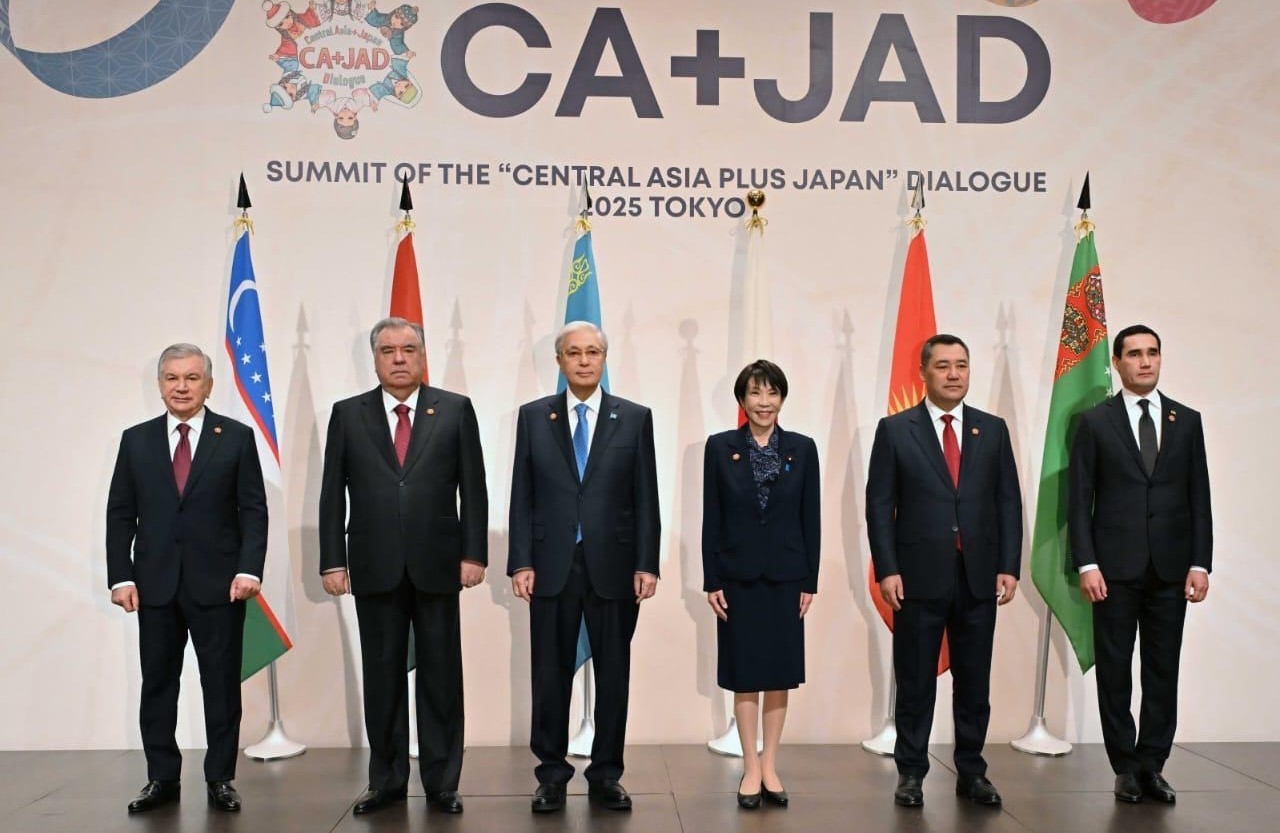
Image: Japan Cabinet Public Affairs Office
Why Central Asia Counts
Both Japan and South Korea are resource-poor manufacturing powers whose leading industries depend on secure supplies of imported minerals. South Korea imports more than 95% of the critical minerals it consumes. Japan received its own warning in 2010, when Chinese rare earth shipments were disrupted during a territorial dispute, and the pressure has returned in a sharper form in 2026.
Central Asia cannot replace China in the short term, but it offers Tokyo and Seoul a credible route toward diversification. Kazakhstan and Uzbekistan combine substantial mineral potential with governments eager to attract investment, technology, and new export markets. Kazakhstan is already a major producer of uranium and chromium, and has significant copper, titanium, and rare earth prospects.
In April 2025, Kazakhstan announced the possible discovery of a rare earth deposit containing more than 20 million metric tons of resources. If further exploration confirms that estimate, the country could possess one of the world’s largest rare earth resource bases. However, the distinction between a resource estimate and a usable supply chain is crucial. A discovery is not a producing mine, and a mine is not a processing industry. Exploration, environmental approvals, infrastructure, separation, refining, and customer qualification can take years.
That gap is precisely why Central Asia should be viewed as a long-term diversification partner rather than an instant substitute for China. Beijing’s advantage lies not only in the ground but also in its dominant position in mineral processing and magnet manufacturing. Japan and South Korea therefore need more than access to deposits; they need durable partnerships that can carry projects from exploration to commercially reliable supply.
Patient Capital, Fast Deals
Japan’s approach is institutional, incremental, and designed to reduce risk before capital moves. Its regional dialogue dates to 2004, well before the current proliferation of “Central Asia plus one” formats. The Tokyo Initiative combines official development assistance, technical cooperation, connectivity projects, human-resource development, and private investment. Its three trillion yen figure is a target for business projects, not a single government spending commitment.
The agreements announced with Kazakhstan illustrate the breadth of this model: long-term mineral contracts, financing memoranda, energy projects, digital infrastructure, environmental technology, and research cooperation. Uzbekistan, meanwhile, has proposed a special economic zone in Samarkand based on Japanese standards. Japan’s strength is its ability to build relationships around feasibility studies, institutional capacity, technical standards, and long time horizons. Its weakness is that large packages can take years to move from memoranda to construction and production.
South Korea’s model is more visibly corporate and execution-oriented. The state creates the diplomatic framework, but conglomerates and mid-sized firms often translate it into factories, supply arrangements, services, and consumer brands. More than 700 companies with South Korean capital operate in Kazakhstan; bilateral trade reached $3.17 billion in 2025; and South Korean direct investment totaled about $8 billion over the previous decade. Kazakh officials say 46 joint projects worth roughly $4 billion are now at various stages of development. In July 2026, the two countries also announced a rare metals research center in Almaty, intended to train specialists and support processing technology.
The 2024 critical minerals memorandum is important because it creates a formal route for Korean firms to participate in exploration and development. It does not grant automatic or exclusive access to deposits; it provides a framework through which commercially viable projects can be assessed and pursued. South Korea’s strength is speed and commercial visibility. Its weakness is that companies naturally favor projects with clearer near-term returns, leaving expensive infrastructure and uncertain upstream ventures dependent on stronger public support.
These are tendencies rather than rigid categories. Japanese companies sign offtake agreements, and South Korea relies heavily on state diplomacy and public finance. The difference is one of emphasis: Japan usually builds the framework and lowers the risk before business expands, while South Korea more often allows companies to identify an opportunity and uses diplomacy to help them scale it.
The Diaspora Dividend
South Korea also possesses a social advantage that Japan cannot reproduce. In 1937, the Soviet authorities deported around 172,000 ethnic Koreans from the Russian Far East, mainly to Kazakhstan and Uzbekistan. Central Asia is now home to a Koryo-saram community estimated at more than 300,000 people, most of them in those two countries.
The community has produced farmers, entrepreneurs, professionals, and cultural intermediaries across the region. Its members are not an instrument of Seoul, and their identities are rooted in Central Asian societies as much as in their Korean heritage. Nevertheless, their presence gives Korean business and culture a familiar social setting. It can ease contacts, strengthen public recognition, and provide a network of people able to navigate both local and Korean commercial practices.
Japan has no comparable diaspora. Its soft power rests instead on a reputation for reliability and quality, together with scholarships, university links, technical training, and long-term professional networks. The Tokyo summit renewed Japan’s commitment to human-resource programs, including the scholarship program for young public-sector leaders. This approach reaches a smaller audience than Korean popular culture, but it can have concentrated influence in engineering, public administration, science, and energy.
Competition Without a Forced Choice
Japan and South Korea are not alone in Central Asia. Japan and South Korea are not alone in Central Asia. China and Russia remain deeply entrenched, while the European Union, the United States, Turkey, Gulf states, and other partners are expanding their own engagement. Geography also works against Tokyo and Seoul: Central Asia is landlocked, and transport routes to East Asia are neither short nor simple. Their comparative advantage lies elsewhere – in industrial demand, engineering capacity, strong commercial brands, and the ability to offer technology, equipment, financing, and long-term purchasing relationships.
Tokyo and Seoul are competing for projects, influence, and access to future supply, but the contest need not be zero-sum. Their models are different enough to coexist, and Central Asian governments have every reason to keep both engaged. Japanese finance, standards, and institutional planning can complement South Korean manufacturing, construction, and faster project execution.
The decisive test will not be the value of memoranda signed at summits or the volume of ore eventually exported. It will be whether the resulting projects create processing capacity, skilled employment, technology transfer, reliable infrastructure, and stronger environmental standards inside Central Asia. If minerals are simply extracted and shipped abroad, East Asia will diversify its supply chains while Central Asia remains a raw-material supplier. If the region uses outside competition to build domestic value chains, both sides can gain.
For Central Asia, the smartest strategy is not to choose between Tokyo and Seoul. It is to keep the field open and make both compete based on the quality of what they leave behind.